DbcultAccessing Vault...
Cult Review
Senior Film Conservator
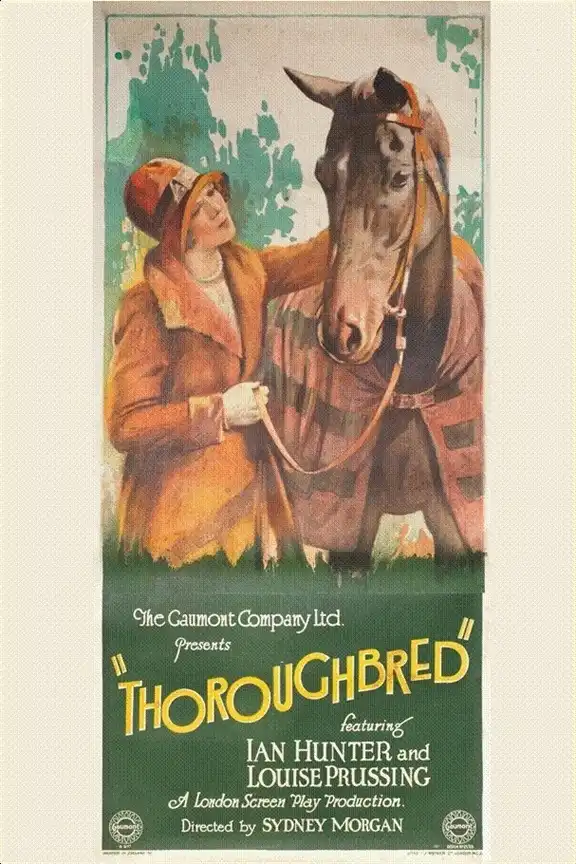
Is "The Thoroughbred" worth watching today? Yeah, if you’re really into old movies, especially the silent stuff. If you're hoping for CGI horses or modern pacing, then please, *run away fast*.
But for those curious about how melodrama played out a century ago, or just enjoy a simple, emotionally charged story without a single spoken word, this could be a fun, if sometimes frustrating, peek.
The plot is, well, *solid*. An MP’s wife, played by Louise Prussing, gets herself into a deep gambling hole. She then tries to strong-arm a jockey, Ian Hunter, into throwing the Derby. It's the kind of premise that just screams 1920s drama, all about moral failings and public shame.
Prussing’s performance as the wife is a masterclass in silent film acting. Her gestures are grand, sure, but there’s this quiet desperation beneath it all. You can see her clutching her pearls, her eyes darting around when her husband, H. Agar Lyons, isn’t looking. It’s almost like you can *feel* her anxiety.
There's a scene early on where she’s at a fancy party, all smiles and poise. But then the camera catches her glance at a hidden racing sheet, and her face just drops. It’s a quick moment, but it tells you everything you need to know about her secret life. She looks utterly miserable, really.
Ian Hunter, as the jockey, is the film's moral compass, really. He’s got that earnest, upright look. His internal conflict comes through mostly in these intense close-ups. You see his brow furrowing, his jaw clenching. He *feels* the weight of her demands, you know?
The transition from her trying to *charm* him to outright *coercion* is pretty stark. She starts with flattery, then moves to threats about his career. It’s not subtle, but in silent film, it doesn’t need to be.
The racing sequences themselves are surprisingly effective for 1928. They use a lot of quick cuts between the horses thundering down the track, the crowd in a frenzy, and Hunter’s determined face. You can almost feel the dust flying.
One shot of the wife looking distraught goes on for just a beat too long, and you almost want to shout, "Alright, we get it!" But then again, maybe that’s how the pacing felt back then, giving you time to really soak in the emotion.
The MP, Lyons, mostly exists as this oblivious, good-natured counterpoint to his wife’s schemes. His unawareness of her obvious distress feels a bit… slow. But that might just be the conventions of the time, the virtuous husband always being the last to know.
The contrast between the lavish parties and the grimy stables is really stark, almost too much so. It’s like they were hitting you over the head with the rich-vs-poor thing, but it works to set the mood.
There’s a moment, a subtle shift in Ian Hunter's posture, when you just *know* he's made a bad decision. No words needed, just that slight slump of his shoulders. It’s actually pretty powerful.
I found myself wondering how many takes they needed for the horse-riding bits. It looks genuinely dangerous, even through the scratchy film stock. Those horses really look like they’re flying.
The intertitles, bless 'em, sometimes state the obvious. But other times, they deliver a real gut punch, a single sentence that changes everything. It's a nice balance, most of the time.
The final race sequence. It's not *Ben-Hur*, obviously, but the way they cut it actually does build some suspense. You can almost feel the crowd holding their breath, even without sound.
The movie gets noticeably better once the pressure really ramps up. Before that, there are a few slower scenes that drag a bit, but once the Derby is in sight, it picks up.
IMDb —
1919
Community
Log in to comment.