DbcultAccessing Vault...
6.8/10
Senior Film Conservator
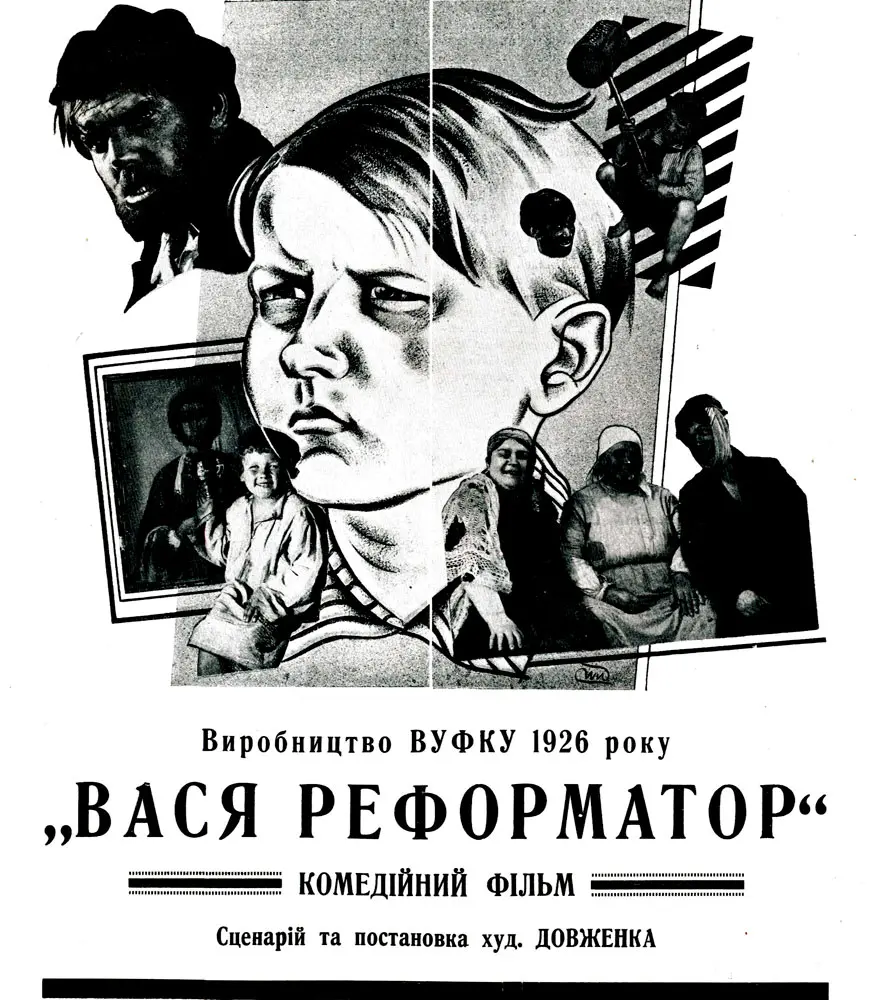
A definitive 6.8/10 rating for a film that redefined the boundaries of cult cinema. Vasya reformator remains a cornerstone of transgressive art.
Is this film worth watching today? Short answer: only if you are a dedicated student of Soviet montage or an Alexander Dovzhenko completist. This is not a film for the casual viewer seeking high-definition thrills, but it is a vital artifact for those who want to see the birth of a cinematic giant. It is specifically for viewers who enjoy the frenetic energy of the 1920s avant-garde and is definitely not for those who demand a linear, polished narrative.
To answer the question directly: for the average moviegoer, no. For the cinephile, absolutely. Vasya Reformator is a messy, loud, and often disjointed piece of work, but it vibrates with the kind of experimental freedom that only exists when a medium is young. It works because it captures the raw anxiety and optimism of a nation in flux. It fails because its episodic nature feels more like a series of sketches than a cohesive story. You should watch it if you want to understand how Dovzhenko moved from being a political cartoonist to a master of the moving image.
1) This film works because it treats childhood independence not as a tragedy, but as a revolutionary virtue.
2) This film fails because the pacing is so frantic it often loses the emotional weight of its individual scenes.
3) You should watch it if you are interested in the intersection of early Soviet social policy and silent slapstick.
The film’s protagonist, played with a surprising lack of sentimentality by Vasili Lyudvinsky, is the antithesis of the Victorian 'orphan.' He is not looking for a home; he is looking for a problem to solve. This is where the film finds its unique voice. While American films like The Woman in His House might focus on the domestic stability of the family unit, Vasya Reformator suggests that the family is secondary to the state and the self. Vasya’s independence is his superpower.
One of the most striking sequences involves Vasya commandeering a 'strange car.' In 1926, the automobile was a symbol of the future, a mechanical beast that the old world didn't understand. Watching a child master this machine is a heavy-handed but effective metaphor for the young Soviet state mastering industrialization. The camera work here is jittery and excited, mirroring the boy’s own adrenaline. It lacks the polish of The River's End, but it replaces that polish with a sheer, unadulterated speed.
Although Faust Lopatinsky is credited as a director, the DNA of the film belongs to Alexander Dovzhenko. You can see his background as a caricaturist in every frame. The priest that Vasya exposes isn't just a character; he is a grotesque. He is filmed from low angles to emphasize his imposing, yet hollow, authority. When Vasya unmasks him, it isn't just a plot point—it's a political cartoon brought to life. This is where the film takes a hard stance. It isn't neutral. It hates the old religious order and loves the new, secular energy of the youth.
The cinematography by Danylo Demutsky already shows signs of the brilliance that would later define films like Earth. There is a specific moment where Vasya saves a man from drowning. The water is filmed not as a scenic backdrop, but as a dangerous, churning texture. It’s a far cry from the more romanticized depictions of nature found in The Beckoning Trail. Here, nature is something to be conquered, just like the thief Vasya eventually catches.
The film’s structure is essentially a series of 'reforms.' Every time Vasya enters a scene, he changes the status quo. He finds a man drowning; he changes his status to 'saved.' He finds a car; he changes its status to 'driven.' He finds a priest; he changes his status to 'exposed.' It is a relentless, exhausting progression. This reflects the 'New Economic Policy' (NEP) era in which the film was made—a time of rapid, often confusing change. It’s clunky. But it’s honest about its goals.
Compare this to contemporary Western films like Breaking Into Society. Where Western cinema often focused on the individual’s rise within an existing social hierarchy, Vasya Reformator is about the individual tearing the hierarchy down. Vasya doesn't want to join the 'strange car' owners; he wants to show them that he can do it better. It’s an aggressive form of storytelling that can feel alienating to modern audiences accustomed to more subtle character arcs.
The acting is typical of the silent era—broad, expressive, and physical. However, Stepan Shagaida and Vladimir Uralskiy provide a grounded counterpoint to the child’s energy. The pacing is the film’s biggest hurdle. It moves at a breakneck speed that doesn't allow for much reflection. In one moment, we are at the river; in the next, we are in a car; in the next, we are in a church. It feels like a montage that forgot to breathe. This is a common trait in early Soviet cinema, where the 'Kuleshov Effect' and the power of the edit were being explored with reckless abandon.
There is a lack of emotional resonance that you might find in a film like Feet of Mud. Vasya is more of a symbol than a person. We don't see him cry, we don't see him doubt himself, and we don't see him grow. He starts as a reformer and ends as a reformer. It’s effective as propaganda, but it’s thin as a character study. Yet, there is a brutal simplicity to it that works. It doesn't pretend to be anything other than a call to action.
Vasya Reformator is a fascinating failure. It is a film that wants to do too much in too little time, yet its ambition is exactly what makes it worth discussing nearly a century later. It lacks the poetic soul of Dovzhenko’s later work, but it has a punk-rock energy that is rare in the canon of 'important' cinema. It isn't a masterpiece. It’s a manifesto. And like most manifestos, it is loud, aggressive, and entirely convinced of its own importance. Watch it for the history, stay for the chaotic car ride, and leave with a better understanding of how the Soviet myth was constructed, frame by frame.
IMDb 6.4
1934
Community
Log in to comment.