DbcultAccessing Vault...
Cult Review
Senior Film Conservator
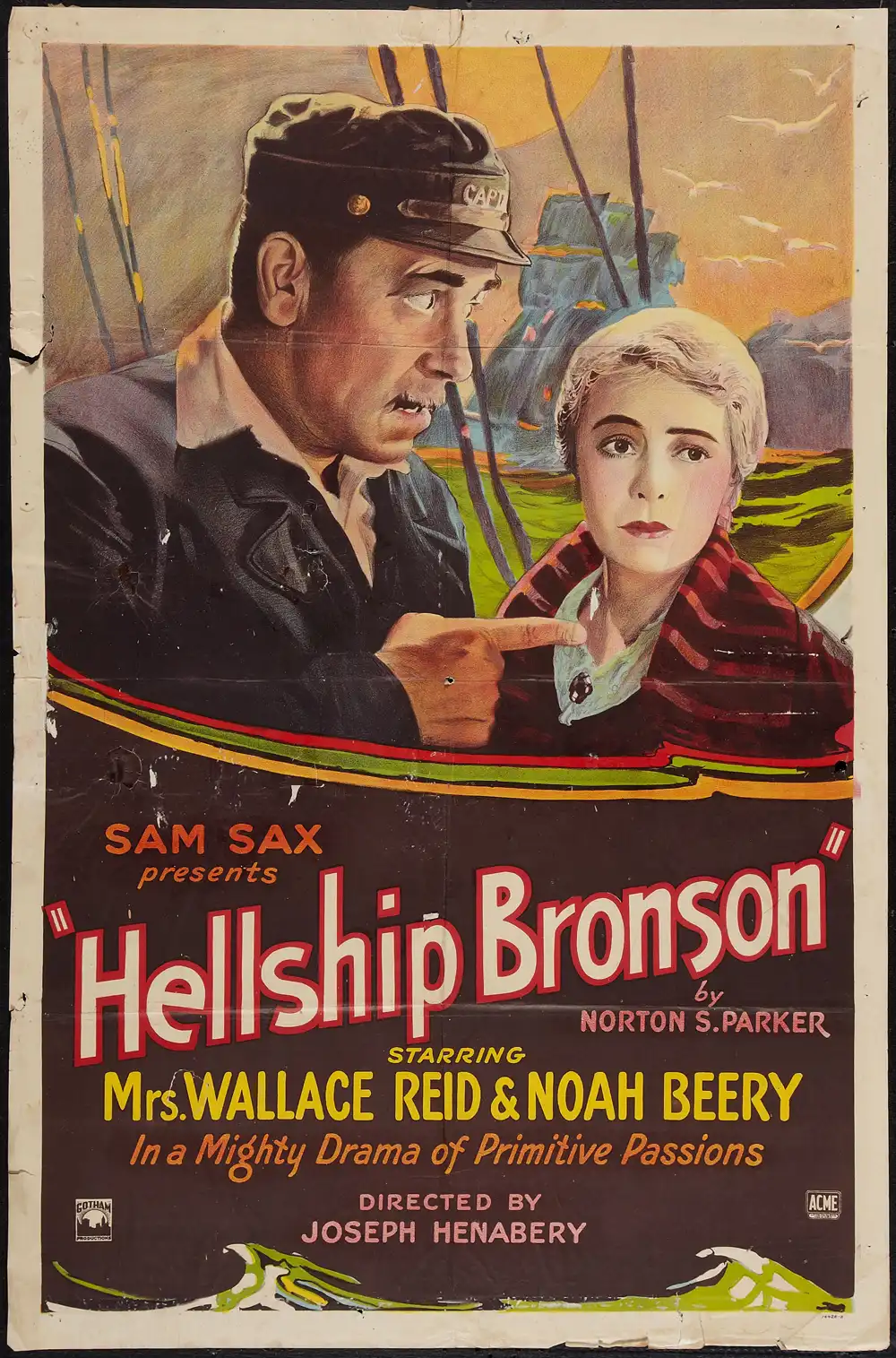
If you're a serious silent film buff, or just really into melodramatic nautical sagas, then Hellship Bronson might just float your boat. For everyone else, honestly? It's a tough sell. You'll likely find yourself checking the runtime more than once, even with its relatively lean runtime.
The premise of Hellship Bronson is pure silent era gold: a wronged captain, a secret son, a vengeful wife stowing away on a ship, and another woman's daughter thrown into the mix. You go in expecting a certain level of operatic drama, and it certainly delivers... just not always in the way you might hope.
Right from the jump, the film sets a leisurely pace. Those opening scenes establishing Bronson's initial heartbreak after believing his wife cheated? They just... go on. You see the pain, sure, but then you see it again, and again, and the intertitles keep reinforcing it. It’s like the movie doesn't quite trust you to get it the first time.
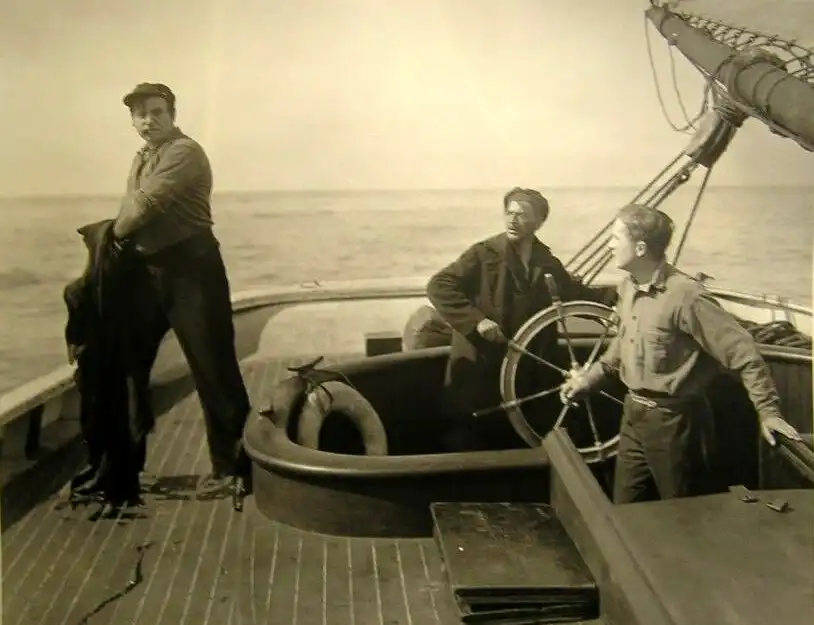
Reed Howes, as the younger Captain Bronson, feels a bit stiff. He's got the 'stoic sailor' thing down, but when he's supposed to be showing deep emotional conflict, it often comes across as just... confused. Like he's forgotten his lines, even though it's a silent film. His interactions with Helen Foster's Mary are similarly understated to the point of being inert. There's meant to be a burgeoning romance there, but it feels more like two polite strangers sharing a lifeboat.
There's this one shot, fairly early on, of Captain Bronson staring out at the ocean after his wife's supposed betrayal. It's a long, static shot, and his facial expression just doesn't change. Not a flicker. It feels less like profound sorrow and more like he's waiting for the director to yell 'cut'.
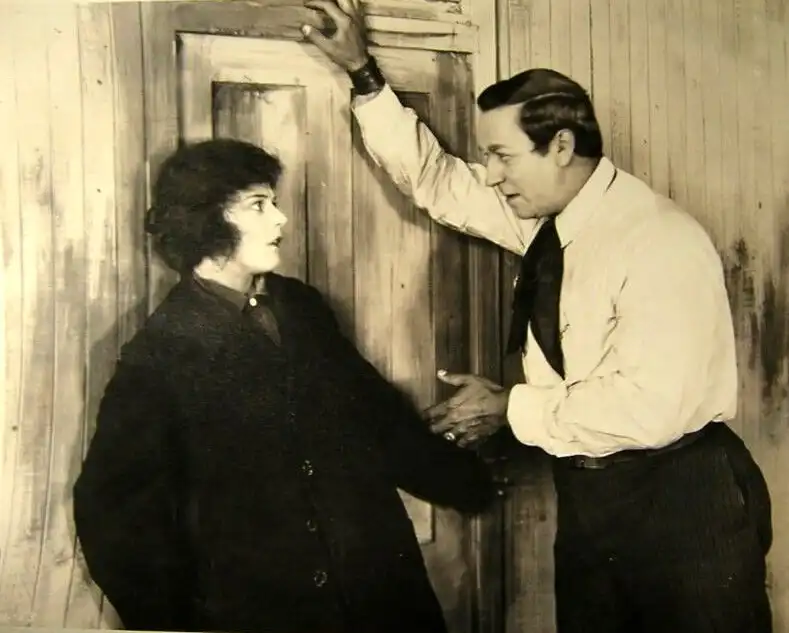
Dorothy Davenport as Mrs. Bronson, though, she tries. She really commits to the melodrama. There's a scene where she's hiding below deck, and her wide-eyed panic is almost comical, but you can't fault the effort. It's the kind of performance that might get a chuckle today, but you appreciate the earnestness of it.
The intertitles are... a lot. They often over-explain what's already clear from the action, or deliver lines that feel incredibly stilted. 'My heart is but a desolate sea, my son, upon which the waves of sorrow perpetually crash!' Something to that effect. You read it and just think, 'Did anyone actually talk like this?'
Later, when Mrs. Bronson finally makes her move to board the ship, it's a whole sequence of creeping around that feels stretched thin. The tension should be palpable, but instead, it's just slow. You're waiting for someone to catch her, or for the scene to just end.
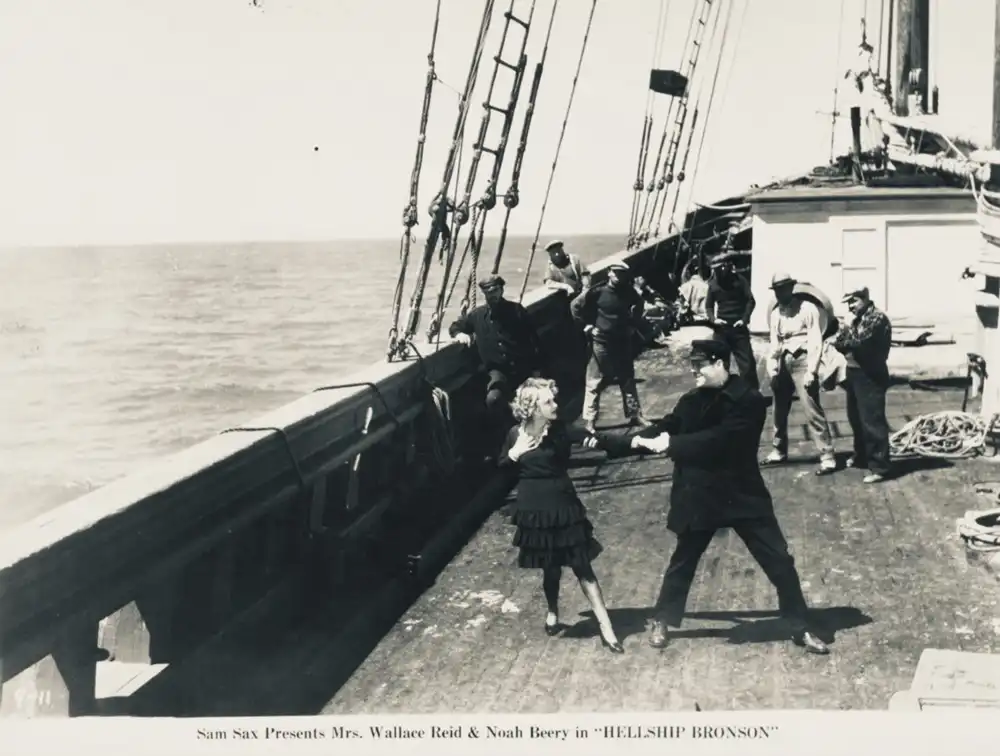
The ship itself looks alright, for a studio set. Some of the exterior shots of the vessel at sea are clearly miniatures, and not particularly convincing ones. You can almost see the strings, or at least the bathtub. It pulls you out of the 'grand adventure' vibe the film is trying to cultivate.
However, there's a small moment, just a beat, when the older Bronson (played by James Bradbury Jr., who takes over after the time jump) catches a glimpse of Mary looking at his son. There's a flicker across his face, a mixture of recognition and something like regret, that feels genuinely human. It’s a brief break from the general broad strokes.
The film tries to balance the heavy drama of betrayal and long-lost family with some lighter moments, mostly involving Harry Watson's character, the comic relief sailor. These bits almost never land. They feel tacked on, like someone decided the audience needed a chuckle amidst all the suffering, but the jokes are just... not funny. They mostly just interrupt the already wobbly dramatic flow.
The storm sequence, while a bit rudimentary in its effects, does manage to create a bit of genuine peril. The frantic movements of the crew, the swaying camera – it actually feels like something could go wrong, which is more than you can say for some of the emotional beats earlier on.
Watching this, you find yourself admiring the sheer earnestness of it all, even as you're stifling a giggle during a particularly exaggerated gasp or a prolonged, tearful embrace. It’s a historical curiosity, really. A window into what passed for high drama almost a century ago.
By the time the various secrets are revealed and the emotional reckonings begin, you're either completely invested in the melodrama or you've checked out entirely. It wraps up exactly as you’d expect a silent film of this type to, with a neat bow, but the journey to get there is a bumpy one. It's less a smooth sail and more a series of lurches.
So, yes, it's a Hellship. But perhaps not in the way the title intended.

IMDb 6.6
1932
Community
Log in to comment.