DbcultAccessing Vault...
5.4/10
Senior Film Conservator
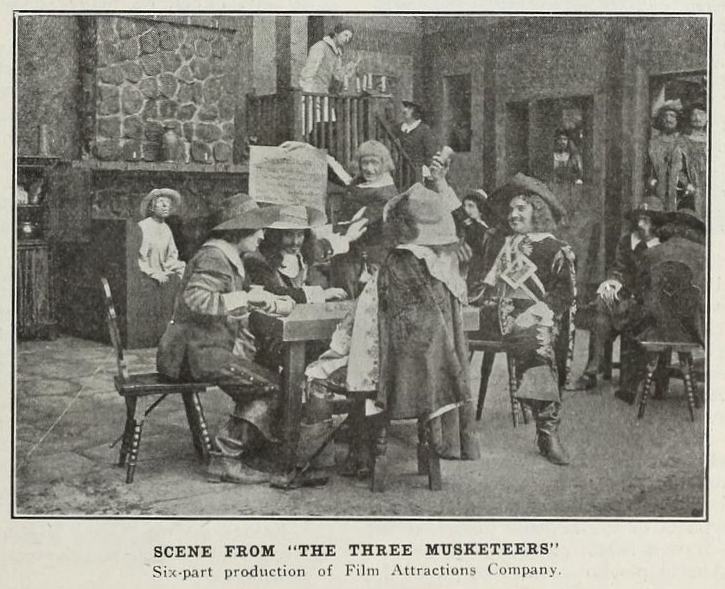
A definitive 5.4/10 rating for a film that redefined the boundaries of cult cinema. The Three Musketeers remains a cornerstone of transgressive art.
Stepping into the cinematic landscape of 1914 with The Three Musketeers is an experience that transcends mere historical curiosity; it’s an immersion into the very nascent art of long-form narrative filmmaking. This ambitious adaptation of Alexandre Dumas’s timeless novel, arriving at a pivotal moment in cinema’s evolution, showcases a bold commitment to epic storytelling without the benefit of spoken dialogue or sophisticated soundscapes. It’s a testament to the power of visual storytelling, where every gesture, every intertitle, and every dynamic composition must carry the weight of character, plot, and emotion. The film, a grand spectacle for its time, invites us to consider how these early pioneers translated sprawling literary works into a language understood universally through light and shadow.
The narrative unfurls with a palpable sense of impending drama, immediately establishing the Machiavellian machinations of Cardinal Richelieu, a character whose cunning is etched into every frame through the actor's piercing gaze and deliberate movements. His political vendetta against the Queen, fueled by a desire for absolute power, forms the bedrock of the conflict. The introduction of the Duke of Buckingham, lured to Paris by a forged letter, is a masterstroke in setting the stage for royal scandal and personal betrayal. This early exposition, conveyed through concise intertitles and expressive performances, efficiently draws the audience into a world rife with conspiracy. It’s a stark reminder that even in an era without the intricate dialogue of modern cinema, the essence of political intrigue could be powerfully communicated, relying on universal human emotions like jealousy and ambition.
D'Artagnan's arrival in Paris is a pivotal moment, painted with strokes of both comedy and pathos. His dilapidated horse and unfashionable attire immediately mark him as an outsider, a figure ripe for ridicule. The incident at the Black Raven Inn, where he is beaten and robbed of his crucial letter by De Rochefort, is more than just a plot device; it’s a brutal initiation into the harsh realities of a city governed by intrigue and casual violence. This early humiliation, however, serves to temper the young Gascon's spirit, igniting a fiery resolve that will define his journey. The portrayal of D'Artagnan, even in these early silent sequences, captures his essential blend of naiveté and unwavering courage, making him an instantly empathetic protagonist. We witness his growth not just through action, but through the subtle shifts in his demeanor, a hallmark of strong silent acting.
The Cardinal's edict prohibiting dueling and gambling in public places is a clever narrative device, instantly creating tension and highlighting his authoritarian grip. The scene where Boniface betrays the Musketeers, leading to a deadly confrontation with the Cardinal's Guards, is executed with a kinetic energy that belies the film's age. The ensuing skirmish, though limited by the technical constraints of the era, still conveys the ferocity of the fight, with Athos wounded and his comrades arrested. Porthos's powerful escape and rescue of Aramis demonstrate the unbreakable bond of the Musketeers, even before D'Artagnan officially joins their ranks. This sequence effectively establishes the Musketeers as defiant figures, living by their own code in opposition to the Cardinal’s iron rule. Their recklessness and loyalty are vividly brought to life, setting them apart as true heroes.
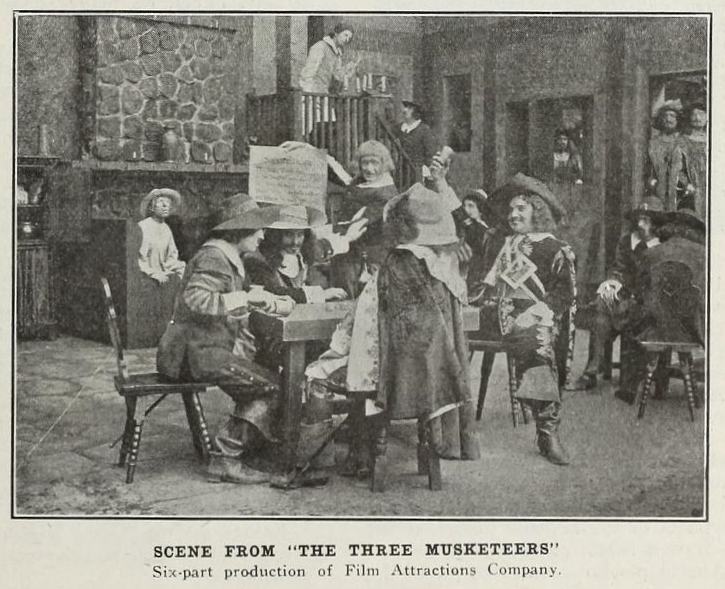
D'Artagnan's first day in Paris is a whirlwind of misadventure and destiny. His simultaneous offense of Athos, Aramis, and Porthos, leading to three duels, is a wonderfully comedic yet crucial sequence. The absurdity of the situation—all three Musketeers finding themselves challenged by the same hot-headed newcomer—sets the stage for their legendary meeting. The interruption by Captain Jussac and the Cardinal's Guards is a stroke of genius, forcing the adversaries to unite against a common enemy. The Musketeers' defiant cry, 'Come and take them!', is a moment that resonates with timeless heroism. D'Artagnan's decision to side with them, his swift dispatch of an adversary, and his heroic act of saving Athos from Jussac, cement his place. The subsequent pledge, 'One for all and all for one,' is more than just a motto; it's the birth of a legend, beautifully rendered through crossed swords and determined gazes. This scene, more than any other, captures the spirit of camaraderie and courage that defines the story.
The Queen's predicament, caught between the King's jealousy and Richelieu's schemes, forms the emotional core of the royal intrigue. The King's gift of twelve diamond studs, intended as a gesture of reconciliation, becomes a potent weapon in the Cardinal's arsenal. Buckingham's secret admission to the Queen's presence, witnessed by the insidious Lady De Winter, escalates the tension. This clandestine meeting, depicted with a compelling sense of urgency, highlights the immense personal risk the Queen undertakes. Lady De Winter's immediate report to Richelieu, and his triumphant revelation to the King, underscore the constant surveillance and betrayal permeating the court. The Queen's hurried decision to give the studs to Buckingham as a token, and Constance's warning of the King's approach, create a breathless sequence of near-discovery. The King's subsequent rage and demand for a search, culminating in the Cardinal finding an unaddressed letter, momentarily diverts suspicion, but Richelieu's defeat is temporary, a mere setback for his relentless plotting. This intricate dance of deceit and near-misses is a testament to the film's ability to build suspense without relying on dialogue, using visual cues and exaggerated expressions to convey the high stakes.
Richelieu, undeterred, masterminds a new scheme: dispatching Lady De Winter to London to steal two of the Queen's diamond studs, setting the stage for public humiliation at the state ball. The Queen's despair and her plea to Constance for aid propel the plot forward with renewed urgency. Boniface's betrayal of Constance, revealing his allegiance to the Cardinal, adds another layer of personal drama and underscores the pervasive corruption. D'Artagnan's intervention, rescuing Constance from her treacherous husband and the Cardinal's guards, not only showcases his chivalry but also tragically results in Boniface's death. This moment is fraught with ethical complexity, a necessary evil in D'Artagnan's protective embrace of Constance. The ensuing conversation between D'Artagnan and Athos about women and betrayal, where Athos reveals his tragic past with Lady De Winter (then under another name, a branded felon he believed he had executed), is a powerful, if brief, moment of character depth. It hints at the dark undercurrents beneath the dazzling surface of court life, making the villainy of Milady even more poignant and personal. This revelation adds a layer of emotional resonance that elevates the film beyond a simple adventure tale, touching on themes of love, betrayal, and justice, much like the intricate moral dilemmas explored in The Cloister and the Hearth.
Entrusted with the Queen's message, D'Artagnan, accompanied by the Musketeers, embarks on his perilous journey to England. This segment of the film transforms into a thrilling chase, a true test of loyalty and courage. Richelieu's counter-moves, sending De Rochefort to Calais, ensure that every step of D'Artagnan's mission is fraught with danger. The ambush on the road, where the Musketeers bravely fight off superior numbers to ensure D'Artagnan's escape, is a powerful demonstration of their 'one for all' ethos. Their willingness to sacrifice themselves for the mission and their comrade underscores the profound bond they share. The subsequent events at Calais, with Lady De Winter's cunning boarding of Buckingham's ship and D'Artagnan's desperate, audacious escape in an open boat under fire, are executed with a gripping sense of urgency. The silent film medium, in these action sequences, relies heavily on rapid cuts, dynamic staging, and the expressive physicality of the actors to convey speed and peril, much like the early action spectacles of the era, though perhaps less fantastical than A Trip to the Wonderland of America, focusing instead on human drama.
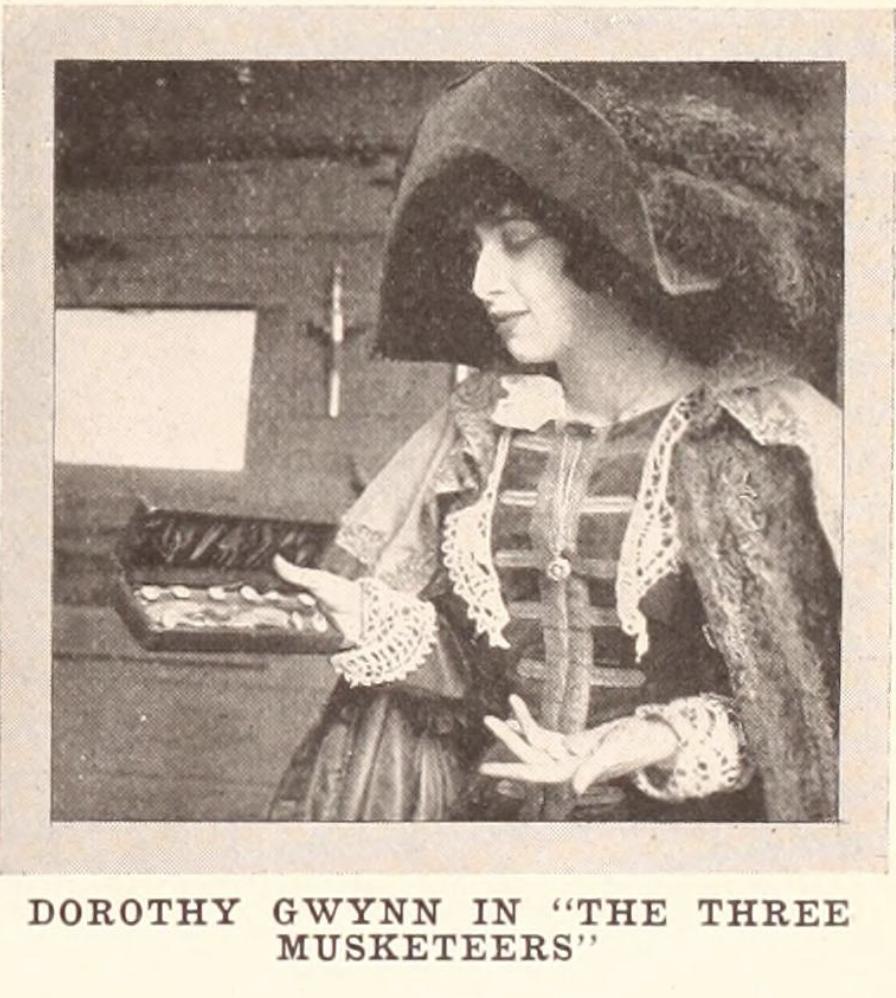
On Buckingham's ship, the tension escalates. Lady De Winter, an embodiment of treacherous beauty, deftly steals two of the diamond studs while Buckingham interviews D'Artagnan. The Duke's initial suspicion of D'Artagnan, accusing him of complicity with Milady, creates a moment of intense drama. It is Constance's cross, given to D'Artagnan, that becomes the unexpected key to unlocking a deeper truth. Buckingham's recognition of the cross, and his exclamation, 'The woman who gave you that cross is my daughter!', is a revelation that profoundly alters the stakes. It not only establishes a familial connection but also imbues D'Artagnan's mission with a deeply personal significance. This twist, while perhaps melodramatic by modern standards, perfectly fits the grand romantic scope of the Dumas narrative. D'Artagnan's perilous swim ashore, escaping capture, and his subsequent near-fatal encounter with a greedy innkeeper, further highlight his resilience and the constant threats he faces. These sequences, though brief, underscore the brutal realities of the world he navigates, where even a moment of respite can turn deadly. The sheer volume of obstacles thrown in D'Artagnan's path, from political adversaries to common criminals, creates a relentless sense of adventure, akin to the relentless pursuit in The Beloved Adventurer.
The climax of the film, the state ball, is a masterclass in silent film suspense. Lady De Winter's premature return to Paris and her delivery of the stolen studs to Richelieu, coupled with the Cardinal's manipulation of the King to advance the date of the ball, create an almost unbearable sense of impending doom for the Queen. The grand staircase, crowded with courtiers, and the elegant gavotte, provide a stark contrast to the Queen's internal despair. The King's insistence that she wear the studs, and Richelieu's triumphant call for attention to her bare neck, represent the peak of the Cardinal's insidious plot. Constance's selfless offer to take the blame for the missing diamonds is a moment of profound loyalty and sacrifice, elevating her character beyond a mere love interest. The scene is meticulously built, allowing the audience to feel the Queen's desperation. The visual storytelling here is paramount; the expressions of fear, triumph, and despair are conveyed through exaggerated, yet effective, facial acting and body language, ensuring the emotional impact is clear even without dialogue.
D'Artagnan's opportune, dramatic return with the diamond studs is the film's cathartic release, a moment of pure heroic triumph. The Queen's re-entry into the ballroom, adorned with the jewels, transforms her despair into vindication. The immediate aftermath, where D'Artagnan reveals Buckingham's paternity to Constance, is a tender, personal reward amidst the public spectacle. However, Richelieu, ever the wily antagonist, refuses to concede defeat easily. His demand to count the studs, revealing only ten, provides a brief flicker of renewed hope for his scheme. Lady De Winter's dramatic entrance, producing the two missing studs and recounting her supposed procurement, is meant to be her moment of ultimate victory and the Queen's final downfall. This moment of false triumph, however, becomes her undoing. The subsequent recognition by Athos, who proclaims her a thief and dramatically exposes her branded shoulder, is a stunning revelation. The horror on the faces of the courtiers, and the King's dawning realization of the conspiracy, mark the definitive turning point. This public shaming, a stark visual representation of justice, is a powerful moment of poetic retribution, reminiscent of the dramatic unveilings in great historical dramas like Julius Caesar where hidden truths come to light with devastating consequences.
The film culminates in a satisfying resolution of both personal and political conflicts. Lady De Winter's arrest, despite her desperate appeals to the Cardinal, signifies the collapse of Richelieu’s grand scheme. The King's banishment of the Cardinal is a moment of decisive justice, restoring order to the court and reaffirming royal authority. His subsequent apology to the Queen, and leading her to the dance, symbolizes reconciliation and the triumph of truth over deception. D'Artagnan, the impetuous Gascon who arrived in Paris with nothing but a sword and a father's advice, has not only saved the Queen's honor but also found his greatest reward in Constance. Their union, forged through shared peril and unwavering loyalty, represents the personal triumph within the larger political drama. The film, in its entirety, is a remarkable achievement for its time, demonstrating the nascent power of cinema to adapt complex narratives, create compelling characters, and evoke strong emotions without the aid of spoken words. It’s a testament to the enduring appeal of Dumas’s story and the ingenuity of early filmmakers. The grand scale, the intricate plot, and the unforgettable characters ensure that even a century later, this silent rendition of The Three Musketeers remains a captivating piece of cinematic history, a vibrant precursor to the swashbuckling adventures that would follow for decades to come.
IMDb —
1926
Community
Log in to comment.