DbcultAccessing Vault...
Cult Review
Senior Film Conservator
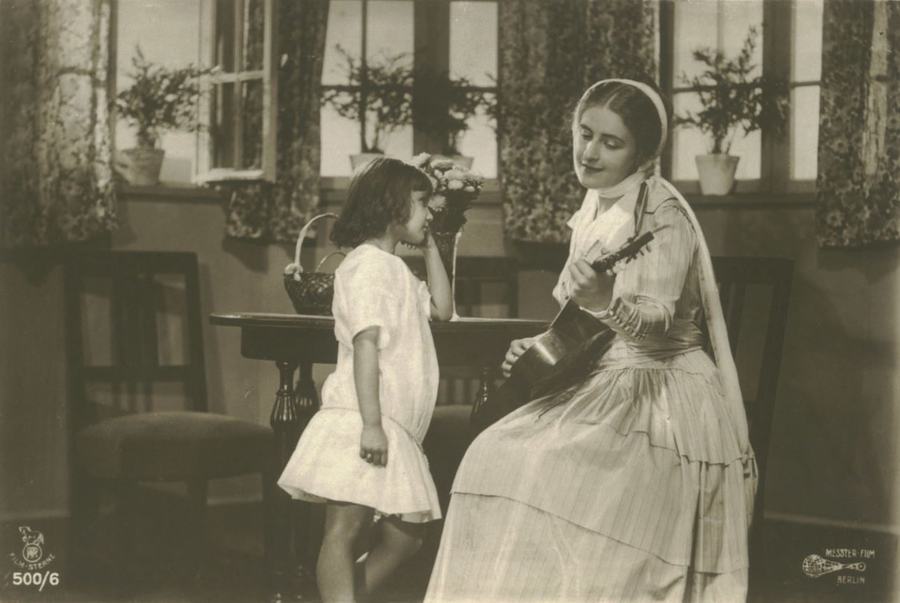
Stepping back into the hallowed halls of early 20th-century German cinema, one often encounters a tapestry woven with grand emotions, stark moral dilemmas, and the captivating luminescence of its stars. Among these cinematic relics, 'Der Ruf der Liebe' (The Call of Love), a film whose very title promises an exploration of profound human connection, stands as a testament to the era's storytelling prowess. While perhaps less globally renowned than some of its contemporaries, this particular feature, anchored by the incomparable Henny Porten, offers a compelling window into the societal anxieties and individual yearnings that defined its time. It’s a film that, even a century later, manages to resonate with a quiet power, inviting us to ponder the eternal struggles of the heart against the unyielding forces of convention.
The genius of Fritz Delius's narrative lies in its simplicity, yet its profundity. We are introduced to Elara, portrayed with breathtaking sincerity by Porten, a young woman whose life, while seemingly tranquil in a picturesque coastal village, belies a spirit yearning for something more. Her world is one of routine, of the sea's rhythmic ebb and flow, until the arrival of Captain Viktor, played with a nuanced gravitas by Heinrich Peer. Viktor is a figure of authority and allure, his naval uniform a stark contrast to the rustic attire of the villagers. He represents a world of sophistication, adventure, and, crucially, a forbidden romance. Their gazes, initially fleeting, soon deepen into an unspoken dialogue, a silent acknowledgment of a magnetic pull that defies societal boundaries and moral codes. The film masterfully builds this tension, relying on subtle gestures, lingering looks, and the powerful language of unspoken desire, a hallmark of the silent era's ability to convey complex emotions without a single spoken word.
Elara's burgeoning affection for Viktor is not without its silent witness. Klaus, her childhood friend and a hardworking fisherman, brought to life by the understated performance of Hans Mühlhofer, harbors a deep, unwavering love for her. His devotion is a quiet counterpoint to the tempestuous passion brewing between Elara and Viktor. Klaus represents stability, familiarity, and a love that is perhaps too comfortable, too expected, to capture Elara's imagination in the same way Viktor's forbidden charm does. Mühlhofer’s portrayal of Klaus is particularly poignant; his eyes, often filled with a melancholic understanding, convey the agony of unrequited love and the helplessness of watching the one you cherish drift towards a potentially ruinous path. This dynamic creates a powerful emotional triangle, where each character's internal struggle is amplified by the presence of the others, making the stakes incredibly high.
As the clandestine meetings between Elara and Viktor grow more frequent, so too do the whispers within the close-knit village. Reputation in such communities is a fragile thing, easily shattered by gossip and suspicion. The film deftly portrays the oppressive weight of societal judgment, a theme that resonates deeply with other melodramas of the period, such as Miss Peasant, which also explored the challenges faced by women navigating restrictive social landscapes. Elara finds herself increasingly isolated, caught between the fiery intensity of her feelings and the cold reality of public disapproval. Her family’s standing, a cornerstone of her identity, begins to crumble under the relentless scrutiny. Viktor, too, is not immune to the pressures. A man of duty, bound by his marriage vows, he grapples with an internal conflict that threatens to tear him apart. Peer’s performance here is critical; he must convey a man torn, not merely by lust, but by a genuine, albeit complicated, affection, battling against his own conscience and the expectations of his station. The 'call of love' becomes a siren song, luring both characters towards a precipice, forcing them to confront the potentially devastating consequences of their desires.
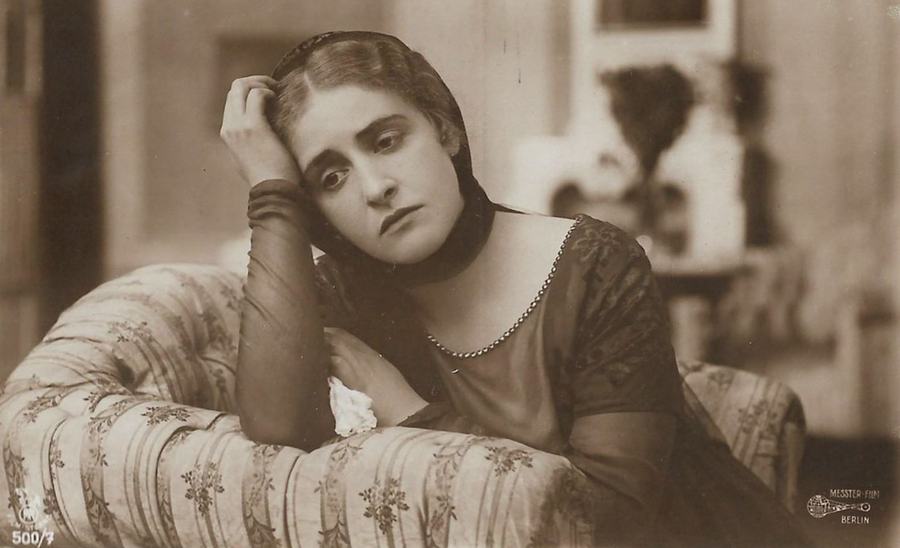
Henny Porten, a luminous figure in German silent cinema, delivers a performance in 'Der Ruf der Liebe' that is nothing short of mesmerizing. Her ability to convey a spectrum of complex emotions through subtle shifts in facial expression, the slightest tremor of a hand, or the eloquent language of her eyes, is a testament to her profound artistry. She embodies Elara's journey from innocent yearning to anguished despair with an authenticity that transcends the limitations of the silent medium. One particular scene, where Elara gazes out at the sea, her face a tableau of longing and resignation, speaks volumes without requiring a single intertitle. It reminds one of the raw emotional power seen in films like Den sorte drøm, where Asta Nielsen similarly captivated audiences with her intense, internal performances. Porten’s Elara is not merely a victim of circumstance; she is an active participant in her own destiny, making choices, however painful, driven by a love so potent it overrides all other considerations. Her portrayal elevates the film from a simple melodrama to a profound character study, demonstrating why she was such a revered star of her time.
The direction, though uncredited in many records beyond Fritz Delius’s writing, exhibits a keen understanding of visual storytelling. The use of the coastal landscape is particularly effective, with the vast, unpredictable sea serving as both a metaphor for Elara's turbulent emotions and a backdrop for the dramatic events unfolding. The stark contrast between the cozy confines of the village and the expansive, often melancholic, ocean vistas underscores the internal and external conflicts at play. The cinematography, while perhaps not groundbreaking for its era, is competently executed, ensuring that the emotional beats are clearly communicated. There are moments of striking visual poetry, particularly in the scenes depicting Elara's solitude, where the play of light and shadow on her expressive face conveys more than any dialogue could. This careful attention to visual detail is a common thread in many silent films that have stood the test of time, such as A hercegnö pongyolája, where setting and atmosphere are integral to the narrative.
Fritz Delius, primarily known as an actor, demonstrated a remarkable aptitude for crafting compelling narratives in his capacity as a writer for 'Der Ruf der Liebe.' His screenplay is a delicate balance of romantic idealism and stark realism, refusing to shy away from the harsh consequences of societal transgression. The plot structure builds inexorably towards a climax where Elara is forced to make a decision that will irrevocably alter the course of her life. This narrative arc, while familiar in melodramatic conventions, feels fresh due to the depth of characterization and the authentic emotional performances. Delius understood the power of the unspoken, allowing the actors to convey much through their physicality and expressions, rather than relying on overly verbose intertitles. This economy of storytelling is a hallmark of effective silent film writing, making the viewing experience engaging and emotionally resonant.
The supporting cast, particularly Heinrich Peer as Captain Viktor, provides the necessary foil to Porten's Elara. Peer embodies the internal struggle of a man torn between duty and desire with a quiet intensity. His portrayal avoids caricature, presenting Viktor not as a villain, but as a flawed individual caught in an impossible situation. The subtle hints of regret and genuine affection in his interactions with Elara add layers of complexity to his character, preventing him from becoming a mere plot device. Similarly, Hans Mühlhofer's Klaus is more than just the 'other man.' He is the embodiment of steadfast, unrequited love, a tragic figure whose quiet suffering mirrors Elara's own in a different register. Mühlhofer’s performance is a masterclass in subtlety, conveying deep emotion through restrained gestures and sorrowful glances. The interplay between these three central figures forms the emotional core of the film, creating a palpable sense of tension and pathos that draws the audience deep into their plight. This kind of intricate character work elevates 'Der Ruf der Liebe' beyond many of its contemporaries, placing it alongside character-driven dramas like When Love Is King in its exploration of romantic complexities.
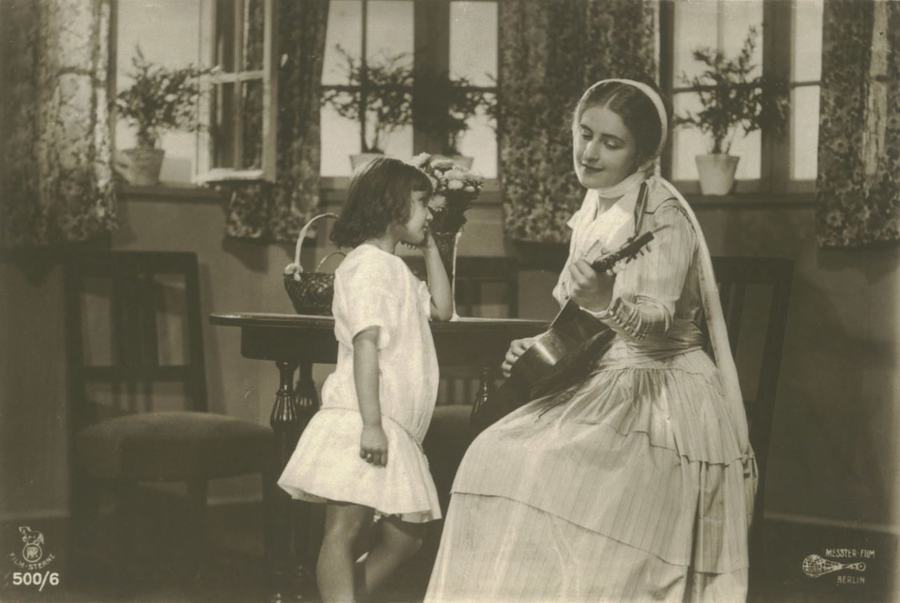
At its heart, 'Der Ruf der Liebe' is a profound meditation on sacrifice. Elara's journey is one of immense personal cost, where the pursuit of genuine affection demands a relinquishing of societal acceptance, family honor, and perhaps even her own future. The film starkly illustrates the formidable power of societal norms and expectations in an era where reputation could make or break an individual, especially a woman. The 'call of love' is presented not as a blissful escape, but as a perilous path fraught with obstacles and pain. This exploration of sacrifice is a recurring motif in silent cinema, often seen in films where characters defy convention, such as Her Wayward Sister, which similarly delves into the consequences of unconventional choices. The film challenges the audience to consider the true cost of authenticity and the often-cruel dictates of a rigid moral code. It compels us to ask: Is love, however powerful, worth such a devastating price?
Beyond the romantic entanglement, the film also offers a subtle commentary on class distinctions and the limitations they imposed. Viktor, a naval officer, belongs to a different social stratum, his world one of privilege and duty, while Elara's is one of humble necessity. Their love, therefore, is not just forbidden by marital vows, but also by the invisible, yet impenetrable, barriers of class. This adds another layer of tragic inevitability to their story, reminiscent of the social commentaries embedded within films like With Serb and Austrian, which often explored the friction between different societal groups. The film suggests that true love, while capable of transcending these barriers in spirit, often succumbs to their practical realities, leaving a trail of broken hearts and shattered dreams in its wake.
While 'Der Ruf der Liebe' might not possess the immediate recognition of some of its more widely distributed counterparts, its artistic merit and historical significance are undeniable. It showcases the formidable talent of Henny Porten at the peak of her powers, demonstrating her range and emotional depth. For enthusiasts of silent cinema, particularly those interested in German melodrama, this film offers a rich and rewarding viewing experience. Its themes of forbidden love, sacrifice, and societal pressure are timeless, ensuring its continued relevance even in an entirely different cinematic landscape. The film serves as a reminder of the foundational storytelling techniques that laid the groundwork for modern cinema, proving that powerful narratives do not always require dialogue or elaborate special effects to move an audience.
The rediscovery and restoration of films like 'Der Ruf der Liebe' are crucial for understanding the full scope of cinematic history. Each rediscovered frame, each perfectly preserved intertitle, offers invaluable insights into the cultural, social, and artistic sensibilities of a bygone era. It allows us to appreciate the craft of pioneers like Fritz Delius and the enduring star power of actors like Henny Porten, who, through their art, captured the very essence of human experience. In an age saturated with digital spectacle, there is a profound beauty in returning to these foundational works, to witness the raw power of storytelling in its purest form. Much like exploring the intricacies of The Reincarnation of Karma, understanding 'Der Ruf der Liebe' offers a deeper appreciation for the nuanced narratives crafted in early cinema.
Ultimately, 'Der Ruf der Liebe' is more than just a historical artifact; it is a vibrant, emotionally charged drama that speaks to the universal human condition. It explores the intoxicating allure of passion, the crushing weight of expectation, and the agonizing choices that define our lives. It’s a film that lingers long after the final fade to black, its silent echoes resonating with the timeless truth that the call of love, however perilous, is often the most difficult to resist.

IMDb 6.3
1934
Community
Log in to comment.