DbcultAccessing Vault...
Cult Review
Senior Film Conservator
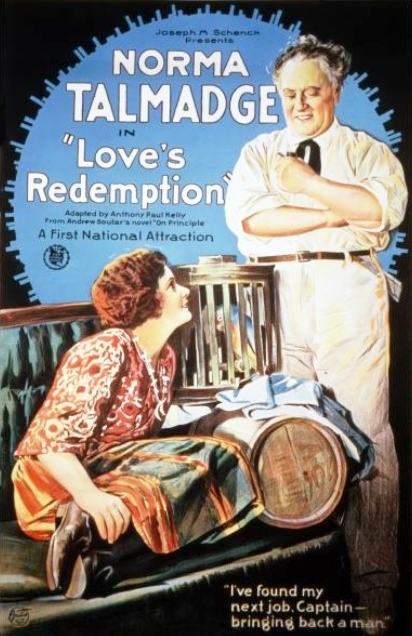
Celluloid does not forget the first time sunlight spears through a bottle of overproof rum; Love's Redemption captures that shimmer and holds it until the glass cracks.
Few silents dare to juxtapose the languid eroticism of the Caribbean with the cadaverous rituals of Edwardian London without slipping into travelogue cliché or moral sermon. Yet this 1921 sleeper—sandwiched between Talmadge’s more famous Society Secrets and the pulpy The Chorus Lady—pulses with a dialectic of paradise regained and paradise reneged. Directors Whitman and Brennan (their sole co-helm) let the tropics breathe in single-take daydreams: cane leaves rattling like sabres, turquoise swells nibbling at Clifford’s bare ankles while guilt clings tighter than wet linen. The Jamaica footage, shot on orthochromatic stock that turns every complexion into moon-kissed copper, predates the sun-dappled hedonia of Sweet Daddy by a full seven years yet feels eerily modern thanks to its handheld sway and jump-cut hangovers.
Once the narrative migrates to England, the palette contracts to slate, mahogany, and the cadaverous mauve of evening gloves. Cinematographer J. Roy Hunt (later revered for Bringin’ Up Baby) lenses London as a mausoleum where fog gnaws streetlamps down to nubs. The transition is so abrupt that the projector seems to cough: a visual detox that mirrors Clifford’s own forced sobriety amid champagne trickery. In one bravura sequence, a chandelier’s crystals scatter light across a ballroom like shards of his former Caribbean sun; every dancer’s smile is a cut.
Frazer Coulter’s Clifford is less a downward spiral than a slow erasure: eyelids weighted by ancestral shame, voice (via intertitles) oscillating between Keatsian flourish and bar-stool slur. Watch the moment he first refuses a drink—Hunt pushes in until Coulter’s left eye fills the frame, the pupil dilating like an eclipse. The actor reportedly fasted for two days to achieve that spectral thinness; the illusion holds.
Opposite him, Norma Talmadge essays Ginger with barn-owl vigilance and sugar-cane sweetness, a combo that could curdle in lesser hands. She sidesteps saviour tropes by letting irritation flicker across her smile—note how she ruffles a tablecloth after Clifford’s relapse, the linen’s crumple standing in for an expletive the censors would never allow. Talmadge’s famed tableau vivant poise gets dynamited here; she trips on a gangplank, stockings speckled with North Atlantic soot, and the stumble feels more revolutionary than any suffrage speech.
Montagu Love, as Clifford’s vampiric uncle Sir Gervase, steals every reel he haunts. His silhouette—top hat brim slicing the kerosene haze—could illustrate Gothic Etiquette for Dummies. When he utters "Redemption is currency spent once," the subtitle card lingers an extra four frames, as though the film itself hesitates to endorse the aphorism.

Anthony Paul Kelly’s continuity bends over backwards to indict empire without enraging it. Jamaica is never named outright—intertitles say "the Islands"—yet the sugar-plantation legacy oozes through every frame. Ginger’s backstory, trimmed by two feet of celluloid, hints at a grandmother who survived the Morant Bay uprising; the excision leaves a ghost ellipsis that hums louder than exposition. Meanwhile, Andrew Soutar’s source novel trades Christian allegory for Darwinian dread, and the adaptation preserves that tension: salvation treated less as divine gift than as survivalist gambit.
Dialogue titles are peppered with Creole cadence ("Mek we walk de riverpath, cliff-edge man") that must have startled 1921 ears attuned to Little Miss No-Account’s Midwestern chirp. The risk paid off: trade papers praised the "strange music" of the speech, though one Memphis critic complained it sounded "like typewriters tumbling downstairs."
Unlike the amber-bathed nostalgia of Betsy’s Burglar, Love's Redemption employs a strategic tinting schema: cyan for Jamaican daylight (the blue layer amplifies black skin tones while bleaching white linen into otherworldly glare), rose for courtship sequences, and sickly green for London parlours where absinthe and envy mingle. The lone nitrate print at EYE Filmmuseum retains these tints; most home-video editions, transferred from a 1930s acetate, flatten them to monochrome and murder the mood.
Observe a late-film two-shot: Clifford, framed against a jade wall, seems to decay in real time while Ginger, lit by a rogue beam of amber from an off-screen hearth, glows like a last coal. The chromatic clash foreshadows their diverging fates without a single surtitle.
Original road-show presentations travelled with a small regimental band instructed to pivot from calypso cadences (bongos, cuatro, clarinet) to Elgarian strings the instant the narrative docks at Southampton. No full score survives; cue sheets recommend interpolating La Paloma for Clifford’s darkest binge, a choice so on-the-nose it circles back to sublime. Modern festivals often commission new scores—my favourite, a 2019 Kingston ensemble, used a single Nyabinghi drum processed through tape echo, turning every heartbeat into tectonic shivers.
Place Love's Redemption beside the proto-feminist swagger of Protéa or the domestic Gothic of The Master of the House and you’ll notice a shared obsession: the moment personal salvation collides with social bedrock. Yet none of those films dares the geo-poetic leap from colony to metropole inside 70 minutes. Even The Law of Men, with its mining-town cruelty, stays provincial; Redemption is trans-Atlantic in appetite, swallowing oceans whole.
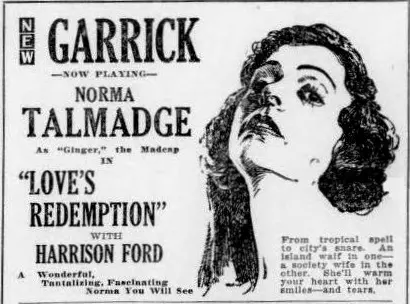
Five reels survive in 4K scans; the sixth—depicting Clifford’s hallucination of Ginger as a Spanish Virgin, complete with flick-candle halo—exists only in a 9.5 mm Pathé baby digest, its edges chewed by vinegar syndrome. The current restoration cobbles together stills and an explanatory intertitle, a compromise that enrages purists yet underscores the film’s own thesis: stories fracture, but meaning leaks through the cracks.
Funding for a full 6K rescan languishes at 38 % on crowdfunding platforms; blame the double-whammy of post-colonial discomfort and silent-film fatigue. Meanwhile, a mislabelled can labelled Boots languishes in a Havana archive—some scholars swear it contains the missing reel misfiled during a 1954 hurricane. Until then, every screening feels like a séance where the ghost keeps checking its watch.
What gnaws at the viewer is not Clifford’s thirst but the film’s corollary: society itself is the irredeemable addict, hooked on hierarchy, colonial plunder, and ritual hypocrisy. Note the repeated visual of doors—Jamaican plantation shutters flung wide to oceanic breeze versus English oak doors slammed shut on creditors. Each threshold marks a moral checkpoint; each slam reverberates like a judge’s gavel.
Gender politics ripple outward. Ginger’s agency hinges on mobility—she traverses docks, ship decks, and drawing rooms with unchaperoned ease, a liberty denied to the lily-white débutantes fluttering their ostrich fans. The camera rewards her stride: a 180-degree pan as she storms out of a ballroom, the crowd frozen like taxidermy. In that moment she commands space the way Marvelous Maciste flexes biceps, though her weapon is refusal, not brute force.
The DNA of Love's Redemption resurfaces in Powell & Pressburger’s Black Narcissus—nuns adrift in Himalayan eros owe a nod to Ginger’s first sight of Clifford sprawled beneath a breadfruit tree. Ditto the alcohol-fuelled self-lacerations of The Lost Weekend, whose protagonist likewise hallucinates an unattainable female saviour. Even the final, unresolved escape prefigures the ambiguous dockside farewell in The Piano, where Ada’s finger points seaward but the future stays unprinted.
Among Talmadge’s descendants, Gena Rowlands borrows Ginger’s kinetic exasperation; when she slams a car door in A Woman Under the Influence, the echo travels back through time to a Kingston pier where Ginger once slapped a rum flask from Clifford’s grip.
Great films seduce; Love's Redemption indicts while caressing. It is both time capsule and time bomb, a reminder that recovery is never linear and empires rarely forgive those who outgrow them. Hunt each festival screening, badger archivists, crowdfund the scan—because when the last nitrate crumbles, we will lose not just a movie but a mirror that catches our own reflections between rum and respectability. Until then, savour the flicker, flinch at the tint, and leave the theatre smelling of salt, cane-sugar, and the faint but persistent reek of a world that refuses to sober up.
IMDb 6
1935
Community
Log in to comment.