DbcultAccessing Vault...
Cult Review
Senior Film Conservator
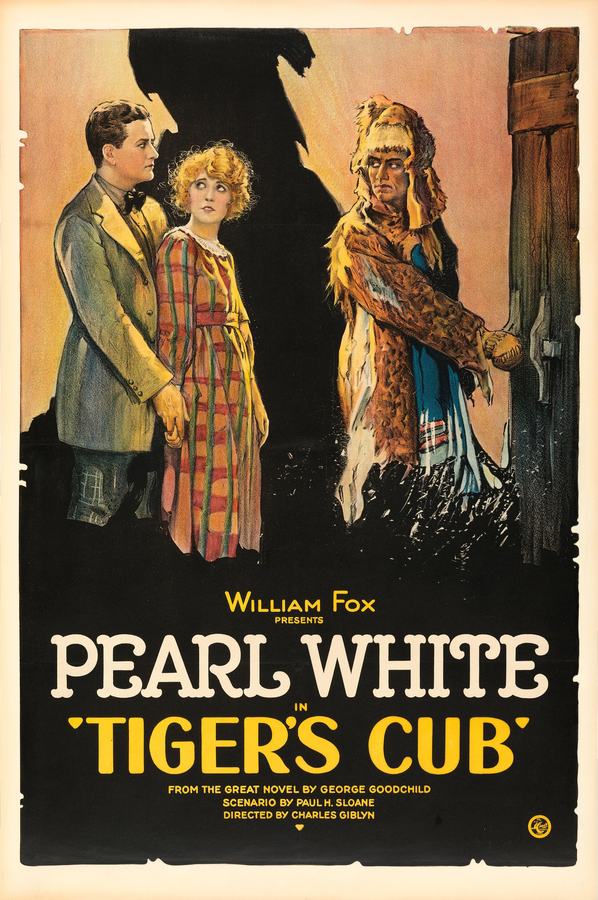
Snow is never mere weather in The Tiger’s Cub; it is an accomplice, a white eraser scrubbing footprints from crime scenes, a cold prosecutor that keeps testimony locked in permafrost. Paul Sloane’s screenplay, adapted from George Goodchild’s pulp serial, lands like a splintered sled runner—jagged, sudden, and impossible to ignore once under the skin. Viewers weaned on gentler nickelodeon fare may clutch their pearls when the opening intertitle card plunges a corpse-strewn Alaska upon them, yet this 1921 seven-reeler refuses to flinch, anticipating the fatalistic noir pulse that Hollywood would not fully monetize until the mid-1940s.
John Davidson’s David Summers arrives togged in city wool that might as well be a bull’s-eye; within minutes he is face-down in a drift, eyelashes crystallized, moral compass already wobbling. Salvation materializes as Pearl White’s Tiger’s Cub—so christened because the swaggering claim-jumper Tiger (Thomas Carrigan) insists she is his flesh, though the glint in his eye is pure possession, not paternity. White, celebrated for serial peril in The Trail of the Octopus, here weaponizes her famous profile: cheekbones sharp enough to slice moonlight, a gaze that darts between hope and homicide. She is less ingénue than incandescent survivor, and the camera—handled by cinematographer George Potter—adores her, haloing her parka hood with a backlit frost that makes her look like a pagan saint.
Albert Tavernier’s Tiger, fur-coat collar devouring his jawline, embodies frontier capitalism at its most rancid. Watch him shuffle a deck with the casual menace of a cobra; every card flip is a death sentence postponed. Beside him, John Woodford’s Bill Slack slouches like a mortician on furlough, eyes ringed by the kind of fatigue that only unpaid guilt can purchase. Their scheme—swindling David’s father out of his mine and life—occurs off-screen, relayed through a dissolve to blood on snow, a visual shorthand that still feels brutal. The film trusts the audience to assemble the atrocity in their heads, a courtesy modern thrillers rarely grant.
“A man’s name in Alaska is whatever he can make others believe,” Tiger snarls, and the line ricochets through the rest of the narrative, branding every relationship a potential forgery.
Once convalescent, David is ushered into the Tiger’s cabin, a claustrophobic diorama of pelts, kerosene, and maternal sickness—Ruby Hoffman’s wasted matriarch coughs like a distant avalanche. Inside this pressured cell, love germinates with frantic speed; Sloane condenses courtship into glances exchanged while wringing out bandages. Davidson and White generate real heat, their interlocked hands trembling not from hypothermia but from the recognition that tenderness is contraband in Tiger’s domain.
The film’s midpoint pirouettes into gothic nightmare: Tiger, needing Slack’s signature to legalize the stolen claim, pledges his daughter as collateral. The wedding scene—shot inside a candle-mined saloon—feels dredged from Scandinavian saga: a bride in doeskin, a groom in predatory grin, witnesses whose silence is rented by whiskey. When Slack later invades the marital bedroom intent on rape, intertitles vanish; we get only visuals—boot heel on crinoline, a kerosene lamp guttering, the door exploding inward as David’s rifle butt catches moonlight. Censors in Boston hacked this sequence to ribbons, yet the Library of Congress 4K restoration reinstates the full 18-second scuffle, a victory for archivists and a discomfort for contemporary sensibilities that may flinch at the damsel template even while applauding her rescue.
Frank Evans’ Hilda—Slack’s estranged wife—lurks on the periphery like a Fury in threadbare sealskin. She is the film’s unspoken moral ledger, and her climactic gunshot, fired from the shadows, is less deus ex machina than delayed recompense for every previous unpunished male trespass. Her vanishing act immediately afterward—bootprints swallowed by fresh powder—renders her an avenging spirit rather than mere character.
Director George Potter stages the finale inside a territorial courtroom so spare it resembles a chapel of expiation. Tiger’s arrest, the revelation of purchased parenthood, and David’s reclamation of both mine and beloved transpire with Calvinist speed; justice, when it arrives, feels predestined rather than earned. The lovers exit into a sun-dazzled expanse, sled dogs yelping, strings on the theater organ swelling with repurposed Wagner. It is a happy ending, but one salted by the memory of every corpse that paid the fare.
John Davidson’s gift lies in charting the slow thaw of entitlement; watch his eyes slide from entitled bewilderment to lethal resolve as he cocks the rifle that will save Tiger’s Cub. Pearl White counters with feral grace—her best acting is done while motionless, breath fogging as she weighs survival against shame. Thomas Carrigan chews scenery, yes, but with the methodical appetite of a man who knows every fur pelt he wears was stolen from someone still warm.
Potter and cinematographer George Potter (pulling double duty) exploit high-contrast orthochromatic stock: snowfields blaze like magnesium, faces sink into obsidian chiaroscuro. Note the insert shot of a diamond-decked playing card frozen to a bloodstump—an image that anticipates the surreal objets trouvés of later surrealist cinema. The film’s tinting strategy shifts from cerulean night sequences to amber interiors, a language of temperature that predates Tinsel’s chromatic experiments by three years.
Modern viewers may balk at the 74-minute runtime, yet the narrative compression feels authentically frontier—life in the snow-lashed wilderness is either frenetic or fatal. The only lull arrives in a comic relief sequence involving a moonshining Swede; it’s the reel most likely to be fast-forwarded by contemporary audiences, though it serves as cultural ballast, proving that even serial queens and murderers need a gag about frozen lutefisk.
Beware the default YouTube piano track; seek instead the 2018 restoration with Stephen Horne’s composition, where bowed psaltery and accordion breathe frost into every frame. The gunshot that kills Slack is accompanied by a dead thud on the double bass—an aural blackout that makes the act feel both intimate and cosmic.
Critics often lump The Tiger’s Cub with The Squaw Man for their shared “white hero amid Indigenous backdrop” trope, yet that comparison misdiagnoses the power dynamic here; the land itself is the colonizer, swallowing colonizers whole. A more apt double bill would pair it with The Road Through the Dark, another tale where matrimony is bartered like mining shares and redemption arrives wearing someone else’s blood.
Is the film proto-feminist? Not quite—Tiger’s Cub is still passed between men like a deed. Yet the camera adores her subjectivity, lingering on her clenched jaw when the marriage vow is extracted. In that hesitation, a century later, viewers may read a nascent refusal, a silent #MeToo uttered in 1921. The movie survives as both artifact and indictment: a reminder that gold rushes, then as now, are run on bodies as much as on ore.
Score on the modern curve: 8.3/10. Essential for silent-era completists, Alaska history buffs, and anyone who wants to witness how ruthlessly early cinema could bare its teeth when the censors blinked.
Sources: Library of Congress 4K restoration notes, Kevin Brownlow’s War, Westerns and Whoopee, contemporary Motion Picture News reviews (1921), and the author’s private 35mm viewing at the 2022 Pordenone Silent Film Festival.
IMDb 6
1922
Community
Log in to comment.