DbcultAccessing Vault...
Cult Review
Senior Film Conservator
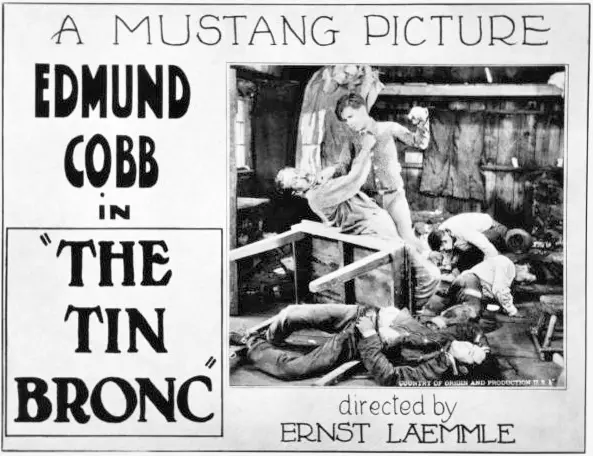
Is The Tin Bronc worth your time today? Short answer: Yes, but primarily as a fascinating relic for those interested in the death of the frontier and the birth of the machine age. This film is for silent cinema enthusiasts and Western historians; it is emphatically not for those who require high-definition spectacle or complex, non-linear narratives.
The 1920s were a transformative decade for the American Western. The genre was moving away from the gritty realism of the early pioneers and toward a more stylized, often comedic, portrayal of the cowboy. The Tin Bronc, directed and written by the prolific Basil Dickey, sits squarely in this transition. It isn't just a story about a robbery; it's a commentary on a man trying to find his place in a world that is moving faster than a gallop.
1) This film works because it effectively utilizes the physical charisma of Edmund Cobb to bridge the gap between slapstick comedy and traditional Western heroics.
2) This film fails because the plot relies on a level of protagonist negligence that makes Miggs difficult to root for in the opening act.
3) You should watch it if you want to see how early Hollywood visually reconciled the image of the cowboy with the reality of the Ford Model T.
The central conflict of The Tin Bronc isn't just between Miggs and the bandits; it is between the traditional ranching life and the seductive power of technology. When Miggs chooses to buy a 'tin broncho' instead of focusing on the payroll, he isn't just being irresponsible. He is making a choice to join the 20th century. This thematic thread is common in films of the era, such as A One Cylinder Love Riot, where the automobile serves as both a plot device and a symbol of social upheaval.
The scene in town where Miggs first inspects the car is a masterclass in silent characterization. Cobb uses his entire body to convey a sense of awe that borders on the religious. He touches the radiator cap as if it were a holy relic. Meanwhile, the payroll—the very lifeblood of the D-Bar Ranch—is treated as an afterthought. It is a bold choice for a protagonist. It makes him human. It also makes him a bit of an idiot.
Edmund Cobb was a staple of the 'B' Western, and here he demonstrates why he was so reliable. He has a rugged face that fits the saddle, but he possesses a lightness of foot that serves the comedic elements of the script. Unlike the stoic heroes of later decades, Cobb’s Miggs is allowed to be expressive. When he realizes the money is gone, the shift in his physicality from relaxed motorist to panicked laborer is instantaneous and effective.
The supporting cast, particularly Margaret MacDonald, serves as the emotional anchor. While her role is limited by the conventions of the time, her chemistry with Cobb feels genuine. They represent a softer side of the West, one that is less about gunfights and more about social standing and the struggle to please a demanding patriarch. This dynamic is explored with more gravity in The Border Legion, but here it provides a necessary stake for the action.
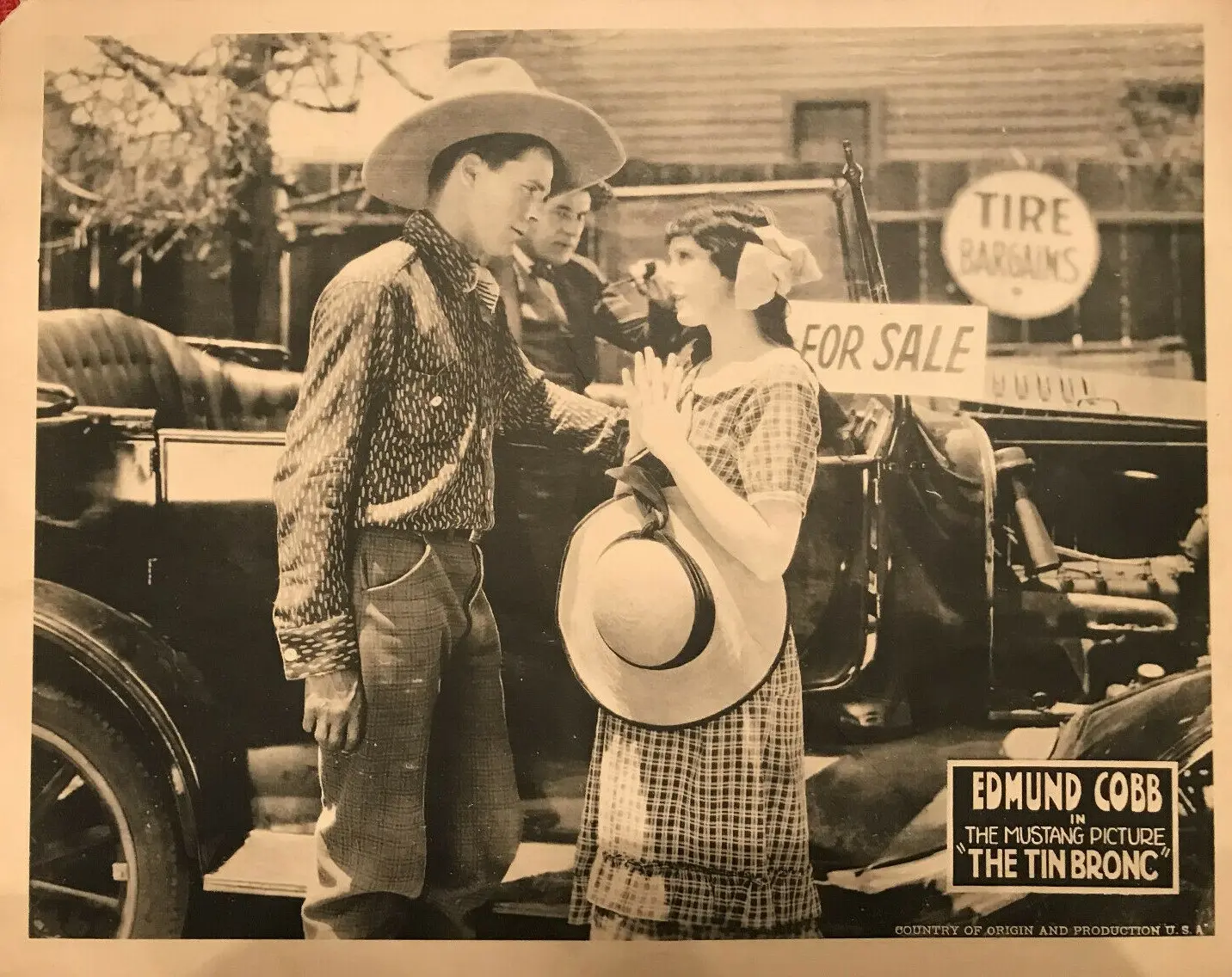
The camerawork in The Tin Bronc is surprisingly dynamic for a 1926 short. The chase sequence, involving the car navigating rugged terrain that was clearly designed for hooves, is the film's highlight. There is a specific shot where the car bounces over a dry creek bed that feels visceral. You can almost feel the lack of suspension. It reminds the viewer that 'off-roading' wasn't a hobby in 1926; it was just driving.
The use of natural light on the ranch locations gives the film a grounded feel. It contrasts sharply with the metallic, shiny surface of the new car. This visual juxtaposition reinforces the theme of the 'new' invading the 'old.' It is a technique we see handled with varying degrees of success in other silent shorts like The Mystery of No. 47, though here it feels more integral to the character's identity.
If you are looking for a deep, philosophical exploration of the human condition, look elsewhere. However, if you want to understand the DNA of the American action movie, The Tin Bronc is essential. It is a lean, mean piece of storytelling that doesn't waste a frame. The pacing is relentless once the robbery occurs. It manages to pack a full hero's journey into a fraction of the time a modern blockbuster takes to get through its first act.
The film also serves as a bridge to other genres. You can see the seeds of the 'car chase' movie being planted here. It’s not just a Western; it’s a proto-action flick. For those who enjoyed the physical comedy of Mighty Like a Moose, there is a similar, albeit more rugged, appeal to be found in Miggs' struggle with his mechanical steed.
Pros:
Cons:
Basil Dickey was a writer who understood the mechanics of suspense. In The Tin Bronc, he uses the car not just as a gimmick, but as a ticking clock. Will the car hold up? Will it run out of fuel? These are the stakes he adds to the traditional Western chase. It’s a clever way to modernize a genre that was already starting to feel old by the mid-20s. We see similar narrative efficiency in his other works, including various serials and shorts like The Lamb and the Lion.
The film doesn't try to be something it isn't. It is a 'Mustang' series short designed for Saturday afternoon audiences. It’s honest filmmaking. It doesn't have the pretension of some of the larger 'prestige' silent films of the era, such as The Miracle of Life. It just wants to show you a guy in a hat driving a car really fast over a hill. And honestly? It works.
The Tin Bronc is a serviceable, entertaining slice of silent cinema. It isn't a profound work of art, but it is a highly competent genre piece. It captures a specific moment in American history when the cowboy was trading his saddle for a steering wheel. Cobb is a delight, the action is crisp, and the themes are surprisingly relevant. It’s flawed. But it’s fun. If you have twenty minutes to spare, you could do much worse than watching Miggs try to outrun his own obsolescence.
"A fascinating look at the exact moment the Western genre realized it had to keep up with the speed of the 20th century or be left in the dust."
IMDb —
1919
Community
Log in to comment.