DbcultAccessing Vault...
7/10
Senior Film Conservator
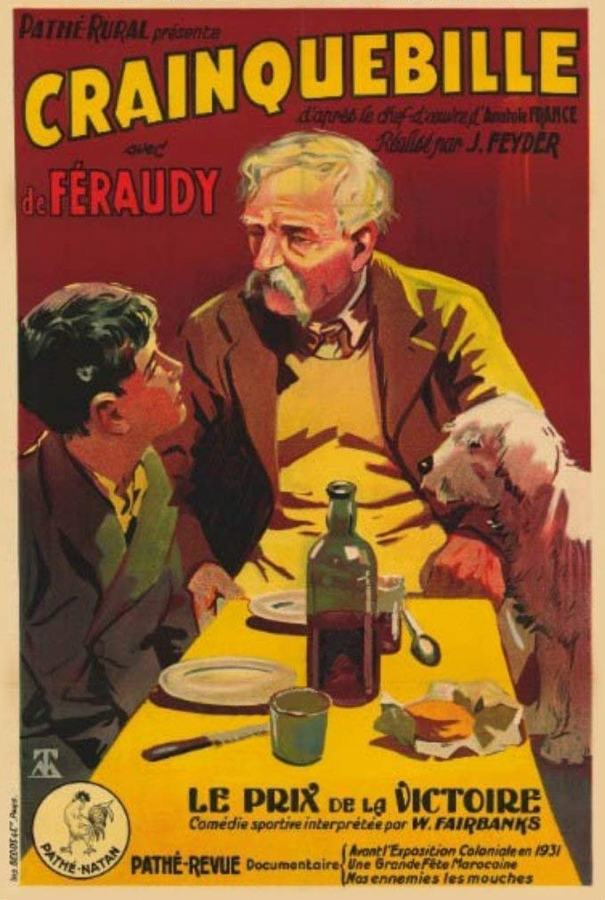
A definitive 7/10 rating for a film that redefined the boundaries of cult cinema. Crainquebille remains a cornerstone of transgressive art.
The first time I saw Crainquebille I walked out into drizzling midnight convinced that every city street had grown a thin layer of invisible moss—something soft, damp, quietly suffocating. Jacques Feyder’s 1923 film is less a narrative than a spore: once inhaled, it colonises your perception of civility, justice, even the sound of gavels. Nearly a century later, the picture still feels like a thumb pressed to a bruise that never quite heals.
Few silents risk lingering on the banal; they crave pirouettes, pie fights, melodramatic eye rolls. Feyder, adapting Anatole France’s 1901 novella, opts for the opposite: a scalpel incision so controlled you don’t feel the blood until the closing intertitle. The film’s 75-minute runtime is a masterclass in negative space—long stretches where nothing “happens” except the slow erosion of a man’s civic identity. In those hush-beaten interludes, you sense the entire bureaucratic digestive tract at work: mouth, gullet, bowel, sewer.
Feyder and cinematographers Léonce-Henri Burel and Maurice Forster shoot Paris as though it were a gigantic vertebra: arcades become spinal canals, courthouse columns resemble calcium deposits, the Seine looks synovial. Notice the recurring motif of thresholds—doorframes, iron gates, the brass rail of the magistrate’s bench—each one a cartilage barrier the peddler must cross while losing another layer of skin. The camera rarely moves; instead, the world shifts around Crainquebille, a visual reminder that power need not chase you when it can simply re-arrange the pavement beneath your clogs.
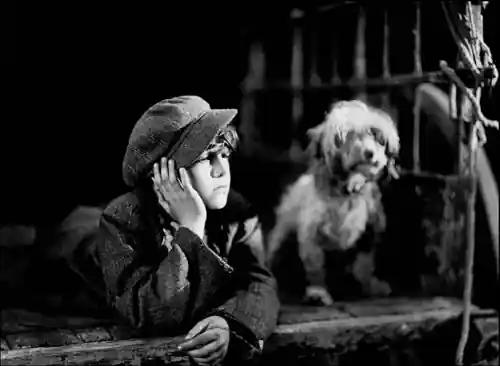
Colour preservationists will weep that the original nitrate carried subtle tinting—rose for dawn markets, arsenic-green for the prison infirmary, livid amber for the courtroom. Today’s 4K restoration (Edition Filmmuseum, 2022) reconstructs those hues via machine-learning guesswork; the result is a ghostly watercolor, as though the film itself had contracted jaundice from its own subject matter.
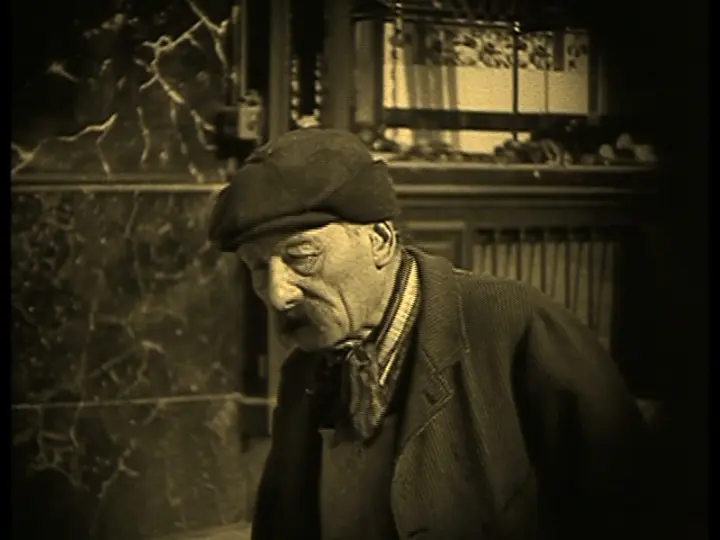
Casting directors talk about “lived-in faces”; Oudart’s is a condemned tenement. His cheekbones carry the architecture of eviction notices; the moustache droops like a wet flag of surrender. Watch the micro-shifts when the magistrate utters “thirty francs or fifteen days”: a single blink, a swallow that ripples the collar, the almost imperceptible tilt of the head as dignity leaks out through the ear canal. Silent cinema seldom gets credit for microscopic acting; here, Oudard turns minimalism into a hunger strike.
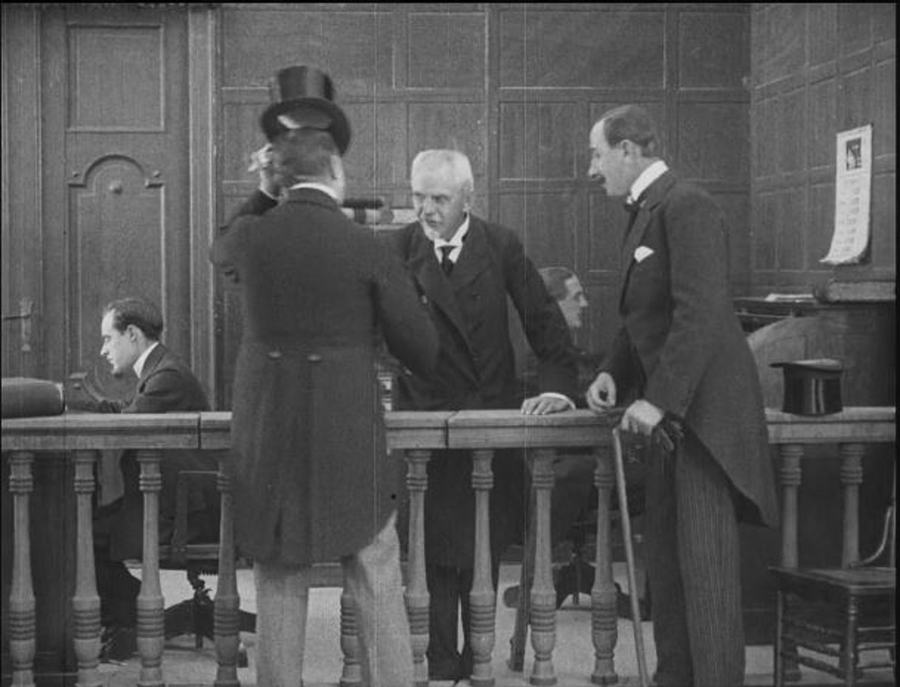
The trial sequence clocks in at barely eight minutes yet contains enough legal black comedy to fuel a Kafka anthology. The magistrate (Maurice de Féraudy) doesn’t roar; he sighs, as though sentencing men is a tedious chore akin to trimming corns. When Crainquebille attempts to explain—”I only said ‘mouchard’ (informer), not ‘vache’ (cow)” —the prosecutor yawns. The defense counsel, paid in wilted lettuce and centimes, recites his plea with the cadence of a bedtime story. The audience in the gallery rustles bonbons in paper cones; the sound editor amplifies every crinkle so that confectionery becomes the soundtrack of jurisprudence.
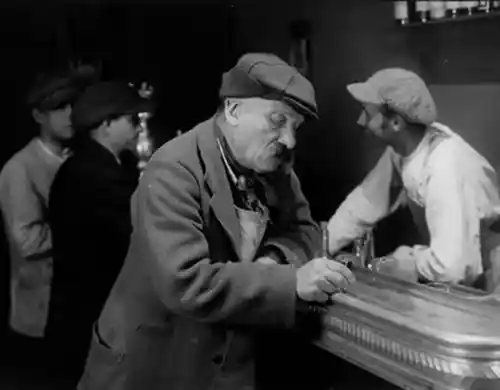
Compare this to the absurdist hopscotch of Doing Time or the expressionist panic of Shattered; Feyder refuses hysteria. The horror lies in how ordinary the carnage feels, like watching wallpaper peel during a medical diagnosis.
Once inside La Santé, the film swaps market-noir for something closer to medieval etching. Cells stack like pigeonholes; silhouettes of unseen inmates flap across stone, recalling the marginalia of a Book of Hours illustrated by Doré. A chaplain offers soup and scripture; Crainquebille declines both, understanding that salvation is merely another commodity he can’t afford. The camera lingers on a spider threading web between bars—an arachnid landlord collecting rent in flies.
Here Feyder interpolates a flashback structure daring for 1923: memories of hawking vegetables bleed through dissolves, as though the man’s past were trying to bust him out by force of nostalgia. Yet every recollection lands like salt on frostbite—brief warmth followed by sharper pain.
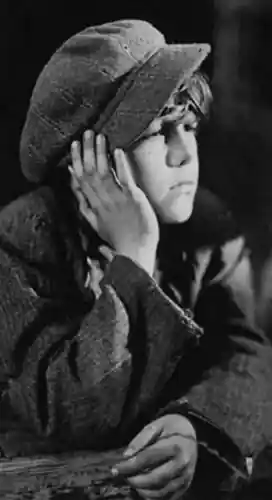
Jean Forest, a guttersnipe with irises the colour of dishwater, embodies the film’s only unalloyed grace. His character, Jérôme, survives by pilfering baguettes and sleeping inside rolled carpets. When he offers Crainquebille the brioche, the old man’s cracked acceptance feels sacramental—communion bread administered by a cherub who still believes in the currency of kindness. Their alliance lasts mere screen minutes yet reframes the entire narrative: if the state manufactures outcasts, the pavement manufactures solidarity.
Contrast this with the bourgeois charity in Jane Goes A’ Wooing, where goodwill comes garnished with piano-wire strings; Feyder insists that only the powerless can gift power without barter.
Although silent, the film is mixed for ears that haven’t heard it yet. Listen to the intertitles—sparse, sardonic, typeset like pharmacy labels. When Crainquebille mutters “On n’est pas des bêtes” (we are not beasts), the intertitle appears over a close-up of prison gruel, so the sentence seems to float atop the slop, unread, undigested.
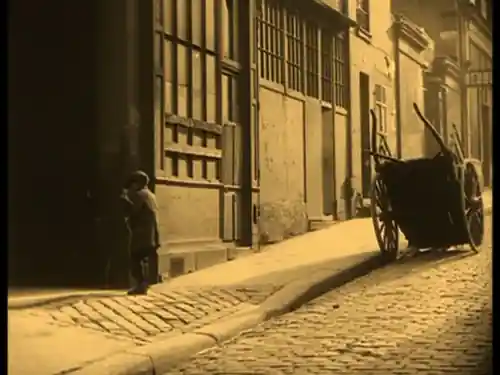
Composer André Gailhard’s 1924 touring score—recently unearthed in the Bibliothèque nationale—calls for muted trumpet, bassoon, and celesta. Synced to the restoration, the music slithers between major and minor like an earthworm on a razor. During the re-release at Cinémathèque Française last March, I timed the trumpet’s entrance: precisely at the moment Crainquebille’s cart is towed away. The audience gasped as though an umbilical cord had been snapped in C-sharp.
Françoise Rosay, later muse to Jean Vigo, plays La Caille, a cabbage seller who once flirted with Crainquebille over scale weights. After his arrest she evaporates from the plot, yet her absence throbs like phantom limb pain. In one insert shot, a market crate bears her initials scrawled in chalk; the camera holds long enough for us to notice the lettering half-rubbed-out by rain. It’s the film’s sole concession to romantic regret, and it lands harder than a death scene.
This stands in pointed contrast to the flapper exuberance of Ladies Must Dance or the pastoral eros of Kärlek och björnjakt; Feyder refuses to let affection become escapism. Love, like lettuce, wilts under the heat of municipal indifference.
Feyder’s cut grammar is ruthlessly elliptical. We never see the policeman write the ticket; the shot jumps from insult to iron gate slam. Likewise, the appeal hearing is dispatched in a single iris-in, a blackout that feels like a sack thrown over the head. The effect is cognitive whiplash: we share Crainquebille’s vertigo as process supplants person. Soviet montage theorists preached juxtaposition as propaganda; Feyder wields absence as indictment.
Critics often chain Crainquebille to Italian neorealism, yet its DNA splices everywhere: in Bresson’s Pickpocket, in Loach’s Hidden Agenda, even in the bureaucratic satire of Fünf Minuten zu spät. The phrase “délit de faciès” (loitering while looking poor) entered French slang via this film, and was revived during the 2010 banlieue protests. Students screened clips outside the Palais de Justice to shame magistrates; several public defenders admitted the movie changed how they addressed clients. Art rarely moves the machinery of power, but sometimes it rusts the gears.
Watching it post-pandemic, the scenes of market shutdowns and forced distancing carry a body-horror sting. When vendors disinfect their scales with vinegar, I flashed back to grocery queues of 2020, the way suspicion replaced sociability. The film predicts not just judicial cruelty but the criminalisation of poverty during crisis. Every era, it argues, invents new words—mouchard, loitering, lockdown—to exile the penniless from public space.
The last image—Crainquebille pushing his reclaimed cart toward a receding horizon of gas lamps—appears hopeful until you notice the constable shadowing him in the mid-distance. The cycle reboots; the film loops in your skull like a vinyl scratch. I left the theatre checking my pockets for an ID I hadn’t needed in years, half-expecting a stranger to demand proof I belonged on the sidewalk. Few movies weaponise empathy so subtly that you exit policing yourself.
Verdict: Essential viewing for anyone who still believes paperwork can’t kill. Stream it, but be warned—afterward, every municipal noticeboard glows like a warrant out for your humanity.
IMDb 7.3
1927
Community
Log in to comment.