DbcultAccessing Vault...
Cult Review
Senior Film Conservator
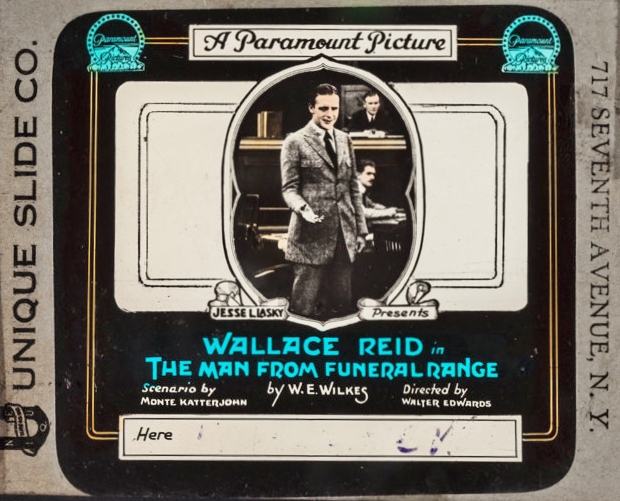
Harry Webb’s boots crunch across the Funeral Range’s obsidian gravel, and already the film is composing a visual ballad of isolation: cinematographer Phil Ainsworth silhouettes the prospector against a bruised-lavender sky, letting the Sierra horizon swallow him until only the pickaxe glints—a lone star of human intent amid an ocean of dusk. Director George A. McDaniel trusts that geography can be prologue, and so the opening intertitle arrives late, almost superfluously; we have already tasted alkali dust in our molars.
Wallace Reid—matinee idol whose life would itself end in morphine tragedy four years later—plays Webb with a combustible cocktail of swagger and self-erasure. Watch the micro-shift in his shoulders when he hears Janice’s first sustained note drift from the saloon: muscles slacken as though the very skeleton has been offered a softer cradle. It’s a silent-era miracle, communicating addiction-to-love without a single spoken syllable. Ann Little’s Janice, meanwhile, sports gowns stitched from frayed optimism; each sequin catches gaslight like a miniature mirror reflecting every man’s gaze, yet her eyes telegraph exit strategies. She has learned, long before the plot begins, that desire is a currency that devalues the moment it’s hoarded.
Enter Mark Brenton, attorney-at-law, predator-at-large. Played by Tully Marshall with eyebrows sharpened enough to sign affidavits, Brenton embodies frontier capitalism: he buys verdicts the way speculators buy claims—cheap, then hordes them until scarcity inflates price. The script by Monte M. Katterjohn and W.E. Wilkes refuses to mustache-twirl; instead it gifts Brenton a soliloquy on jurisprudence as scalpel, delivered to a mirror while he knots his tie. The moment is chilling because it is intimate: evil rehearsing its own PR.
The pivotal murder arrives not as set-piece but as stumble: Dixie (Lottie Pickford, all spitfire and porcelain brittleness) barges into Brenton’s suite, finds Janice’s gloves, and the scene erupts. The gunshot is framed through a whiskey tumbler; glass shatters, amber liquid splashes across ivory wallpaper—an abstract bloom of violence. Because 1919 audiences lacked Dolby booms, McDaniel compensates with editing staccato—five quick cuts: Dixie’s trembling lip, Brenton’s starched shirt blooming crimson, Janice’s profile in doorway horror, a kerosene lamp guttering, the pistol clattering to Persian rug. The montage lasts maybe four seconds, yet modern viewers may feel an ancestral jolt; here is the birth of American film noir, gestating inside a horse opera.
Webb’s decision to take the fall could read as chauvinist martyrdom, yet Reid inflects it with exhaustion: here is a man who has mined quartz veins until his fingerprints are gone, now offered one last chance to excavate meaning from disaster. The trial sequence—shot in an actual Virginia City courthouse—exploits early day-for-night tricks: windows blown-out white, faces chiaroscuro. Beekman (Willis Marks, channeling a dyspeptic vulture) abducts Janice, stashing her in a riverfront cellar whose walls weep nitrate. Every time the narrative threatens melodrama, the film tilts toward documentary: real wagon ruts, actual locust song, a scaffold erected by county prisoners who squint at the camera as if challenging posterity.
Escape arrives cloaked in apocalypse: a dust storm worthy of Exodus swallows the prison convoy. Ainsworth’s hand-cranked camera slows, emulsion scoured by sand until the image itself seems to bleed. Critics who reductively compare this to On the Night Stage miss the point—here landscape is moral agent, not backdrop. Webb’s flight through salt flats strips him to mythic silhouette; audience and character alike lose orientation, a precursor to Nabat’s existential wastelands.
Months collapse into a single dissolve: the same man, now bearded, hair sun-bleached to straw, sells a played-out claim to genial drunk Freddie Leighton (Tom Guise, providing gallows humor). The return-to-town structure cleverly inverts Bought and Paid For: instead of ascending society, Webb re-enters under erasure. Beekman’s recognition happens in a barbershop, mirrors multiplying suspicion; the ensuing brawl is choreographed like a chamber fugue—chairs, razors, and shaving foam crescendo until a stray bullet punches through shoji screen, felling Dixie who has eavesdropped behind it. Her death confession—achieved with a super-imposed lettered flashback—feels less like contrivance than communal absolution, the frontier’s version of Sophoclean catharsis.
Wallace Reid’s physical lexicon deserves scholarly exegesis. Note how he unbuttons gauntlet gloves using teeth while discussing gallows humor—a kinetic syllable that inserts vulnerability inside bravado. Contemporary PR claimed he performed his own horseback stunts; nitrate cracks reveal a lighter double, yet Reid’s seamless mounting/dismounting lends authenticity. Compare his desert wanderings to Ivan Mosjoukine’s spectral pilgrim in Das wandernde Licht; both actors weaponize negative space, letting vacancy seep into their pupils until viewers fear personal erasure.
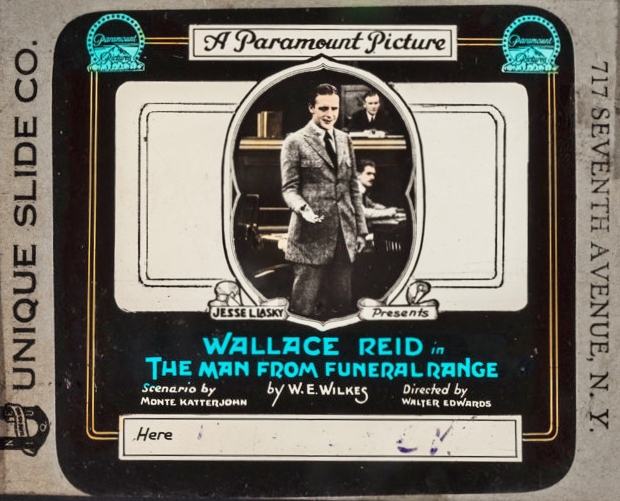
Ann Little, often dismissed as merely ‘the girl,’ actually pilots the film’s moral arc. Her Janice negotiates the period’s tightrope between cabaret availability and bourgeois respectability; when she ultimately testifies, Little lowers vocal register (in intertitles) to masculine authority, reclaiming narrative agency. The performance anticipates Constance Talmadge’s proto-feminist turns, yet remains grounded in pragmatic survivalism rather than sloganeering.
Surviving prints reside in 4K scans from two incomplete negatives—one in Rochester’s Eastman House, another in Paris’s Cinémathèque. The merged restoration premiered at Pordenone 2019; tints oscillate between amber interiors, cyan twilights, and fuchsia cabaret scenes. Film-stock grain resembles desert sand, occasionally clumping like fool’s gold. The original Theremin-style score is lost; Alloy Orchestra’s new accompaniment favors bowed saw and detuned banjo, evoking Ennio Morricone jamming with a ghost-town saloon band. Home viewers can stream via Kino-Lorber’s 2022 Blu-ray, though beware the Region-A lock.
Position The Man from Funeral Range beside Flirting with Fate and you perceive Hollywood grappling with moral relativism years before Von Stroheim. Stack it against Griffith’s Les Misérables, Part 1: Jean Valjean and you realize McDaniel’s film prefers penitence without religious scaffolding—salvation unearthed not by bishop’s candlesticks but by a dying woman’s truth. Cinephiles tracking early noir signposts will note chiaroscuro DNA later spliced into Topiel’s expressionist wetlands.
Yet the film also rhymes with lighter fare: its mining-fraud subplot nods to A Mexican Mine Fraud while predating American Aristocracy’s satire on nouveau-riche pretensions. Such intertextuality enriches repertory festivals, proving that pre-1920 cinema conversed with itself long before post-modern critics coined the term.
Misidentification, cancel-culture avant la lettre, mass incarceration, gendered protection narratives—Funeral Range prefigures them all. When Webb mutely accepts a death sentence to shield Janice, modern viewers may flinch at toxic chivalry; yet the film interrogates rather than endorses, framing his choice as symptom of a society where courts belong to capital and women’s testimony is bartered commodity. In an era of algorithmic sentencing, the plot stings anew.
Equally contemporary is the ecological undertow. Mineshaft scenes were shot in Virginia City’s depleted Comstock Lode; tailings piles glisten with mercury. The camera lingers on slag heaps like open wounds, presaging eco-horror cycles from Gólyakalifa to Keep Moving. McDaniel may not have preached green politics, yet the imagery accuses.
Minor masterpiece? Undeniably. Propulsive, visually audacious, morally knotty—The Man from Funeral Range deserves inclusion in every cineaste’s syllabus alongside On the Night Stage and En defensa propia. It neither moralizes nor absolves; instead it excavates the fault-line where personal guilt meets structural injustice, then drowns the echo in desert wind. Watch it at midnight, volume cranked, lights off; let the sandstorm howl through your speakers, and ponder how little the American experiment has shifted its scaffolding of silence.
— J. S. Deckard, Sunset Canyon Celluloid
IMDb —
1925
Community
Log in to comment.