DbcultAccessing Vault...
Cult Review
Senior Film Conservator
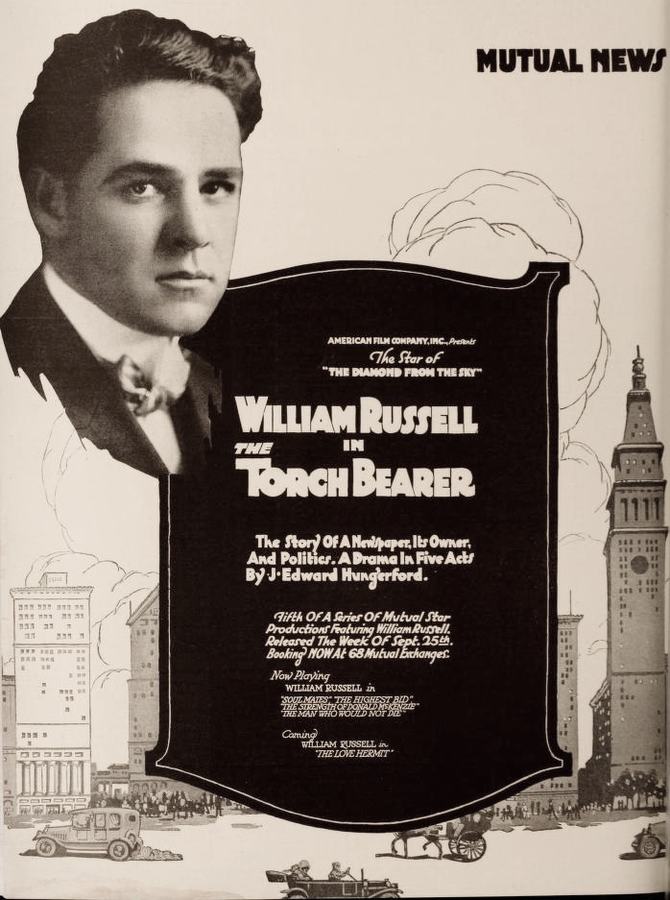
The year 1916 represented a pivotal threshold for American cinema, a period where the medium transitioned from ephemeral nickelodeon novelties to sophisticated feature-length narratives capable of exploring sociopolitical nuances. The Torch Bearer emerges from this era as a fascinating artifact of progressive-era optimism, blending the grit of investigative journalism with the whimsical tropes of the 'Western' girl archetype. Directed with a keen eye for the burgeoning visual language of the silent screen, the film serves as a vehicle for William Russell and Charlotte Burton, whose chemistry anchors a story that might otherwise have succumbed to the weight of its numerous subplots.
At its core, the film is an exploration of the 'Torch' as a symbol of truth—a flame held aloft by John Huntley-Knox (played with a stoic intensity by Allan Forrest). His role as the owner of the Boston Star isn't merely a professional designation; it is a moral imperative. In an age where the press was beginning to realize its power as the 'Fourth Estate,' Huntley-Knox’s war against corruption feels strikingly modern. This thematic preoccupation with municipal reform aligns the film with other contemporary works like Power, which similarly dissected the mechanics of political influence.
The collaboration between the press and the legal system, represented by William Wendell, provides a framework for the film's higher stakes. The corruption isn't just a vague antagonist; it is a tangible force that threatens the sanctity of the family unit. This mirrors the tension found in Alias Jimmy Valentine, where the past and present collide in a quest for societal redemption. In The Torch Bearer, the quest is for both civic purity and ancestral exoneration, as John unearths the confession that clears his father’s name—a plot device that adds a layer of 'whodunit' mystery reminiscent of Værelse Nr. 17.
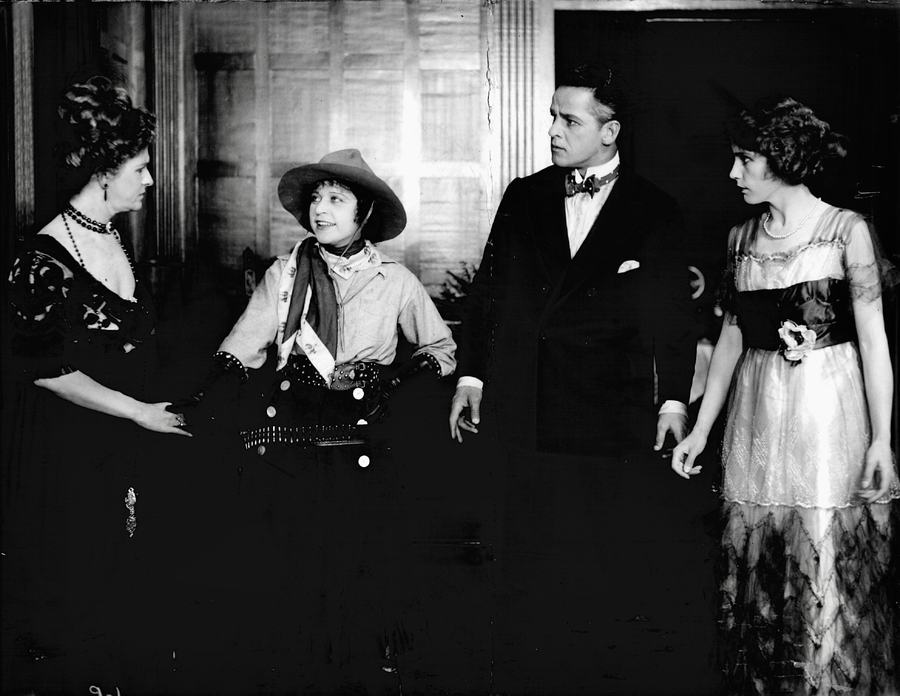
Perhaps the most engaging element of the film is Charlotte Burton’s portrayal of Janet Dare. The 'Western' girl was a popular trope in early cinema, often used to contrast the perceived decadence of the East with the rugged honesty of the West. However, The Torch Bearer subverts this by making the 'Western' identity a conscious performance. Janet’s decision to play the 'wild' girl is a brilliant act of psychological warfare against the snooty Huntley-Knox matriarch. It is a meta-commentary on the reductive nature of social labels, a theme explored with different cultural nuances in The Heroine from Derna.
Burton navigates this duality with a mischievous charm. Her 'tricks'—the boisterous behavior and disregard for etiquette—serve as a satirical mirror to the rigid Bostonian society. This playfulness provides a necessary counterpoint to the film's darker elements of murder and political ruin. One can see echoes of this tonal balancing act in the domestic comedies of the time, such as The Waybacks, though The Torch Bearer maintains a more consistent dramatic tension.
Technically, the film utilizes the limited tools of 1916 to great effect. The use of interior lighting to establish the oppressive nature of the political dens versus the airy, light-filled spaces of the Huntley-Knox estate creates a visual dichotomy that reinforces the narrative themes. While it lacks the avant-garde experimentation found in some European imports of the era, such as Skazka mira, its craftsmanship is solid and purposeful. The cinematography captures the physical comedy of Janet's antics with clarity, while the more dramatic sequences, particularly the kidnapping, utilize shadows to heighten the sense of peril.
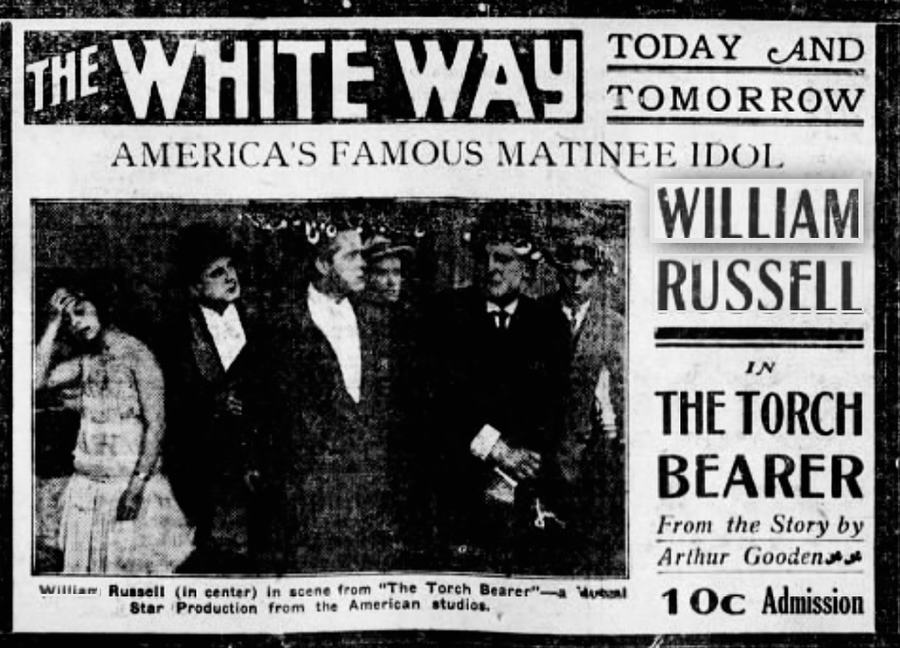
The inclusion of the Boy Scouts in the finale is more than just a quaint historical footnote; it reflects the zeitgeist of the mid-1910s. The Scout movement was seen as the pinnacle of civic preparation for young men, and their presence in the film’s climax serves as a symbol of the 'new generation' taking up the torch of justice. This mobilization of youth for a moral cause is a recurring motif in the era's propaganda and social dramas, often seen in more heavy-handed ways in films like The Heart of Humanity.
What makes The Torch Bearer stand out is its refusal to be pigeonholed into a single genre. It is a romance, yes, but it is also a crime procedural and a political manifesto. The discovery of the murder confession adds a layer of suspense that rivals the mystery elements of The Vanderhoff Affair or the shadowy intrigue of Green Eyes. The revelation that Janet is a wealthy heiress adds a fairy-tale quality to the ending, ensuring that the audience leaves the theater with a sense of complete emotional satisfaction.
The kidnapping sequence, while somewhat formulaic by modern standards, was a high-octane set piece for 1916 audiences. The tension of the 'wrong' girl being taken—Janet instead of Henrietta—adds a layer of irony. Janet’s ability to hold her own with a firearm is the ultimate payoff for her 'Western' masquerade. It suggests that while she was playing a part, she possessed the inner fortitude that the part required. This empowerment of the female lead is a refreshing departure from the 'damsel in distress' trope, a shift also observed in the gritty realism of Paws of the Bear.
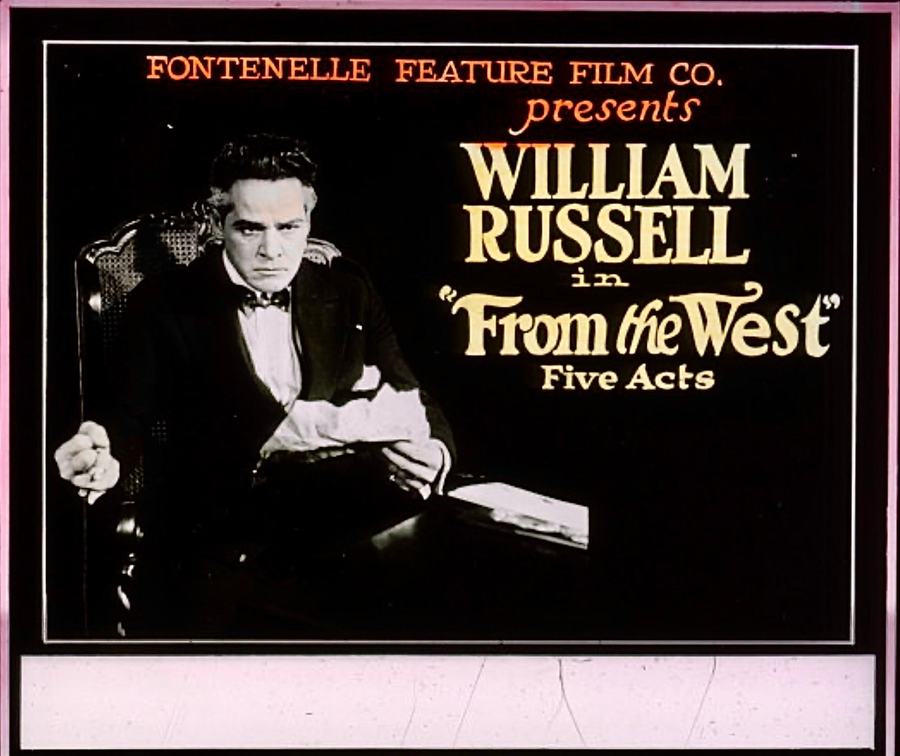
William Russell’s presence in the film is undeniable. As a star of the silent era, he possessed a physicality that translated well to the screen, whether he was portraying a sophisticated urbanite or a man of action. His chemistry with Charlotte Burton is the engine that drives the film's second act. The supporting cast, including the under-appreciated Marguerite Nichols and the versatile Harry Keenan, provide a solid foundation for the leads. The direction by Arthur Henry Gooden and the writing by J. Edward Hungerford demonstrate a keen understanding of pacing, ensuring that the transition between the comedic 'masquerade' scenes and the dramatic 'corruption' scenes feels organic rather than jarring.
In comparison to other 1916 releases like Irish Eyes, which leaned heavily into sentimentalism, The Torch Bearer feels more intellectually engaged with the world it inhabits. It doesn't shy away from the ugliness of political graft or the pain of a tarnished family reputation. Even the romantic resolution for Henrietta and Wendell feels earned, a secondary reward for their commitment to the reformist cause.
Reflecting on The Torch Bearer over a century later, one is struck by how much of its DNA remains in contemporary storytelling. The 'crusading journalist' and the 'woman with a secret' are archetypes that have been refined but never replaced. The film’s optimistic belief that corruption can be purged through the light of truth and the vigor of youth is a sentiment that, while perhaps naive in our cynical age, remains deeply moving.
While it may not have the epic scale of some wartime dramas or the psychological depth of later silent masterpieces, The Torch Bearer is a quintessential example of high-quality American studio production from the mid-1910s. It is a film that understands its audience, delivering a mixture of laughter, suspense, and moral triumph. For those interested in the evolution of the American narrative film, it is an essential watch—a bright, flickering flame in the vast archive of silent cinema. It stands alongside works like What Happened at 22 as a testament to the era's ability to weave complex plots into a coherent and entertaining whole.
Ultimately, the film's title is its most enduring message. To be a 'torch bearer' is to accept the responsibility of the past while lighting the way for the future. John Huntley-Knox and Janet Dare, in their own disparate ways, fulfill this role. They bridge the gap between the old world of family secrets and the new world of civic duty. In the end, the 'torch' is passed not just to the Boy Scouts on screen, but to the audience itself, invited to witness the triumph of light over shadow.
Reviewer's Note: For a deeper look at the era's fascination with female agency and masquerade, I highly recommend exploring Men Who Have Made Love to Me, which offers a much more provocative take on social performance.
IMDb —
1932
Community
Log in to comment.