DbcultAccessing Vault...
Cult Review
Senior Film Conservator
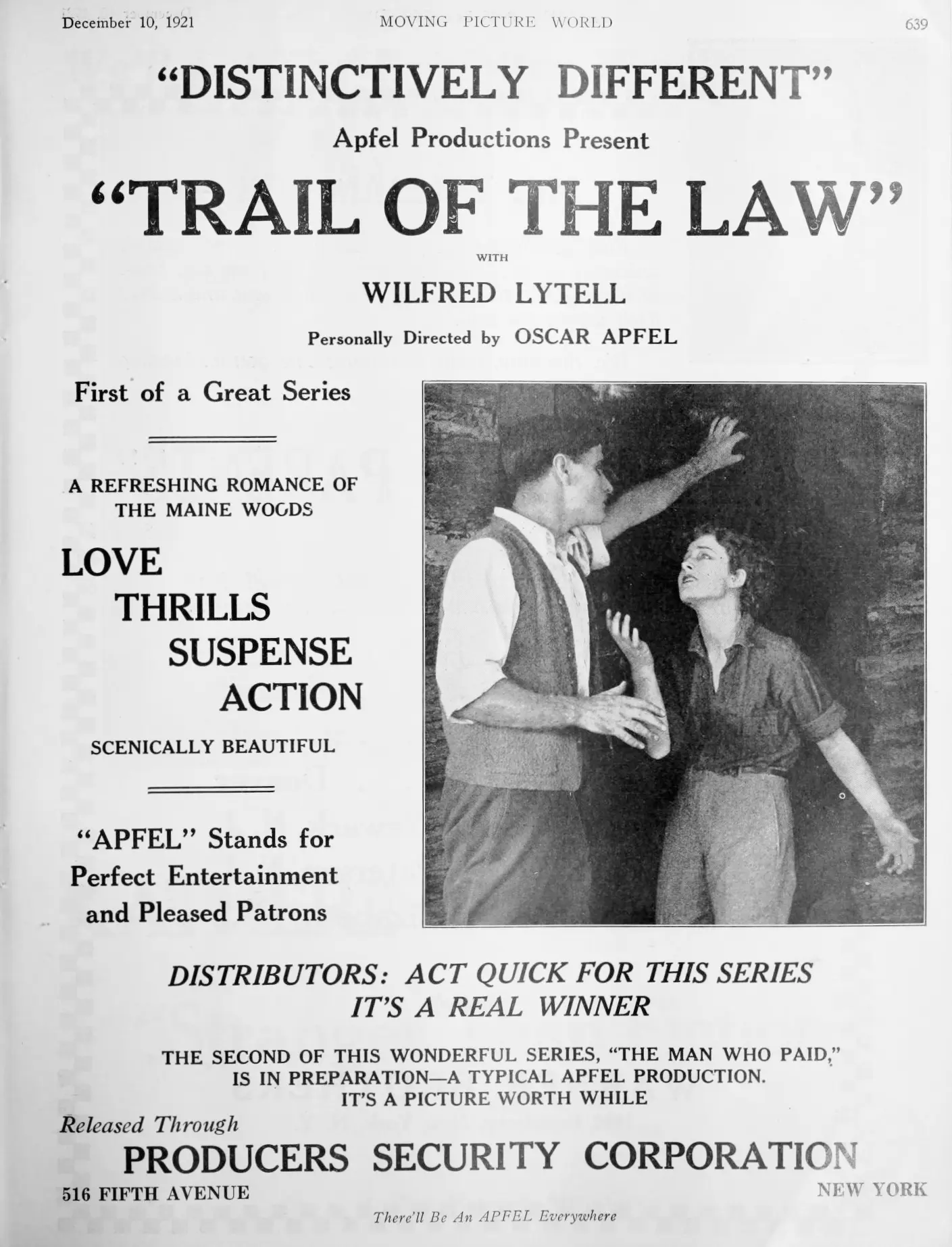
Stepping back into the silent era of cinema, one often finds gems that, despite the passage of a century, resonate with a surprising contemporary relevance. 'The Trail of the Law', a 1924 production, is precisely such a film. It's a narrative steeped in the raw, untamed essence of the Maine woods, a setting that is as much a character as any of the human players. This isn't merely a backdrop; it's a crucible, forging and testing the identities and moral compasses of its inhabitants. Marion Brooks' screenplay, though adhering to certain conventions of the period, manages to imbue the story with a potent blend of suspense, poignant drama, and a nascent exploration of gender roles that feels remarkably forward-thinking for its time. The film invites us to peel back layers of deception, to confront the legacy of violence, and to ponder the very nature of justice in a world where the law is often a distant echo.
At its core, the film presents a fascinating study of survival and identity through the character of a young woman forced to adopt a male persona. This isn't a whimsical masquerade; it's a desperate measure born from the harsh realities and inherent dangers of her isolated community. By day, she navigates the rugged terrain and social dynamics as a boy, a disguise that offers a shield against the vulnerabilities associated with her true gender in such a perilous environment. This daily transformation is a powerful visual metaphor for the societal pressures and limitations placed upon women, particularly in frontier or remote settings. It's a theme that, while perhaps not explicitly feminist in its original intent, certainly opens avenues for such interpretation today. One can draw parallels to other tales of disguised identity, though often for different reasons, like in The Lure, where deception serves a more predatory purpose, contrasting sharply with the protective necessity seen here.
Norma Shearer, in one of her earlier roles, delivers a performance that hints at the formidable talent she would later fully unleash upon Hollywood. Her dual portrayal is nuanced, capturing both the feigned bravado of the boy and the quiet vulnerability of the woman. It's a testament to her burgeoning skill that she can convey such complex emotional states without uttering a single word, relying solely on expression, gesture, and physicality. The shift from the confident, almost swaggering gait of her male disguise to the more reserved, perhaps even weary, demeanor of her true self in the sanctity of her home is subtly but effectively communicated. This early work provides a fascinating insight into the development of an actress who would become one of the most celebrated stars of her generation, a true icon of the silver screen. Her ability to command attention and convey deep emotion in these formative years is truly remarkable.
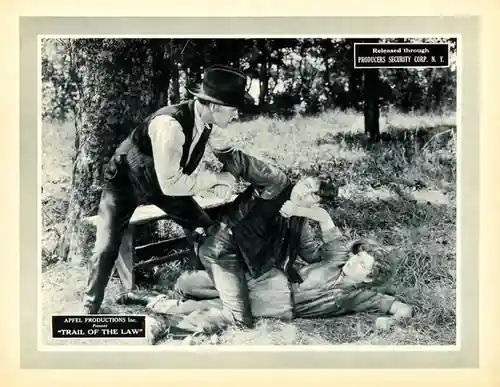
The tragic backstory of her mother's murder by a renegade figure years prior casts a long, dark shadow over the narrative. This unresolved trauma fuels her father's singular, unwavering quest for vengeance, a theme that resonates deeply within the human psyche. The father, a man hardened by grief and the unforgiving wilderness, embodies a primal sense of justice, one that exists outside the formal strictures of the law. His oath to avenge his murdered wife is not just a plot device; it's the very engine of the story, driving much of the conflict and character motivation. This potent cocktail of grief and the pursuit of retribution is a timeless narrative element, found in countless tales across cultures and eras. It's a raw, visceral emotion that the silent film medium, with its emphasis on visual storytelling and heightened emotion, was particularly adept at conveying.
The narrative masterfully builds tension as the identity of the renegade slowly comes into focus, revealing itself not as some elusive, distant antagonist, but as a chillingly familiar figure: a nasty neighbor. This revelation amplifies the stakes considerably, transforming a quest for abstract justice into a deeply personal, immediate confrontation. The proximity of the villain makes the threat palpable, the betrayal more profound. Richard Neill, as the vengeful father, delivers a performance that is both stoic and simmering with barely contained rage. His portrayal captures the essence of a man pushed to his breaking point, a figure who, having lived outside the conventional reach of the law for so long, feels compelled to mete out his own brand of frontier justice. The climax, where the father confronts the villain, is a powerful depiction of raw human emotion, a near-descent into homicidal fury that is both terrifying and tragically understandable.
It is at this critical juncture that Wilfred Lytell's character, the young man from the city, steps in as a pivotal force. His arrival introduces an element of external civilization, a different moral framework into the wild, untamed world of the Maine woods. Lytell is not merely a romantic interest; he embodies a more formalized, perhaps more merciful, interpretation of justice. His intervention, preventing the father from crossing the line into murder, is a crucial thematic turning point. It suggests that while the desire for vengeance is powerful and understandable, there is a higher moral ground, a different path towards resolution. This dynamic between primal retribution and a more measured form of justice is a compelling aspect of the film, echoing debates that continue to resonate in society today. The nascent romance between Lytell and the daughter adds another layer of complexity, hinting at a future where love and a different kind of order might prevail over the cycle of violence.
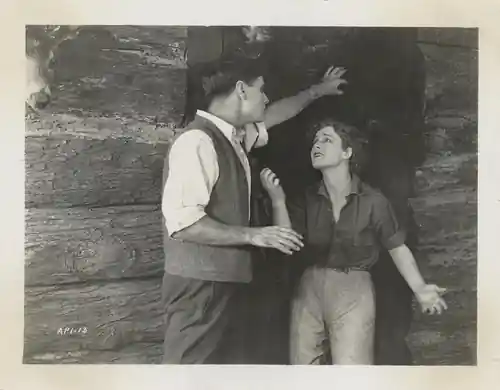
Beyond the central figures, the supporting cast, including Charles Byer, George Stevens, and John P. Morse, contribute to the tapestry of this wilderness community, each adding texture to the film's gritty realism. Their performances, though perhaps less prominent, are integral to establishing the authentic atmosphere of the settlement, a world far removed from urban sophistication. Marion Brooks, as the writer, demonstrates a keen understanding of dramatic pacing and character development, crafting a narrative that, despite its silent nature, speaks volumes. Her ability to weave together themes of identity, vengeance, and nascent romance within a tightly structured plot is commendable. One might compare the intricate plotting to other melodramas of the era, such as Her Great Match, but Brooks' particular strength lies in grounding these grand emotions in a stark, believable environment.
The direction, though not explicitly credited in the provided details, effectively utilizes the natural landscape of the Maine woods. The cinematography, even when viewed through the lens of early 20th-century technology, manages to convey both the beauty and the brutal indifference of nature. Long shots establish the isolation of the settlement, while closer frames emphasize the emotional turmoil etched on the characters' faces. The use of natural light and shadow would have been crucial in creating atmosphere, enhancing the sense of danger and mystery that pervades the story. Silent films, by necessity, relied heavily on visual storytelling, and 'The Trail of the Law' is a fine example of how effectively this could be achieved, with every gesture, every set piece, and every frame contributing to the overall narrative impact. This visual eloquence is a hallmark of the era, often overlooked in favor of later sound films, but deserving of careful appreciation.
'The Trail of the Law' serves as an excellent artifact for understanding the thematic concerns and narrative conventions of early American cinema. It showcases the burgeoning star power of Norma Shearer, the enduring appeal of vengeance narratives, and the fascinating ways in which silent films tackled complex social issues through visual metaphor. The film's exploration of gender fluidity, even if unintentional in its modern interpretation, is particularly noteworthy. The daughter's daily transformation is not just a plot device; it's a commentary on the roles prescribed by society and the lengths individuals must go to survive or protect themselves within those confines. This kind of thematic depth elevates it beyond a simple melodrama.
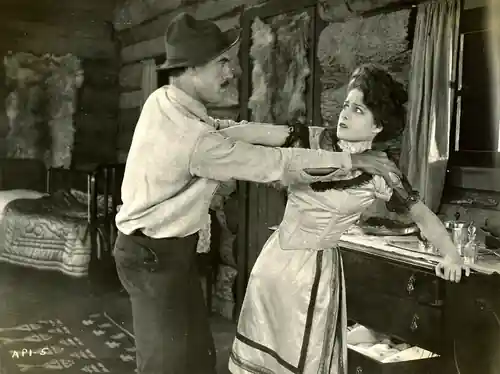
Comparing it to other films of the period, one can see how 'The Trail of the Law' fits into a broader cinematic landscape that often grappled with themes of justice, crime, and morality. While perhaps not as overtly action-packed as some 'westerns' like The Law Rustlers, it shares a similar spirit of frontier justice and the struggle against lawlessness. However, its focus on the psychological toll of vengeance and the intricacies of personal identity gives it a distinct flavor. The narrative's reliance on suspense and dramatic revelation also brings to mind thrillers such as Officer 666, albeit with a more grounded, less farcical tone.
The film's resolution, with Lytell's timely intervention, offers a glimmer of hope, suggesting that even in the most desolate and morally ambiguous landscapes, there is room for compassion and a more enlightened form of justice. It's a conclusion that, while perhaps somewhat conventional for the era, provides a satisfying emotional catharsis after the intense build-up of suspense and dramatic conflict. The ending doesn't negate the father's grief or his desire for retribution, but it subtly redirects the narrative towards a path of healing and reconciliation, mediated by love and a nascent understanding of formal law. It's a powerful statement on the human capacity for both destruction and redemption.
In conclusion, 'The Trail of the Law' is far more than just a historical curiosity. It's a compelling drama that speaks to universal themes of identity, revenge, and the search for justice. Norma Shearer's early performance is a highlight, offering a tantalizing glimpse of the star she would become. Marion Brooks' narrative craftsmanship holds up, delivering a story that is both engaging and thought-provoking. For enthusiasts of silent cinema, or anyone interested in the foundational narratives of Hollywood, this film offers a rich and rewarding viewing experience. It reminds us that even without spoken dialogue, the power of visual storytelling, compelling characters, and universal human emotions can transcend time and continue to captivate audiences. It's a testament to the enduring art of cinema, and a vivid reminder of the foundational stories that paved the way for the complex narratives we enjoy today.
The film's impact, though perhaps not as widely discussed as some of its more famous contemporaries, lies in its unflinching portrayal of human nature against the backdrop of an unforgiving world. It's a narrative that explores the thin line between civilization and savagery, personal grievance and societal order. The journey of the masked daughter, the tormented father, and the intervening city man coalesce into a story that is both deeply personal and broadly resonant. It poses questions about who we are when forced to conceal our true selves, about the price of vengeance, and about the transformative power of connection and intervention. Such questions are timeless, ensuring 'The Trail of the Law' remains a relevant and poignant piece of cinematic history, inviting new generations to discover its quiet power and the profound artistry of the silent screen. This is a film that truly leaves a mark, a silent echo in the annals of storytelling.
IMDb —
1917
Community
Log in to comment.