DbcultAccessing Vault...
Cult Review
Senior Film Conservator
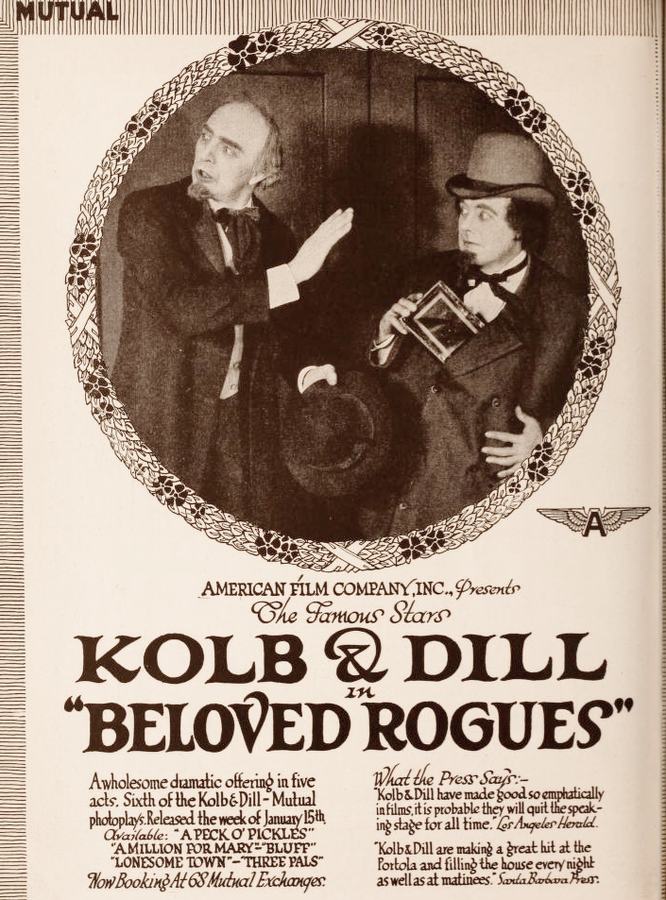
Stepping back into the cinematic annals of yesteryear, one occasionally stumbles upon a gem that, despite its vintage, resonates with a surprising contemporary relevance. Beloved Rogues, a silent film from an era when narratives unfolded through gesture, expression, and the rhythmic cadence of intertitles, is precisely such a discovery. It's a sprawling saga that pits the earnest simplicity of the individual against the cold, calculating machinations of corporate power, all while exploring themes of loyalty, deceit, and the circuitous path to justice. This isn't just a period piece; it's a testament to enduring human struggles, cloaked in the dramatic flourishes unique to early filmmaking.
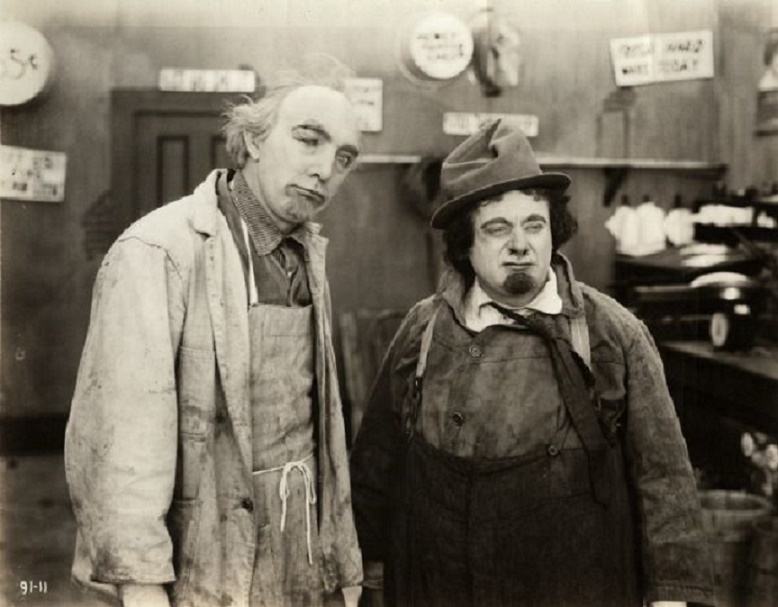
At its core, Beloved Rogues introduces us to Mike and Louie, a pair of foreign-born hardware and plumbing proprietors whose modest enterprise embodies the very spirit of independent craftsmanship. Their world, however, is swiftly encroached upon by the ominous shadow of the Amalgamated Hardware Company, a trust that seeks to consolidate power and crush competition with ruthless efficiency. The film wastes no time in establishing this central conflict, presenting the trust's offer to buy out Mike and Louie as less an invitation and more a thinly veiled threat. Their principled refusal sets in motion a chain of events that will irrevocably alter their lives and those intertwined with them.
Amidst their spirited denunciation of the trust's predatory practices, we are introduced to Madge and her sweetheart, Jack Kennedy. Jack, in a gesture of traditional courtship, seeks Madge's hand from her uncles, Mike and Louie, who, burdened by an unspoken secret, withhold their immediate blessing. The evening's revelations peel back layers of Madge's past: orphaned by a tragic mining accident in the West, she was raised under the loving guardianship of Mike and Louie. A cruel twist of fate, orchestrated by the duplicitous John Andrews—her father's former partner—had led them to believe Madge's father died penniless. Unbeknownst to them, Andrews, now a silent partner with Jack's own father, the formidable 'Boss' Kennedy, in the Amalgamated Hardware Company, had cunningly usurped Madge's inheritance. This revelation casts a pall of dramatic irony over Jack's familial ties, as his father, a crook of considerable influence, strives to shield his son from the sordid realities of his business dealings.
The trust's campaign against Mike and Louie escalates from coercive offers to outright economic warfare. Andrews and Kennedy, determined to squash the defiant duo, establish a rival store directly across the street, employing aggressive underselling tactics that systematically erode Mike and Louie's customer base. The relentless pressure eventually forces the humble foreigners out of business, a poignant depiction of the individual's vulnerability against an entrenched, unscrupulous system. The subsequent chapter of Madge's life plunges her into further tragedy; seeking employment, she finds work in a laundry, only to be blinded by the catastrophic explosion of an alkaline tank. This devastating turn not only amplifies the emotional stakes but also serves as a stark reminder of the harsh industrial realities of the era, where danger lurked in even the most mundane workplaces. It's a moment that galvanizes Mike and Louie, transforming their initial economic grievance into a deeply personal quest for justice and restitution.
The discovery of a specialist capable of restoring Madge's sight, albeit for a daunting sum of $300, propels Mike and Louie into a moral abyss. Their desperate plea to Kennedy for aid, offering to sell their now-defunct store, is met with a callous refusal, a chilling demonstration of the 'Boss's' lack of empathy, directing them instead to Andrews for 'charity.' The irony is palpable, a bitter pill for the men who unknowingly stand at the precipice of uncovering Andrews' profound betrayal. Their visit to Andrews, introducing Madge under the pseudonym 'Miss Morton,' is a masterstroke of dramatic tension. Andrews' barely concealed surprise at Madge's presence, coupled with the resonance of her name, triggers a cascade of repressed memories: the dying pleas of his former partner, Madge's father, begging him to care for his child, bequeathing half-interest in a mine that subsequently yielded an unimaginable fortune. Andrews' subsequent cruel deception, informing Madge's guardians that she was left nothing, stands as a damning indictment of his character.
The narrative then pivots to the burgeoning internal strife within the trust itself. Andrews, learning of Kennedy's double-crossing tactics and Jack's management of the rival store, retaliates by buying the store for a mere $500. This act of corporate espionage, however, inadvertently seals Mike and Louie's fate in another way. Word of their newly acquired $500 spreads, leading to a nighttime robbery. The ensuing night court scene is a microcosm of the power dynamics at play: Kennedy, arriving with Jack, leverages his influence to have his henchmen released, leaving Mike and Louie to bear the brunt of the injustice. This blatant abuse of power proves to be a turning point for Jack, whose confrontation with his father over his unethical actions leads to a profound rupture in their relationship, compelling him to abandon his father's house and embrace a path of greater integrity.
Driven by a potent cocktail of righteous indignation and a desperate love for Madge, Mike and Louie embark on an audacious, if amateurish, spree of 'rogue' activities. Their first target: Kennedy's house, from which they pilfer the necessary $500 for Madge's operation. Emboldened by this success, they venture out for another 'haul,' accidentally stumbling into Andrews' residence. There, they crack his private safe, absconding with a tin box that, upon examination, reveals the irrefutable evidence of Andrews' original guilt—the documents proving his fraudulent appropriation of Madge's inheritance. This discovery transforms their petty thievery into a mission of profound justice. Madge's release from the hospital, her sight restored, is a moment of profound triumph, yet the shadow of Andrews' villainy still looms large.
The climax of Beloved Rogues unfolds in a courtroom drama where Andrews, still attempting to settle scores with Kennedy, cunningly frames Jack for the theft of the incriminating tin box. The tide of evidence turns against Jack, threatening to unjustly condemn him. In a powerful display of self-sacrifice and loyalty, Mike and Louie, unable to bear the injustice, leap up and confess to the crime. Their confession allows Andrews to make a desperate escape, but the two friends are sentenced to two years in State prison. This segment of the film, while seemingly a tragic conclusion, is in fact a profound exploration of their transformation. For a year, they are consumed by remorse, but subsequently, they emerge as 'trusted trusties,' symbols of rehabilitation and moral rectitude. Their newfound wisdom is shared with fellow convicts, impressing upon them the folly of wrongdoing and even averting a prison break. They truly become the 'beloved rogues,' their unconventional path leading to an unexpected form of moral authority.
The narrative culminates in a heartwarming, almost fairytale-esque resolution. Called to the warden's house under the pretense of setting a banquet table, Mike and Louie are met by Madge, Jack Kennedy, the Governor of the State, and a clergyman. In a moment of supreme vindication and joy, they are invited to Madge and Jack's wedding, having been granted a gubernatorial release. This final scene beautifully ties together all the threads of the story, affirming the triumph of good over evil, the power of loyalty, and the redemptive capacity of even the most unlikely heroes. The title, Beloved Rogues, is fully realized, encapsulating their journey from honest shopkeepers to desperate criminals, and finally, to revered figures whose unconventional acts paved the way for justice and happiness.
The strength of Beloved Rogues lies not just in its intricate plot, but in the compelling performances that breathe life into its characters without the benefit of spoken dialogue. Max Dill and Clarence Kolb, as Mike and Louie, masterfully convey a spectrum of emotions, from their initial good-natured defiance to their desperation, fear, and eventual quiet dignity. Their physical comedy and expressive faces carry much of the narrative weight, making their transformation from law-abiding citizens to 'rogues' both believable and endearing. Clarence Burton as John Andrews personifies avarice and treachery, his every gesture dripping with villainy, while Harry von Meter's 'Boss' Kennedy oscillates between ruthless pragmatism and a father's conflicted love, adding layers of complexity to the antagonist camp. May Cloy, as Madge, embodies innocence, tragedy, and resilience, her character serving as the emotional anchor and the catalyst for much of the film's dramatic impetus. Tom Chatterton's Jack Kennedy provides the moral compass, his journey from privileged son to disillusioned truth-seeker offering a crucial counterpoint to his father's corruption.
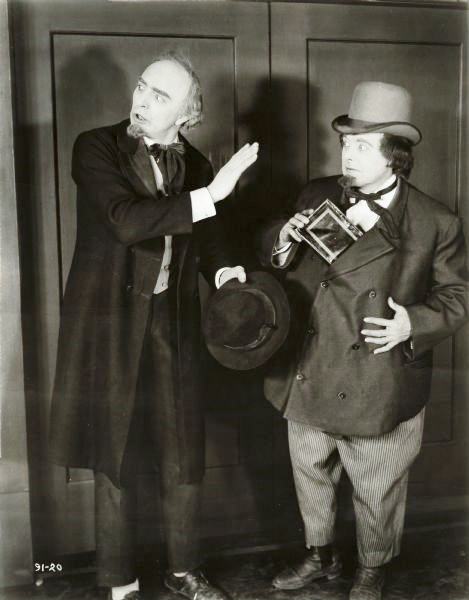
The direction, attributed to Alfred Santell and Aaron Hoffman (as writers, but often involved in the broader creative vision of silent films), demonstrates a keen understanding of pacing and visual storytelling. The narrative unfolds with a briskness that belies its complexity, ensuring that audience engagement never wanes. The use of intertitles is judicious, providing necessary exposition without overwhelming the visual narrative. The film effectively uses visual metaphors—the imposing facade of the Amalgamated Hardware Company versus the humble storefront of Mike and Louie, the stark contrast between the opulent homes of the villains and the more modest surroundings of the protagonists—to underscore its thematic concerns. While not a spectacle-driven epic, its strength lies in its ability to generate significant emotional resonance through intimate character struggles and high-stakes moral dilemmas.
Beloved Rogues is a fascinating artifact of its time, deeply rooted in the societal anxieties of early 20th-century America. The 'trust' as a villainous entity was a popular trope, reflecting widespread public concern over monopolies and unchecked corporate power. Films like The Dummy or Held for Ransom, while perhaps differing in genre, often tapped into similar veins of crime, injustice, and the struggle for personal agency against larger forces. What sets Beloved Rogues apart is its exploration of how ordinary individuals, when pushed to their limits by systemic injustice, might resort to unconventional means to achieve a greater good. Mike and Louie's journey from law-abiding citizens to 'rogues' is not a descent into amorality but rather a desperate, if flawed, attempt to restore balance and protect the innocent. Their eventual redemption within the prison system, becoming trusted mentors, speaks volumes about the film's optimistic view of human potential for reform and positive influence, even after making questionable choices.
The film deftly explores the concept of 'found family' through Mike and Louie's unwavering devotion to Madge. Their bond transcends biological ties, showcasing a powerful portrayal of paternal love and sacrifice. This contrasts sharply with the fractured, self-serving familial dynamics within the Kennedy household, where 'Boss' Kennedy's corrupt empire ultimately alienates his son. The narrative also poses profound questions about the nature of justice itself. Is justice only served through strict adherence to the law, or can it sometimes be achieved through extralegal means when the system itself is compromised? The film, by celebrating its 'beloved rogues,' leans towards the latter, suggesting that true morality can sometimes reside outside the confines of strict legality, particularly when confronting entrenched corruption.
Furthermore, the subplot of Andrews' internal struggle with his past, triggered by Madge's appearance, introduces an interesting psychological dimension. It hints at the corrosive power of guilt and the lingering specter of past misdeeds, even for the most hardened villains. While Andrews ultimately remains unrepentant in his actions, the momentary glimpse into his tormented conscience adds a layer of depth to the otherwise straightforward villainy. This nuanced characterization, even in a silent film, prevents the antagonists from becoming mere caricatures, instead presenting them as products of their own greed and moral compromises. The film's resolution, with the Governor's intervention, suggests a belief in a higher, benevolent authority capable of rectifying wrongs when the conventional legal system falls short, providing a satisfying, if somewhat idealized, closure to the complex web of deceit and sacrifice.
In conclusion, Beloved Rogues stands as a compelling example of silent cinema's ability to tell intricate, emotionally resonant stories. It is a film that, despite its age, offers a surprisingly rich tapestry of themes: the relentless march of corporate ambition, the resilience of the human spirit, the binding power of loyalty, and the complex, often unconventional, pursuit of justice. The performances are engaging, the plot is meticulously crafted, and the message of redemption and the triumph of integrity, even in the face of overwhelming odds, remains timeless. For enthusiasts of classic cinema, or anyone interested in a poignant drama that transcends the limitations of its medium, Beloved Rogues is an experience well worth seeking out. It reminds us that heroism can be found in the most unexpected places and that sometimes, the most beloved figures are those who dared to be a little bit rogue in the name of what is right.
IMDb —
1924
Community
Log in to comment.