DbcultAccessing Vault...
5.4/10
Senior Film Conservator

A definitive 5.4/10 rating for a film that redefined the boundaries of cult cinema. Somewhere in Wrong remains a cornerstone of transgressive art.
Short answer: Yes, but only if you are a student of comedy history or a Stan Laurel completist. It is a fascinating relic that shows a comedy legend still trying to find his definitive voice before the magic of the duo years.
This film is for viewers who enjoy the raw, unpolished energy of 1920s slapstick and those interested in the evolution of the 'tramp' archetype. It is definitely not for those who require high-definition production values or the refined, rhythmic pacing of Laurel and Hardy’s later sound shorts.
In 1925, Stan Laurel was not yet the whimpering, hair-scratching Stan we know. In Somewhere in Wrong, he plays a character described as a 'two-fisted loafer.' This is a significant distinction.
Where Chaplin’s tramp was a poet and his later persona was a victim of circumstance, this version of Laurel is an opportunist. He doesn't just want the doughnuts; he feels entitled to them. It is a grit-teeth comedy.
Watching him interact with Max Asher and Charles King is a lesson in early ensemble dynamics. There is a hardness to the comedy here. It lacks the warmth of Let's Go but makes up for it with a strange, frantic desperation.
The way Laurel moves is different here too. He is faster. More aggressive. He isn't afraid to be the instigator of the trouble, which is a jarring contrast to his later work where trouble usually found him.
The central sequence involving the doughnuts on the windowsill is the film's strongest asset. It represents the classic silent comedy trope of 'the unattainable object.'
The staging by director Tay Garnett is functional but effective. He uses the window as a frame within a frame, emphasizing Laurel’s status as an outsider looking in. It’s a simple visual metaphor for class longing.
When the farmer's daughter, played by Julie Leonard, enters the frame, the tone shifts. The comedy pauses for a moment of genuine pathos. This was a common trend in 1925, seen in more dramatic works like Chickie or even Shattered Idols.
The pity she shows him isn't just a plot point; it’s the emotional hook. Laurel’s reaction—a mix of confusion and sudden, unearned romantic fervor—is played for laughs, but there’s a sting to it. He is a man who doesn't know how to handle kindness.
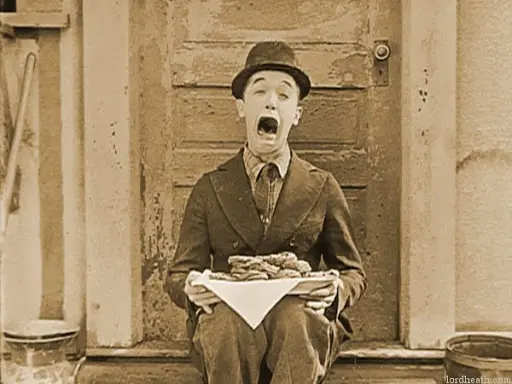
Tay Garnett, who would later go on to direct noir classics, shows an early knack for spatial awareness. The farmhouse interior is used like a minefield. Every dish is a potential casualty.
The pacing is brisk, almost too brisk. Silent shorts of this era often suffered from a 'more is more' philosophy regarding gags. Compared to the atmospheric pacing of Exile, this film feels like a fever dream.
The cinematography is typical for the mid-20s—flat, high-key lighting that ensures every facial expression is visible. It lacks the artistic shadows of Assunta Spina, but it serves the slapstick well.
One cannot overlook the contribution of Pal the Wonder Dog. In many scenes, the dog provides the most grounded performance. The dog acts as a witness to the human absurdity, a technique that would become a staple of the genre.
There is a surprisingly dark undercurrent to the 'broken dishes' climax. It isn't just about property damage; it’s about the destruction of a domestic ideal. Laurel’s character is a wrecking ball.
I would argue that Somewhere in Wrong is actually a tragedy disguised as a comedy. The 'tears' mentioned in the plot aren't just for show. They represent the realization that the tramp cannot change his spots.
This subversion of the 'happy ending' is what makes the film stand out from more generic fare like Beaches and Peaches. It refuses to give the protagonist a clean win. He starts the film alone, and he ends it alone.
The doughnuts, once a symbol of hope and sustenance, become a reminder of his failure. It is a cynical ending for a film that presents itself as a lighthearted romp. It works. But it’s flawed.
When placed alongside The Four Horsemen of the Apocalypse, the stakes of Somewhere in Wrong seem trivial. However, comedy is often a more accurate reflection of daily life than grand epics.
The film shares some thematic DNA with Plain Clothes in its exploration of identity and social standing. In both films, the protagonist is trying to appear as something they are not.
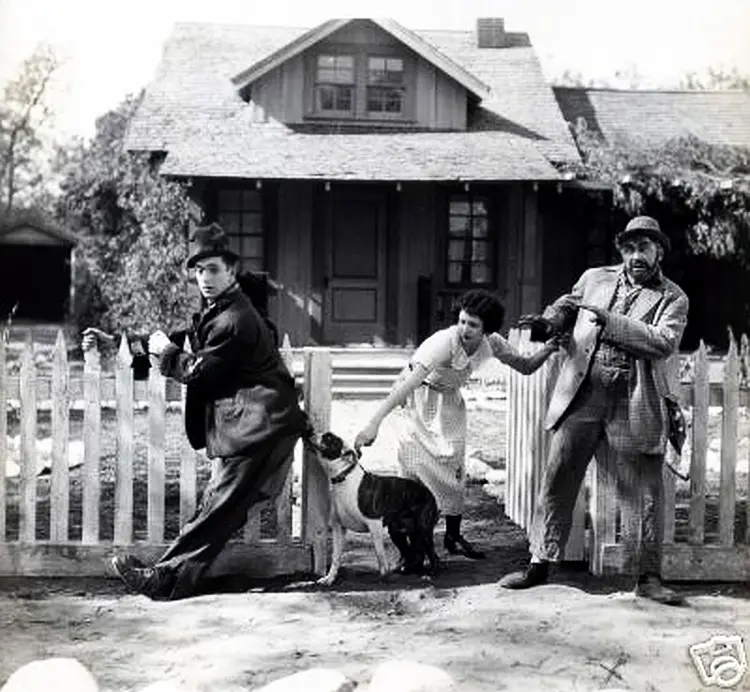
Even compared to other shorts like Hats, Laurel’s work here feels more aggressive. He was carving out a niche for himself that was distinct from the 'sweet' comedians of the time.
It is also worth noting the influence of the 'working class' struggle. While Daytime Wives looked at the urban struggle, this film looks at the rural poverty of the itinerant worker. It’s a snapshot of a forgotten America.
Pros: A rare look at Laurel's solo range; excellent use of animal actors; high-energy physical gags.
Cons: Primitive editing; some jokes are recycled from earlier shorts; the 'tears' finale feels slightly manipulative.
Comedy ages faster than any other genre. What was hilarious in 1925 can feel like a chore in 2024. However, physical comedy is the universal language.
The scene where Laurel tries to hide his hunger while maintaining a 'tough guy' persona is objectively funny. It relies on facial micro-expressions that Laurel would eventually master.
It lacks the sophisticated irony of Freie Liebe, but it possesses a visceral honesty. You can feel the weight of the dishes and the stickiness of the doughnuts. That tactile quality is missing from modern CG-heavy comedies.
The film's brevity is its saving grace. It doesn't overstay its welcome. It delivers its premise, executes its gags, and exits before the formula becomes tiresome.
Somewhere in Wrong is a fascinating, if slightly uneven, entry in the Stan Laurel canon. It captures a genius in transition. It is loud, messy, and occasionally heartbreaking.
While it doesn't reach the heights of the later Laurel and Hardy masterpieces, it provides essential context for how those heights were eventually reached. It is a rough draft of a legend.
If you can get past the flickering frames and the simplistic plot, there is a core of real humanity here. Stan Laurel was a master of the human condition, even when he was just a 'two-fisted loafer' looking for a snack.
Final score: 3.5 out of 5 doughnuts. It’s a solid piece of history that still manages to squeeze out a few genuine laughs. Watch it for the dog, stay for the legend.
IMDb 6.1
1930
Community
Log in to comment.