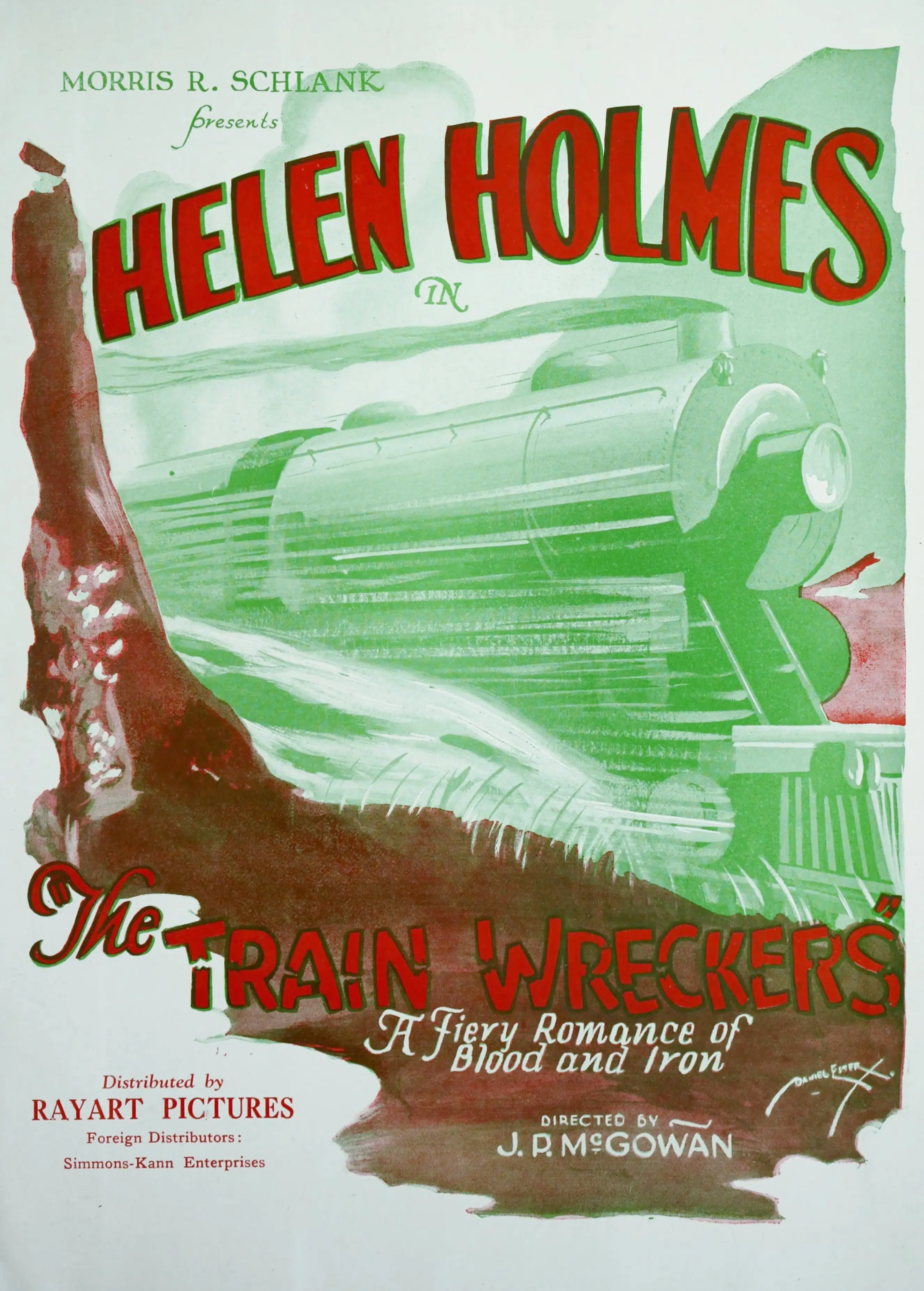
In the opening scene, we are introduced to Helen Holmes, a railway owner's daughter who is entrusted with the responsibility of managing a significant section of the family's line. The plot unfolds with an air of mystery and suspense, as Helen's journey is interwoven with the backstories of characters like Jimmy Aubrey, Nelson McDowell, Park Frame, Franklyn Farnum, and Harry von Meter, all of whom play pivotal roles in the narrative. The film, written by skilled authors, sets the stage for a tale that is both thrilling and complex, with themes of corporate rivalry, personal growth, and the unexpected alliances that form in the face of adversity.
At the heart of the story lies the character of Helen, a young and ambitious manager who finds herself in a precarious position. Her father, Kingsley, has put her in charge of a railway line, unaware that the previous manager, Roberts, has been using the line to further the interests of his own fruit packing company. This revelation sets the stage for a series of events that will test Helen's resolve and strategic acumen. As the story progresses, Helen and Jack Stewart, a competitor in the fruit packing industry, form an unlikely alliance to take back what Roberts has stolen from them. The film explores the dynamics of this partnership, the challenges they face, and the personal growth that occurs as a result of their collaboration.
The narrative reaches a thrilling peak when Helen and Jack find themselves in the midst of a confrontation. Roberts, realizing the threat posed by their alliance, orchestrates a fight between his men and Jack's men. Despite the odds, Jack's side gains the upper hand, but a moment of unexpected tragedy occurs when one of Roberts' men throws a block of ice at Jack, causing him to fall and sending the freight car he is standing on into a dangerous descent. In a moment of bravery and heroism, Helen chases down the freight car on another car, lassoing it and stopping it just in time to prevent a catastrophic crash. This sequence is not only visually stunning but also a testament to Helen's character and her ability to think on her feet under pressure. The film's climax is equally dramatic, as Helen must once again leap to action to prevent a trolley from colliding with the freight car that Roberts is manning.
The film's visual and technical aspects are equally impressive. The railway setting provides a rich backdrop for the story, with scenes that are both atmospheric and visually stunning. The director's use of cinematography and editing enhances the sense of urgency and tension, making the audience feel as though they are right there in the action. The score, composed by a talented musician, adds to the emotional depth of the film, with music that is both haunting and uplifting. The set design and costume choices are also noteworthy, providing a sense of authenticity and period detail that enhances the overall immersive experience.
The performances in 'The Train Wreckers' are a highlight of the film. Helen Holmes, played by a seasoned actress, brings a sense of determination and vulnerability to her role, making her character relatable and compelling. Jimmy Aubrey and Nelson McDowell, in their supporting roles, provide a strong foundation for the story, while Park Frame, Franklyn Farnum, and Harry von Meter offer memorable performances as the conflicting forces that shape the narrative. The film's cast is a testament to the quality of the storytelling, with each character contributing to the overall narrative in a meaningful way.
While 'The Train Wreckers' is a standalone film, its themes and narrative structure echo those found in other works of its time. For instance, the film shares a similar dynamic of corporate intrigue and personal alliances with films like 'Days of Daring' and 'Surprise', both of which explore the complexities of business and the personal stakes involved. The film also draws parallels with 'An Alaskan Honeymoon', which, like 'The Train Wreckers', delves into the challenges of managing a significant undertaking in a remote and challenging environment. These comparisons highlight the film's relevance and its place within the broader context of early 20th-century cinema.
In conclusion, 'The Train Wreckers' is a captivating and well-crafted film that offers a rich narrative, dynamic character development, and thrilling action sequences. It is a testament to the storytelling prowess of its writers and the skill of its cast. While the film may not be without its flaws, it is a compelling watch that will hold the audience's attention from beginning to end. It is a film that rewards close attention and multiple viewings, as each layer of the story reveals more depth and complexity. For fans of historical drama, corporate storytelling, and action-packed narratives, 'The Train Wreckers' is a must-see.