DbcultAccessing Vault...
Cult Review
Senior Film Conservator
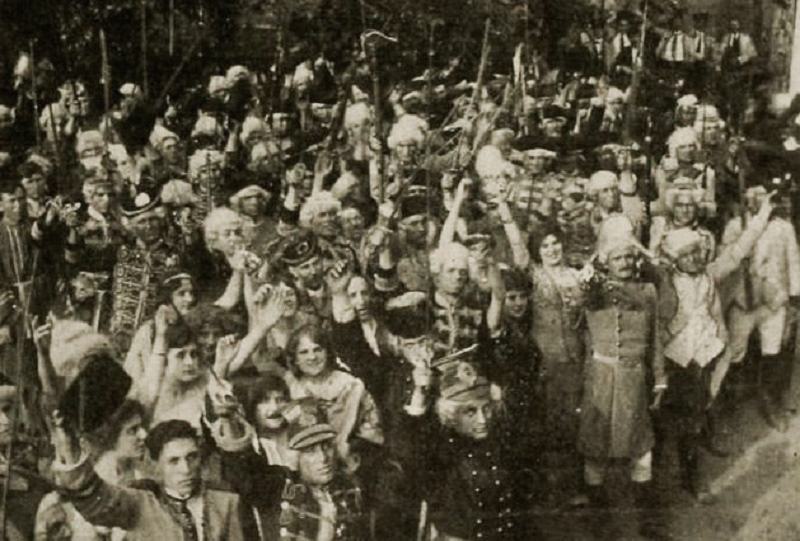
Stepping into the tumultuous final years of the 18th century, "The Tyranny of the Mad Czar" delivers an enthralling, if disquieting, chronicle of power, paranoia, and psychological decay. This cinematic journey plunges us headfirst into the turbulent accession of Paul I to the Russian throne in 1796, a period shadowed by the colossal legacy of his mother, Catherine the Great. The film isn't merely a historical recounting; it's a deep dive into the mind of a ruler whose eccentricities rapidly metastasized into a profound malady, etching his infamous moniker into the annals of history. From the very outset, the narrative establishes a palpable sense of unease, hinting at the fragile mental state that would ultimately consume its central figure. The film masterfully portrays a monarch burdened by expectation, perhaps overshadowed by his predecessor, and increasingly isolated by his own spiraling delusions.
The genius of the film lies in its unflinching portrayal of Paul's psychological unraveling, presenting a series of incidents that are as startlingly vivid as they are profoundly disturbing. We witness acts of impulsive cruelty that beggar belief: the arbitrary, public plucking out of an officer's beard, a visceral exhibition of absolute, unhinged power. This isn't just a display of authority; it's a theatrical performance of dominance, designed to instill terror and underscore the Czar's unpredictable nature. Similarly, the scene where he strikes down one of his most faithful officers in front of the regiment is not merely a breach of military decorum; it's a shattering of loyalty, a public degradation that signals a monarch utterly detached from the bonds of fealty and respect. These aren't isolated outbursts; they are carefully orchestrated dramatic beats, each one a brushstroke adding to the unsettling portrait of a mind losing its grip on reality. The film doesn't shy away from the grotesque, even depicting his childish act of sticking out his tongue in the midst of important social gatherings, an act so incongruous with imperial dignity that it borders on the absurd, yet profoundly underscores his mental regression. His ridicule of church representatives further alienates powerful institutions, illustrating a complete disregard for traditional authority and spiritual solace, replacing them with his own capricious will.
These escalating incidents are not just character beats; they are the very catalysts for the tragedy that unfolds. The film meticulously builds the case for Paul's undoing, demonstrating how his unpredictable, often cruel, behavior created an environment ripe for conspiracy. It's a testament to the script's intricate design that the viewer understands the inevitability of the plot against him, even as the human cost remains deeply affecting. The architectural precision of the screenplay allows us to observe the insidious growth of dissent, cultivated in the shadows of the Czar’s increasingly erratic court. The atmosphere becomes thick with apprehension, a constant undercurrent of fear and resentment simmering beneath the surface of imperial grandeur. This is not merely a story of a mad king; it’s a study of how unchecked power, when coupled with mental instability, can corrode an entire system from within, leading to a desperate, violent remedy.
At the heart of this intricate web of intrigue stands Count Pahlen, Chief of Police of St. Petersburg, portrayed with a chilling blend of cunning and conviction. Pahlen is not a cartoonish villain; he is a pragmatist, a man who believes the stability of Russia outweighs the life of its increasingly dangerous ruler. The film portrays him as the arch-conspirator, a master strategist who deftly gathers a cabal of officers from various corps, sowing seeds of discontent with calculated precision. His methods are subtle, his arguments persuasive, appealing to both the sense of duty and the self-preservation instincts of those he seeks to recruit. The tension is palpable as Pahlen moves through the court, a silent predator, his every interaction laden with unspoken meaning and veiled threats. This aspect of the narrative, the intricate dance of political maneuvering and clandestine planning, gives the film a thrilling, almost spy-thriller quality, reminiscent of the intricate power plays seen in historical dramas like A Fight for Freedom; or, Exiled to Siberia, though here the rebellion is against the throne itself, rather than external oppression. The moral ambiguity of Pahlen's actions is a central theme: is he a traitor or a savior? The film leaves this question tantalizingly open for the audience to ponder.
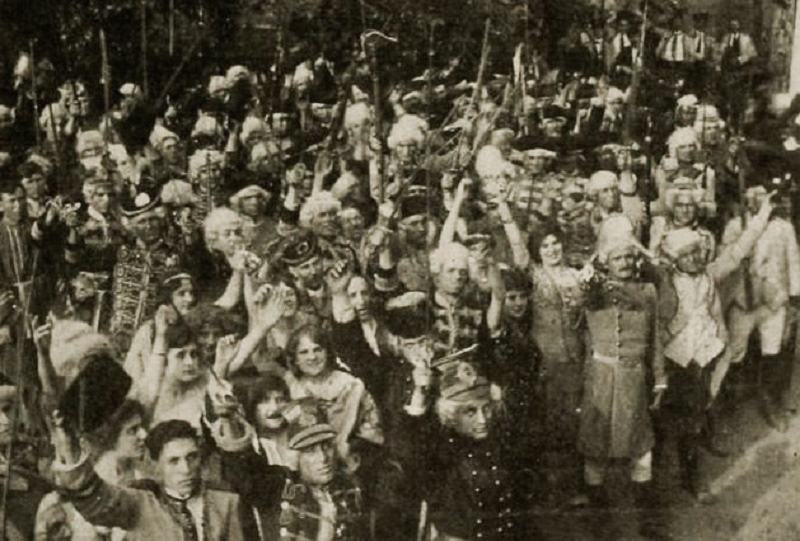
Perhaps the most psychologically compelling aspect of the conspiracy is Pahlen's success in inveigling Prince Alexander, Paul's own son and heir, into the plot. This filial betrayal adds a profound layer of tragic complexity to the narrative. The depiction of Alexander's internal struggle, his moral quandary between duty to his father and duty to the state, is handled with exquisite sensitivity. We see the prince torn, perhaps initially horrified by the prospect, yet gradually convinced by Pahlen's logic and the undeniable evidence of his father's deteriorating mental state. It's a testament to the film's nuanced characterizations that Alexander isn't simply a pawn; he's a conflicted figure, burdened by a terrible choice. This dynamic creates a powerful undercurrent of pathos, transforming a political assassination into a deeply personal tragedy. The weight of this decision, the ultimate act of patricide, hangs heavy over the entire third act of the film, creating a suffocating tension that builds inexorably towards its violent climax.
Amidst this maelstrom of madness and machination, the character of Countess Anna provides a much-needed, deeply sympathetic counterpoint. Her love for the Mad Czar, unwavering and profound, furnishes the film with its tragic heart. Anna is not merely a romantic interest; she is a figure of immense strength and sorrow, a woman who sees beyond the monarch's derangement to the vulnerable man beneath. Her wonderful influence over Paul, however fleeting, offers glimpses of the man he might have been, or perhaps, the man he once was. These moments of tenderness, fragile and often short-lived, serve to humanize Paul, preventing him from becoming a mere caricature of madness. Her presence injects a deep, sympathetic throb for his misfortunes, reminding us that even a tyrant, especially one afflicted by mental illness, is capable of inspiring love and pity. Anna’s struggle to protect Paul, to shield him from both himself and his enemies, adds an agonizing layer of suspense and emotional depth. Her ultimate failure to save him is not just a plot point; it's a poignant testament to the limits of love in the face of overwhelming political and psychological forces. Her arc resonates with the quiet suffering found in other historical tragedies, where individual devotion clashes with the brutal realities of power, much like the unspoken sorrows in films such as The Silence of Dean Maitland, albeit in a different context of societal pressure and personal torment.
The film's visual language, if one were to imagine its execution, would undoubtedly be crucial in conveying the escalating madness. One can envision stark, imposing sets reflecting the grandeur and isolation of the imperial court, contrasted with increasingly distorted or claustrophobic camera angles as Paul's mind unravels. The use of lighting could be particularly effective, perhaps transitioning from the bright, formal illumination of early scenes to a darker, more shadowy palette, mirroring the encroaching darkness within the Czar's psyche. The sound design would also play a vital role, with an unsettling score that builds tension and perhaps incorporates discordant elements to represent Paul's fractured mental state. Imagine the silence of the vast palace broken by the Czar's sudden, irrational outbursts, or the hushed whispers of conspirators, barely audible over the growing din of his madness. Such artistic choices would elevate the historical narrative into a truly immersive psychological thriller, drawing the audience into the oppressive atmosphere of fear and uncertainty.
Thematically, "The Tyranny of the Mad Czar" explores profound questions about the nature of power, sanity, and morality. It delves into the corrupting influence of absolute authority, especially when wielded by a mind in decline. The film forces us to confront the uncomfortable truth that leadership, when untethered from reason, can become a weapon against its own people. It’s a cautionary tale about the dangers of unchecked autocracy and the desperate measures individuals will take to restore order, even if those measures involve regicide. The psychological depth afforded to Paul, despite his monstrous acts, invites a degree of empathy, suggesting that madness itself is a form of tyranny, trapping its victim as much as it terrorizes those around him. The film doesn't offer easy answers, instead presenting a complex tapestry of human ambition, fear, and love, all interwoven with the tragic threads of mental illness. This exploration of the darker aspects of human nature and power dynamics could be loosely compared to the intense psychological focus of a film like The Woman in Black, where the horror stems not from the supernatural, but from the insidious creep of dread and mental torment.
In its totality, "The Tyranny of the Mad Czar" stands as a powerful historical drama, a compelling character study, and a chilling political thriller all rolled into one. It’s a film that demands attention, not only for its historical significance but for its profound psychological insights and its unflinching depiction of a ruler’s tragic downfall. The narrative’s careful construction, from the initial seeds of eccentricity to the full bloom of madness and the meticulously planned conspiracy, ensures a gripping viewing experience. The interplay between the historical context, the personal torment of Paul, and the machinations of Pahlen, all underscored by Anna’s poignant devotion, creates a rich, multi-layered story. This is a cinematic achievement that transcends mere historical reenactment, offering a timeless meditation on the perils of power and the fragility of the human mind. The film leaves an indelible impression, prompting reflection on the fine line between genius and madness, and the heavy price paid when that line is irrevocably crossed. It’s a masterful piece of storytelling, deserving of its place among the most impactful historical sagas.
IMDb 4.3
1924
Community
Log in to comment.