DbcultAccessing Vault...
7/10
Senior Film Conservator
A definitive 7/10 rating for a film that redefined the boundaries of cult cinema. The Two Johns remains a cornerstone of transgressive art.
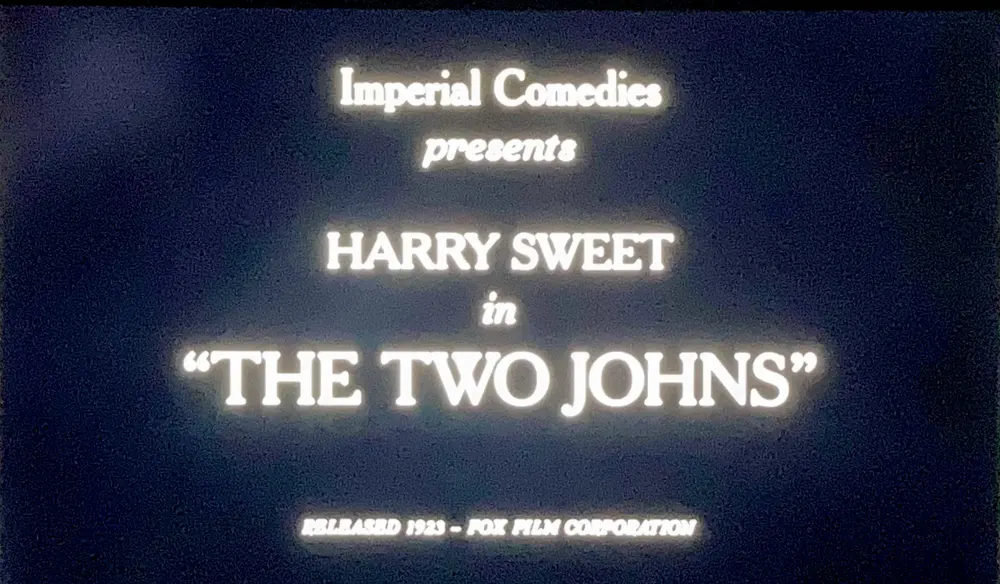
Step into a time capsule, back to the roaring twenties, when cinema was a symphony of motion, expression, and the universal language of laughter. 'The Two Johns' (1923), a delightful confection from the annals of silent film, stands as a testament to the era's unique comedic genius. Directed by the prolific Tom Buckingham, this film, starring the inimitable Harry Sweet, Marvin Loback, and the ever-reliable Heinie Conklin, serves up a generous helping of slapstick, mistaken identity, and frantic chases that remain as charmingly chaotic today as they were a century ago. It’s a film that, despite its age, still possesses a vibrant, almost infectious energy, reminding us why these early cinematic endeavors laid the foundational bricks for all that followed.
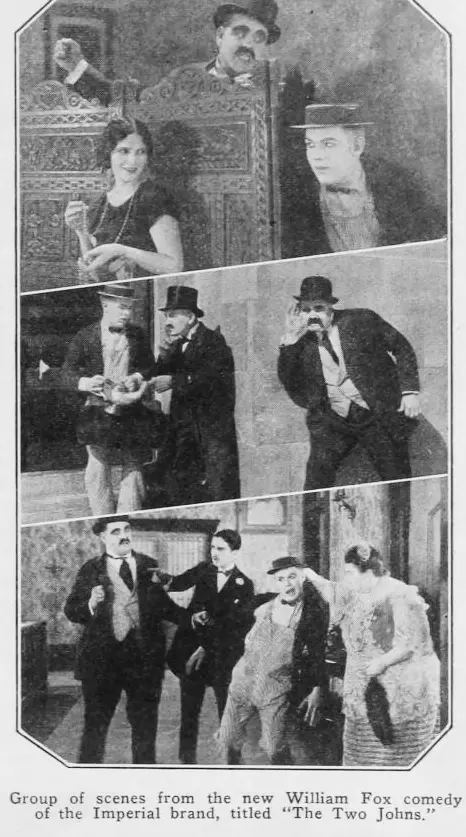
At its core, 'The Two Johns' is a brilliant exercise in comedic escalation, all stemming from a deceptively simple premise. We are introduced to a character, a country fellow named John (presumably played by Harry Sweet), entrusted with a rather extraordinary delivery: an 'Aladdin's lamp.' Now, whether this is a genuine magical artifact or merely a valuable antique imbued with an almost mythical aura by the characters' perceptions is delightfully ambiguous, lending an air of whimsical fantasy to the proceedings. John, with his earnest demeanor and perhaps a touch of rustic naiveté, embarks on his mission, unaware that this seemingly mundane task is about to unravel into a grand spectacle of confusion and pursuit. His journey, initially marked by the quiet determination of a man on a mission, quickly spirals into a frantic odyssey as a tenacious detective (likely Marvin Loback or William Irving) enters the fray, hot on the trail to intercept the lamp. The detective's efforts, however, are not merely complicated but utterly confounded by the sudden, bewildering appearance of John's exact double. This doppelgänger, a mirror image in every aspect, becomes the ultimate disruptor, turning a straightforward investigation into a comedic quagmire. The ensuing chaos, a ballet of mistaken identities and close calls, forms the comedic backbone of the film, leaving both the characters and the audience delightfully disoriented. It's a setup that, while simple, provides an incredibly fertile ground for the kind of physical comedy and character-driven gags that defined the silent era.
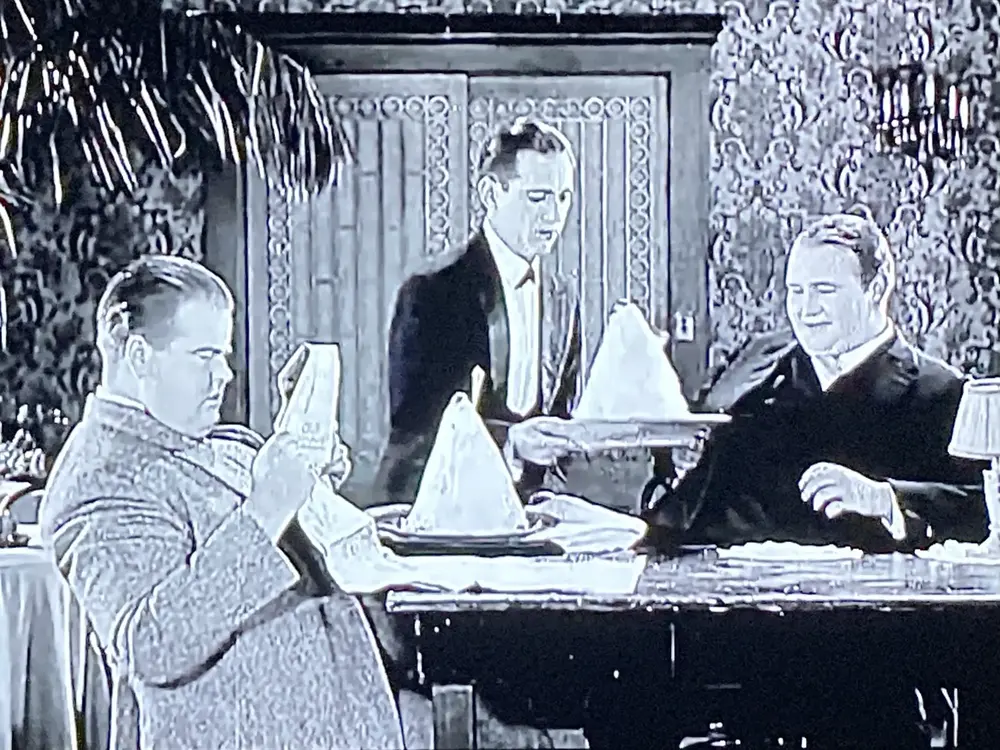
Harry Sweet, a name that might not resonate as loudly as Keaton or Chaplin today, was a significant comedic force in his time, and 'The Two Johns' showcases his particular brand of physical comedy with aplomb. Playing not one, but two Johns, he navigates the delicate tightrope of distinguishing between the earnest original and his mischievous, or perhaps simply misdirected, double. This dual role is a demanding one, requiring subtle shifts in posture, expression, and timing to convey the distinct personalities, or lack thereof, of the two identical figures. Sweet’s ability to elicit genuine laughter through his contorted expressions and frantic movements is a joy to behold. He embodies the bewildered everyman caught in an impossible situation with remarkable conviction, making his predicament all the more hilarious.
Marvin Loback, often a reliable supporting player, likely shines as the frustrated detective. His character, initially a figure of authority and competence, is progressively reduced to a state of bewildered exasperation as the two Johns weave their web of confusion. The humor often arises from the contrast between his serious intent and the utterly nonsensical situations he finds himself in. Think of the meticulous, often self-important detectives in films like Detective Brown, whose earnestness only serves to amplify the absurdity around them. Loback’s performance likely provides a crucial anchor, a straight man against the escalating lunacy.
And then there's Heinie Conklin, a master of exaggerated reactions and the quintessential 'heavy' or 'stooge' of the silent era. Conklin's presence almost guarantees a certain level of physical mayhem and boisterous humor. His character, whatever his role—perhaps an accomplice, a rival, or merely another victim of the Johns' shared identity—undoubtedly adds another layer of anarchic energy to the film. The interplay between Sweet's frantic energy, Loback's escalating frustration, and Conklin's robust physical presence would have created a dynamic comedic trio, each feeding off the others' performances to amplify the overall effect.
The supporting cast, including William Irving, Bud Jamison, Hilliard Karr, Blanche Payson, and John Rand, would have filled out the bustling world of 'The Two Johns,' each contributing to the tapestry of confusion. Payson, known for her formidable screen presence, might have played a stern authority figure or a bewildered bystander, while Jamison's imposing physique often lent itself to roles requiring physical comedy or a menacing, yet often bumbling, foil. In silent film, every face, every gesture, contributed significantly to the narrative and comedic impact, and these stalwarts of the era would have been instrumental in building the film's vibrant comedic landscape.
Tom Buckingham, the film's writer and director, was a prolific figure in the silent era, known for his keen understanding of comedic timing and narrative construction. Crafting a film centered on mistaken identity requires a delicate touch; the humor lies in the audience's awareness of the deception while the characters remain blissfully, or comically, ignorant. Buckingham’s script for 'The Two Johns' must have been a masterclass in setting up gags, orchestrating chase sequences, and ensuring that the narrative momentum never faltered, even amidst the escalating absurdity. His direction would have emphasized clear visual storytelling, relying on exaggerated actions and reactions to convey character motivations and plot developments without the aid of dialogue. The pacing of silent comedies was often relentless, a rapid-fire succession of gags and physical stunts, and Buckingham was adept at maintaining this high-octane energy.
Considering the intricate dance of two identical characters, Buckingham would have had to meticulously plan each scene, ensuring that the audience could always distinguish between the 'real' John and his double, or at least understand why the other characters couldn't. This often involved clever camera work, precise blocking, and the skillful use of editing to create the illusion of two identical individuals interacting. The challenge of shooting dual roles in the silent era, without the benefit of modern special effects, was considerable, relying on split screens, careful matching of movements, and the actor's own versatility. Buckingham's ability to pull this off seamlessly is a testament to his directorial prowess.
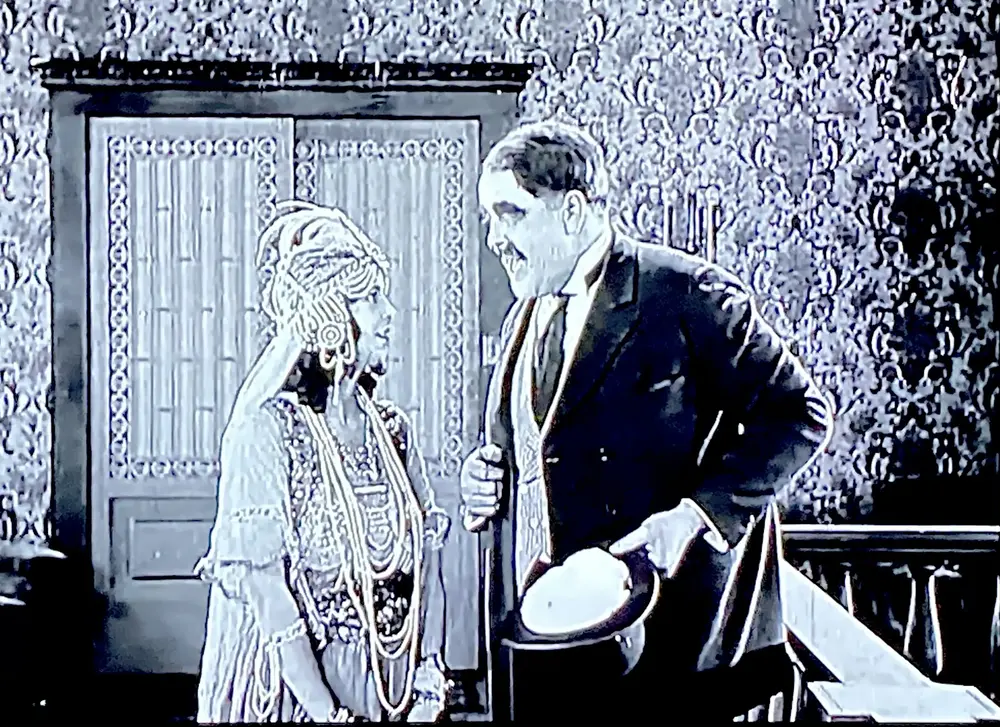
The trope of mistaken identity is a timeless comedic device, and 'The Two Johns' leverages it to its fullest potential. From Shakespearean comedies to modern farces, the confusion arising from identical appearances or swapped roles consistently delivers laughter. What makes 'The Two Johns' particularly effective is the sheer scale of the chaos it unleashes. It's not just a minor misunderstanding; it's a full-blown societal disruption, with a valuable (and possibly magical) artifact at stake. The film taps into a primal fear of losing one's identity, only to twist it into a source of pure, unadulterated amusement. This theme resonates even today, reminding us that sometimes, the most complex problems arise from the simplest of coincidences.
Comparing it to other films of the era, one might see echoes of the frantic energy found in films like Up in the Air, where characters are often literally suspended in precarious, comical situations. The rapid-fire gags and physical stunts might also remind viewers of the sheer inventiveness seen in short comedies that prioritized visual humor. The narrative structure, building from a simple task to a complicated web of interactions, also mirrors the escalating stakes found in adventure serials, albeit with a comedic twist, where the 'treasure' isn't just gold but a magical lamp.
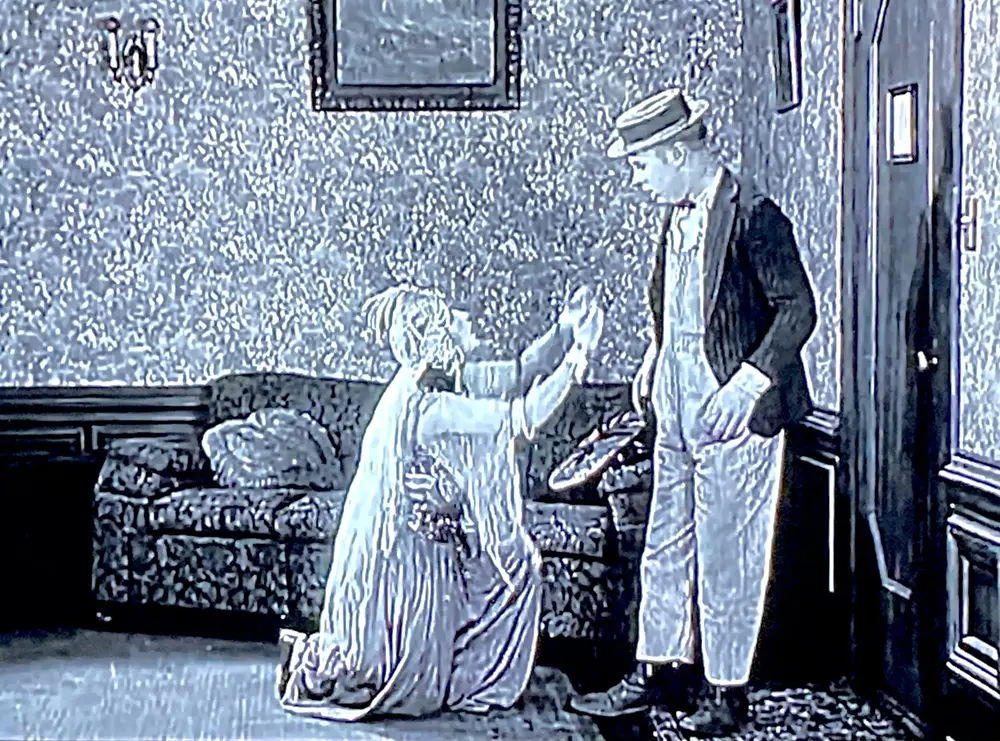
Beyond its immediate comedic impact, 'The Two Johns' offers a fascinating glimpse into the craftsmanship of early cinema. The reliance on visual storytelling, the exaggerated performances, the innovative special effects (for their time), and the dynamic editing all speak to a period of immense creativity and experimentation. Silent films demanded a different kind of engagement from their audience, one that involved interpreting visual cues and internalizing the narrative without spoken dialogue. The success of films like 'The Two Johns' underscores the universal appeal of well-executed physical comedy and compelling storytelling, regardless of technological limitations.
The film also serves as a valuable historical document, reflecting the cultural sensibilities and humor of the early 20th century. The idea of an 'Aladdin's lamp,' for instance, speaks to a public still enchanted by exotic tales and mythical objects, even as the modern industrial age was rapidly taking hold. The character of the 'country John' versus the 'city detective' might also subtly play on contemporary social dynamics, highlighting the contrast between rural simplicity and urban sophistication, a common theme explored in various forms, from dramas like The New South to more lighthearted fare.
While the comedic performances are undoubtedly the highlight, the technical aspects of 'The Two Johns' should not be overlooked. The cinematography, for instance, would have played a crucial role in establishing the mood and clarity of the action. In an era before sophisticated lighting setups were commonplace, cinematographers had to be ingenious with natural light and simple artificial sources to ensure that the frantic movements and subtle expressions of the actors were captured effectively. The clarity of the visual gags, particularly those involving the two Johns, would have depended heavily on precise camera angles and sharp focus.
Editing, too, was a silent art form in itself. The rhythm and pace of the film were entirely dictated by the cuts. Fast cuts would have intensified the chase sequences and heightened the sense of urgency and chaos, while longer takes might have allowed the audience to savor a particularly elaborate piece of physical comedy. The transition between scenes, the use of intertitles to convey dialogue or plot exposition, and the overall narrative flow were all meticulously crafted to guide the audience through the story. It's a testament to the skill of the editors of the time that these films, despite their lack of spoken word, managed to tell compelling and often hilarious stories.
Furthermore, the set design and costuming, while perhaps not as elaborate as those in grand dramas like The Lash of Destiny, would have been crucial for establishing the film's world. The contrast between the 'country' setting for John's origin and the more bustling, perhaps chaotic, urban environment where the mistaken identity unfolds would have been conveyed through careful attention to detail in the backdrops and props. The 'Aladdin's lamp' itself would have been a pivotal prop, its appearance and handling needing to convey its perceived value and mystical allure. Every element, from a simple hat to a grand street scene, contributed to the overall authenticity and comedic impact of the film.
'The Two Johns' is more than just a relic of a bygone era; it's a vibrant, engaging piece of cinematic history that continues to entertain. Its blend of physical comedy, ingenious plotting, and memorable performances makes it a standout example of silent film farce. For those who appreciate the foundational artistry of cinema and the sheer joy of unadulterated laughter, rediscovering 'The Two Johns' is a genuinely rewarding experience. It reminds us that humor, at its heart, is a universal language, transcending time and technological advancements. So, if you ever get the chance to witness the madcap adventures of these two Johns, do yourself a favor and dive headfirst into the delightful delirium. It's a journey well worth taking, a testament to the enduring power of a good laugh and the timeless appeal of a well-told, albeit chaotic, story.
IMDb 4.9
1930
Community
Log in to comment.