Plot Reimagined Through a Critical Lens
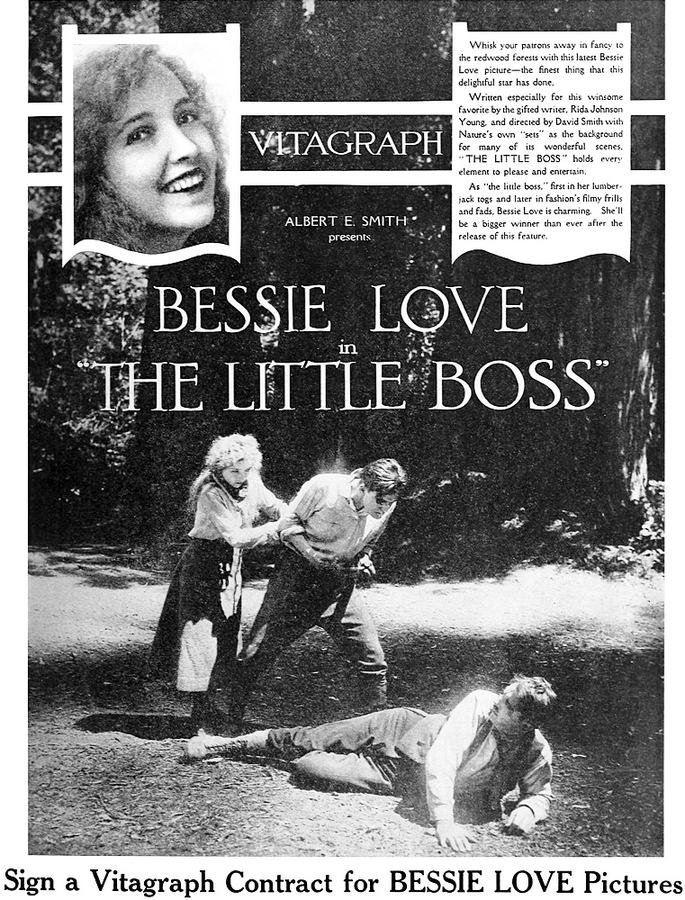
In the austere wilderness of a 1920s lumber camp, Peggy Winston emerges as an unexpected matriarch, wielding authority with a blend of iron resolve and maternal warmth. Her dominion, inherited from a patriarch whose legacy is etched into the very timber she harvests, is not merely a business but a living organism sustained by the loyalty of the "jacks"—the burly, salt‑kissed workers who revere her as both overseer and confidante. When Clayton Hargis, the polished heir to a maritime empire, descends upon the camp to negotiate an all‑encompassing contract, the collision of worlds is palpable. Clayton’s polished demeanor masks a naiveté that Peggy exploits with a daring rescue: when the river claims him, she plunges into the icy current, wresting him from death’s grasp. The act is less a heroic tableau than a visceral revelation of Peggy’s suppressed yearning, a yearning that remains invisible to Clayton, whose mind is already charted toward a pre‑arranged marriage.
Invited by Clayton’s sister to experience the city’s glitter, Peggy abandons her corduroy workwear for silks that drape her like a second skin. The metamorphosis is not merely sartorial; it is an alchemical transformation of identity, a shedding of the rugged exterior in favor of a cultivated femininity. Yet the metropolis, with its cacophony of carriages and illuminated storefronts, proves a hollow stage. The sight of Clayton’s fiancée clasping his arm in an intimate embrace shatters Peggy’s fragile hope, prompting her to flee after a week of desperate pawnings—each item sold a token of her dwindling agency.
During her exile, a conniving associate of Clayton—an opportunist who capitalizes on the power vacuum—seizes the camp’s title, threatening the livelihood of the jacks and the integrity of Peggy’s inheritance. Clayton, now haunted by the realization that his heart beats for Peggy, joins the associate in a frantic search. Their arrival is met with hostility; the jacks, incensed by perceived betrayal, imprison the duo in a timber cabin and, in a dramatic crescendo, plant dynamite beneath its floorboards. Peggy’s return, timed with cinematic precision, diffuses the volatile situation, pacifies the enraged workers, and restores equilibrium. In the denouement, Clayton rectifies the legal transgression and, with unvarnished sincerity, declares his love, culminating in a union that bridges the chasm between wilderness and civilization.
Cinematic Craftsmanship and Visual Poetry
The film’s visual language, orchestrated by director John B. Clymer, is a study in contrast. The black‑and‑white palette, though limited by the era’s technology, is enlivened by strategic lighting that carves the forest’s silhouettes into stark, almost expressionist forms. The interplay of shadow and light mirrors Peggy’s internal duality—her rugged, sun‑kissed exterior juxtaposed against the luminous aspirations of urban refinement. Notably, the river rescue sequence employs a series of rapid cuts, a technique reminiscent of D.W. Griffith’s kinetic montage, yet infused with a tenderness that underscores Peggy’s emotional stakes.
Comparatively, the film’s pacing evokes the kinetic energy of Gar el Hama V, while its thematic preoccupation with class mobility recalls the narrative thrust of The Perils of Pauline. The cinematographer’s choice to frame the lumberjacks in low-angle shots imbues them with a mythic quality, echoing the reverence afforded to the natural world in The Voice on the Wire. The city scenes, conversely, are rendered with a softer focus, a visual cue that underscores Peggy’s alienation amidst opulence.
Performance Nuance and Character Arc
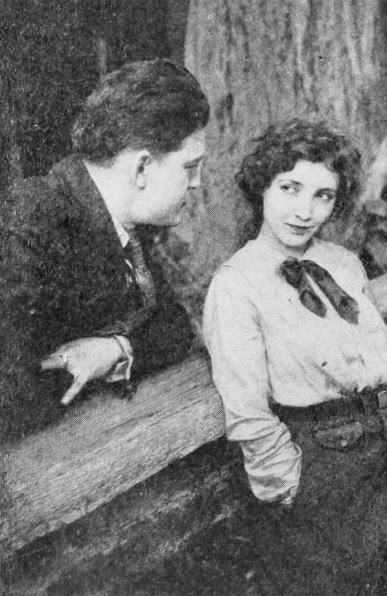
Bessie Love, as Peggy, delivers a performance that oscillates between stoic command and vulnerable yearning. Her expressive eyes, a hallmark of silent-era acting, convey a spectrum of emotions without the crutch of dialogue. The subtle tilt of her head when she watches Clayton across the river is a masterclass in non‑verbal storytelling. Wallace MacDonald’s portrayal of Clayton, while initially bordering on the archetypal aristocratic suitor, matures into a nuanced figure grappling with the dissonance between societal expectations and authentic desire.
The supporting cast—Joe Rickson as the grizzled foreman, Harry Russell as the duplicitous associate—adds layers of texture, each embodying facets of the film’s central conflict: the tension between industrial exploitation and personal loyalty. Their performances, though constrained by the era’s theatrical diction, are enlivened by a kinetic physicality that anchors the narrative in tangible reality.
Thematic Resonance and Socio‑Historical Context
The Little Boss operates on multiple thematic registers. At its core lies a commentary on gender dynamics in early twentieth‑century America; Peggy’s ascendancy to a position traditionally reserved for men challenges contemporary norms, positioning her as a proto‑feminist figure. The film also interrogates the myth of the American Dream, juxtaposing the rugged authenticity of the lumber camp against the seductive veneer of urban sophistication. This dichotomy reflects the post‑World War I cultural shift, wherein many Americans grappled with the allure of industrial progress versus the preservation of agrarian values.
Moreover, the narrative’s exploration of class mobility—Peggy’s transition from corduroy‑clad laborer to silk‑draped city dweller—mirrors the broader societal migration from rural to urban centers during the 1920s. The film’s resolution, wherein love triumphs over economic stratification, offers a romanticized vision of social integration, a motif also evident in The Lure of Luxury and Jewel.
Comparative Analysis with Contemporary Works
When measured against its silent contemporaries, The Little Boss distinguishes itself through its balanced fusion of romance, action, and social critique. While The Man Who Came Back leans heavily on melodramatic tropes, The Little Boss integrates its melodrama with a robust sense of place, allowing the forest itself to become a character. The film’s climactic dynamite scene shares a visceral intensity with the suspenseful set pieces of The Face in the Dark, yet it diverges by employing the explosion as a symbolic purge of entrenched power structures rather than mere spectacle.
In terms of narrative structure, the film’s three‑act progression—rural establishment, urban exile, and climactic reconciliation—parallels the storytelling arc of Over Night, albeit with a more pronounced emphasis on environmental determinism. The use of a natural disaster (the dynamite‑laden cabin) as a catalyst for character revelation is reminiscent of the narrative device employed in Das lebende Rätsel, underscoring the silent era’s penchant for externalizing internal conflict through physical peril.
Legacy, Influence, and Modern Reappraisal
Although The Little Boss did not achieve the box‑office heights of its more flamboyant peers, its influence reverberates in later depictions of strong‑female protagonists navigating patriarchal landscapes. The film prefigures the character archetype later popularized by Greta Garbo’s nuanced portrayals and, decades later, by the resilient heroines of contemporary cinema such as Katniss Everdeen. Its visual motifs—particularly the interplay of industrial machinery and natural environments—foreshadow the aesthetic concerns of directors like John Ford, who would later celebrate the American frontier with similar reverence.
From a preservation standpoint, the surviving prints of The Little Boss offer scholars a valuable window into early 1920s production design, costume evolution, and location shooting techniques. The film’s use of on‑location timber camps, as opposed to studio backlots, lends authenticity that modern audiences find refreshing amidst the artificiality of many period pieces.
Final Assessment
In sum, The Little Boss stands as a multifaceted artifact of silent cinema, weaving together romance, social commentary, and kinetic action with a deft hand. Its protagonist, Peggy Winston, embodies a rare blend of rugged independence and emotional depth, challenging the era’s gender conventions while remaining accessible to contemporary viewers. The film’s visual composition, anchored by strategic chiaroscuro and purposeful framing, elevates its narrative beyond mere melodrama, inviting repeated viewings and scholarly discourse. Whether examined as a case study in early feminist representation, a testament to the era’s technical ingenuity, or simply as an engaging love story set against the backdrop of a roaring forest, The Little Boss endures as a testament to the silent era’s capacity for nuanced storytelling.