DbcultAccessing Vault...
4.6/10
Senior Film Conservator
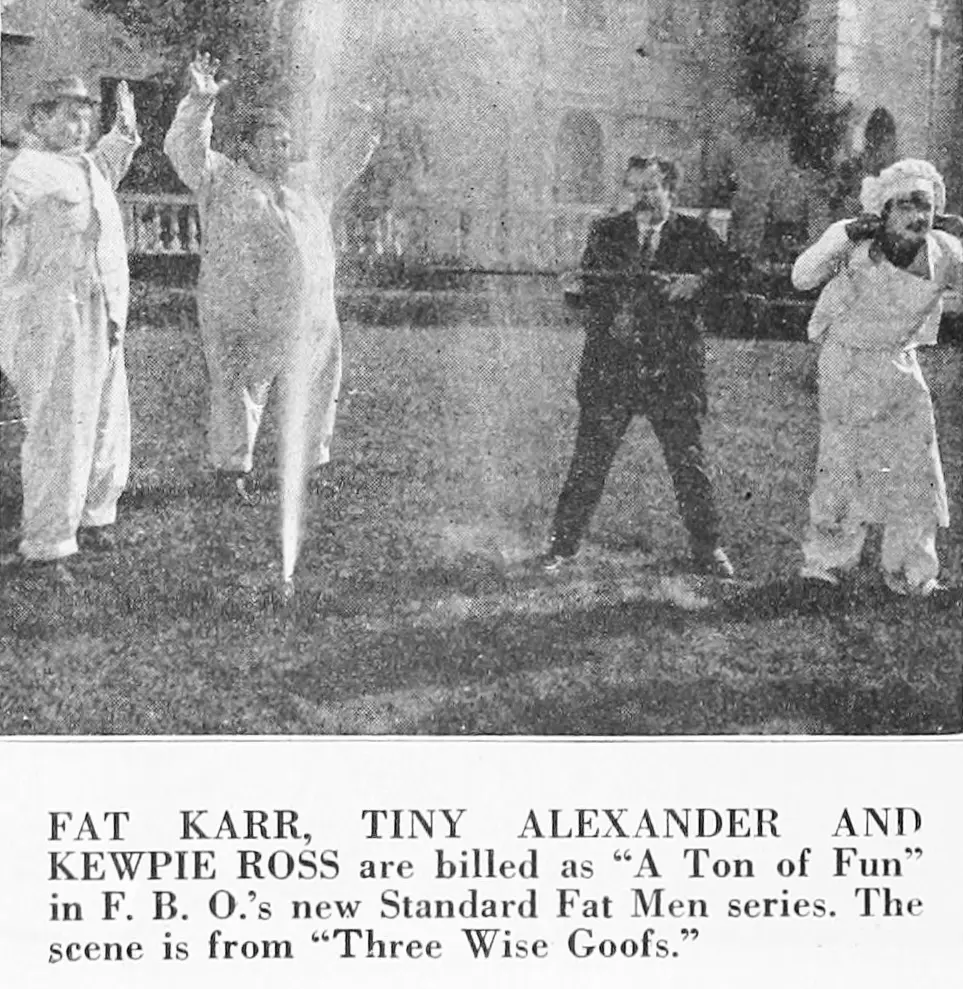
A definitive 4.6/10 rating for a film that redefined the boundaries of cult cinema. Three Wise Goofs remains a cornerstone of transgressive art.
Is Three Wise Goofs worth watching today? Short answer: only if you are a dedicated historian of silent-era slapstick or a completionist tracking the early career of Tay Garnett. This film is for viewers who find academic joy in the raw, unrefined mechanics of 1920s physical comedy, but it is certainly not for anyone who requires a coherent plot or modern comedic sensibilities.
This film works because the physical chemistry between 'Kewpie' Ross and Frank Alexander creates a rhythmic, albeit predictable, chaos that serves as a fascinating precursor to the Three Stooges.
This film fails because its structural reliance on repetitive, low-stakes gags makes even its brief runtime feel surprisingly taxing for a modern audience.
You should watch it if you want to witness the foundational DNA of the 'three-man' comedy dynamic before it was polished into a commercial art form.
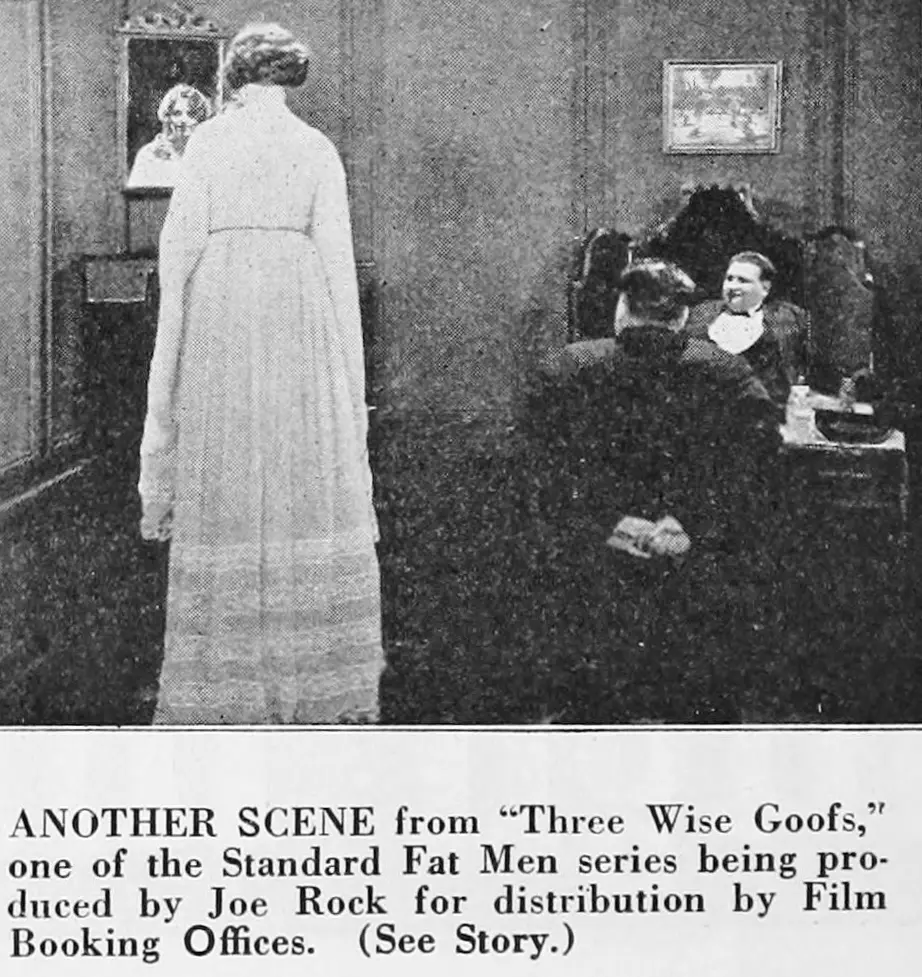
To understand Three Wise Goofs, one must understand the environment in which it was born. In 1923, comedy was moving away from the pure anarchy of the early 1910s and toward something slightly more structured, though this film sits firmly in the transitional gap. Written by Tay Garnett, who would later find fame directing hard-boiled classics, the script here is essentially a list of physical provocations. It lacks the sophisticated narrative layering found in The Poor Boob, opting instead for a 'hit them with everything' approach.
The pacing is frantic, almost desperately so. There is a sense that the creators were terrified of a single frame passing without a visual punchline. This leads to a film that is high in energy but low in resonance. When 'Kewpie' Ross enters a scene, his entire body is a prop. Every movement is exaggerated to ensure the audience in the back of a 1923 theater could track the gag. It works. But it’s flawed. The lack of breathing room means that when a genuinely clever bit of physical business occurs, it is often swallowed by the surrounding noise.
Consider the scene where the trio attempts to navigate a simple doorway. In a Keaton film, this would be a ballet of physics. In Three Wise Goofs, it is a pile-up. There is a brutal simplicity to it that feels honest, if not particularly elevated. It reminds me of the unpolished energy in The Masquerader, where the performance often outshines the actual material provided by the script.
The casting of 'Kewpie' Ross, Frank Alexander, and Hilliard Karr was a deliberate attempt to play with physical archetypes. You have the small, the large, and the rotund. It is a visual shorthand that requires no dialogue. Frank Alexander, in particular, uses his size not just for sight gags, but as an anchor for the more frenetic movements of Ross. This dynamic is the film's strongest asset. Without their specific physical contrast, the film would collapse into a generic blur of movement.
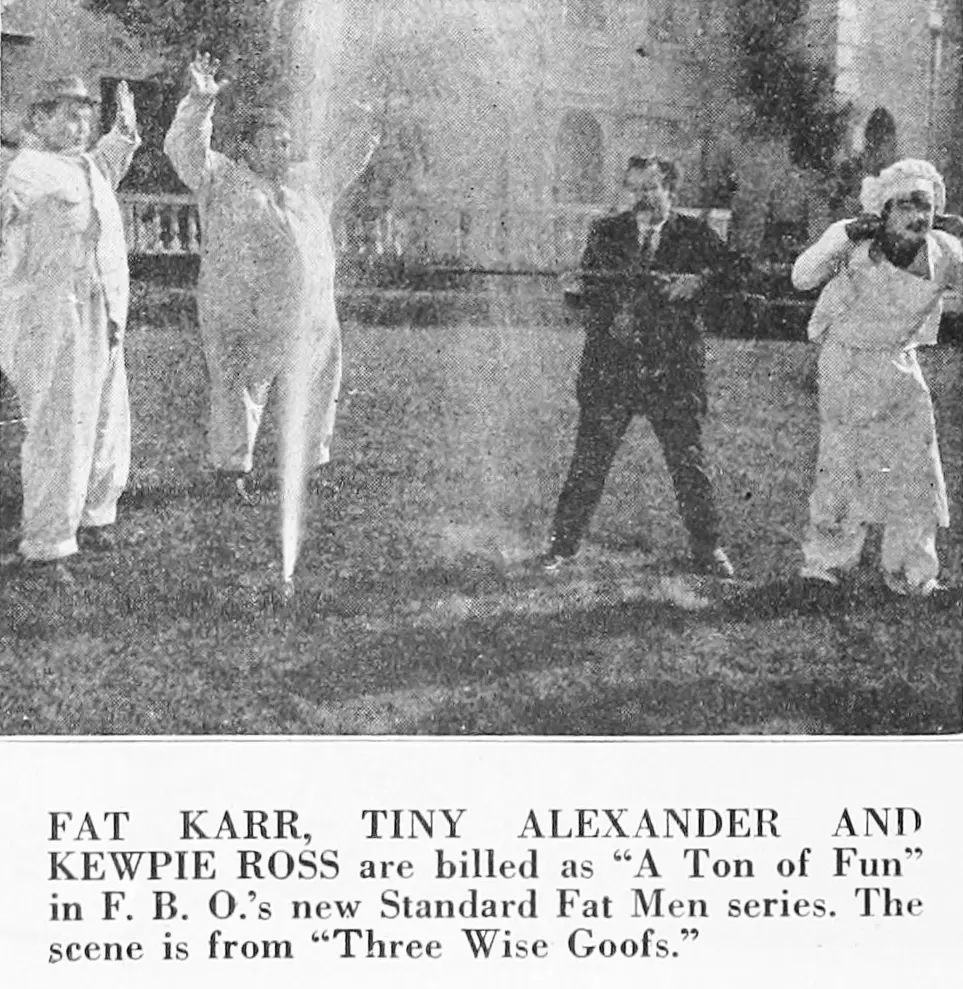
Billie Rhodes is the unsung hero here, though her role is tragically limited. In many silent shorts of this period, the female lead was relegated to being the 'prize' or the 'scold.' Rhodes attempts to inject some personality into her reactions, but the script gives her little to do but look on in bewilderment. Compared to the more integrated female roles in Anita Jo, Rhodes feels like an afterthought in a boys' club of falling down.
The acting style is, of course, broad. There is no room for subtlety when you are dodging falling objects. However, there is a debatable charm in how 'Kewpie' Ross uses his face. He doesn't just react; he telegraphs his internal confusion with a series of eye-rolls and grimaces that feel like a silent language of their own. It is a performance of pure exteriority. It is fascinating to watch, even if it lacks the emotional depth seen in contemporary dramas like Still Waters.
Cinematographically, Three Wise Goofs is functional. The camera stays mostly static, acting as a proscenium arch for the performers. This was standard for the time, but after twenty minutes, the lack of dynamic angles begins to feel claustrophobic. There are no experimental flourishes like those found in Looney Lens: Pas de deux. Instead, the focus is entirely on the clarity of the action. If a man is going to fall into a tub of water, the audience needs to see the tub, the man, and the splash in a single, uninterrupted wide shot.
The tone is one of relentless optimism in the face of disaster. No matter how many times the characters fail, they reset for the next gag with a clean slate. This gives the film a dreamlike quality, where consequences don't exist. This lack of stakes is why the film struggles to remain engaging for its full duration. Without a narrative 'hook' like the ones found in Manhattan, the viewer is left watching a series of disconnected events. It is a comedy of moments, not a comedy of errors.
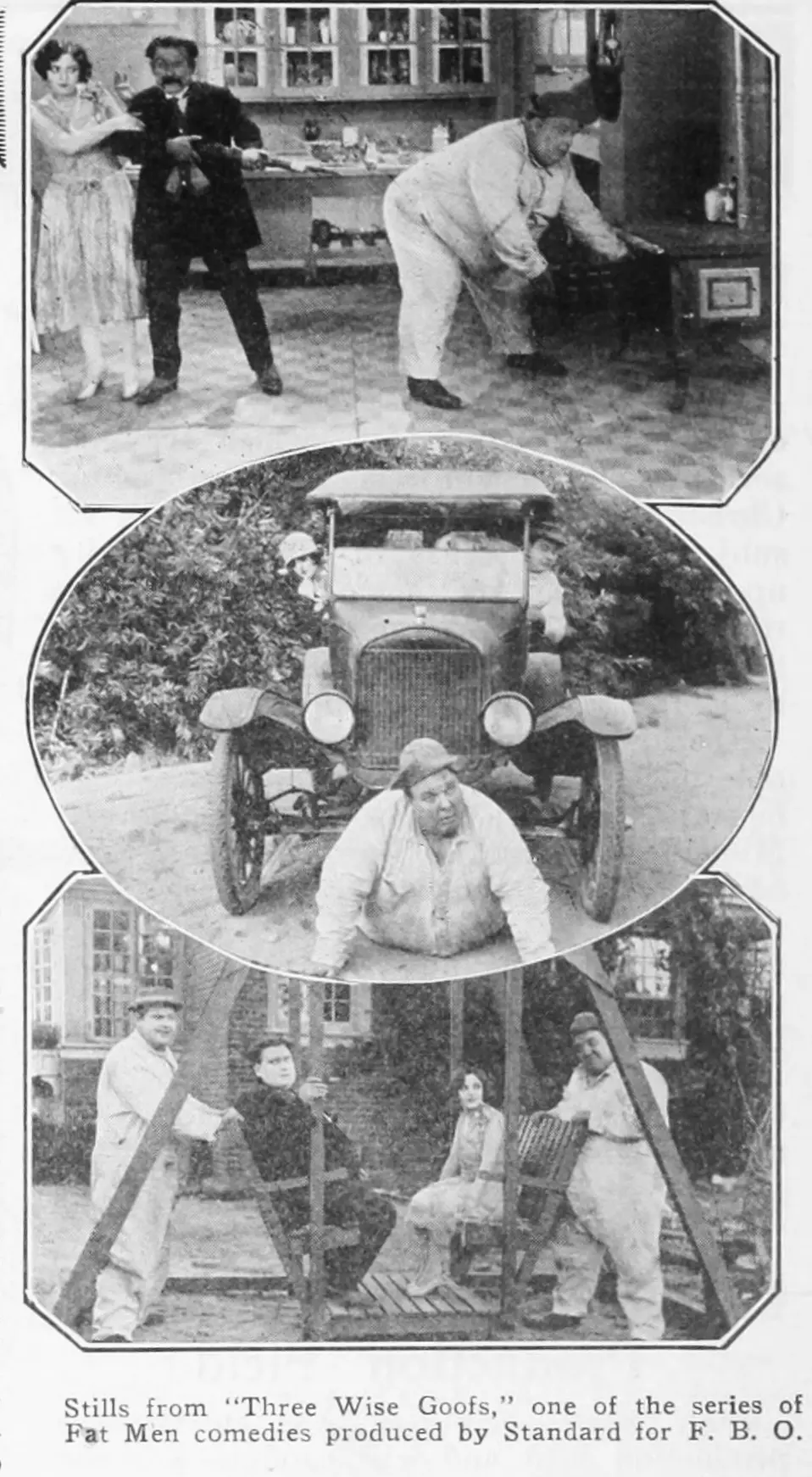
The pacing is the film's biggest hurdle. While short by modern standards, the repetition of the 'three men trying to do one thing' trope wears thin. It lacks the escalating tension of The Fatal Sign, where the suspense drives the viewer forward. Here, we are simply waiting for the next pratfall. It is a rhythmic experience rather than a narrative one.
Whether Three Wise Goofs is worth your time depends entirely on your interest in the evolution of comedy. If you are looking for a movie that will make you laugh out loud today, you might be disappointed. The humor is dated and the tropes are well-worn. However, if you are interested in the 'how' of cinema—how early filmmakers choreographed movement and how they utilized specific body types for effect—then this is a vital piece of the puzzle.
It is a film that exists as a bridge. It connects the solo clowning of the 1910s to the ensemble comedy of the 1930s. It is not a masterpiece, but it is a necessary step in the development of the genre. Watching it is like looking at the rough sketches of a great painter. You can see the talent and the ideas, even if the final composition is messy.
Pros:
Cons:
Three Wise Goofs is a loud, stumbling, and ultimately harmless piece of cinema history. It doesn't have the grace of Chaplin or the ingenuity of Keaton, but it has a grit and a frantic energy that is uniquely its own. It is a reminder that before comedy was an art, it was a physical endurance test. While it may not stand up as a 'great film' in the traditional sense, its value as a historical document is undeniable. It is a messy, funny, and occasionally boring look at three men trying to find their footing in a world that wants them to fall. It works. But it is flawed. For the modern viewer, it is a curiosity rather than a classic.
If you have already explored the major works of the era like Manhattan or the more dramatic Et Syndens Barn, this short provides a nice change of pace. Just don't expect it to change your life. It is, at its heart, exactly what the title promises: three goofs doing goofy things. And sometimes, that is enough.
IMDb 6.6
1921
Community
Log in to comment.