DbcultAccessing Vault...
Cult Review
Senior Film Conservator
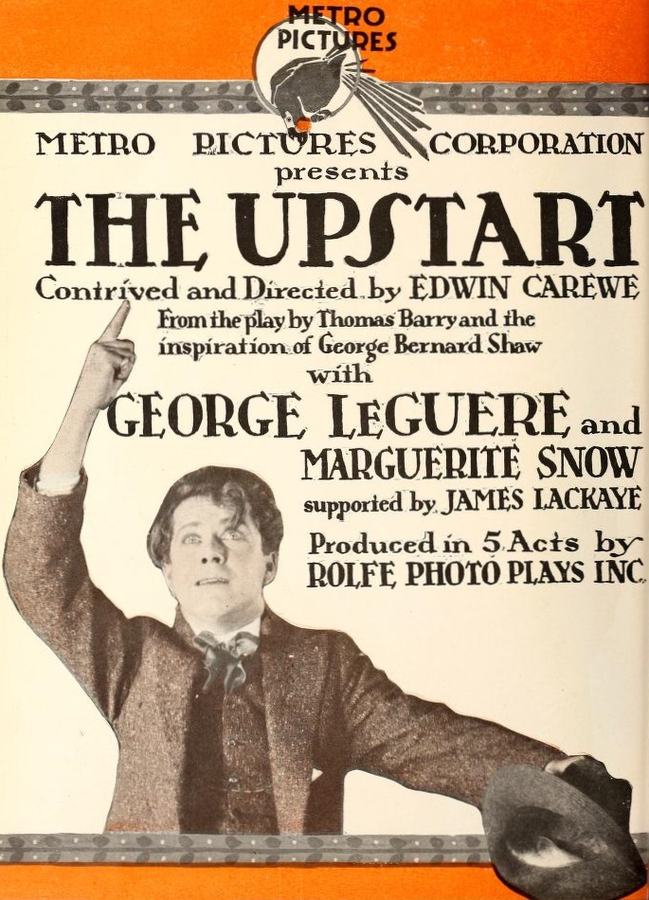
In the nascent years of cinema, when the moving picture was still finding its voice and its capacity for social commentary, a film like The Upstart emerges as a surprisingly nuanced, if somewhat didactic, exploration of human relationships. Released at a time when societal norms were rigidly defined yet subtly shifting, this production, penned by June Mathis and Tom Barry, offers a fascinating glimpse into early 20th-century anxieties surrounding marriage, affection, and the often-ironic consequences of idealistic intervention. It’s a narrative that, despite its vintage, resonates with a timeless quality, inviting audiences to ponder the true nature of commitment and the perils of philosophical detachment.
Our central figure, Coventry Petmore, portrayed with a compelling blend of earnestness and naiveté by Fred Sittenham, is a man consumed by an abstract crusade. He is not merely dissatisfied with his own domestic arrangements; he is philosophically opposed to the very concept of loveless marriage and the societal ill of divorce. This conviction, so potent that it compels him to abandon his wife and child, sets him on a quixotic journey, a self-appointed knight errant tilting at the windmills of marital discord. Petmore’s idealism, while noble in its intent, is immediately suspect in its execution, predicated as it is on a profound disconnect from the messy, unpredictable emotional landscape of real human beings. He is a theorist, not a practitioner, and his grand pronouncements on love and loyalty are soon put to the ultimate test in the crucible of another’s domestic drama.
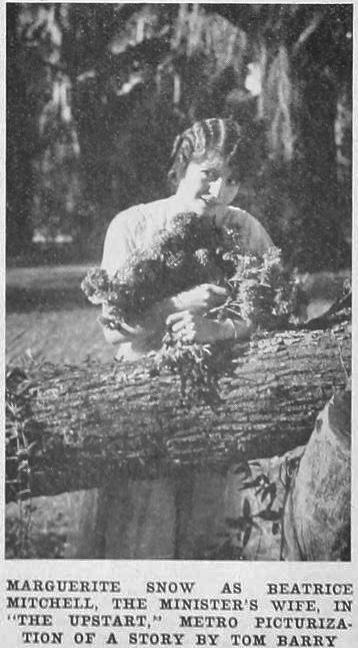
Petmore’s path serendipitously (or perhaps karmically) leads him to the stately, yet emotionally barren, household of Judge Mitchell. Here, we encounter a microcosm of the very issues Petmore purports to address. The Judge’s son, a minister portrayed by Frederic Sumner, embodies a rigid, duty-bound approach to matrimony. His relationship with his wife, Beatrice (Marguerite Snow), is characterized by an almost painful absence of affection. Beatrice, starved for emotional connection, finds herself increasingly drawn to the vitality and charm of her chauffeur, Larry Price, played by George LeGuere. This burgeoning attraction, a silent rebellion against the minister’s emotional austerity, becomes the perfect canvas for Petmore’s grand social experiment. He sees not a woman in distress, but a case study, an opportunity to prove the efficacy of his theories. His intervention is less about genuine empathy and more about a strategic application of his abstract principles.
The core of Petmore’s audacious plan is a calculated manipulation, a theatrical gambit designed to shock the minister into realizing the error of his ways and to win Beatrice back through a grand, romantic gesture. He encourages Beatrice to declare her intention to elope with Price, simultaneously coaching the minister on the precise, emotionally resonant response he believes will rekindle their dormant love. It’s a fascinating, if deeply flawed, piece of social engineering, revealing Petmore’s belief that human emotions can be neatly packaged, triggered, and resolved through a pre-written script. His confidence in this maneuver is absolute, stemming from an almost clinical detachment from the raw, unpredictable forces of human desire and resentment. The irony, of course, is that Petmore, in his zeal to mend broken marriages, actively facilitates the very act of infidelity he claims to abhor, albeit with the intention of a 'cure.'
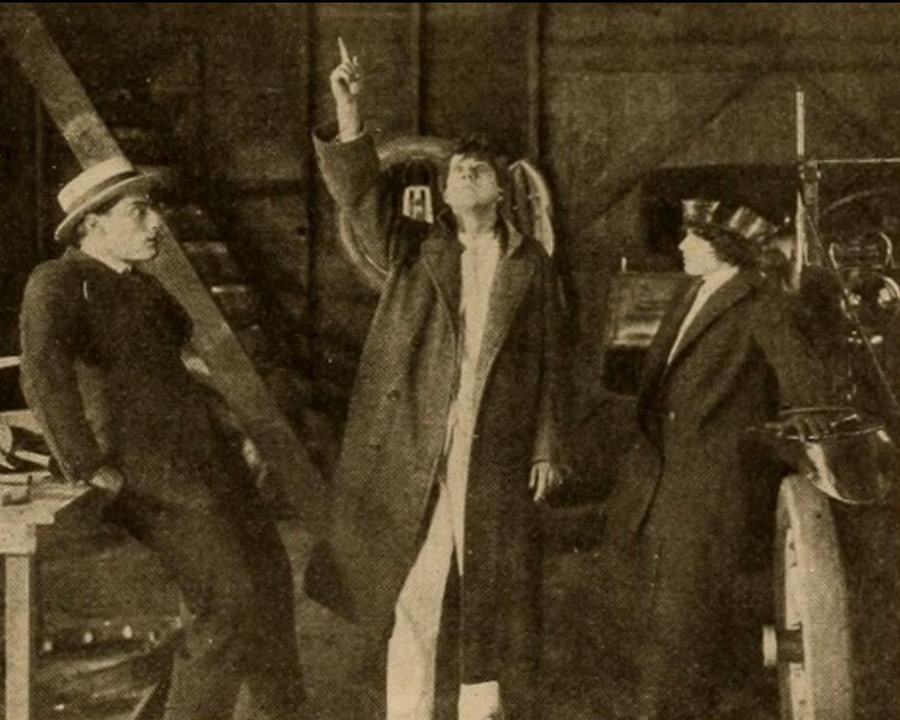
Predictably, Petmore’s intricate machinations unravel with spectacular inefficiency. Human hearts, it turns out, are not so easily swayed by philosophical arguments or carefully constructed scenarios. Beatrice’s declaration is not a mere ploy; her attraction to Larry Price is genuine, and the minister’s coached response, however well-intended, fails to pierce through the accumulated layers of neglect and disaffection. The plan backfires, pushing Beatrice closer to the precipice of elopement rather than away from it. It is only a stroke of providential intervention—a torrential rainstorm and subsequent car trouble—that physically prevents Beatrice and Price from completing their escape. This external impediment, rather than any internal change of heart or successful application of Petmore’s theories, is what temporarily halts the runaway couple, underscoring the haphazard nature of fate against the best-laid plans of men.
The repercussions of Petmore’s meddling are swift and decisive. Judge Mitchell, the patriarchal figure of the household, embodies the prevailing social order, a man less concerned with the abstract ideals of love and more with the maintenance of decorum and reputation. Upon discovering Petmore’s role in the near-scandal, the Judge, portrayed with an air of stern authority by James Lackaye, wastes no time in ejecting the self-appointed social reformer from his home. Petmore, the architect of a failed grand design, is cast out, his theories discredited, his presence deemed disruptive and dangerous. This expulsion serves as a symbolic rejection of his radical, albeit misguided, approach to marital counseling, reinforcing the idea that some societal structures, however flawed, are fiercely protected against external interference.
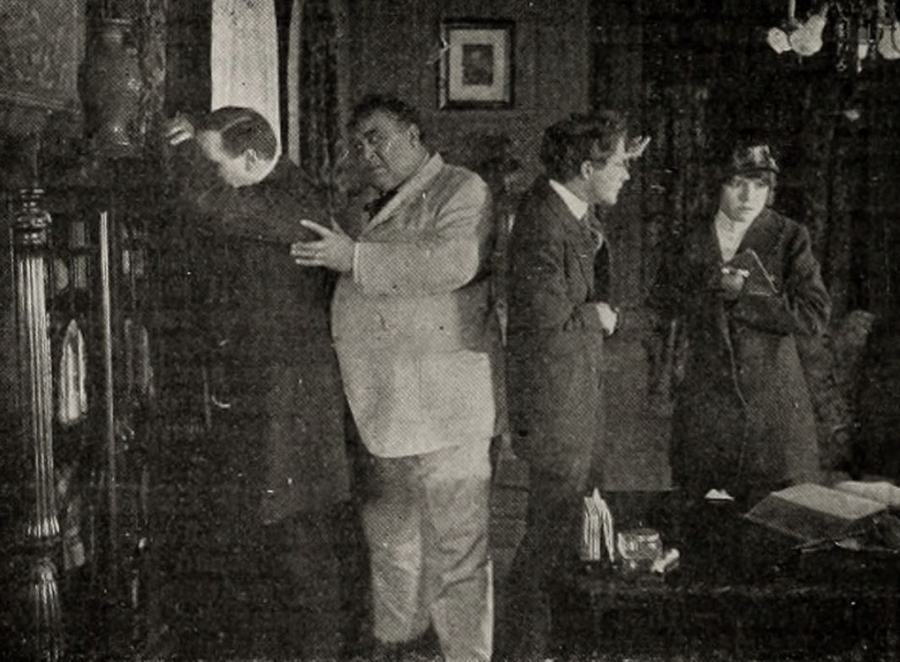
The final, crushing blow of irony awaits Petmore upon his return home. The crusader against loveless marriages and divorce discovers that his own wife has succumbed to the very circumstances he sought to prevent in others, having run away with her chauffeur. This devastating personal refutation of his entire mission should, by all accounts, shatter his convictions. Yet, in the film’s most striking and perhaps most unsettling conclusion, Petmore’s belief in his abstract theories remains unshaken. This unwavering resolve, despite overwhelming evidence of personal failure, paints Petmore not merely as a fool, but as a tragic figure, so deeply entrenched in his philosophical constructs that he is immune to the lessons of lived experience. It's a powerful statement on the human capacity for self-delusion and the stubborn adherence to ideals, even when those ideals have led to personal ruin.
Thematically, The Upstart is surprisingly rich for an early cinematic endeavor. It dissects the institution of marriage, questioning whether it is merely a social contract or a vessel for genuine affection. The film implicitly critiques the societal pressures that often trap individuals in unfulfilling unions, exploring the consequences of emotional neglect. Beatrice’s yearning for connection, the minister’s emotional detachment, and Petmore’s detached idealism all converge to highlight the complex interplay of duty, desire, and societal expectation. While the film’s resolution for Beatrice is left somewhat ambiguous by the providential storm, her near-elopement serves as a potent symbol of a woman’s desperate search for agency and affection in a restrictive world.
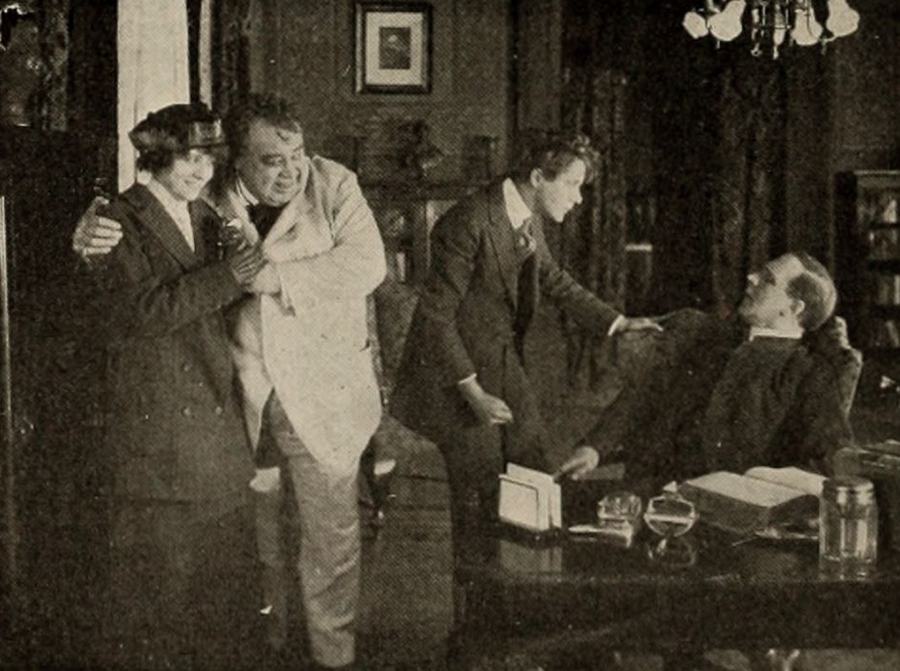
From a filmmaking perspective, June Mathis and Tom Barry’s screenplay demonstrates a keen understanding of character and narrative arc, even within the confines of silent cinema. The plot, while somewhat melodramatic, is tightly constructed, with each event building towards the ultimate ironic climax. Silent films relied heavily on visual storytelling, expressive acting, and well-placed intertitles to convey emotion and plot points. One can imagine Fred Sittenham’s Petmore conveying his earnest, yet misguided, fervor through grand gestures and intense facial expressions, while Marguerite Snow’s Beatrice would have communicated her quiet desperation and burgeoning hope with subtle shifts in posture and gaze. The use of a rainstorm as a plot device is a classic trope, but here it serves not as a mere inconvenience, but as a literal dampening of impulsive desire, a temporary reprieve from a decision that would have irrevocably altered lives.
Comparing The Upstart to its contemporaries, it stands out for its direct engagement with social issues. While other films of the era might have focused on adventure, like The Life and Adventures of John Vane, the Australian Bushranger, or historical spectacle, such as The Last Days of Pompeii, The Upstart delves into the often-uncomfortable realities of domestic life. It offers a more nuanced take than perhaps the overt melodrama of something like East Lynne, presenting a protagonist whose flaws are intellectual rather than purely moral. The film’s willingness to portray a character who fails so spectacularly in his mission, yet remains unshaken, gives it a psychological depth that transcends simple morality tales. It's less about good versus evil and more about the conflict between idealism and messy reality.
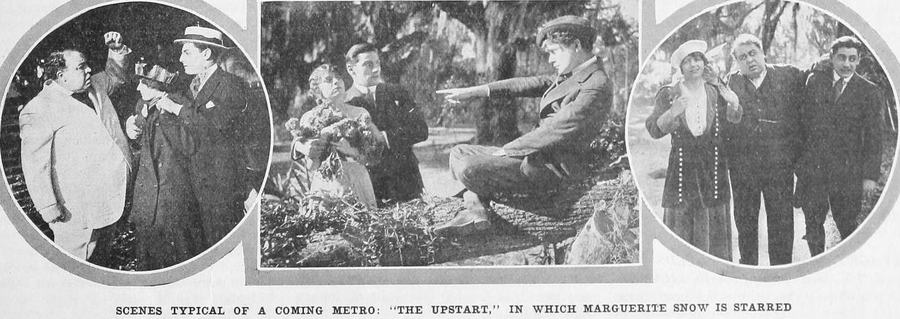
The film’s commentary on women’s roles and agency, though subtle, is also noteworthy. Beatrice’s predicament is not unlike those explored in nascent feminist narratives, such as Your Girl and Mine: A Woman Suffrage Play, which directly addressed women's fight for their voice. While Beatrice doesn't actively campaign for suffrage, her yearning for emotional fulfillment outside a loveless marriage speaks to a similar desire for self-determination. Her near-elopement, though thwarted, represents a desperate grasp for personal happiness, a rejection of her prescribed role as the minister’s unloved wife. This makes her character, despite her limited agency in the narrative, a compelling figure of early cinematic womanhood.
Ultimately, The Upstart serves as more than just a historical curiosity; it is a thought-provoking piece of early cinema that grapples with perennial human dilemmas. It reminds us that good intentions, when coupled with a lack of understanding of human nature, can lead to catastrophic results. Petmore’s journey is a cautionary tale about the dangers of intellectual arrogance and the inherent unpredictability of the heart. His unwavering conviction, even in the face of profound personal irony, leaves a lasting impression, forcing us to consider the fine line between principled conviction and stubborn delusion. It’s a film that, through its sharp narrative and ironic twists, invites continued contemplation on the enduring complexities of love, marriage, and the human condition.
IMDb —
1919
Community
Log in to comment.