DbcultAccessing Vault...
6.6/10
Senior Film Conservator
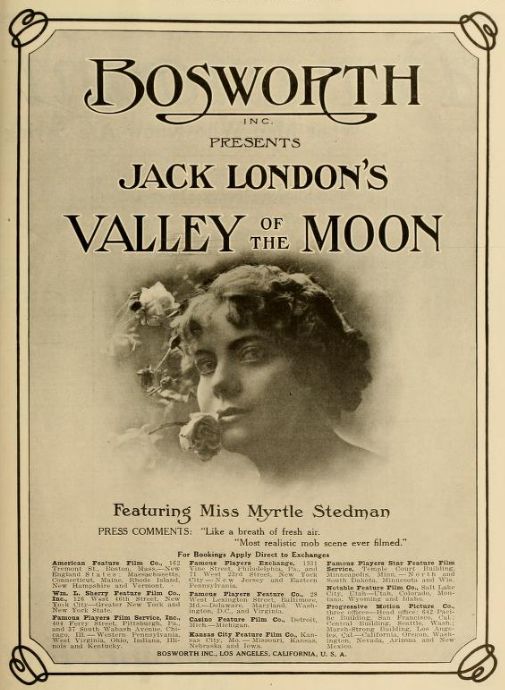
A definitive 6.6/10 rating for a film that redefined the boundaries of cult cinema. The Valley of the Moon remains a cornerstone of transgressive art.
To witness the 1914 adaptation of Jack London’s The Valley of the Moon is to engage with a cinematic artifact that feels both ancient and remarkably prescient. Directed by Hobart Bosworth, who also takes on the mantle of the protagonist, this film is far more than a mere pastoral romance; it is a sprawling, socio-political manifesto that captures the volatile transition of the American West from a frontier of opportunity to an industrial cage. Much like the thematic weight found in The Seed of the Fathers, London’s narrative, as translated by Hettie Grey Baker, grapples with the inescapable gravity of heritage and the biological imperative to return to the land.
The film opens not with grand vistas, but with the claustrophobic, tactile reality of the working class. Billy Roberts and Saxon are introduced as archetypes of vitality trapped within the machinery of the city. Their meeting at the Weazel Park picnic is a masterclass in silent-era characterization, where the 'roughhouse' energy of the San Francisco and Oakland rivalry serves as a backdrop to their burgeoning connection. Bosworth and Myrtle Stedman portray their characters with a grounded, muscular grace that distinguishes them from the more theatrical performances of the era, such as those found in The Last Egyptian.
The subsequent teamsters' strike is the film’s narrative fulcrum. It is here that the production’s scale becomes truly staggering. The use of a thousand extras to depict the rioting strike-breakers creates a sense of genuine peril and historical gravitas. Unlike the stylized conflict of Julius Caesar, the violence in 'The Valley of the Moon' feels immediate and dirty. The death of Bert, Billy’s chum, is the catalyst for a psychological descent that mirrors the urban decay surrounding them. Billy’s incarceration and the subsequent destitution of Saxon represent the lowest ebb of their fortunes, a stark portrayal of how the industrial complex grinds the individual into dust.
The turning point of the film occurs not through a physical confrontation, but through a spiritual awakening. As Saxon sails on the San Francisco Bay, the vastness of the water serves as a mirror to her internal yearning. She realizes that the city is a necrotic organism, a place that has outlived its utility for those who carry the blood of pioneers. This realization is the film’s most poetic moment—a rejection of the modern world in favor of an idealized, atavistic past. It is a theme that resonates with the existential struggles depicted in The Convict Hero, where the search for redemption is inextricably linked to the landscape.
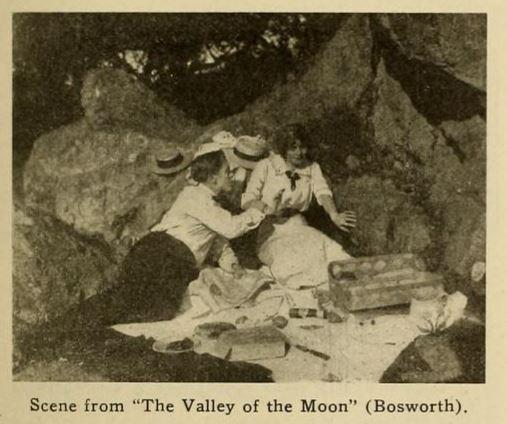
Their subsequent journey on foot is a rhythmic departure from the frantic editing of the strike sequences. The film adopts a more contemplative, episodic structure as Billy and Saxon traverse the California coastline. This section of the film functions as a travelogue of the soul, capturing the rugged beauty of the terrain that their ancestors once conquered. The cinematography, though limited by the technology of 1914, manages to convey the shimmering allure of the Pacific and the daunting scale of the hills.
One of the most fascinating segments of the film is the encounter with the 'Abalone Eaters' in Carmel. This group of artists and intellectuals represents a different kind of escape from industrialism—one defined by creative freedom and communal living. The inclusion of this subculture adds a layer of intellectual texture to the film, contrasting Billy’s physical prowess with the cerebral pursuits of the bohemians. The boxing match at Carmel, where Billy secures their camping outfit in a mere twenty-seven seconds, is a brilliant callback to his origins as a pugilist, proving that his urban skills can be repurposed for their survival in the wild.
This middle act of the film serves to cleanse the palette of the soot and blood of the first half. It prepares the audience—and the characters—for the eventual discovery of their sanctuary. The pacing here is deliberate, allowing the viewer to feel the passage of time and the hardening of Billy and Saxon’s resolve. It is a stark contrast to the melodramatic pacing of Behind the Scenes, focusing instead on the endurance of the human spirit.
The climax of the film is not a battle, but a discovery. The moment Billy and Saxon stand upon the cairn and look down into the Valley of the Moon is a sequence of pure cinematic catharsis. Sonoma is presented as a secular Eden, a place where the labor of the hands is directly rewarded by the fertility of the earth. The film’s transition into scenes of busy ranch life represents the ultimate fulfillment of the Londonian dream: the reconciliation of man and nature.
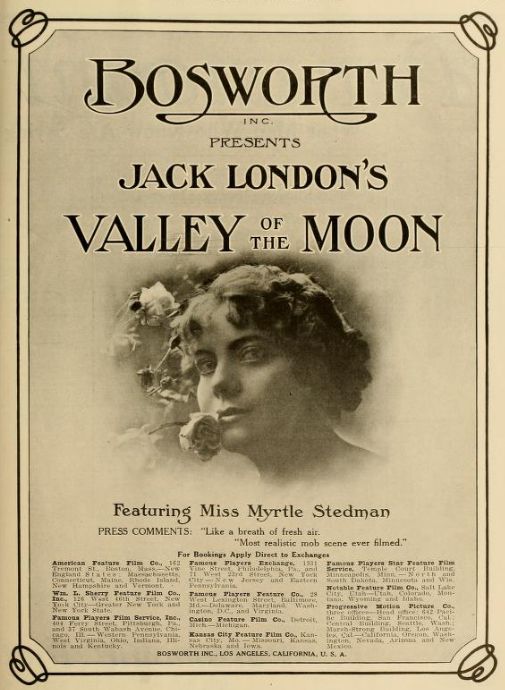
The final scene in Wildwater Canyon is a masterstroke of understated emotion. Saxon’s whispered secret—the promise of a new generation—solidifies their claim to the land. They are no longer just survivors of the city; they are the new pioneers, closing the circle that their ancestors began. The film ends on a note of profound serenity, a far cry from the chaotic opening. The thematic journey from the 'iron heel' of Oakland to the 'moon-drenched' peace of Sonoma is complete.
From a technical standpoint, The Valley of the Moon is an ambitious undertaking for its time. Hobart Bosworth’s direction shows an intuitive understanding of how to use landscape as a character, a technique that would later be perfected in the Western genre. The performances are remarkably modern, avoiding the exaggerated pantomime that often plagues silent cinema. Myrtle Stedman, in particular, delivers a performance of quiet strength that serves as the film’s emotional anchor.
When compared to other contemporary works like Samson or The Black Chancellor, 'The Valley of the Moon' stands out for its commitment to social realism. While other films were preoccupied with historical spectacle or gothic intrigue, Bosworth and London were looking at the immediate, pressing issues of the American working class. The film’s message remains startlingly relevant in an age where the disconnect between urban life and the natural world continues to widen.
'The Valley of the Moon' is a monumental achievement in early American cinema. It is a film that demands to be seen not just as a historical curiosity, but as a vibrant, breathing work of art. Its exploration of labor, heritage, and the healing power of the landscape is handled with a sophistication that belies its age. For anyone interested in the roots of social realism in film, or for those who simply appreciate a well-told story of resilience and redemption, this film is an essential experience. It is a cinematic hymn to the enduring power of the American dream, stripped of its artifice and returned to the soil from which it grew.
IMDb 6.9
1930
Community
Log in to comment.