DbcultAccessing Vault...
6.2/10
Senior Film Conservator
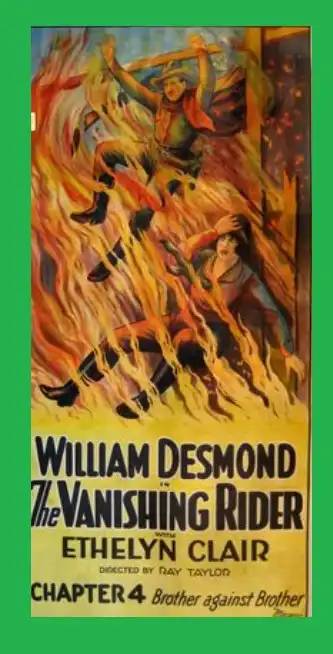
A definitive 6.2/10 rating for a film that redefined the boundaries of cult cinema. The Vanishing Rider remains a cornerstone of transgressive art.
If you have a Saturday afternoon to kill and a high tolerance for flickering black-and-white dust, this might be for you. It is probably not worth it for anyone else, unless you are a completionist for early horror icons. 🤠
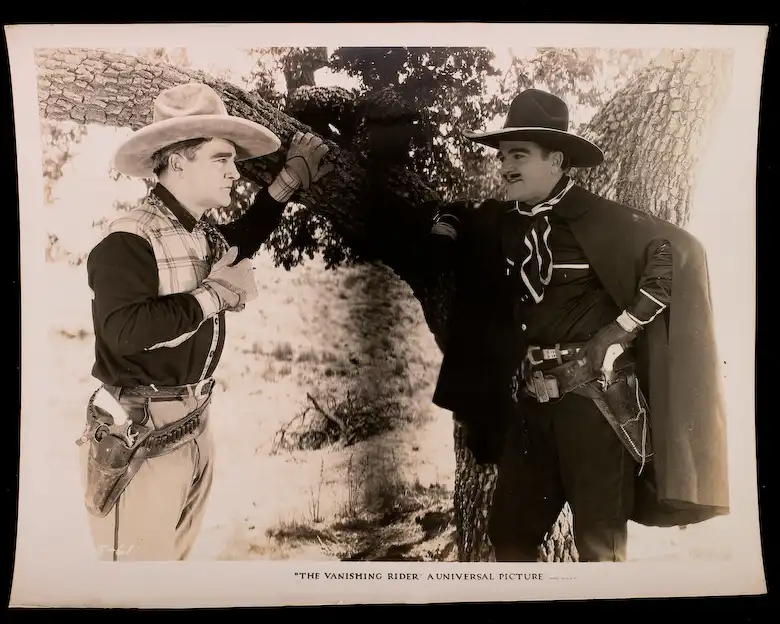
I sat down to watch The Vanishing Rider mostly because Boris Karloff is in it. He isn't the star, but you can see that heavy-lidded stare starting to take shape even here in the dirt.
The movie is a serial, which means it was designed to be watched in small chunks. Watching it all at once feels a bit like eating an entire bag of flour. It is dry and a little repetitive.
William Desmond plays the hero, and he has that very specific 1920s way of sticking his chest out. It looks like he is constantly trying to keep his balance on a moving boat.
The main gimmick is that the hero has a 'vanishing' trick. In 1928, this was just a crude double exposure.
Sometimes he fades out and the background stays, but you can still see his outline. It is charmingly bad. It makes him look like a ghost who isn't very good at being dead. 👻
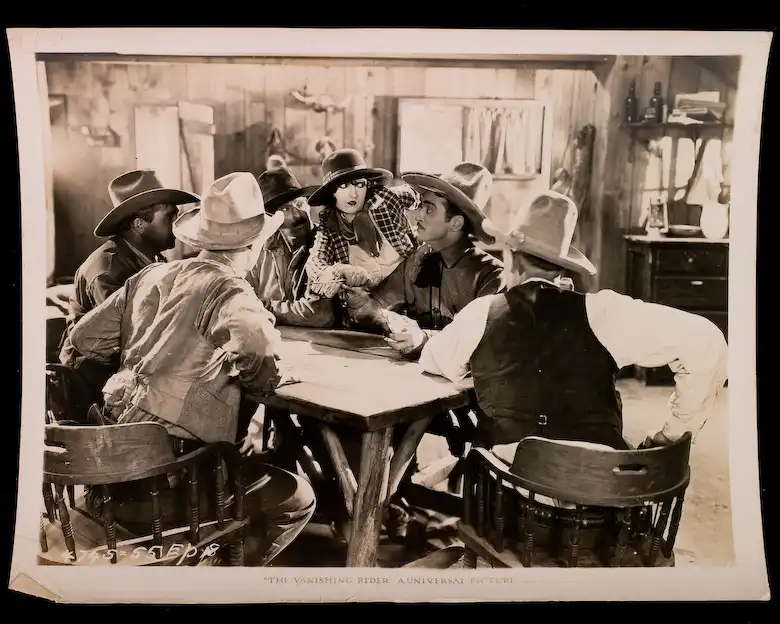
One might suggest that the film struggles with its own spatial logic. Characters seem to ride for hours to get to a ranch that looks like it is right next door.
The horses look exhausted. There is a scene in the third chapter where a horse just stops and looks at the camera. I felt for that horse.
Ethlyne Clair is the leading lady, and she does a lot of alarmed pointing. Her acting is mostly in her eyebrows.
It is interesting to compare this to something like Fear Not from a few years earlier. You can see how the Western genre was starting to get a bit more formulaic and tired.
The dialogue cards are full of that over-the-top silent movie energy. One card says something about 'vile treachery' and it feels like the movie is trying very hard to make us care.
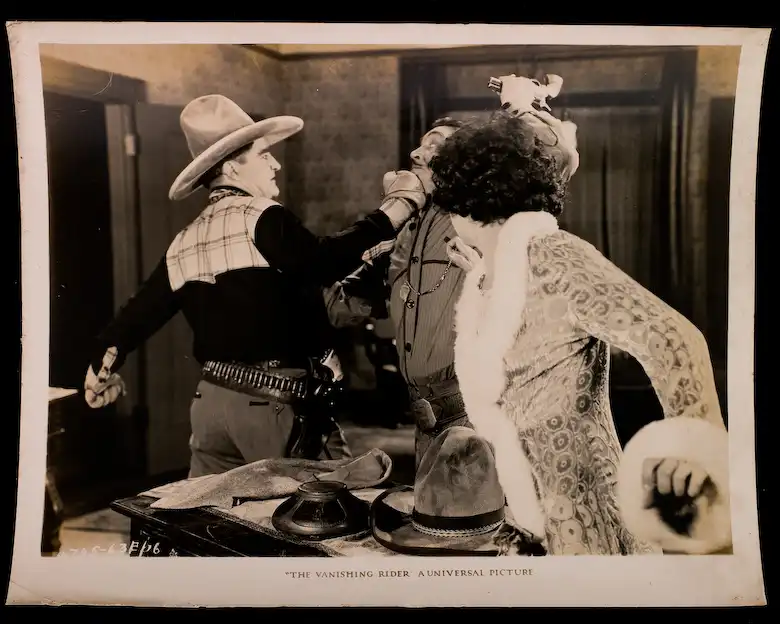
I noticed a weird edit in the middle of a fight scene. A guy gets punched, falls, and then suddenly he is standing three feet to the left in the next shot.
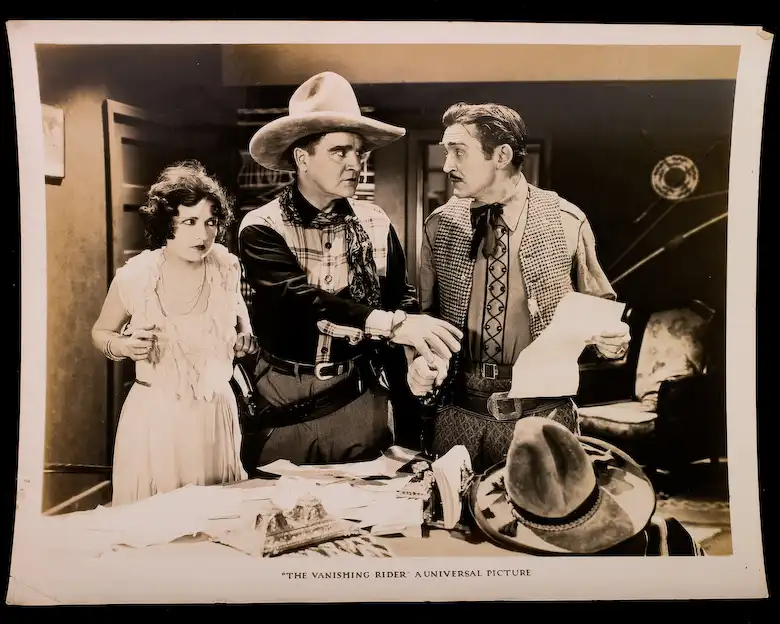
The continuity person must have been at lunch. Or maybe they just didn't think anyone would be looking this closely a hundred years later.
Boris Karloff plays a villainous henchman named Vane. He has this weirdly intense presence compared to everyone else.
While the hero is doing his big theatrical gestures, Karloff is just lurking. He understands the camera better than the director does.
There is a certain materiality to the film stock here that I actually liked. The scratches and the grain make the desert look even more desolate.
It reminds me of the visual texture in The Bottle Imp, though that was much more stylized. Here, the grit is just... actual grit.
The costumes are a bit strange too. Some of the outlaws wear hats that look three sizes too big. They keep having to adjust them during the chase scenes.
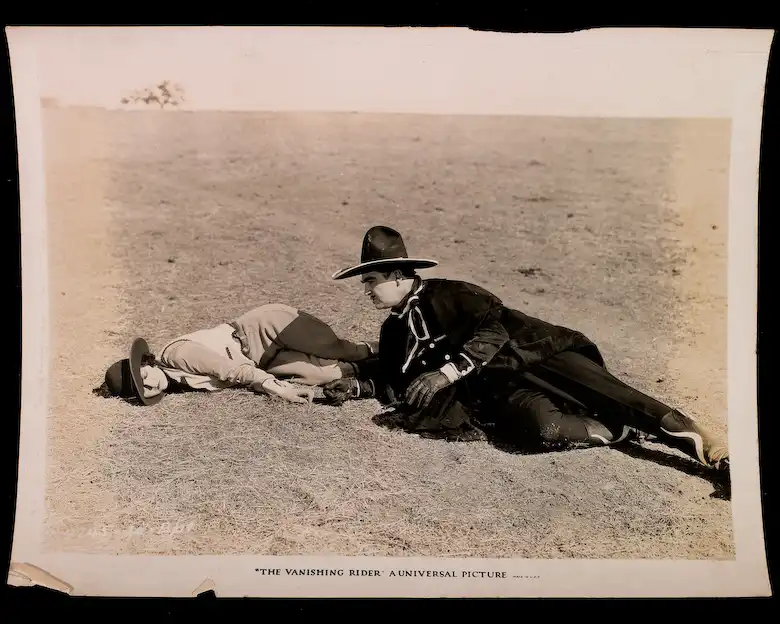
It takes away from the menace of the gang when they are constantly worried about their headwear. 🎩
The pacing is very 'chapter-based,' which means every ten minutes there is a cliffhanger. Someone falls off a cliff or gets trapped in a burning shack.
By the fifth time it happens, you start to wonder why they don't just walk away. The hero seems to have no sense of self-preservation.
One could argue that this represents the industrial nature of early Hollywood. They were just churning these out like sausages.
It lacks the weird, poetic energy of something like Children of Eve. It is just a job.
There is a scene with a campfire that lasts way too long. They just sit there. I think they were trying to build tension, but it just felt like they forgot to say 'cut.'
The music in the restored version I saw was a bit repetitive too. It was just the same three piano chords over and over.
I found myself looking at the backgrounds a lot. The California hills look so empty back then. No houses, no power lines, just void.
It gives the movie a lonely feeling that I don't think was intentional. It makes the 'vanishing' hero seem even more isolated.
I suspect the writers, like George H. Plympton, were just pulling ideas out of a hat. The plot doesn't always connect.
One minute they are fighting over a ranch, the next there's a mysterious secret. It is a bit of a mess, honestly.
If you've seen False Trails, you know how these low-budget Westerns usually go. They all blend together after a while.
But Karloff makes it worth a look. Even as a 'heavy,' he has this strange dignity.
He doesn't fit in the world of the Western. He looks like he belongs in a dark castle, even when he's standing in a dusty canyon.
The ending is very abrupt. It just sort of stops. 🎬
It doesn't feel like a conclusion as much as it feels like the production ran out of money. Or film.
I wouldn't call it a 'lost gem.' It is more like a dusty pebble.
But sometimes dusty pebbles are interesting if you care about where they came from. It is a piece of history that shows how clunky movies used to be.
You can see the gears turning. You can see the actors waiting for their cues.
It is a very human movie in that way. It is flawed and a bit silly, but it's trying its best.
If you're looking for something polished, go watch a modern blockbuster. If you want to see a future legend sneering in the dirt, give this a try.
Just don't expect the 'vanishing' to look like Marvel special effects. It is more like a magic trick gone wrong at a kid's birthday party.
And that is kind of why I liked it. It feels real.
IMDb 5.8
1914
Community
Log in to comment.