DbcultAccessing Vault...
Cult Review
Senior Film Conservator
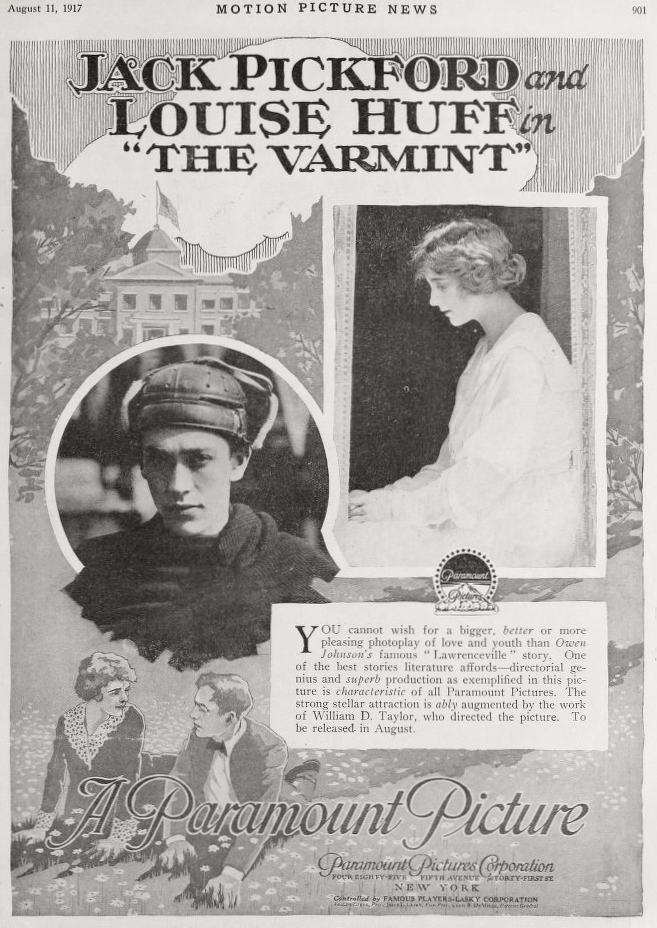
Picture a one-reel universe where the air tastes of chalk dust and pubescent panic, where every cricket chirp outside the dormitory window sounds like a countdown to disgrace.
The Varmint—released in March 1917 by Paramount but lately banished to the phantom zone of mislabeled archives—unfurls like a brittle valentine to the American boarding-school mythos. Jack Pickford, all freckled insolence and pocket-sized bravado, incarnates Owen Johnson’s literary hellion with such kinetic precision that you can almost smell the damp wool of his regulation blazer. Yet the film’s true motor is not juvenile mischief but a triangulation of gazes: the boy who cannot stop performing, the professor who sees through the performance, and the camera that refuses to flinch when the mask slips.
Director William Desmond Taylor—two years away from the sensational murder that would eclipse his filmography—shoots Lawrenceville’s cloistered arches and frozen ponds like a man already haunting his own crime scene. Shadows pool beneath the Roman’s gown; moonlight rasps across Dink’s cheekbones; intertitles arrive in spidery handwriting, as though scribbled by a delinquent who has just learned shame.
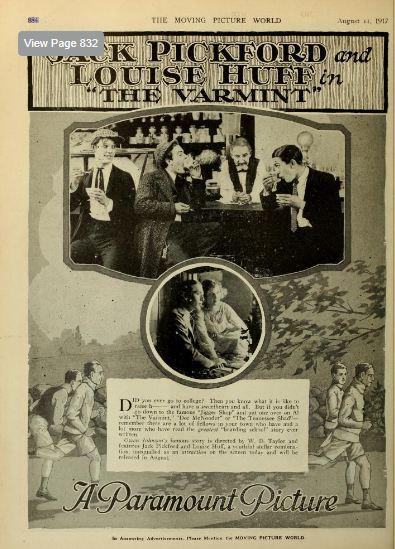
From the coach’s interior—essentially a wooden box hurtling through New Jersey dusk—Dink launches into a self-mythologizing spiel so florid it could pickle itself. He brags about tormenting masters, corrupting prefects, reducing headmasters to quivering custards. The joke, savage in its economy, is that every boast metastasizes into future humiliation once the stranger opposite him doffs his hat and becomes the arbiter of Latin gerunds. The film’s grammar here is comic, but the emotional undertow is tragic: the boy is fluent only in the language of self-sabotage.
Ben Suslow’s cinematography counters the slapstick with proto-noir chiaroscuro. When the Roman’s eyebrow arches, the coach lantern swings, carving both faces into a binary of predator and prey—except we cannot yet tell which is which. The scene lasts maybe forty-five seconds, yet it inoculates the remainder of the narrative with moral vertigo.
Lawrenceville Academy, rendered through a handful of exterior long shots and a flurry of interior tableaux, becomes a panopticon where every gaze is reciprocal. Dink expects to mesmerize; instead he is dissected. His classmates—Tennessee Shad, MacNooder, the ephemeral chorus of necktied gargoyles—register disgust with the efficiency of a Greek chorus. Taylor frames them in diagonal ranks, their eyes forming converging sightlines that pin the varmint like a lepidopterist’s specimen.
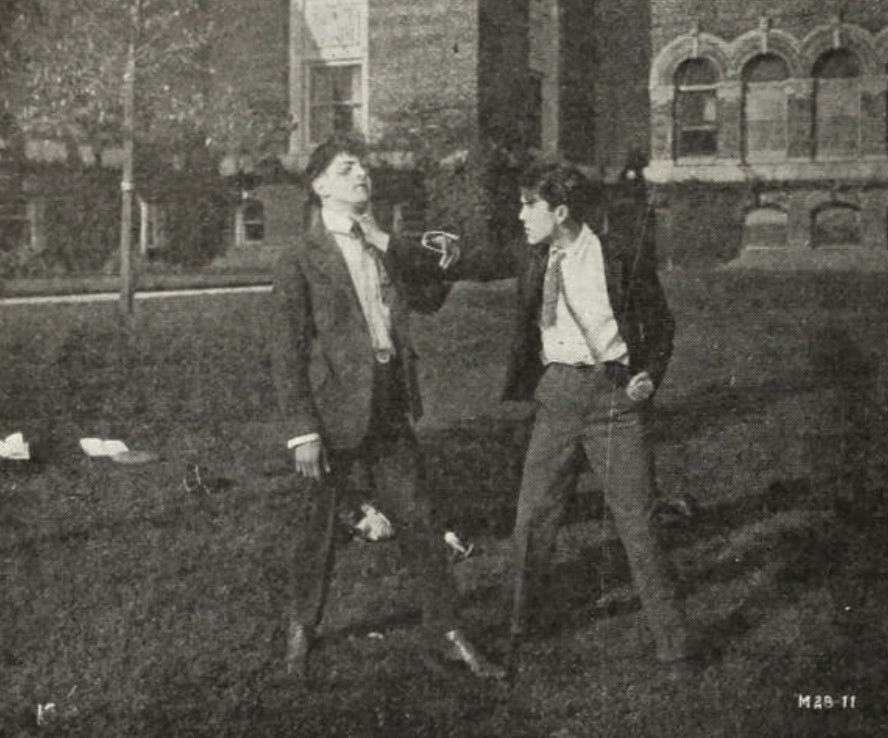
Yet the film refuses the easy catharsis of communal vengeance. Each prank ricochets, bruising the prankster more than the target. When Dink fakes a Latin passage—rolling declensions like dice—the Roman’s laughter is not derisive but almost paternal, the sound of a man who recognizes the gulf between ignorance and venality. The cut to wide-shot reveals the entire classroom stunned into silence, as if childhood itself has paused to consider the possibility that mercy might be more ferocious than punishment.
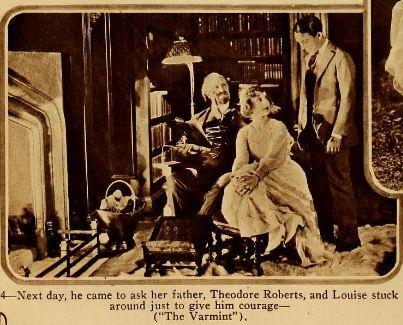
Louise Huff, as Miss McCarty, drifts through this masculine furnace like a Pre-Raphaelite after-image. She is older, betrothed, serenely unattainable; her function is not to be a love interest but to be the first object Dink desires and cannot bend to his will. Their flirtation—a single reel of teasing glances and a stolen conversation beside a lily-choked pond—ends with the news of her engagement delivered via a fellow student’s smirk. Dink’s heartbreak is registered not by histrionics but by costume: he retreats to the dormitory, unwraps a gaudy new scarf, and studies his reflection as though the neckwear might re-knit his fractured ego. The scarf becomes a gag in the next scene, yet the pathos lingers like a bruise under tweed.
The film’s moral crucible arrives when Dink, flunking, must sit a private examination in the Roman’s parlor. Cinematically, the sequence is a miniature heist: Tennessee and MacNooder lurk outside, prepared to topple a water cooler to lure the professor away. The camera cross-cuts between the conspirators’ jittery eyes and the pendulum of the grandfather clock—time itself conspiring in the deception.
Then the rug-pull: the Roman exits, but does not take the bait. He simply leaves Dink alone with blank paper, an inkwell, and the echo of his own pulse. The room, lit by a single kerosene lamp, becomes a Caravaggio; the boy’s shadow balloons across the wainscoting like a confession. In the intertitle, Dink scrawls nothing but his name—an act of surrender so quiet it feels like a detonation.
When the Roman returns, he pretends to scan the empty sheets, nods, and murmurs, “I think this will about pass you, Stover.” The line, both benediction and indictment, detonates the film’s central thesis: character is the only curriculum that cannot be faked.
Pickford’s acting style—half Fairbanks swagger, half Pickford family tremor—finds its apotheosis in the flicker of micro-expressions that traverse his face when the Roman grants reprieve. First, incredulity; then, a vertiginous relief that edges on nausea; finally, the dawning awareness that adulthood will demand a continual self-forgery more exacting than any juvenile con. The moment is silent, yet it screams.
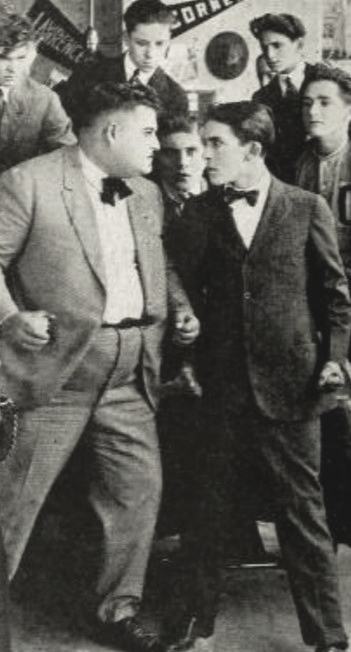
Compare this with The Undesirable, where the protagonist’s masquerade is socioeconomic, or Destiny’s Toy, where fate itself plays dress-up. The Varmint argues that identity is not a garment to be swapped but a skin to be shed in agonizing increments.
The final reel dispenses with triumph. Dink, now an upperclassman, is tasked with shepherding younger boys—among them fresh varmints whose eyes glint with the same predatory wattage he once wore. Taylor shoots the passing of the mantle in a single tracking shot: the new boys scramble across a snow-dusted quad, their scarves whipping like battle standards, while Dink stands atop the dormitory steps, arms folded, face unreadable. The camera holds on him until the iris closes, not on a smile but on the uneasy compression of someone who has learned that authority is merely shame wearing epaulettes.
There is no sermon, no swelling orchestra—only the whisper of celluloid through the gate, the metallic taste of winter, and the suspicion that the cycle of varmintry is less a moral failing than a necessary engine of institutional memory.
Silent-era adolescence is too often caricatured as either Melting Millions caperish froth or Country Mouse bucolic nostalgia. The Varmint occupies a liminal register: it trusts that the audience will intuit the brutality of boyhood without sugar or sadism. Its DNA strands can be traced to later scholastic micro-epics—Goodbye, Mr. Chips’ tender humanism, If….’s insurrectionary venom—but its own hour-long existence remains stubbornly singular.
Archival prints, when they surface, are often duped to sepulchral greys. Yet even in murky 9.5 mm bootlegs, Pickford’s freckles glow like candle sparks, and the Roman’s gown retains an indigo authority that seems to predate cinema itself. The film demands restoration not for nostalgic varnish but because its emotional algorithms—shame, mercy, the mortification of becoming the thing we mock—are hard-coded into every modern coming-of-age story that dares to leave its protagonist unredeemed.
Watch it, if you can, on a winter night when the radiators clank like distant rugby practice. Let the flicker infect you with the ancient suspicion that the true varmint is not the boy who struts but the adult who remembers—and forgives—what it cost to stop strutting.
IMDb —
1920
Community
Log in to comment.