DbcultAccessing Vault...
Cult Review
Senior Film Conservator
The first image we register is a tire iron glinting like a reluctant prophet beneath a sickle moon: Mary Ladislas, silk-clad and trembling, elopes with the only man who ever asked her opinion on syndicalism rather than stock options. Their getaway automobile—more cathedral than chassis—becomes a confessional booth on wheels, yet the heavens retaliate with a gravel-strewn ditch and a single snapped axle. One instant of asphalt ballet and the chauffeur’s skull caves in, leaving Mary to inhale the metallic perfume of freedom curdled into culpability.
Richard Ridgely and Louis Joseph Vance, that devilish tandem of scenario schemers, understand that melodrama at its most sublime is simply sociology with the lights turned off. From the flicker of the opening intertitle we sense the film’s wager: can a woman outrun the gravitational pull of rumor, or does stigma possess its own centripetal hunger? The Destroying Angel answers with a narrative so carnivorous that even the celluloid seems to chew itself.
Enter Hugh Whittaker—Marc McDermott’s consumptive tycoon—his pallor the color of ledgers left too long in the sun. Doctors have signed his death certificate in advance; he is a man who has already attended his own wake and now wishes to RSVP for everyone else’s. When he stumbles upon Mary teetering on a hotel parapet, the moment is filmed in chiaroscuro so severe that their silhouettes fuse into one trembling gallows. Marriage, here, is not sacrament but quarantine: he offers his name the way a plague victim extends a bandaged wrist.
Vance’s intertitles, peppered with the aphoristic snap of dime-store Nietzsche, tell us Hugh “bartered tomorrow for a stranger’s tear.” Yet McDermott’s micro-gestures—the involuntary clench of a jaw, the flutter of eyelids that refuse to close—transcend the purple prose. In the space between words he etches a cosmology of resignation, a map of every bridge we burn to keep warm.
Cut to the partner left holding the satchel: Drummond, portrayed by Walter Craven with the oleaginous charm of a croupier who knows the roulette wheel is rigged but still feigns surprise when zero lands. Entrusted with Hugh’s fortune, he embarks on a spree of bacchanalia so exhaustive that even the piano intertitles appear slightly drunk. When Mary—now rechristened “The Destroying Angel” by a press that adores body counts—rebuffs his oily sponsorship, Drummond’s wounded vanity metastasizes into obsession.
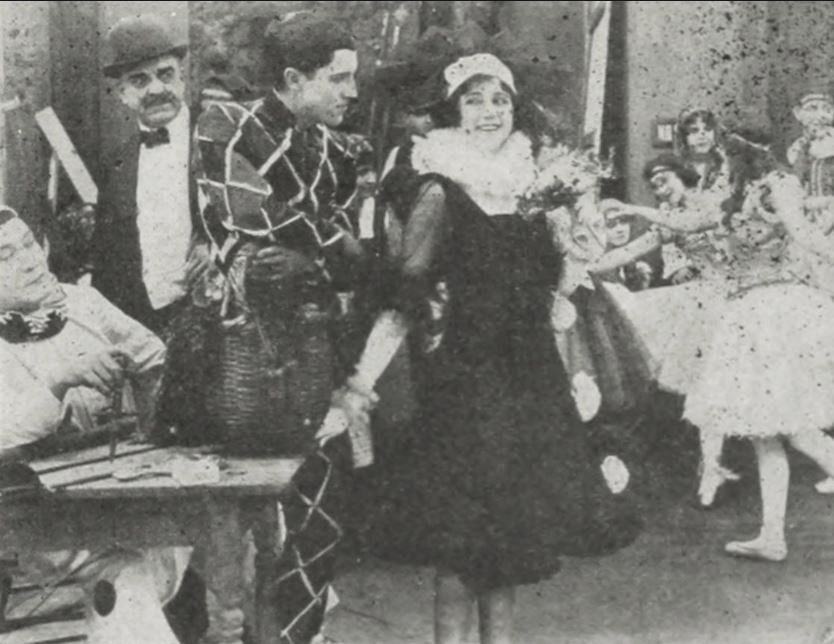
Notice the set design in Drummond’s den: Persian rugs soaked in absinthe light, a tiger skull smirking above the mantel, ledgers whose red ink bleeds into the carpet threads. It is capital not as accumulation but as appetite—every coin a razor blade wrapped in silk. One cannot watch without recalling Samson’s temple of testosterone or the opulent rot in Satana, yet Ridgely pushes further, implying that money itself is the original vampire: it bites, then insists you thank it for the privilege.
Fast-forward: Hugh is reported deceased, a telegram dispatched from some dusty Arizona outpost where coyotes proofread the obituaries. Mary, stranded in a metropolis that smells of wet iron and hubris, auditions for the opera impresario Max—George A. Wright in waxed moustache and predatory patience. She lands the title role in Carmen, not through vocal pyrotechnics but because her eyes contain “the hush before the guillotine falls.”
The backstage sequences throb with a documentary pulse: greasepaint merged into pores, gaslights flickering like arrhythmia, tenors who practice dagger thrusts between arias. When rival actor David (William West) proposes marriage, Max’s jealousy erupts into sabotage: a sandbag plummets, a windpipe collapses, and Mary inherits another ghost for her entourage. Notice how Ridgely frames the death in an unbroken wide shot, forcing us to scan the rafters for the invisible hand of fate—an anxiety device later borrowed by Thais and Sealed Orders.
Four years dilate like bruises. Mary, now a star whose name sells out box offices faster than influenza, accepts the yacht-and-champagne proposal of Thurston, a millionaire so callow he believes love is spelled L-O-V-E in stock options. On the night of their engagement cruise, Max stalks through fog with the solemnity of a tax collector, shoves Thurston off the rail, and vanishes into the thrum of turbines. The newspapers howl; the city christens her “The Destroying Angel,” a sobriquet equal parts glamour and quarantine.
What chills is not the body count but the film’s suggestion that misfortune clings to Mary the way tubercular blood clings to a handkerchief—an ontological rather than moral contagion. In a medium where fallen women usually repent or drown, The Destroying Angel dares to propose that survival itself may be the most unforgivable sin.
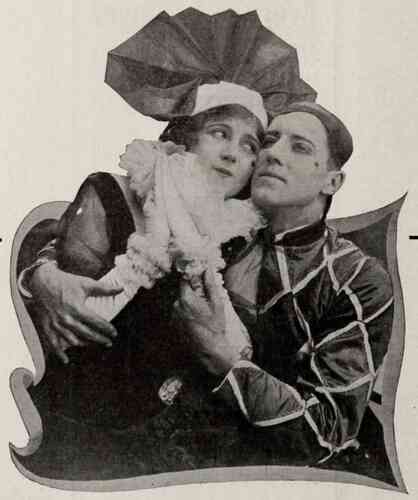
Meanwhile, Hugh claws out of his own obituary. A silver lode, discovered by sheer obstinacy, pumps iron back into his veins; he returns east, cheeks ruddy with providence and Protestant guilt. McDermott’s gait is slower now, freighted with the memory of graves he did not have to occupy. When he glimpses Mary onstage, Ridgely inserts a ghost-double exposure: the consumptive hovering like an afterimage over the tycoon. Recognition strikes; Mary’s nervous breakdown is rendered in stroboscopic jump-cuts—faces in the auditorium liquefy, the chandelier becomes a constellation of accusatory eyes.
She flees to a seaside hamlet where gulls scream like defective phonographs. Hugh, unaware, rents the adjoining cottage—a contrivance that should feel hoary, yet the directors milk the ocean for existential echo: waves erase footprints the way society erases reputations, and both characters learn that sand is the only witness that refuses to testify.
Drummond, pockets turned inside out like inverted intestines, reemerges to abduct Mary, brandishing a derringer that looks comically toy-like until it clicks. Hugh intervenes; the scuffle is filmed in silhouetted profile against the surf, black figures writhing like negative space come alive. When Drummond’s skull meets a jagged rock, the death is off-hand, almost bureaucratic—no moral trumpet, only the soggy thud of ledger closed.
Yet the true coup is editorial: Ridgely cuts from the corpse to a gull plunging into the tide, emerging with a flicker of silverfish—life feeding on death feeding on life. One senses the entire moral universe wink, as if to say curses are merely narratives we haven’t finished rewriting.
Mary, convinced her touch is still arsenic, sneaks back to the city and the opera house where Max awaits, eyes glittering like wet obsidian. He fires at Hugh, but every bullet veers, embedding in scenery—an inverted miracle that satirizes the deus-ex-machina tradition. Hugh strides down the aisle, not Christ-like but shareholder-like: calm because he owns the majority of tomorrow. Mary finally steps into the footlights, confesses love not as absolution but as mutual indebtedness. The couple exits through a stage door that opens onto daylight—an aperture so abrupt it feels like the film itself has run out of darkness.
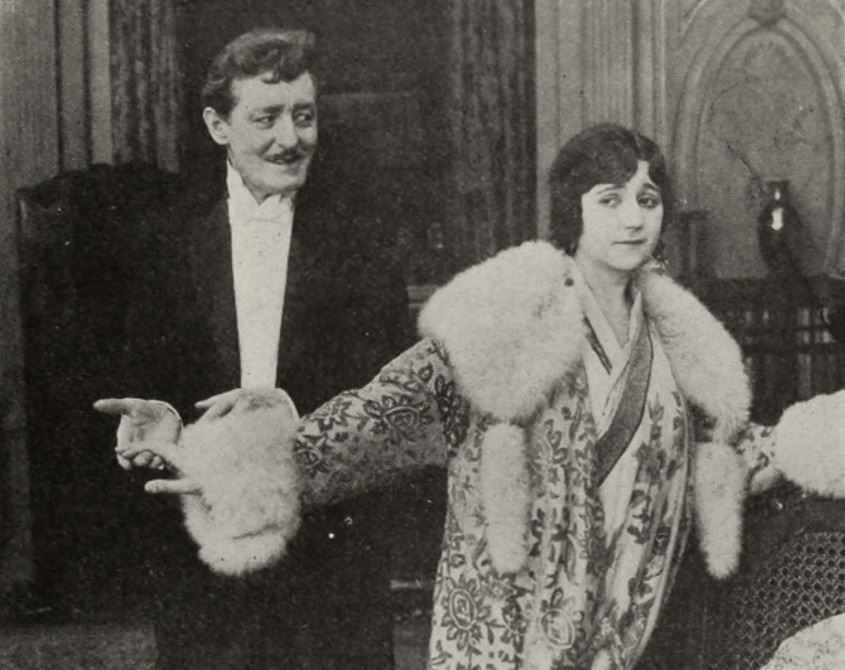
Cinematographer Fred C. Jones employs tints the way a renaissance brawler employs daggers: amber for interiors throbbing with secrets, cobalt for exteriors that promise but never deliver escape, and—most daring—a sickly chartreuse for moments when Mary confronts her own reflection, implying self-disgust has its专属 spectrum. Compare this chromatic bravado to the monochrome despair of Life Without Soul or the fairy-tale pastels in Entre ruinas; Ridgely’s film emerges as a fever chart of the soul.
Mabel Trunnelle’s Mary is a masterclass in negative capability: watch her pupils dilate between revulsion and relief when Hugh proposes, or the way her shoulders ascend toward her earlobes each time a suitor says her name—tiny calibrations that render dialogue superfluous. McDermott matches her with a minimalist economy rare in 1915; he acts mostly with the dorsal muscles, turning his back to camera whenever emotion threatens to crest, as if shame were always located between the shoulder blades.
Contemporary exhibitors were advised to accompany the ferry sequence with Chopin’s Funeral March reversed—an avant-garde wink that turns grief into palindrome. Today, one can imagine a post-rock crescendo beneath the final gun misfire, the drums mimicking blood in the ears. The film begs for anachronism because its core anxiety is modern: the fear that identity is merely the sum of headlines written about us.
Where For Napoleon and France militarizes desire and Three Weeks eroticizes monarchy, The Destroying Angel commodifies calamity. Mary’s body becomes the speculative stock into which men pour fantasies; each catastrophe inflates her market value until the bubble of notoriety eclipses the woman underneath. The film’s radical stroke is to let her profit from the crash—she exits not a recluse but a star, her price recalibrated by love rather than liquidity.
Long presumed lost, a 35mm nitrate print surfaced in a Catalan convent’s archive in 1998, misfiled beside hymnals. The restoration by the EYE Institute reinstated two excised intertitles that clarify Hugh’s mining fortune, though rumors persist of an even longer cut featuring a dream sequence where Mary argues with her own shadow. Criterion has expressed interest; let us lobby before the reels dissolve into vinegar syndrome.
Great melodrama does not wink at posterity; it burns its confessions into the viewer then dares the future to call the scar decorative. The Destroying Angel survives as both artifact and warning: reputations may be murdered and resurrected more times than any savior, yet love—messy, improbable, un-bulletproofed—remains the only force that empties the chamber before the trigger is pulled. Watch it at midnight when the city outside your window sounds like a projector chewing through fate. When the lights come up, check your pulse; if it’s steady, rewind and play the ocean again.
IMDb 7.5
1936
Community
Log in to comment.