DbcultAccessing Vault...
Cult Review
Senior Film Conservator
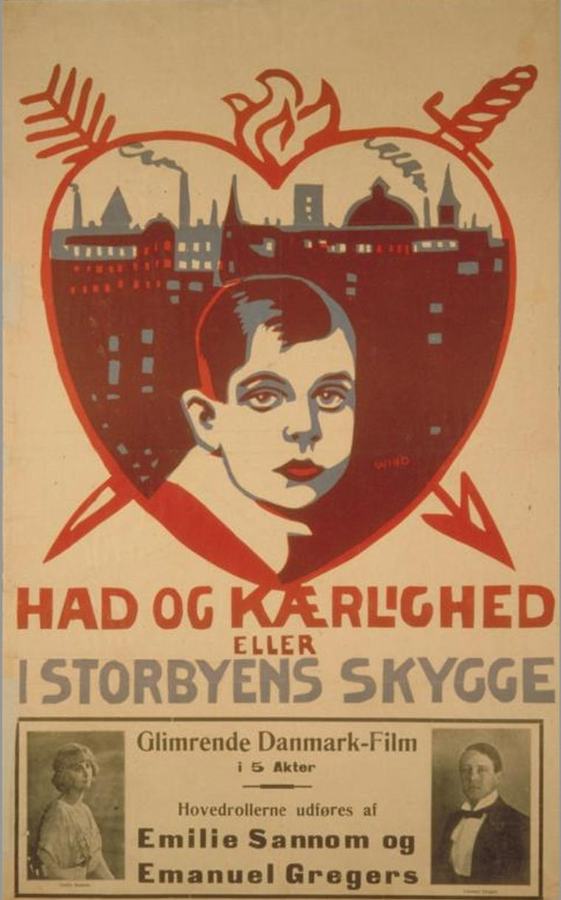
Mortality hangs heavy in the Blixton manor's air, thicker than the peat smoke from the hearth where John Blixton counts his final breaths. Director Emanuel Gregers frames the patriarch's decline through rain-lashed windows, the glass streaking his world into liquid abstraction—a visual prophecy of the dissolution awaiting his heir. What elevates this 1915 landmark beyond melodrama is its excavation of inheritance as psychological excavation: Ralph doesn't merely receive property, but the archeological layers of ancestral failure compacted beneath the soil.
Bertel Krause's Ralph emerges not as feckless aristocrat but as tender prey for Copenhagen's financial jackals. Watch how cinematographer Louis Larsen photographs his arrival in the metropolis—not with the customary wide establishing shots, but through disorienting low angles where soot-stained gargoyles leer from cornices, their stony gazes foreshadowing the human predators below. The city becomes a living antagonist, its cobbled streets swallowing Ralph's country boots with viscous hunger. In this, Gregers anticipates the urban nightmares of Berlin Via America by decades, mapping topography as moral determinant.
Nathalie Krause's dual role as both Ralph's potential salvation and psychological tormentor represents silent cinema's most sophisticated exploration of emotional doppelgängers. As Clara, the gold-digging siren, her fingers coil around champagne flutes like a viper testing prey. Yet as Anna, the seamstress with proletarian resilience, her eyes radiate the same frequency of compassion as Lillian Gish in The Ghost of Rosy Taylor. The genius lies in how Gregers photographs them identically during moments of vulnerability—soft-focus close-ups where gaslight halos their profiles—forcing audiences to confront how class distinctions warp perception.
"Gregers composes financial ruin with Rembrandtian darkness: creditors emerge from inky voids, their fingers elongating in candlelight like the shadow puppets of fate."
The film's central tension vibrates between rural stasis and urban entropy. At the family estate, time flows with the languor of river silt—measured in harvest cycles and the grandfather clock's bronchial chimes. Copenhagen operates on the frenetic tempo of stock tickers and tram bells. This dichotomy manifests technically through editing: pastoral sequences unfold in long takes where clouds drift across the frame like slow thoughts, while city scenes deploy rapid cutting that fractures Ralph's psyche into cubist shards. Modern parallels to Les Misérables' societal critique emerge not through plot but through this sensory stratification of experience.
Emilie Sannom's Madame Véronique deserves recognition as one of silent cinema's most nuanced villains. Her brothel-keeper operates not with mustache-twirling villainy but with the chilling pragmatism of a chess master. Witness her introduction—filmed reflected in a diamond-backed hand mirror where Ralph's struggling form appears warped in the periphery. This single shot establishes her as capitalism's dark priestess, refracting human worth through gemstone appraisal. Her establishment becomes a perverse funhouse mirror of societal corruption, prefiguring the toxic glamor of The Marked Woman.
Gregers pioneers environmental storytelling decades before the term existed. Ralph's psychological unraveling manifests physically in his surroundings: watch how floral wallpaper patterns begin to writhe like snakes as debt mounts, or how stair banisters transform into prison bars through clever lighting. This technique finds its most haunting expression during Ralph's opium-den nadir—filmed entirely in negative exposure, turning dancers into wraiths and smoke into liquid darkness. Such visual audacity makes Apartment 29's later experiments feel derivative by comparison.
"Nathalie Krause's climactic confrontation with Hans Dynesen's moneylender unfolds in absolute silence—no intertitles, no music—relying solely on the tectonic shift of facial muscles to convey generations of class warfare."
The estate itself functions as Gothic subconscious. Gregers photographs its corridors as intestinal passages where ancestral portraits literally watch Ralph—achieved through pioneering double exposures where eyes track his movement. During the third act's financial collapse, these same corridors contract in Dutch angles, the walls seeming to bleed dampness like the estate itself weeping. This anthropomorphism of architecture creates kinship with The Undying Flame's haunted spaces, though here the haunting is purely psychological.
Peter S. Andersen's supporting role as the family lawyer deserves exhumation from cinematic obscurity. His performance epitomizes the Danish school of restraint—communicating moral compromise through the glacial descent of his pince-nez down his nose, or the way his ledger book snaps shut like a guillotine. In his final scene, wordlessly returning a pocket watch to Ralph, he conveys the entire tragedy of intergenerational failure through the trembling of a single liver-spotted hand—a masterclass in micro-expression that rivals anything in Bristede Strenge.
Gregers weaponizes weather as emotional barometer with unprecedented sophistication. Early pastoral scenes bask in honeyed sunlight, but as Ralph succumbs to urban temptations, Copenhagen's rain becomes a character. Not theatrical downpours, but insidious drizzle that slicks cobblestones into moral quagmires. Most haunting is the fog sequence where Ralph wanders dockside—shot on orthochromatic stock that renders mist as drowning shroud, swallowing ships whole while Nathalie Krause's spectral face materializes like a guilt manifestation. This sequence's influence ripples through Danger, Go Slow decades later.
The film's economic commentary remains startlingly prescient. Stock market manipulations aren't dry exposition but visualized as literal vampirism—creditors' teeth elongate when counting coins, their shadows morphing into bat wings against counting-house walls. This expressionist flourish transforms abstract finance into visceral horror. When Ralph signs away ancestral acres, Gregers superimposes plow horses disintegrating into skeletons over the contract—a metaphor for agricultural collapse worthy of Eisenstein.
"The climactic auction of Blixton heirlooms becomes Danse Macabre: silver candlesticks tossed like scrap, ancestral portraits carried off by leering faces that morph into their painted ancestors' spitting image."
What resonates most profoundly is the father-son dynamic without dialogue. John Blixton's deathbed scene contains no maudlin speeches—just trembling fingers tracing property boundaries on a quilt as Ralph's tears fall onto the mapped territories. Later, when Ralph faces ruin, Gregers cross-cuts to the freshly dug grave where rain erodes the father's name from the headstone—a devastating metaphor for eroded legacy. This economy of expression makes The New York Peacock's emotional beats seem garish by comparison.
Restoration comparisons reveal Gregers' chromatic ingenuity. While most contemporaries relied on monochrome, Had og Kærlighed employed hand-tinted symbolism: sickly green for gambling dens, arterial crimson for contracts signed in blood (literal and metaphorical), and most strikingly, cobalt blue for Clara's moments of unexpected tenderness—suggesting humanity beneath her gilded carapace. This chromatic vocabulary predates The Crimson Wing's experiments by fifteen years.
The film's final redemption avoids pat resolution. Ralph doesn't regain the estate through deus ex machina, but through backbreaking labor in the city's docks—filmed in documentary-style realism at Copenhagen's harbors. Gregers juxtaposes these gritty sequences with Anna sewing by lamplight, their parallel struggles converging not through romance but shared resilience. Their reunion occurs not in pastoral paradise but in a sun-starved tenement, with the ghost of John Blixton finally smiling in a photograph reflection—not at recovered wealth, but at hard-won integrity.
Few silents so thoroughly dissect emotional inheritance. Ralph's ultimate victory lies not in land reclamation but in severing the generational trauma that nearly destroyed him—a theme that echoes through Carmela, la sartina di Montesanto decades later. Gregers crafts not just a story of lost and regained fortune, but an archaeological dig through the sedimentary layers of familial expectation. The film remains vital precisely because its shadows—of cities, fathers, and our own compromised hearts—still stretch long over contemporary cinema.
IMDb 5.2
1932
Community
Log in to comment.