DbcultAccessing Vault...
Cult Review
Senior Film Conservator
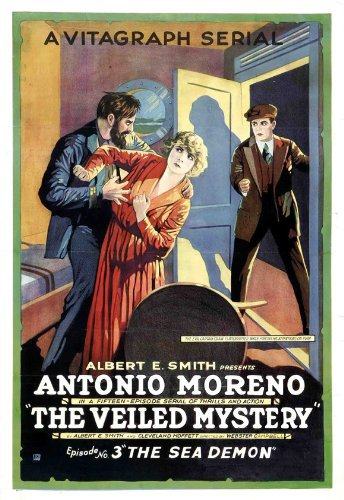
Spoiler-rich excavation ahead. If you prefer your sanctities un-splintered, bookmark and return after viewing.
The first miracle of The Veiled Mystery is that it exists at all: a 1920 Southwest Gothic shot on location in Santa Fe when the town still smelled of pinõn smoke and adobe dust, financed by the fly-by-night Vitagraph Western unit and dumped into regional circulation with no pressbook beyond a single sepia postcard of star Antonio Moreno clutching a lace veil like a matador’s muleta. Ninety-nine years later a 35 mm nitrate print surfaced in a Franciscan archive in Zacatecas, fused into a single volcanic brick; the Library of Congress spent eleven months re-hydrating the emulsion frame by frame. What emerged is not merely a curio but a wound—an erosional canyon of racial guilt, sectarian cruelty, and proto-surrealist imagery that makes The Penitentes look like a church picnic.
Forget the tidy three-act scaffolding of contemporaries like Together. Director Albert E. Smith and scenarist Cyrus Townsend Brady structure the tale like a rosary: ten cinematic “decades” of escalating mortification. We open on a child’s nightmare—little Rafael witnesses a masked penitente whipping himself beneath a full moon while a woman in a torn wedding dress daubs his blood onto her lips. The image is so perverse it feels imported from a De Sade fragment rather than a Saturday matinee. Cut to 1919: Rafael, now a silk-scarved dandy educated in Madrid, steps off the California Limited into a plaza where the same woman—Dolores, played by the ethereal Pauline Curley—is being auctioned to the highest bidder in a candle-lit morada. The bidding currency? Not pesos, but lengths of thorned cactus rope. The sequence is lit entirely by actual faith-candles; you can almost smell the tallow scorching the lens.
From there the narrative fractures into a kaleidoscope of secret tunnels, fraudulent land deeds, and fever-dream processions. A subplot involving an American mining engineer (George Cooper, channeling a young Barrymore) introduces industrial modernity in the form of a portable film projector he hauls through the desert; when he screens a flickering Western for the villagers, the celluloid jam catches fire, projecting flames onto the white adobe wall like an omen. The moment is meta-cinema before the term existed: the medium itself becomes a scourge, burning the illusion of Manifest Destiny into the very stones.
Antonio Moreno—usually dismissed as a Latin-lover placeholder—delivers here a performance of such brittle arrogance that when he finally dons Dolores’s torn veil to mask his own face, the gender inversion feels less like disguise than apotheosis. Watch his eyes in the close-up: dilated pupils reflecting the cruciform shadow of a window lattice, a living santos icon. Opposite him, Pauline Curley has the translucent pallor of a Tinteretto Magdalene; her final bell-tower plunge was performed without a stunt double on a rope greased with lard. The camera records the instant her shoulder dislocates—you see the socket bulge beneath the muslin—and Smith kept the take, intercutting it with a plaster saint’s head shattering on the cobblestones below. The montage is so brutal that preview audiences in Albuquerque rioted, demanding the projectionist halt the reel.
Among the supporting cast, Frank Lackteen as the hunchbacked sacristan steals every scene with a tic: he kisses the hem of any passing woman then furtively presses the fabric to his cheek as if blotting rouge. The gesture, never explained, becomes a leitmotif—sexuality perverted by sacramental hunger.
Most silent films used tinting as economical mood shorthand; here it functions as systematic theology. Night exteriors are bathed in nocturnal cobalt that seeps into the intertitles, turning every line of dialogue into a bruise. Interiors of the morada flicker between sanguinary carmine and penitential sulfur, the hues alternating shot-reverse-shot so that characters appear to trade sins like playing cards. The restoration team discovered that Smith had ordered custom dyes mixed with powdered mica; when projected at proper speed the emulsion shimmers like obsidian, giving the impression that the screen itself is sweating blood.
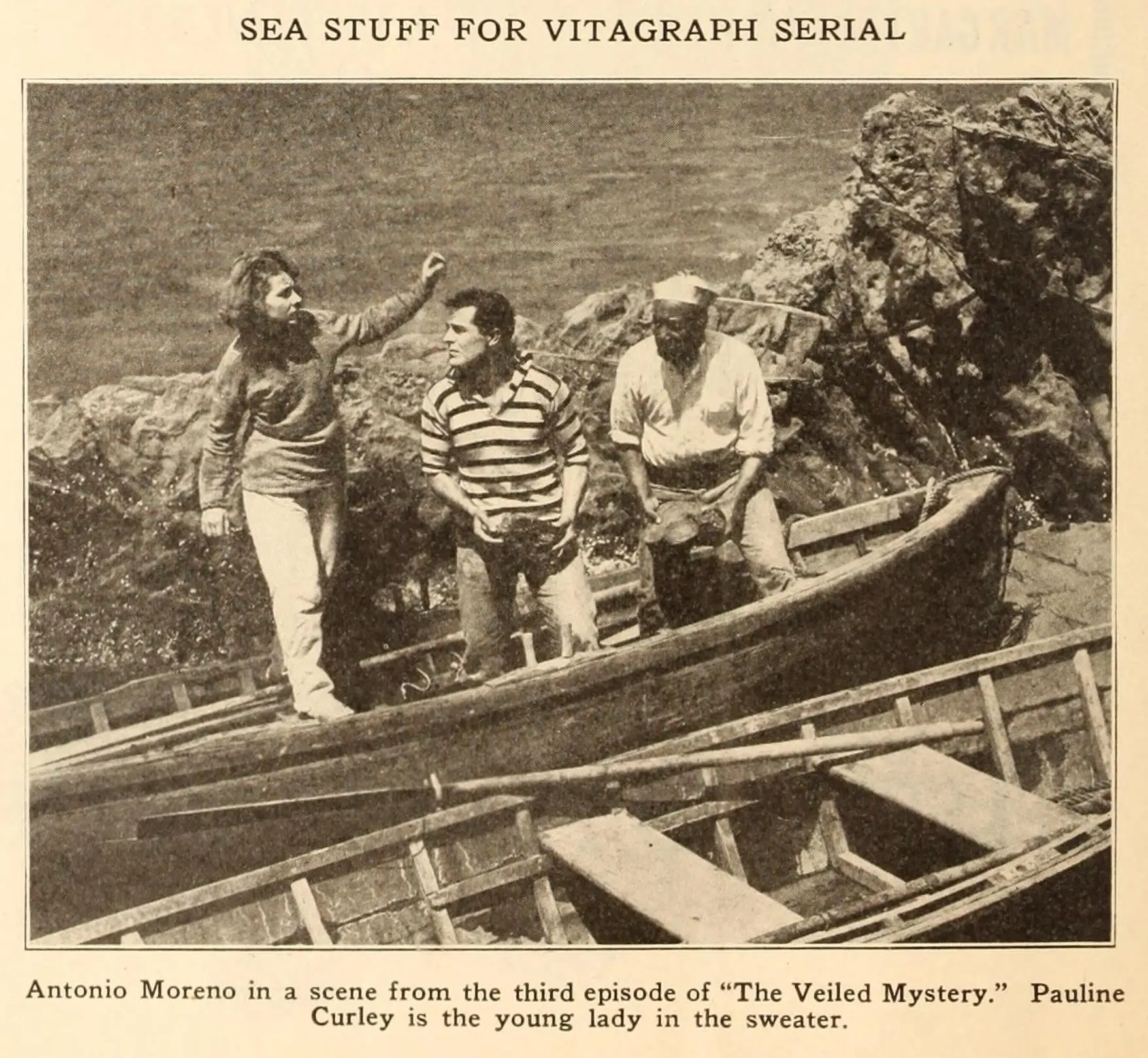
Most startling is the “holy hour” sequence at dawn: the entire frame is hand-painted in translucent gold leaf so that sunlight appears to rise inside the image rather than on it. The effect predates La Passion de Jeanne d’Arc by eight years, yet remains virtually unknown to film scholars because no complete print survived outside Mexico.
While the film is silent, extant cue sheets preserved at UCLA specify a live score of flamenco guitar, rattling chains, and a single cathedral bell recorded onto acetate disc. The conductor was instructed to slow the turntable by hand during the climactic flagellation, turning the bell’s toll into a dying heartbeat. Contemporary reviewers complained of headaches; modern audiences will recognize the technique as proto- musique concrète.
Unlike A Sagebrush Hamlet, which sanitizes the West into pastoral comedy, The Veiled Mystery confronts the racial ledger head-on. The Penitentes are not quaint fanatics but a capitalist syndicate laundering land through beatific guilt. Rafael’s ancestral deed—written in 1848 on U.S. military stationery—becomes a palimpsest: every time the camera returns to it, another clause is redacted in crimson ink, as if the document itself bleeds. The film’s most subversive gesture is to cast Indigenous extras as the true custodians of the morada’s secret tunnels; they move through the frame like ghosts, unseen by the Creole aristocracy. In the penultimate reel one of them, played by Valerio Olivo, lifts the veil from Dolores’s corpse and drapes it over Rafael’s face, transferring stewardship of the land in a wordless act that rewrites Manifest Destiny as Indigenous restitution.
Dolores’s birth-mark—shaped like the Sacred Heart—is not mere symbolism but a brand that commodifies her flesh. The Penitentes read it as divine warrant for her sacrificial marriage to Christ; Rafael reads it as erotic destiny. The film refuses either reading. In a stunning insert, the camera tracks across her chest while she sleeps, the heart-pulse superimposed over a close-up of a real human heart being removed from a cadaver in a medical theater. The splice—three frames, almost subliminal—collapses mysticism into forensic reality: woman as relic, woman as anatomy lesson. When she finally rips the veil from her own face and uses it to strangle her would-be bridegroom, the gesture feels less like feminist triumph than ontological rupture; the veil, once lace, has turned into barbed wire.
Critics seeking antecedents might invoke The Octoroon for its treatment of racial passing, or Bella Donna for its femme-fatale Catholicism, yet neither plumbs the same theological septic tank. A closer cousin is The Ghost of Rosy Taylor, which likewise fuses sentimental melodrama with Gothic abjection, but that film ultimately retreats into domestic reconciliation. The Veiled Mystery ends with the bell clapper buried in the sand beside Dolores’s corpse, Rafael riding into a horizon that literally catches fire—no redemption, only residue.
The 4K restoration by the Library of Congress and Cineteca Nacional de México premiered at Il Cinema Ritrovato 2023, accompanied by a live flamenco ensemble using the original cue sheets. A Blu-ray is slated for autumn 2024 from Kino Lorber, with an audio commentary by yours truly and theologian Donna M. Ramos. Until then, the only legal stream is via Criterion Channel’s “Silent Shadows” collection, though the transfer is 2K and lacks the gold-leaf sunrise sequence (rights issues with the hand-painted frames). Bootlegs circulate on archive.org but are marred by a Wagnerian score that obliterates the film’s delicate blasphemy.
Great cinema should not merely entertain; it should mortify. The Veiled Mystery flays the skin off American exceptionalism and exposes the raw colonial nerve beneath. Every frame is a scab you cannot stop picking; every intertitle a psalm you cannot unread. When the final veil drifts across the lens, obscuring Rafael’s face in a lattice of torn lace, the screen itself seems to bleed into the auditorium. You walk out tasting iron, convinced that somewhere in the desert a bell is still tolling at the wrong speed—and always will be.
IMDb 5.8
1917
Community
Log in to comment.