DbcultAccessing Vault...
6.8/10
Senior Film Conservator
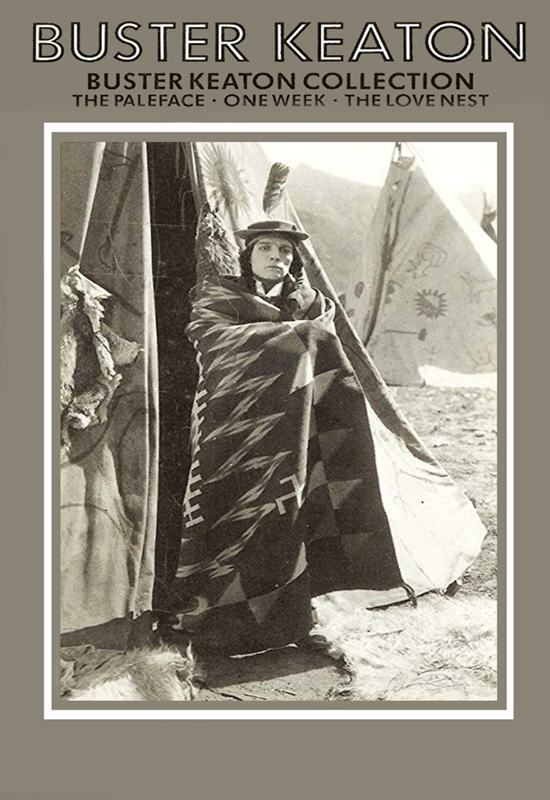
A definitive 6.8/10 rating for a film that redefined the boundaries of cult cinema. The Paleface remains a cornerstone of transgressive art.
When the projector’s carbon arc first kissed the silver in 1922, The Paleface arrived as a two-reel fever—22 minutes that feel like 22,000 years of American guilt compressed into celluloid nitrate. Keaton, stone-faced yet sphinx-smiling, waltzes into frame wearing a derby two sizes too innocent for a land soaked in crude and betrayal. The gag density is malicious: every corner of the frame hides a trapdoor, every shadow a capitalist ghoul.
Plot, nominally: Friendless, a rail-riding nobody, is literally sold to a Pawnee maiden—an arranged marriage meant to block the Bureau of Indian Affairs from signing away mineral rights. The bureaucrats, puffing cigars fat as artillery shells, chortle at the loophole: if the chieftain’s daughter weds a white man, the land becomes “private property” under federal statute. Keaton’s character, too hungry to argue, accepts the shotgun wedding, unaware that the dowry includes a bulls-eye on his back.
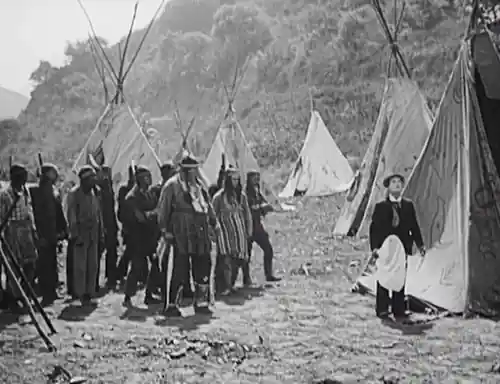
What distinguishes The Paleface from The Hoodlum or even Keaton’s own Sure Fire is its marriage of physics and political farce. Watch the sequence where our hero attempts to lasso a runaway oil derrick—it whips like a dragon’s tail, flinging him skyward until gravity renegotiates. The camera never blinks; there’s no under-cranking chicanery, just a man testing Newton’s patience.
Even more audacious: the buffalo stampede shot in Griffith Park with real animals coaxed by pneumatic whistles. Keaton rides a hobby-horse fashioned from a broomstick and sheer chutzpah, threading between horned behemoths whose hooves drum thunder into the dust. One misstep and the gag becomes a coroner's report; instead, the sequence lands as surrealist rodeo—Bunuel meets Buffalo Bill.
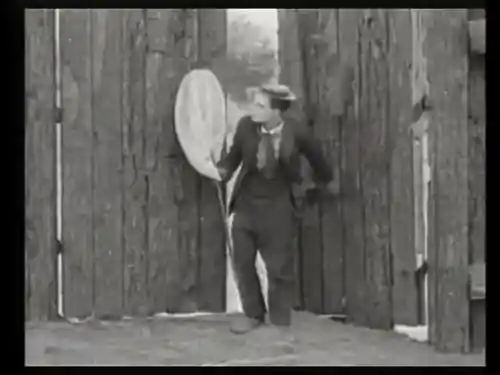
Today’s Twitter tribunal might indict the film for red-face minstrelsy, yet Keaton and co-writer Edward F. Cline complicate the caricature. The Pawnee are not monolithic victims; they hatch stratagems, weaponize bureaucracy, and weaponize Keaton himself as a Trojan spouse. The tribe’s matriarch (played with regal steel by an uncredited Yvonne Renard) spits herbal truths at Washington envoys while her warriors practice semaphore with smoke signals that mock Morse code.
Crucially, the film’s true antagonists are the oil barons—vaudevillian vampires who twirl mustaches made of ticker-tape. Their scheme to drill under sacred burial mounds literalizes America’s subterranean plunder. When Keaton dons war-paint, it’s less minstrelsy than infiltration; he becomes a living petition, a paleface turned prism refracting colonial guilt.
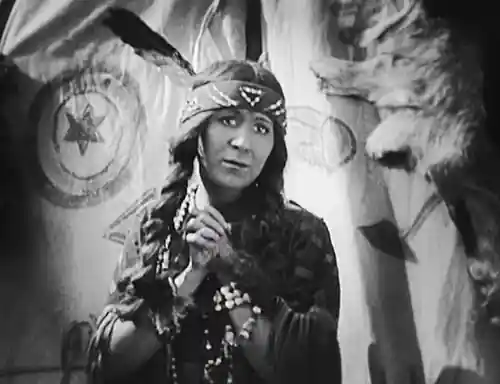
In 1922, spoken titles were already démodé; Keaton prefers spatial puns. A still-life of bacon and beans becomes a haiku of hunger; a telegraph wire sagging in parabola spells “complicity” in Morse. Notice how he never smiles—never—yet the audience detonates. The laugh emerges from cognitive whiplash: our brains expect catharsis, Keaton withholds, and the tension vents as hilarity.
Compare this to The Seal of Silence, where silence is ornamental, or The Faded Flower where it’s melancholic. In The Paleface, silence is a blunt object—used to bludgeon the viewer into awareness.
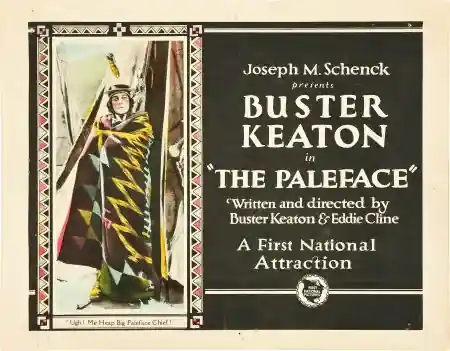
Restorationists at the Smithsonian recently unearthed a 35mm tinted print: night scenes soaked in cyanide-blue, dawn awash with tangerine emulsion. The palette amplifies the moral rot: oil derricks glow like infernal cathedrals while tribal tipis shimmer in ghostly aquamarine. When Keaton’s face is smeared with ochre, the frame becomes a Rothko canvas—broad swaths of color bleeding into ontological inquiry.
Virginia Fox’s character, named Shadow-Water in studio notes, refuses the damsel stencil. She trains a Winchester with the serenity of a seamstress, stitches land deeds into quilted armor, and negotiates dowry like a Wall Street broker. Her flirtation with Keaton is a fencing match—eyelashes as foils, silence as thrust. In one subversive inversion, she rescues him from quicksand using her hair braid as rope, a visual rejoinder to decades of machismo.
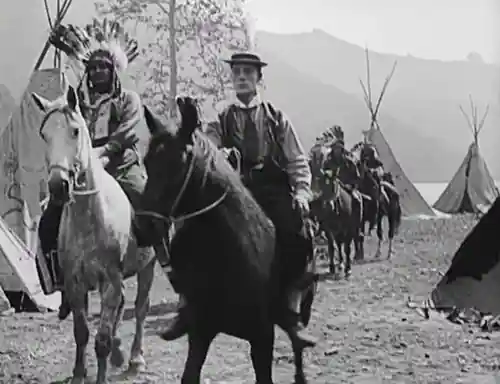
Yet the film stops short of full egalitarian utopia: the final reel restores patrimony to male clergy, a concession to 1922’s box-office piety. Even so, the residue of Fox’s defiance lingers like beadwork on the edge of the frame.
Original exhibition notes list a live accompaniment of “Zuni prayer drums segueing into ragtime.” No recordings survive; modern revivals often slap on generic honky-tonk, neutering the polyphony. Imagine instead a revival where Tanya Tagaq’s throat-singing collides with Nicolas Jaar’s ambient dread—that would honor the film’s spirit of dissonant communion.
Watch the auction scene: land parcels sell for millions yet payment occurs via IOUs fluttering like confetti. The auctioneer’s gavel morphs into a oil-slicked blackjack; each whack spews soot that coats the bidders until they resemble coal miners. It’s a literalization of Monthly Review dictums: capital accumulation as slapstick, each laugh a ledger entry of theft.
Keaton understood that comedy is the only genre where the proletariat can win without firing a shot—where falling on your ass becomes an act of revolution.
Frack pads now scar the same mesas where Keaton shot. The film survives as prophecy: every pipeline leak, every sacred site bulldozed, replays the cartoon avarice he lampooned a century prior. Stream it beside Beans or My Country First and you’ll detect the echo—governments still barter Indigenous soil for bitumen, only the CGI budgets have ballooned.
The 4K restoration on Criterion Channel retains nitrate shimmer; beware the public-domain prints on tube sites—those look like they were soaked in crude. For purists, Kino’s Blu-ray offers a booklet essay by J. Hoberman plus a commentary track where a Lakota historian annotates each gag’s anthropological footprint.
Rating? On a scale of petro-dollar to petro-glitch, The Paleface scores a resounding gush—a spurting derrick of comic anarchy that still stains the shirt of American amnesia.
Keaton exits the frame astride a rail cart coasting into vanishing point, his face still unsmiling. Behind him, oilmen chase invoices fluttering like wounded gulls. The land remains, scarred yet alive, and the film—brittle, flammable, defiant—waits for the next projector to ignite. Each viewing is a small combustion against forgetting.
IMDb 6.8
1921
Community
Log in to comment.