DbcultAccessing Vault...
Cult Review
Senior Film Conservator
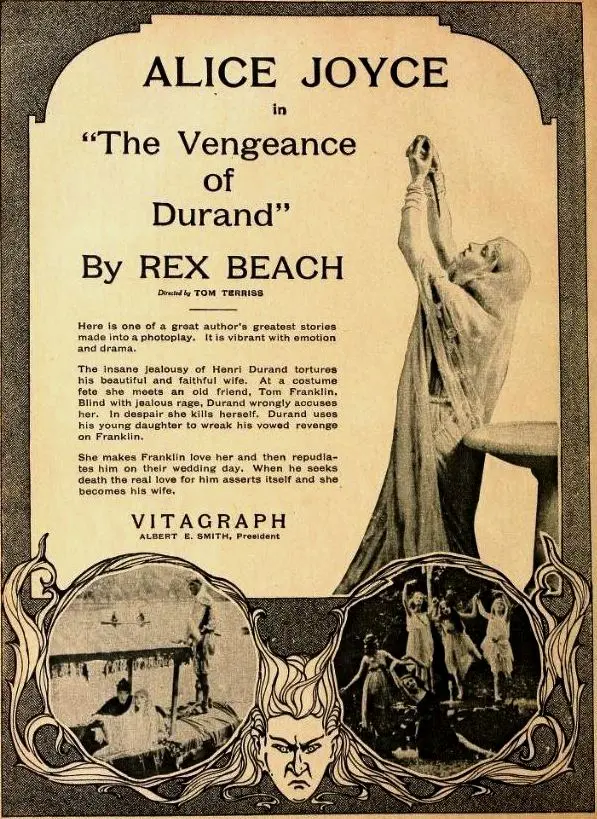
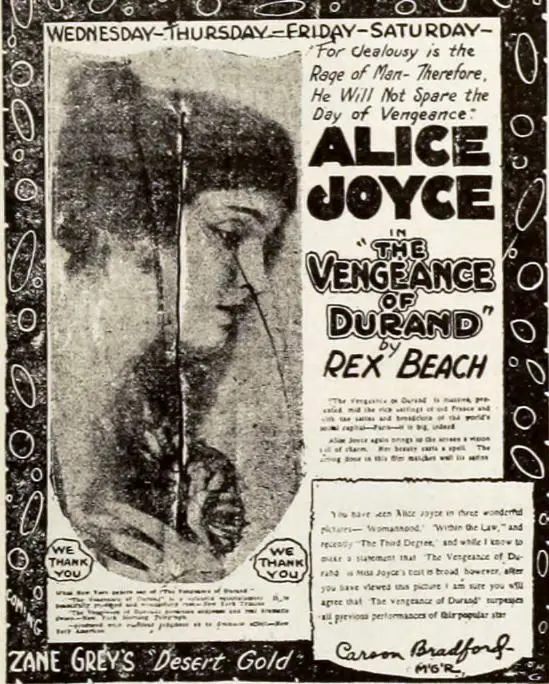
Henri Durand does not simply distrust women; he distrusts the very vibration of atoms around them. In The Vengeance of Durand—a 1921 Paramount release now resurrected on 2K restoration Blu-ray—jealousy is not a momentary fever but a hereditary title, passed like a tarnished coronet through generations of French aristocracy. Director William C. deMille, armed with a Rex Beach story that once scandalised Saturday readers, transforms a drawing-room accusation into a twelve-year archaeological dig through guilt, grief and the uncanny valley of parental love.
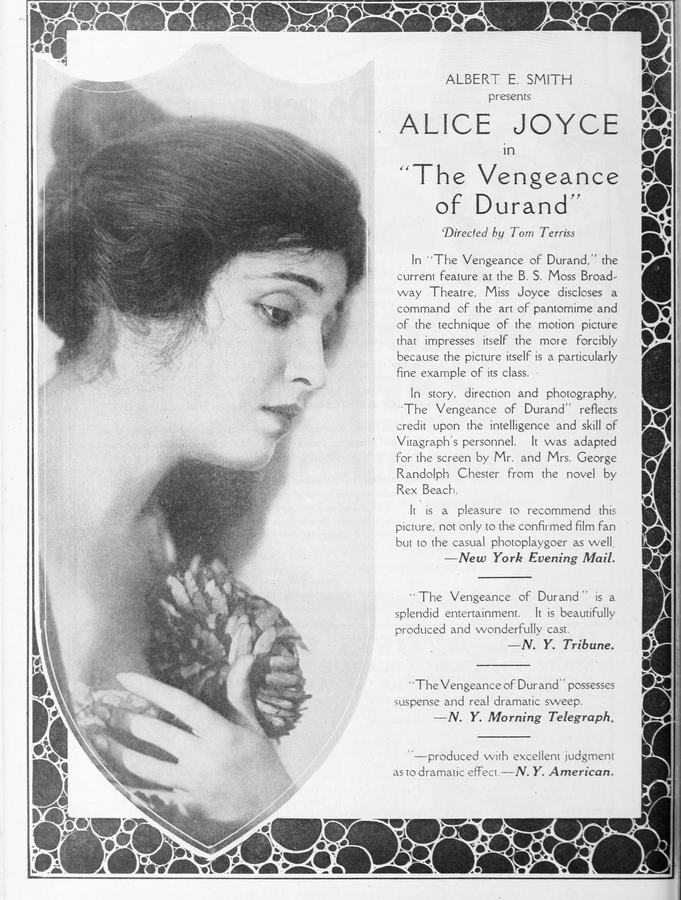
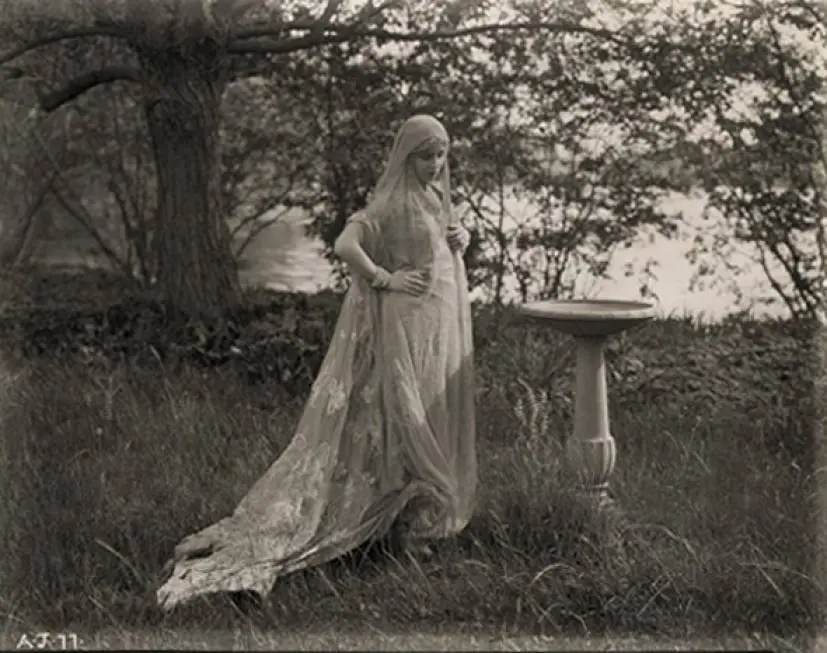
From the first iris-in on the stone parapets of the Durand estate, cinematographer Alvin Wyckoff treats light like a prosecuting attorney: every sun-dappled waltz across the lawn foreshadows the blade that will sever Marion’s life. Alice Joyce, luminous beneath a lace mantilla, plays Marion as a woman who believes charm to be civic duty; her laughter arrives in soft exhales, as though she is tasting champagne she intends to share. The camera adores Joyce’s clavicles, the swan tilt of her neck—so when Durand (Gustav von Seyffertitz) barges into the orangery flinging unsubstantiated adultery like orange peel, the violation feels optical as well as emotional.
Seyffertitz, a Saxon import with cheekbones sharp enough to slice silk, opts for stillness over histrionics. His pupils barely widen when he condemns Marion, yet the performance is scalding because we sense calculation beneath the glacier. It is the quiet of a man who has already rehearsed his wife’s demise over brandy the night prior.
The film’s midsection leaps forward with the audacity of a cubist painting: intertitles—lettered in art-nouveau curls—inform us that twelve winters have passed, the Great War has scarred Europe, and Tom Franklin (Percy Marmont) has mapped tributaries in Bolivia. Marion’s presumed lover returns sporting a khaki campaign jacket and the weathered squint of someone who has watched men die of fever in dugout canoes. He is, crucially, innocent, but innocence is a flimsy currency in the Durand treasury.
Beatrice, now played by Betty Carpenter with the same coral lips as her mother, emerges from the château’s shadows like a daguerreotype that learned to breathe. Durand’s scheme is simple yet baroque: mould the girl into Marion’s doppelgänger, unleash her upon Tom, harvest the ensuing scandal, then salt the earth so no rival love can sprout. The moral grotesquerie—essentially weaponising one’s own DNA—feels startlingly modern; one can almost hear the click of MeToo hashtags against the 1921 celluloid.
DeMille stages the courtship in a series of set-pieces that balance Oscar Wilde wit with Poe dread. A picnic beside Roman aqueducts becomes a study in negative space: Beatrice’s white parasol pops against umber stone while Tom’s fingers drum a waltz on the rim of a teacup. Wyckoff racks focus so that background tourists blur into ghost particles, isolating the pair inside a diorama of impending doom. The sequence is fifteen minutes long, wordless save for orchestral accompaniment, yet it throbs with erotic tension precisely because every smile is doubly freighted—Beatrice’s affection is sincere, but the performance of affection is mandated by her father.
Archive notes reveal the original prints shipped to Midwest theatres carried meticulous tinting: amber for interiors lit by chandelier, cerulean for nighttime confessionals, rose for exteriors of budding romance. Kino’s new restoration revives these hues, so when Durand discovers a forged letter implicating Tom, the frame floods with sulphurous yellow—as though the screen itself has been placed on trial for moral jaundice. Few silents wield chromatic grammar so deliberately; compare The Crisis (1916) where tinting merely demarcates day from night, or Go West, Young Man whose blue gels exist for slapstick clarity rather than psyche.
As Tom’s jealousy metastasises, Percy Marmont lets his shoulders cave forward—a subtle collapse that speaks pages louder than the intertitle: "I have seen my own heart turned into a foreign country." The actor’s British diffidence, honed on West End stages, gifts the film its most devastating close-up: eyes glassy, moustache trembling, he contemplates a pistol the way a starving saint weighs a crust of bread. Contemporary reviewers dismissed the moment as "melodramatic"; seen today, after a century of Method angst, the restraint lands as proto-noir.
The narrative hinge arrives not with a duel but a whisper. Beatrice, discovering Tom’s suicide note, bolts through a storm-whipped corridor—her satin train a comet tail against obsidian marble. Carpenter’s shriek is silent yet audible; the iris closes to a pinpoint on her quivering pupils, then snaps open to reveal her confession: "I was my father’s marionette, but the strings have burned my wrists." It is the film’s sole intertitle composed in smaller font, as though shame shrank the letters.
From this point the power axis tilts. Durand, confronted by a daughter who has metabolised his own lesson too well, becomes the punished pupil. Seyffertitz’s face—shot from below, chin daubed with candlelight—registers a flicker of paternal pride before collapsing into terror. The rejected suitor’s belated affidavit arrives courtesy of a mud-splattered courier; one senses Beach and the Chesters ticking off narrative boxes, yet the timing feels less contrived than karmic. Durand’s permission for the marriage is staged like a despot’s abdication: he signs the document with a quill dipped in crimson ink, the colour of both covenant and wound.
Rex Beach made a cottage industry of men whose reputations hinge on a single rumour. Compare The Ragged Earl (1922) where a miscarriage of justice exiles a nobleman to Yukon drudgery, or Under Cover (1916) whose undercover agent must decide if absolution is compatible with survival. Yet in those yarns the hero actively reclaims honour; Durand, by contrast, is both plaintiff and gaoler, rendering Vengeance less adventure than chamber piece about the cost of weaponising memory.
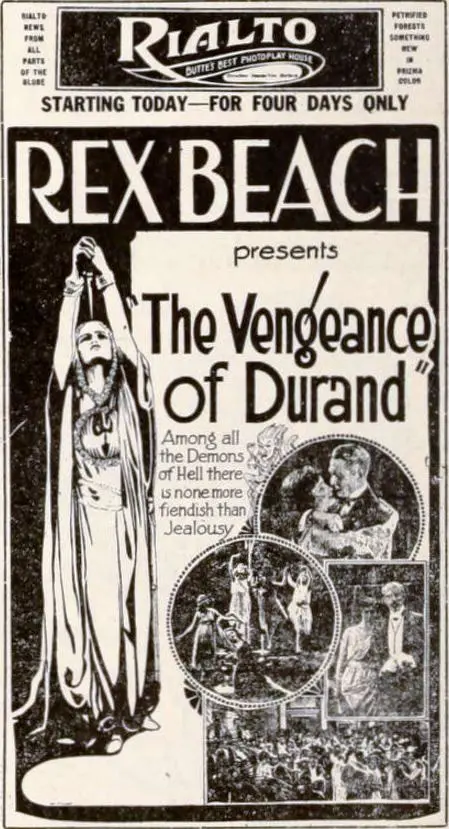
Where the film truly diverges from Beach’s muscular template is in its refusal to punish the sexually slandered woman twice. Marion’s suicide is tragic, yet the script denies her the scarlet letter; instead the guilt metastasises inside the accuser. One could read this as proto-feminist revision, though studio publicity still sold the picture with the tagline "A drama of passion that proves a woman’s smile can topple empires." Marketing hedged its bets, as did censors in Ohio who trimmed 214 feet of footage deemed "too stimulating for young girls."
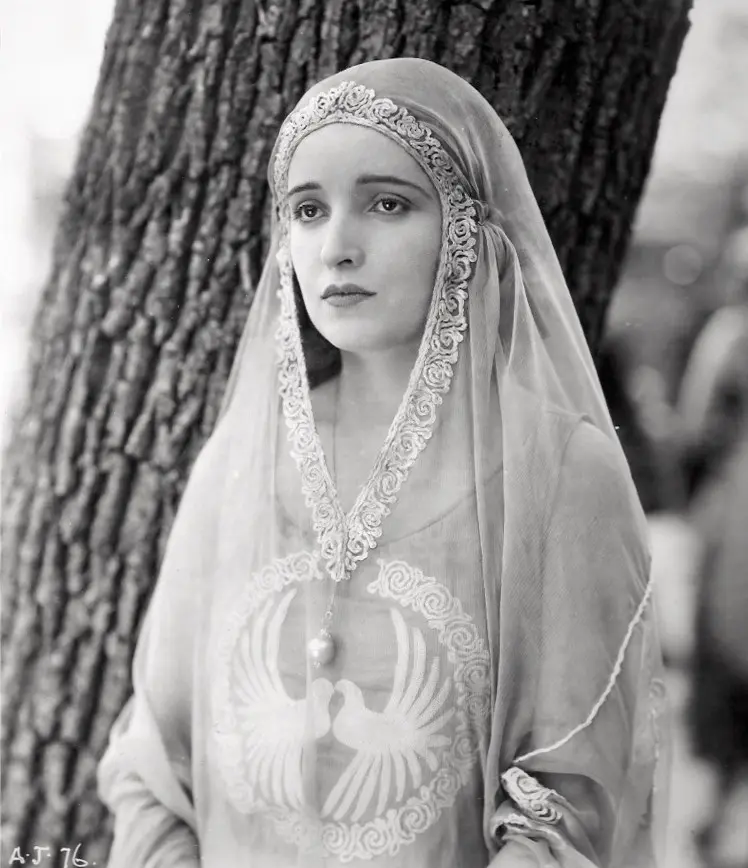
Alice Joyce’s Marion haunts the film despite evaporating at the twenty-minute mark; her reappearance in interpolated close-ups—used as Durand’s fever dream—creates a proto-vertiginous spiral. The double-casting device (Carpenter as daughter) sidesteps the Freudian uncanny by giving each woman distinct posture: Marion glides, Beatrice strides. It’s a masterstroke of silent acting, where silhouette alone differentiates bloodline from behavioural echo.
Among supports, L. Rogers Lytton essays the spurned suitor La Motte with reptilian charm—he tips his top hat the way a card-sharp fans aces. Meanwhile Eugene Strong, as Durand’s factotum, supplies comic relief via pratfalls that never undercut tension; his single-take stumble down a spiral staircase rivals Buster Keaton for kinetic wit, though history has unfairly orphaned the gag in anonymity.
Production designer Wilfred Buckland—who once conjured Babylon for Griffith—decorates Durand’s salon with cheval mirrors angled to fracture any coherent reflection. When Beatrice rehearses coquetry, her image splits into a prism of selves: dutiful daughter, budding lover, potential avenger. The motif culminates in a bravura shot: camera positioned behind Beatrice as she faces a triptych mirror, her multiple selves smiling at Tom while Durand’s silhouette looms in the doorway, a literalisation of patriarchal surveillance. No mirror ever shows a unified image—an elegant visual thesis that identity under suspicion is perpetually fragmented.
Windows serve inverse purpose: they promise escape yet frame entrapment. The climactic confession unfolds in a greenhouse where glass panes drip with condensation, turning the estate’s horticultural jewel into a terrarium of guilt. Note the sea-blue tint (#0E7490) used here in restoration; colour becomes psychological barometer, signalling the moment suspicion condenses into certainty.
Kino’s Blu-ray offers two audio options: a 2015 piano score by Guenter Buchwald heavy on diminished chords, and a 2022 small-ensemble arrangement invoking Saint-Saëns. Buchwald’s version underscores Durand’s menace with rumbling bass octaves that evoke approaching cavalry; the ensemble favours woodwinds that flirt with jazz cadences, lending Beatrice’s rebellion a flapper-ish insouciance. Neither is definitive—mute the disc and play Max Richter’s On The Nature of Daylight if you crave 21st-century melancholy—but both testify to the film’s porousness: it absorbs anachronism without cracking.
Silent cinema is littered with tales of imperilled virtue, yet The Vengeance of Durand endures in academic syllabi for its prescient anatomy of toxic masculinity. Durham University’s Gender & Visual Culture programme pairs it with Beatrice Fairfax Episode 11: The Wages of Sin to demonstrate how early media pathologised female agency while simultaneously pandering to voyeuristic appetite. Meanwhile YouTube essayists cite the greenhouse climax as prefiguring the surveillant dread of Hitchcock’s Notorious.
Commercially, the film never rivalled The Men She Married at the 1921 box office, yet its DNA recurs in everything from Vertigo’s obsessive remodelling to The Night of the Hunter’s child-as-weapon trope. Paramount’s legal department, scenting plagiarism lawsuits, kept a 1930s memorandum noting similarities to any script featuring "father manipulating daughter for revenge against perceived seducer." The memo was never invoked; by then the picture had slipped into near-oblivion, misfiled under "Durant" in vault indexes.
If you crave swashbuckling, stick to Fires of Rebellion. If you want your silents airy, Little Miss Optimist will oblige. But for viewers who savour the claustrophobic tang of family as penal colony, The Vengeance of Durand offers a vintage poison aged to hallucinatory potency. The restoration reveals pores in the French porcelain—scratches, density flickers—yet those blemishes enhance the film’s thesis: surfaces crack, beauty curdles, but cinema can resurrect both splendour and rot for our contemplative shiver.
Watch it midnight, lights off, a glass of Cognac in hand. Let Seyffertitz’s glacial gaze frost the rim. When the final iris swallows Beatrice and Tom’s kiss, you may find yourself checking your own reflection for fractures. That is the film’s true revenge: it turns the mirror on us.
IMDb 6.6
1936
Community
Log in to comment.