DbcultAccessing Vault...
Cult Review
Senior Film Conservator
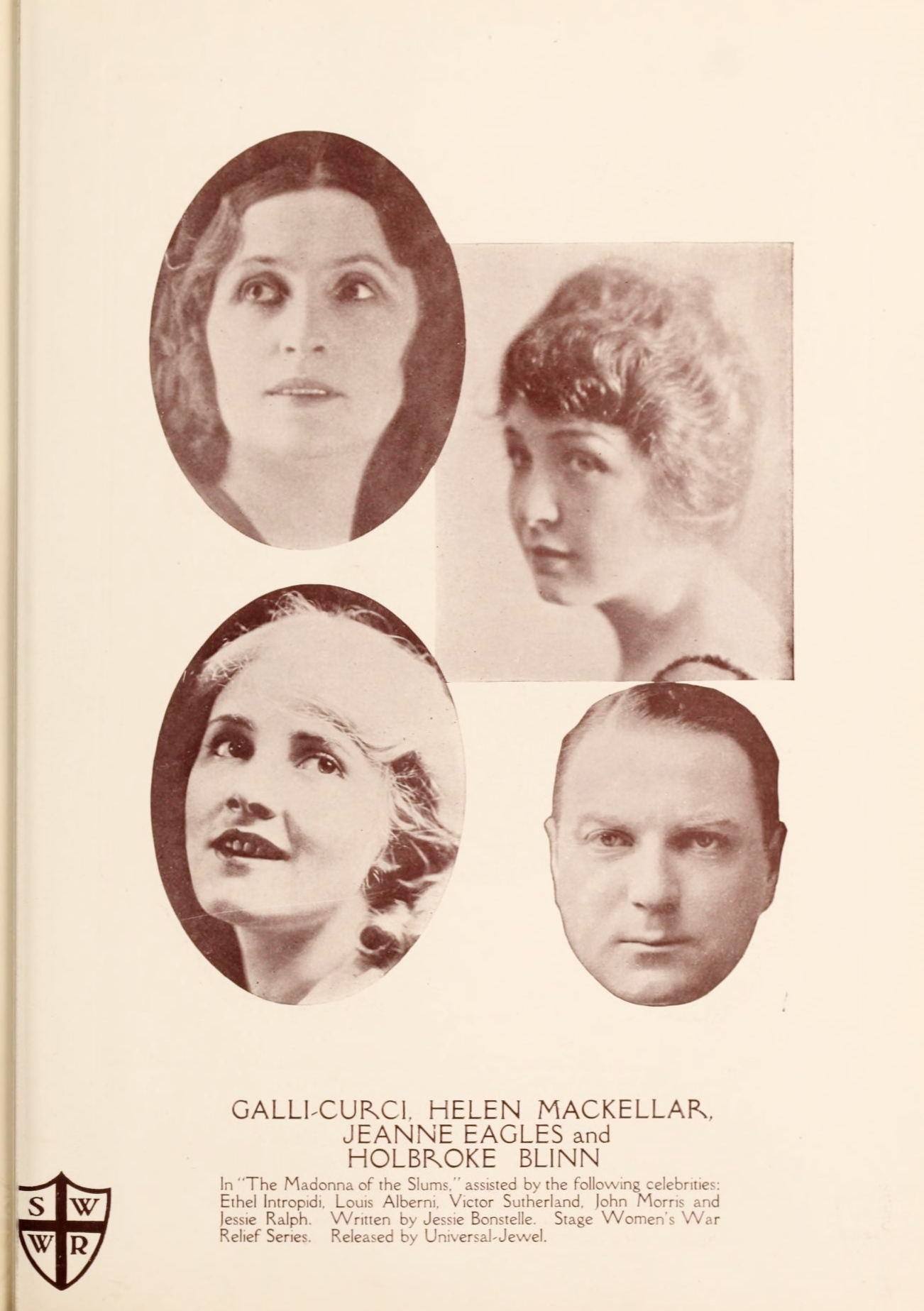
The silent era of cinema often functioned as a bridge between the Victorian morality play and the burgeoning grit of 20th-century social realism. In The Madonna of the Slums, we witness a fascinating, if somewhat stylized, exploration of the 'starving artist' trope flipped on its head. Here, the artist is not starving for bread, but for meaning—a spiritual malnutrition that can only be cured by the visceral reality of the lower classes. It is a film that demands we look at the ethics of the aesthetic gaze, questioning whether the capture of suffering on canvas is an act of empathy or one of refined exploitation.
The central conceit—a wealthy painter unable to finish his magnum opus for lack of a 'face'—is a recurring motif in early narrative cinema. Much like the thematic underpinnings of The Brat, where class distinctions are bridged through the transformative power of the artistic lens, The Madonna of the Slums posits that true beauty is found not in the symmetry of the aristocracy, but in the endurance of the downtrodden. Luis Alberni portrays the artist with a restless, almost predatory intellectualism. He is a man who has mastered the brush but lost the pulse of humanity. His studio is a tomb of unfinished ideas, a stark contrast to the vibrant, albeit painful, life vibrating just outside his window.
When he finally encounters the woman (played with a haunting, luminous intensity by Jeanne Eagels), the film shifts gears. Eagels, whose legacy is often tied to the tragic 'lost' performances of the late silent era, brings a level of psychological depth that elevates the material beyond its melodramatic roots. She isn't just a model; she is a survivor. Her character's desperation—begging for milk money—is the catalyst for the artist's redemption. This dynamic mirrors the social commentary found in How Could You, Jean?, though with a significantly darker, more somber tone. While other films of the period might treat poverty as a whimsical costume to be shed, this film treats it as a crucible.
The cinematography utilizes a primitive but effective form of chiaroscuro to differentiate the two worlds. The artist’s world is flooded with light, yet feels cold and sterile—a white-walled purgatory. Conversely, the slums are rendered in deep shadows and flickering textures, suggesting a world that is messy, dangerous, but undeniably real. This visual dichotomy is essential to the film's success. It forces the audience to reconcile the 'Madonna' of the title with the 'Slums' of the setting. It is a juxtaposition that was quite radical for its time, predating the more formalized social realism of the 1930s.
In comparing this to Manhattan Madness, we see a different side of the New York mythos. Where the latter focuses on the kinetic energy and thrill of the city, The Madonna of the Slums focuses on its casualties. The cast, including the formidable Jessie Ralph and Holbrook Blinn, provides a sturdy framework for this moral play. Ralph, in particular, adds a layer of earthy gravitas that grounds the more ethereal qualities of the artist's quest. The inclusion of Amelita Galli-Curci, even in a tangential or cameo capacity, hints at the high-culture aspirations of the production—an attempt to marry the operatic with the cinematic.
"The canvas does not merely reflect the face of the mother; it reflects the conscience of the man holding the brush. In the silence of the theater, the scream of the impoverished infant is felt in the strokes of the artist's hand."
What makes this film stand out from contemporaries like Madame Bo-Peep or The Marriage Speculation is its refusal to fully sanitize the ending. While the artist secures his desire, the film leaves us with the lingering question of the woman’s future. Is she saved by the commission, or is she merely a temporary vessel for his ego? This ambiguity is where the film's true power lies. It touches upon the themes of I Want to Forget, dealing with the haunting nature of one's past and the struggle to transcend one's circumstances.
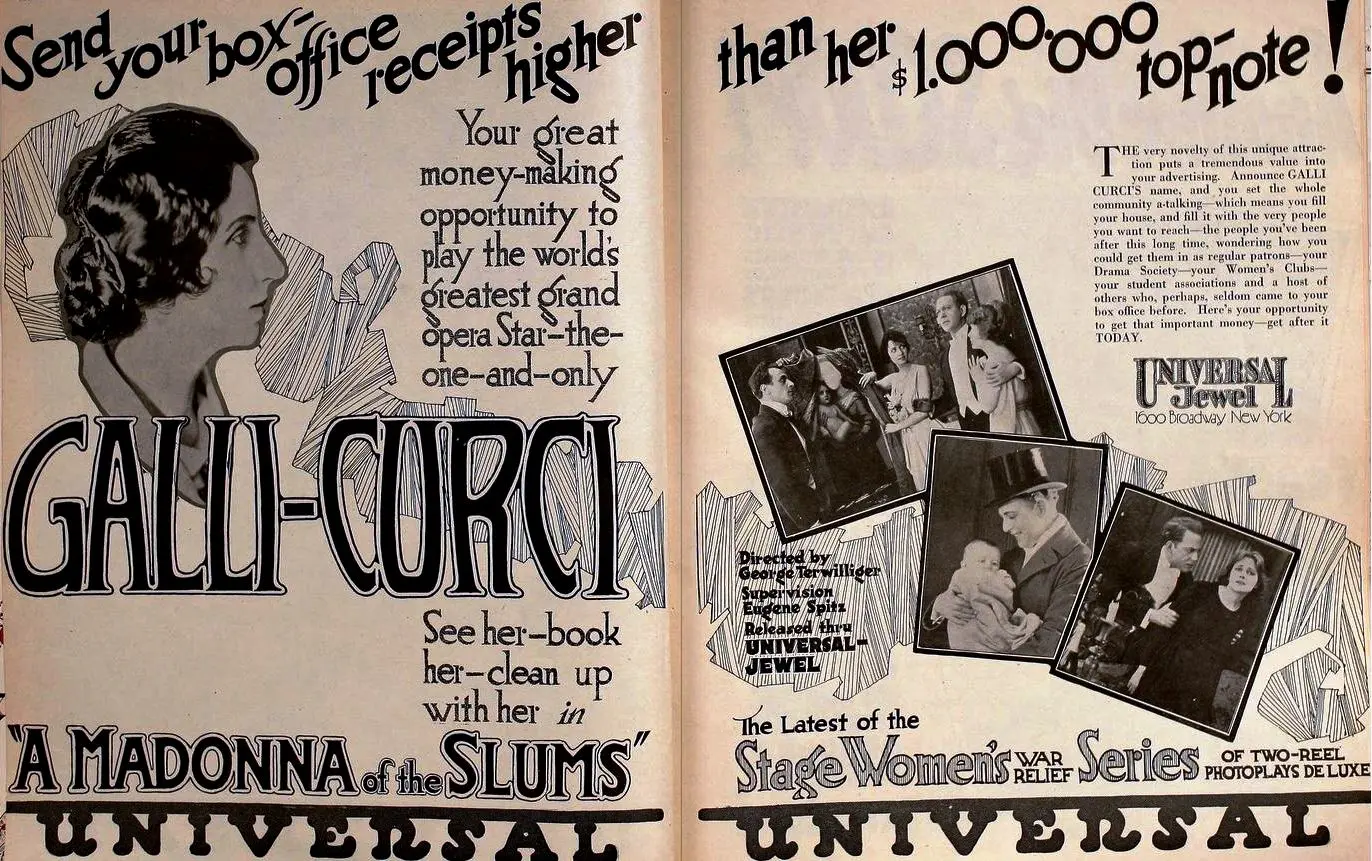
The writing by Jessie Bonstelle and Calder Johnstone displays a surprising amount of restraint. In an era known for over-the-top intertitles, the dialogue here (as represented by the text cards) is often secondary to the visual storytelling. The physical language of the actors tells the story of the class divide far more effectively than any prose could. When the artist watches the mother beg, the camera lingers on her hands—worn, shaking, yet clutching the few coins she has managed to scavenge. It is a moment of pure cinema that transcends the limitations of the technology of 1919.
Furthermore, the film’s exploration of national identity and the 'American Dream'—or rather, the American Nightmare—echoes the sentiments found in My Own United States. It asks what it means to be a citizen of a country that allows such vast disparities to exist side-by-side. The artist's studio and the slum alleyway are separated by only a few blocks, yet they represent entirely different universes. This spatial proximity and social distance are handled with a nuance that is often missing from modern 'poverty porn' cinema.
To understand the impact of The Madonna of the Slums, one must look at the landscape of the time. This was not the era of the gritty western like A Gun Fightin' Gentleman or the lighthearted comedy of The Dub. This was a time of transition. The film carries the weight of European influences—perhaps a nod to the dramatic sensibilities of Sposa nella morte! or the atmospheric tension of Revelj. It sought to prove that American cinema could be as psychologically complex as its overseas counterparts.
The performance of Jeanne Eagels cannot be overstated. Often remembered for her tragic personal life, her work here shows a discipline and an emotional range that was ahead of its time. She doesn't lean into the 'vamp' archetype seen in Beauty and the Rogue, nor the cynical edge of Men Who Have Made Love to Me. Instead, she creates a character defined by maternal instinct and quiet dignity. It is a performance of 'being' rather than 'acting,' a rarity in the silent period where theatricality was the norm.
While some might find the plot's resolution a bit too convenient—the artist getting 'just what he desired'—the journey to that point is filled with enough atmospheric dread and genuine pathos to satisfy even the most cynical viewer. It lacks the raw physical spectacle of The Corbett-Fitzsimmons Fight or the straightforward heroism of Fighting Bob, but it offers something far more durable: a glimpse into the human soul at its most desperate and its most creative.
Ultimately, The Madonna of the Slums is a testament to the power of the face in cinema. It reminds us that before there were explosions, CGI, or complex soundscapes, there was the human visage, capable of telling the entire history of the world in the blink of an eye. For those interested in the roots of social drama and the evolution of the female performance in early film, this is an essential, if somber, viewing experience that lingers long after the final frame fades to black.
IMDb 5.2
1934
Community
Log in to comment.