DbcultAccessing Vault...
Cult Review
Senior Film Conservator
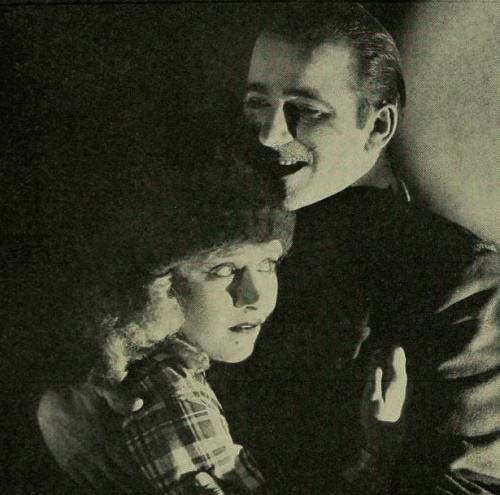
Picture a frontier that feels less like John Ford’s Monument Valley than a fever etching by Goya: tumbleweeds roll like severed heads, clouds bruise into raw umber, and every cactus spine predicts betrayal. Guinn “Big Boy” Williams—also the writer—casts himself as the perpetual trickster, a man whose laughter ricochets off canyon walls the way ricochet itself is a punchline. His father, played with granite-jawed weariness by Charles Arling, embodies generational fatigue; you can almost hear the cartilage in his knees creak whenever the son whoops through a plate-glass window.
Williams’ script, deceptively linear, spirals inward like a lasso tightening around its own throat. What begins as barn-raising japery pivots—without title-card warning—into a scalding indictment of scapegoat culture. Cattle vanish overnight; promissory notes flutter like dying doves; and the town’s righteous whisper mill, embodied by Pauline Curley’s wide-eyed schoolmarm, demands a sacrifice. Big Boy, half-inebriated on corn liquor and his own legend, staggers into the frame of a hold-up he never planned, his silhouette frozen by a bank camera that might as well be the eye of an Old-Testament god.
Williams’ physical lexicon toggles between barn-dance buoyancy and mortified stillness—watch his shoulders collapse inward the instant he realizes the brand on a slaughtered steer matches the one on his saddlebag. It’s a silent-era masterclass in muscular acting: no overdubbed monologue required, only the tremor of a lower lip caught in a shaft of side-light. Marion Aye, as the saloon songbird who believes in Big Boy’s innocence, has catlike eyes that seem to store every sunset; her close-ups glow with such nitrate warmth you fear the celluloid might combust.
Al Ferguson and Bert Appling, playing the villainous ranch hands, eschew moustache-twirling for something colder: Ferguson’s Larson chews toothpicks as if gnawing on virtue itself, while Appling’s Powell projects the lazy certainty of men who know juries fear the rope almost as much as the accused. Their conspiracy is staged in chiaroscuro—half faces, half shadows—so each frame resembles a daguerreotype of Original Sin.
Cinematographer Al Ferguson (pulling double duty as an actor) lenses the prairie at magic hour so that grass blades ignite like match heads. Deep-space staging allows a posse to emerge from heat shimmer miles away, their torches pricking the screen like orange exclamation marks. Intercut iris shots isolate spurs, revolver cylinders, and the tell-tale scar on a heifer’s flank—visual metonyms that turn the landscape into a ledger of evidence. One jaw-dropping sequence overlays a nocturnal stampede with double-exposed silhouettes of stolen banknotes fluttering skyward, implying that currency and cattle are interchangeable currencies of avarice.
Though devoid of diegetic audio, the film vibrates with implied acoustics: the thud of a body onto sawdust, the metallic shrrrik of a switchblade, the communal gasp that surely filled nickelodeons in 1921. Modern viewers, lulled by talkie exposition, may find the absence of spoken exposition almost radical; emotions must detonate through gesture alone. The result is a western that feels closer to dance-theatre than to the verbose oaters of the 1950s—an ancestor to Heidi’s pastoral minimalism and the existential gauntlet of Raskolnikov.
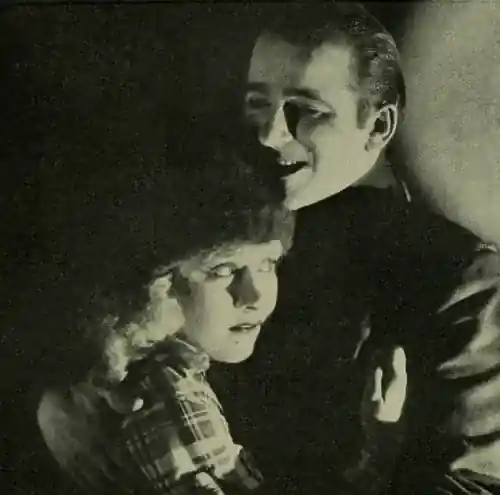
Curley’s character, listed only as “The Girl” in press kits, weaponizes empathy: she alone deciphers brands the way a philologist parses cuneiform. In a genre that later ossified into masculine cliché, her intellectual agency startles. When she gallops sidesaddle across alkali flats to warn Big Boy, the camera crabs backward, keeping her in frame while the horizon tilts—a visual metaphor for social upheaval. Compare this to the cloistered femininity of Tom’s Little Star or the courtly masquerades in Du Barry; here, the west becomes a crucible where gender roles smelt and re-cast themselves nightly.
For decades only a 9.5 mm Pathé digest circulated among collectors, its emulsion scarred like a range steer after a lobo maul. Enter the San Francisco Silent Film Foundation: a 4K wet-gate scan from a Czech print, paired with a tinting bible discovered in Guinn Williams’ granddaughter’s attic, restores lavender nights and persimmon dawns. The new Blu-ray (region-free, 1080p) offers two scores: a jaunty fiddle medley by the Skylark Quartet and a brooding ambient suite by experimental duo Copper Mesa, allowing you to toggle between barn-dance exuberance and existential dread. Subtitles, unobtrusive and lemon-yellow, translate the original French and Czech title cards for polyglot cinephiles.
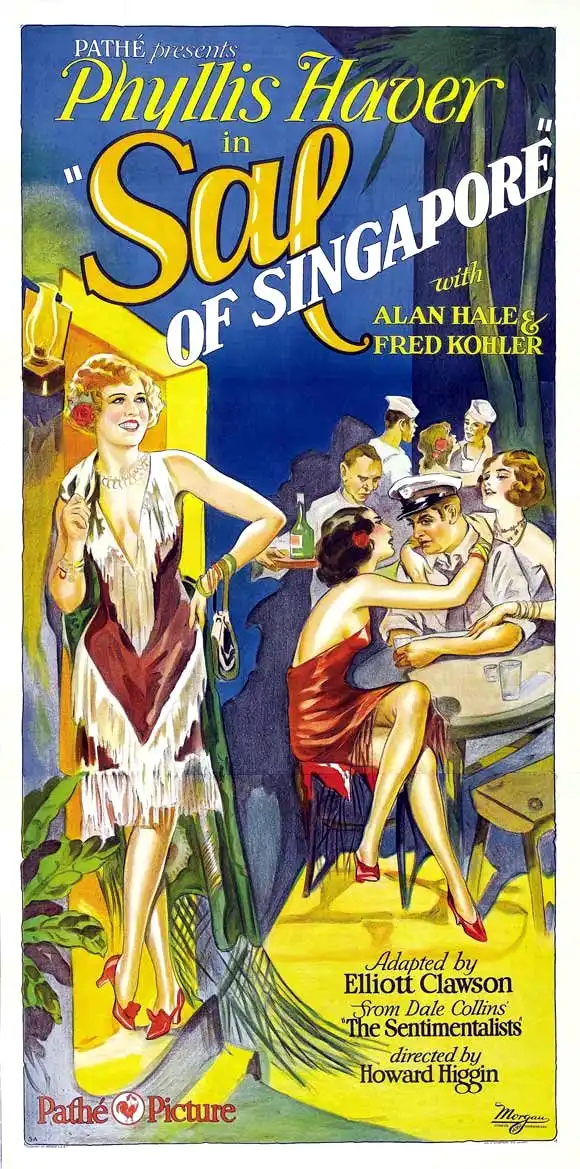
Consider the film’s DNA within the wider 1921 ecosystem: the same year saw The Impersonation dabble in psychological doppelgängers, while In Search of Arcady mythologized pastoral escape. Yet none fuse action and allegory as seamlessly as The Vengeance Trail. Its doppelgänger is not a human lookalike but the specter of culpability itself, stalking Big Boy like a shadow that grows longer at high noon.
Modern practitioners of the neo-western—think Hell or High Water or Wind River—owe a debt to Williams’ narrative architecture: the false accusation, the economic desperation, the final confrontation where landscape and conscience merge. Even horror auteurs found inspiration; the bank-robbery montage, with its quick-zoom eyes and flickering shutter, prefigures the stroboscopic terror of Ikeru Shikabane. Meanwhile, slapstick aficionados trace a direct line from Big Boy’s barroom pratfall to the kinetic exuberance of Bumping Into Broadway.
Contemporary trade sheets dismissed the picture as “another oater for the Saturday lot.” They failed to notice how Williams deconstructs the cowboy as commodity: his Stetson, oversized, keeps slipping over his eyes, literally clouding heroic vision. In an era when Reagan later rode the same iconography into governorship, such self-interrogation feels prophetic. Today, as streaming algorithms resurrect public-domain westerns to pad playlists, reclaiming titles like The Vengeance Trail becomes an act of cultural archaeology—one that exposes the roots of American mythmaking before sound, color, and John Wayne calcified the template.
Watch the last reel under a star-pierced sky if you can. When Big Boy spurs his paint horse across a ridge, the restored silver nitrate catches moonlight so purely the image seems chiseled from pearl. The posse behind him—faces obscured by bandana dusk—becomes a Greek chorus of vendetta. You will feel the same cosmic chill that haunts Whom the Gods Destroy or the spiritual transfiguration in The Miracle Man, yet grounded in the hoof-beat cadence of a working ranch. That paradox—transcendence via dirt—cements The Vengeance Trail not as footnote, but as cornerstone.
“A western that rides past its genre fence, straight into the marrow of national identity.” — RetroPrairie Journal
Seek it, stream it, scream at your projector if the bulb flickers. Then pass the tale along the way campfires once passed gunpowder myths—because some trails deserve to be ridden forever.
IMDb 6
1928
Community
Log in to comment.