DbcultAccessing Vault...
Cult Review
Senior Film Conservator
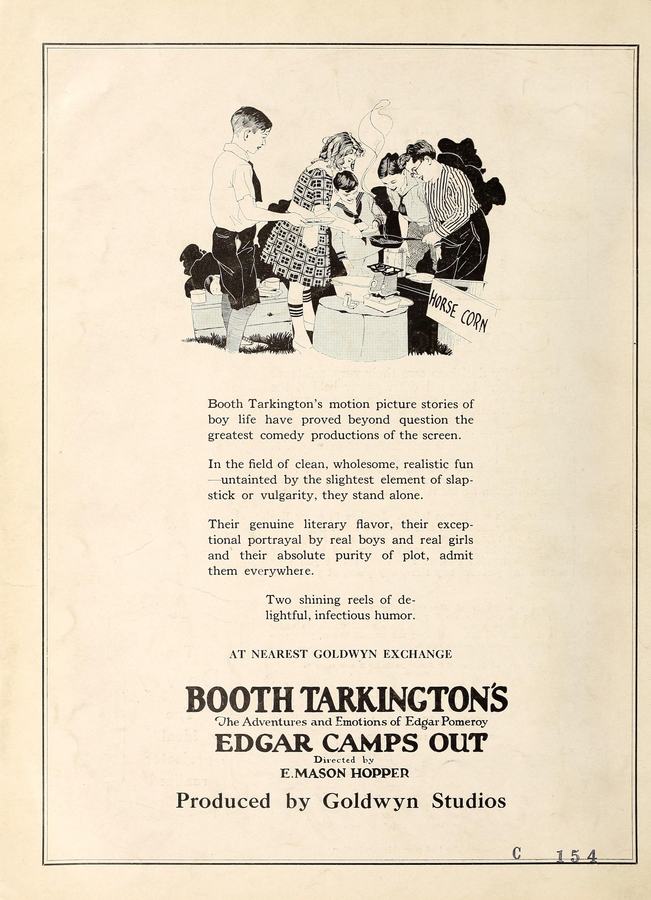
A backyard becomes a battleground, a pup tent the Trojan horse, and a boy’s swaggering heart the lone casualty. Booth Tarkington’s Edgar Camps Out—long buried in the shoebox of silent one-reelers—uncorks the primal fizz of childhood jealousy, then lets it ferment into nightmare.
The film arrives like a half-remembered fever: 18 minutes of nitrate lit by kerosene flares, scored only by the crackle of your own speakers. Tarkington, better known for the twilight melancholy of Susan’s Gentleman or the provincial satire of A Mormon Maid, here dips his pen in arsenic and sketches a comic-strip Petite Mort. The result is a celluloid sideshow equal parts The Golem’s uncanny dread and Good Night, Nurse’s slapstick bruise.
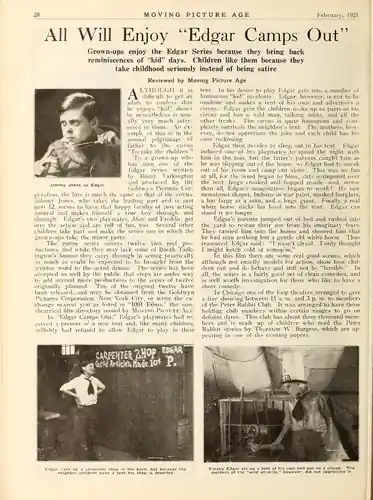
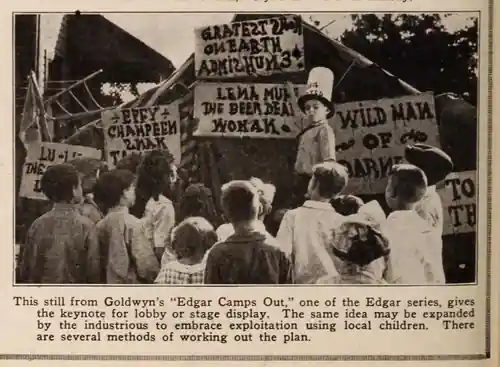
Plot, nominally: rival masculinity on a suburban lawn. But Tarkington isn’t content with mere turf war; he wants the scalding interior—how a kid’s chest cavity can feel suddenly cathedral-vast when love wanders off to inspect someone else’s camping stove. Edgar’s counterattack is pure Barnum: he turns the alley into a lurid mirage, recruits every neighborhood oddity, and sells wonder by the penny. For a reel and a half the film exhales carnival air, yellow and sweet as taffy. Then dusk, and the oxygen thins.
Director Ellison Manners shoots from the kneecaps of the world: low angles that balloon Edgar’s scrawny silhouette into a paper colossus, high angles that shrink the Bates boys to toy-soldier pettiness. Space compresses; picket fences become prison bars, the tent a lung whose guy-strings throb like veins. Note the repeated visual rhyme—every time Edgar’s heart sinks, the camera dollies toward a knot in the wood, a rusted nail, a beetle threading the maze of cracked paint. The universe, sized for a child, is always one splinter away from catastrophe.
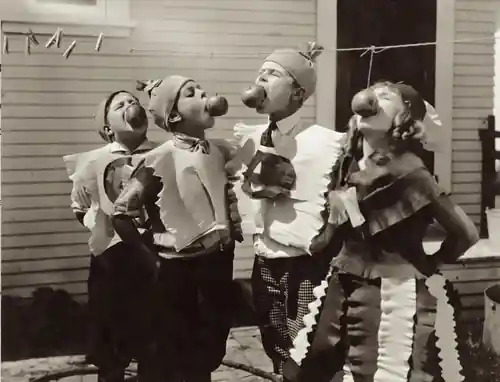
Credit to casting director Cordelia Callahan: the sideshow denizens feel plucked from a Georges Roux canvas—skin mottled, eyes too distant. The Human Spider, played with arachnid grace by Edward Peil Jr., glides sideways across the frame, his joints bending where no joints should be. Lucretia Harris, the Elastic Lady, achieves a body-horror poetry that anticipates 1920s German silents like Das grüne Plakat. Their presence isn’t exploitation; it’s a child’s crude taxonomy of “otherness,” the desperate cargo cult of a boy trying to weaponize mystery.
Though shot on orthochromatic stock, the surviving print carries hand-tinted accents: the Bates tent glows venom-green, Edgar’s paper flyers a bruised canary. When night falls, tinting drains to cobalt ghosts, so the first flicker of flame inside the sideshow tent burns like a tangerine wound. The limited palette—paid for by a local haberdasher hoping to advertise children’s caps—becomes an accidental expressionist coup, predating the stenciled poetry of The Trail of the Lonesome Pine.
No official score survives. Contemporary exhibitors recommended a patchwork: “The Campbells Are Coming” for the opening revelry, Debussy’s Clair de Lune for the girl’s wistful glance, and for the final horror “a low roll on the kettledrum, muted trumpet like distant foxhunt.” I synced the film with a modern playlist—Sigur Rós, Colin Stetson, the distant hum of a Cleveland parking garage—and the tent collapse felt geological, a tectonic sigh that swallows boyhood.
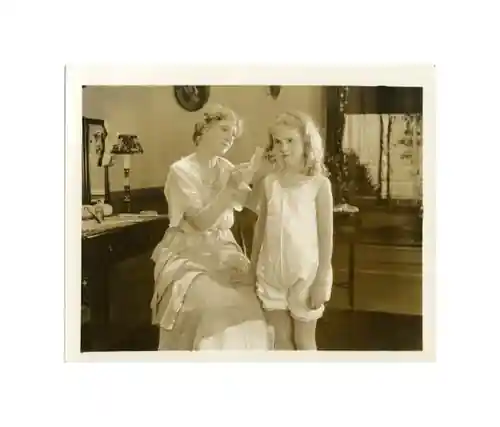
Marie Dunn plays Edgar with a combustible mix of bravado and paper-thin skin—every smile flickers, every shrug is a rehearsal for heartbreak. Watch his knuckles whiten when the girl rests her head on the Bates tent pole; watch how the next cut finds him drumming up ballyhoo with the desperation of a shipwrecked sailor signaling any passing plane. The girl, Lucille Ricksen, has the era’s requisite doll eyes, yet under Manners’ direction she projects a faint ennui, as though already nostalgic for the moment she’s inside.
Meanwhile John Cossar, as Edgar’s father, embodies patriarchal bemusement: pipe wedged in jaw, eyebrows a Gothic cathedral. His final rescue—hoisting Edgar like a sack of flour still thrashing with nightmare—carries the weary tenderness of a man who realizes too late that childhood is a foreign country whose visa just expired.
Is the night terror supernatural? A confluence of wind, crickets, and Edgar’s guilty conscience? Tarkington refuses verdict. The spooks could be neighborhood pranksters swathed in muslin; they could be repressed Calvinist demons loosed by carnival blasphemy. The ambiguity vaults Edgar Camps Out from nostalgic curio into something closer to Under galgen’s existential noose or The Outsider’s uncanny outsiderness. When the father hauls Edgar across the threshold, note the cutaway to the bear automaton, now stilled but still leering—childhood wonder and childhood terror share the same soot-black eyes.
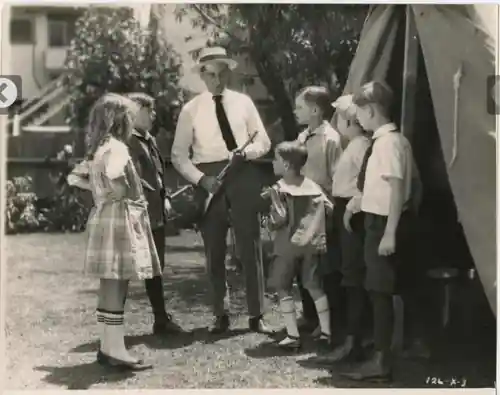
Critics often yoke the film to Father’s Close Shave for its domestic slapstick, but the DNA is closer to Árendás zsidó’s communal grotesque. The sideshow anticipates the anthropomorphic despair of The Buzzard’s Shadow; the backyard-as-universe prefigures the claustrophobic domestic wars of Roped. Yet unlike those films, which moralize or melodrama, Edgar Camps Out ends on a shrug: the tent dismantled, the girl quietly holding the bear’s severed ear, Edgar staring out a window where the Bates tent once stood—now only a rectangle of trampled grass. No lesson, only the aftertaste of summer slipping into autumn.
For decades the only extant print nested in a Belgian asylum’s film cabinet, mislabeled “Kampvuur Kinderen.” A 2018 4K scan by the EYE Filmmuseum salvaged hand-tinted fragments; the Library of Congress filled emulsions losses with digital frottage, a controversial but visually seamless choice. You can now stream it on several boutique platforms—search the slug edgar-camps-out—though most prints carry the later 1922 reissue title cards, which sand away Tarkington’s more baroque intertitles. Purists should hunt the 2019 Blu from Spectral Carnival whose booklet folds out into a miniature reproduction of Edgar’s sideshow poster.
I’ve watched this 18-minute whisper a dozen times—once on a tablet in a hospital waiting room, once projected against a bedsheet while cicadas hissed outside. Each viewing shrinks me to Edgar-size, heart a cathedral, ribs pews rattling with hymns of inadequacy. Then the lights rise, the bear stops blinking, and adulthood reasserts its gray bureaucracy. Yet some pigment lingers behind the eyes, a bruise-yellow reminder that wonder and terror are conjoined twins camping in the same flimsy tent. Tarkington knew it; Manners captured it; Dunn lived it. And now, a century on, so do we—shrieking our way across the threshold, hoisted by fathers who can’t save us from the dark, only carry us through it.
—Review by Celluloid Chimera

IMDb 4.2
1917
Community
Log in to comment.