DbcultAccessing Vault...
6.3/10
Senior Film Conservator
A definitive 6.3/10 rating for a film that redefined the boundaries of cult cinema. What Happened to Rosa remains a cornerstone of transgressive art.
There is a peculiar, almost haunting quality to the way 1920’s What Happened to Rosa approaches the concept of identity. While many of its contemporaries were preoccupied with the visceral realities of the post-war era, this film, penned by the fascinating Pearl Lenore Curran and Gerald C. Duffy, dives headlong into the nebulous world of spiritualism and reincarnation. It is a vehicle for the incomparable Mabel Normand, whose screen presence was often a chaotic blend of vulnerability and acrobatic wit. Here, she portrays Mayme Ladd, a character who serves as a surrogate for every working-class dreamer of the Jazz Age.
The film opens with a stark contrast between the drudgery of the hosiery counter and the vibrant, hallucinatory potential of the human imagination. Unlike the darker explorations of psychological control found in The Hand Invisible, where the unseen exerts a malevolent force, What Happened to Rosa treats the supernatural as a liberating agent. When a fortune teller informs Mayme that she was once a Spanish lady of high birth, the film doesn't just present a plot point; it initiates a total aesthetic shift. The cinematography begins to favor the ornate, the dramatic, and the flamboyant, mirroring Mayme’s internal transition into Rosa Alvaro.
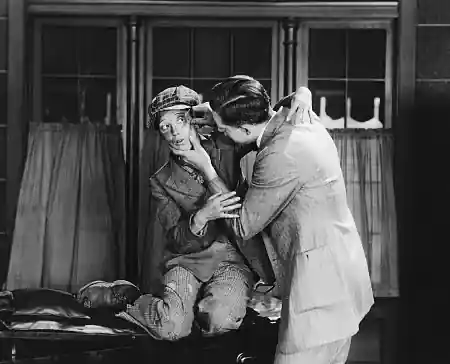
To understand the depth of this film, one must look at the writer, Pearl Lenore Curran. Curran was a woman who claimed to channel a 17th-century entity named Patience Worth, making her the perfect scribe for a tale about past-life intrusion. This lends the film an authenticity of conviction that distinguishes it from mere farce. While Saints and Sorrows might grapple with the heavy mantle of religious duty, What Happened to Rosa uses the ethereal to puncture the balloon of social pretension. Mayme’s belief in her Spanish heritage isn't portrayed as madness, but as a survival mechanism against the crushing weight of her proletarian reality.
Normand’s performance is a masterclass in duality. As Mayme, her movements are restricted, her eyes reflecting the fatigue of a thousand transactions. As Rosa, she becomes a whirlwind of lace and gesture. This isn't just physical comedy; it’s a semiotic deconstruction of class. She adopts the signifiers of nobility—the tilt of the chin, the rhythmic snap of the fingers—with such fervor that the world around her has no choice but to accept the fiction. It’s a theme explored with more gravitas in Fedora, but here it is handled with a light, almost mercurial touch that keeps the audience in a state of constant amusement.
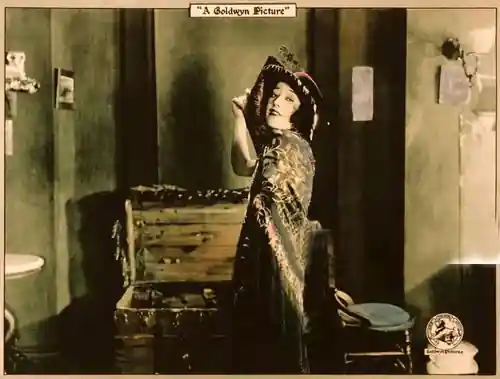
The supporting cast provides a sturdy framework for Normand’s flights of fancy. Adolphe Menjou, even in this early stage of his career, exudes the polished sophistication that would become his trademark. He represents the very world Mayme aspires to join, yet he is the one captivated by her fabricated exoticism. Their chemistry is a delicate dance of misconceptions. It brings to mind the romantic entanglements of A Midnight Romance, where the sea breeze seems to carry with it the possibility of reinventing one’s heart.
Tully Marshall and Eugenie Besserer round out a cast that understands the specific requirements of silent era timing. The pacing is relentless, moving from the cramped confines of the department store to the expansive, sun-drenched decks of a yacht. This transition is vital; the yacht becomes a floating stage where Mayme’s Rosa can perform without the tether of her true identity. In this sense, the film shares a DNA with A Society Exile, focusing on the performative nature of high-society life and the masks one must wear to navigate it.
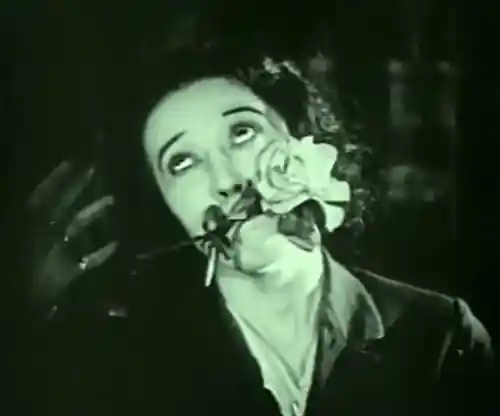
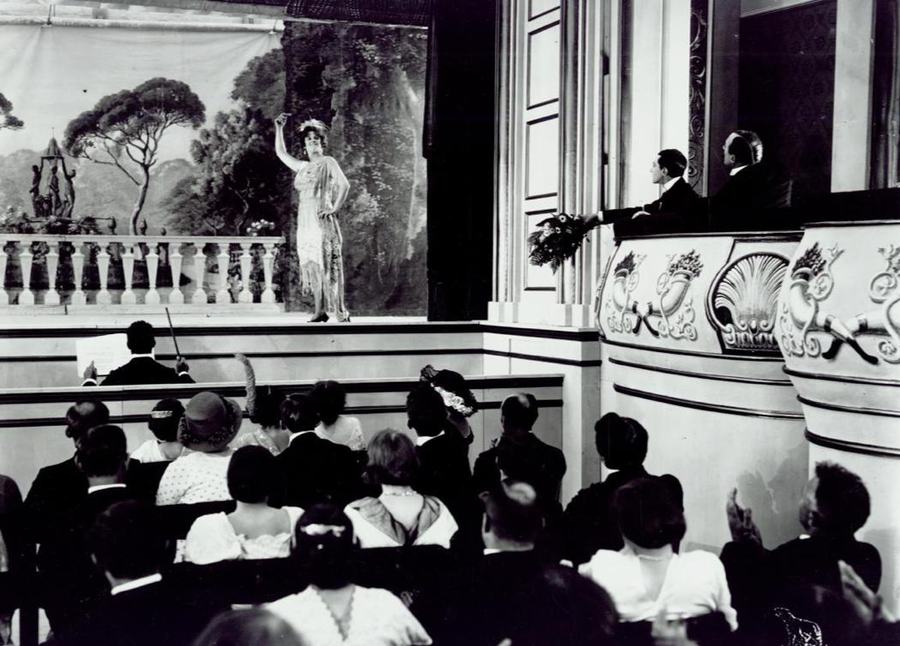
The comedic sequences involving the fortune teller’s prophecy are staged with a theatrical flair that highlights the absurdity of the situation. When Mayme first attempts her "Spanish" dance, the film teeters on the edge of disaster, only to be saved by Normand’s innate grace. It is a moment of pure cinematic joy, reminding us that the best comedies are those where the stakes feel intensely personal to the protagonist. Much like the characters in The Happy Warrior, Mayme is fighting a battle for her own happiness against a world that would prefer she stay in her place.
Visually, the film utilizes the chiaroscuro of the silent era to great effect. The shadows in the fortune teller’s parlor are deep and evocative, suggesting a world of hidden truths, while the bright, flat lighting of the store emphasizes the banality of Mayme’s daily life. This visual dichotomy reinforces the film’s central theme: the struggle between the internal self and the external expectation. We see similar visual storytelling in The Lash of Power, though that film uses its shadows to much more sinister ends.
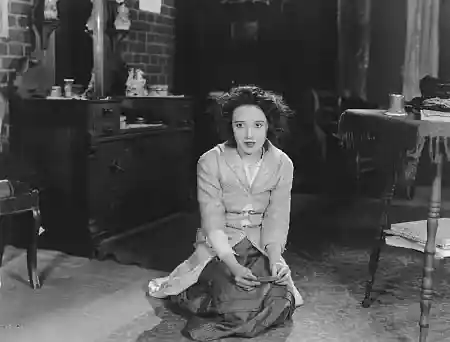
The script by Curran and Duffy is surprisingly modern in its skepticism of authority. The "experts" and "mystics" are often shown to be charlatans, yet their lies provide the catalyst for Mayme’s genuine growth. This irony is the heart of the film. It suggests that truth is not found in facts, but in the courage to inhabit one’s own dreams. This sentiment is echoed in Hidden Fires, where the secret life of the protagonist provides the only real warmth in a cold world.
Reflecting on What Happened to Rosa over a century later, its charm remains remarkably untarnished. While some of the ethnic tropes might feel dated to a modern eye, Normand’s performance transcends the era’s limitations. She isn't mocking Spanish culture; she is embracing a symbol of passion and freedom that her own culture denied her. In this way, the film is a precursor to the screwball comedies of the 1930s, where identity was often a fluid concept used to navigate the complexities of love and money.
Comparisons to Strictly Confidential are inevitable, as both films deal with the tension between private desires and public personas. However, Rosa has a whimsical, almost fairy-tale quality that sets it apart. It doesn't seek to moralize; it seeks to enchant. The resolution of the romance, which involves a series of increasingly frantic coincidences and narrow escapes, is handled with a deftness that prevents it from feeling contrived. It is the logical conclusion to a story that began with a leap of faith into the unknown.
In the broader context of silent cinema, this film stands as a testament to the power of the star system. Mabel Normand was a force of nature, and What Happened to Rosa is perhaps the best distillation of her screen persona. It captures her at the height of her powers, blending the slapstick energy of her Keystone days with a sophisticated narrative structure. It is a film that rewards multiple viewings, as the nuances of the performances and the subtle wit of the title cards become more apparent.
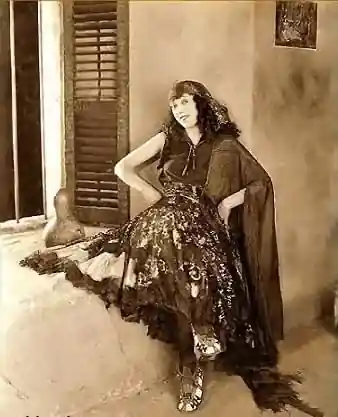
The technical aspects of the film, from the costume design to the set decoration, are exemplary. The "Rosa" costumes are particularly noteworthy, using intricate embroidery and heavy fabrics to ground Mayme’s fantasy in a tangible reality. This attention to detail ensures that the audience, like the characters on screen, is momentarily seduced by the illusion. It’s a technique seen in La Gioconda, where the visual splendor is inseparable from the narrative’s emotional weight.
Furthermore, the film’s exploration of the "New Woman" of the 1920s is subtle but present. Mayme is a woman who takes control of her own narrative. While she uses a past-life persona to do so, the agency is entirely hers. She is not a passive victim of fate, but an active participant in her own reinvention. This contrasts with the more traditional depictions of female suffering found in La piccola fonte or the domestic dramas like Infidelity.
Ultimately, What Happened to Rosa is a celebration of the transformative power of the imagination. It reminds us that we are not defined by our circumstances, but by the stories we choose to tell about ourselves. Whether she is Mayme Ladd or Rosa Alvaro, the protagonist is a woman seeking a life of meaning and excitement in a world that offers her neither. By the time the final frame flickers out, we are left with the feeling that the "Rosa" within all of us is just waiting for the right moment to dance. It is a cinematic experience that, much like the diplomatic intrigues of Diplomacy or the gritty realism of Fighting Blood, leaves an indelible mark on the history of the medium, albeit through the lens of laughter rather than tears.
For those who appreciate the artistry of the silent era, this film is an essential watch. It combines the technical prowess of the period with a heart that is timeless. In the pantheon of great comedies, it holds a unique position—a film that is as much about the soul as it is about the funny bone. It is a reminder of why Mabel Normand remains one of the most beloved figures in film history, and why stories of self-discovery, no matter how absurd the premise, will always resonate with an audience. Like the titular character in Der Lumpenbaron, Mayme finds that the crown she wears, even if made of tinsel, allows her to walk with the stride of a queen.
IMDb 6.4
1919
Community
Log in to comment.