DbcultAccessing Vault...
Cult Review
Senior Film Conservator
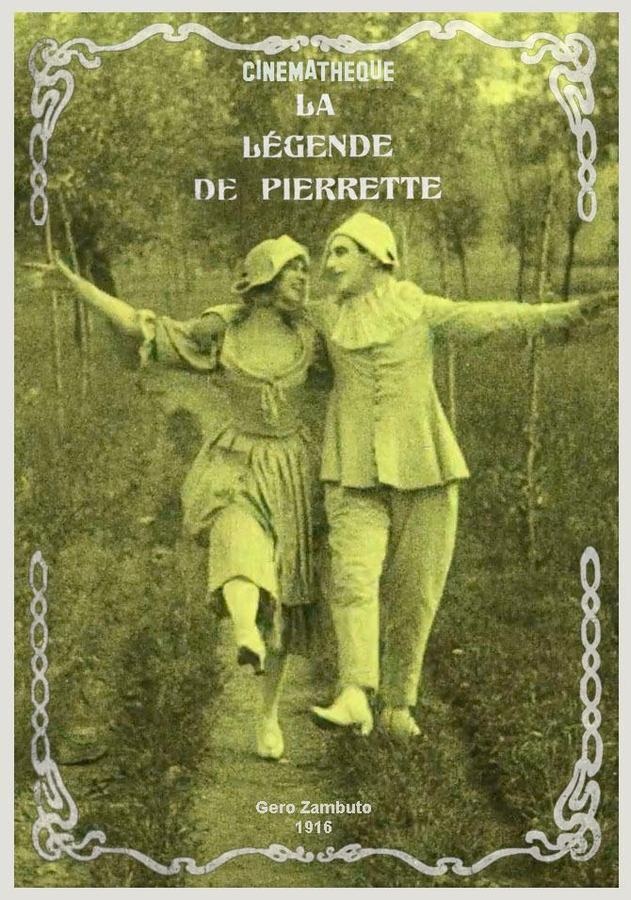
The silent era, a period often dismissed by casual viewers as primitive, was in fact a crucible of cinematic artistry, where visual storytelling reached an apex of expressive power. Few films from this nascent period encapsulate the delicate balance of burgeoning romance, societal upheaval, and individual temptation quite like La leggenda di Pierrette. This Italian gem, featuring the compelling performances of Helena Makowska, Giulio Del Torre, and Vasco Creti, transcends its deceptively simple plot to offer a profound meditation on the human heart's susceptibility to change, the allure of the unknown, and the often-unseen currents that pull us from our established paths. It's a testament to the fact that even without a single spoken word, cinema could articulate the most complex emotional landscapes with breathtaking clarity.
At its core, the narrative unfurls in a rural idyll, a verdant canvas where the pure, unblemished love between Pierrot and Pierrette blossoms. Their world is one of pastoral simplicity, a harmonious existence woven from shared glances, gentle strolls, and the quiet understanding that only true affection can forge. Giulio Del Torre's Pierrot embodies this rustic devotion with an earnestness that is both heartwarming and, in retrospect, heartbreaking. He is the very picture of steadfast love, his gaze upon Pierrette radiating an uncomplicated adoration that feels as natural and eternal as the rolling hills surrounding them. Helena Makowska's Pierrette, initially, mirrors this innocence, her movements graceful and her expressions reflecting a soul content within its familiar confines. This foundational bliss is not merely a backdrop; it is the emotional bedrock against which the subsequent drama unfolds, making the impending disruption all the more poignant.
The catalyst for this shift arrives not with a bang, but with the gentle rustle of silk and the murmur of sophisticated voices. As Pierrette ventures forth, perhaps seeking a new perspective or simply a different patch of wildflowers, she encounters a group of young city dwellers. Their presence is an immediate, albeit subtle, intrusion into her pristine world. They are an exotic species, clad in garments of finer cut, their mannerisms imbued with an urbanity that contrasts sharply with the earthy simplicity of Pierrette and Pierrot. This encounter is masterfully filmed, creating a palpable sense of otherness. The city folk represent not just a different social class, but an entirely different way of being – one that speaks of freedom, excitement, and perhaps a touch of dangerous allure. Pierrette, with an innocent entrepreneurial spirit, offers them her flowers, a small act of commerce that inadvertently opens a gateway to a world she never knew existed.
It is within this brief interaction that the seeds of doubt and desire are sown. One of the men, portrayed with captivating charm by Vasco Creti, is immediately smitten by Pierrette. His gaze is different from Pierrot's; it holds not just affection, but a hint of worldly experience, a promise of adventure. He begins to court her, his approach undoubtedly more polished, more urbane than anything Pierrot could offer. And here lies the film's central psychological drama: Pierrette's reaction. Makowska's performance during this phase is a study in nuanced emotional awakening. Her initial surprise gives way to curiosity, then to a dawning awareness of her own desirability beyond the confines of her familiar love. She is not insensitive to his advances; a flicker of interest, a hesitant smile, a momentary lapse in her steadfastness. These are not grand gestures, but subtle shifts in expression, in the way she holds herself, that speak volumes about her internal conflict. The film brilliantly captures the quiet agony of a heart torn between loyalty and the intoxicating pull of novelty, between the comfort of the known and the thrill of the unexplored.
The genius of La leggenda di Pierrette lies in its ability to transform a seemingly simple love triangle into a powerful allegory. It’s a microcosm of the broader societal anxieties and transformations prevalent in the early 20th century. The burgeoning industrialization and urbanization across Europe were drawing people from rural areas into cities, promising opportunity and excitement, but often at the cost of traditional values and communal bonds. Pierrette's dilemma can be seen as representing the soul of a nation, or indeed, an individual, caught between the comforting embrace of tradition and the seductive siren call of modernity. The film doesn't preach; it observes, allowing the audience to project their own understanding onto the characters’ choices and predicaments. This allegorical depth elevates it beyond a mere romantic drama, positioning it as a significant cultural artifact.
From a technical perspective, the film is a masterclass in silent cinematic expression. The directors, though uncredited in the prompt, skillfully utilize visual cues to convey the narrative's emotional weight. The cinematography, presumably capturing the Italian countryside, would have been crucial in establishing the stark contrast between Pierrette’s natural habitat and the implied sophistication of the city. Close-ups on the actors' faces, particularly Makowska's, become windows into their innermost thoughts and feelings. A downturned lip, a fleeting glance, a hesitant gesture—these are the powerful tools of silent acting, and the cast here deploys them with remarkable precision. The pacing, too, would have been carefully calibrated to allow moments of quiet contemplation to linger, enhancing the sense of unfolding emotional drama. The absence of dialogue forces a heightened awareness of every visual detail, every subtle cue, making the viewing experience intensely immersive and profoundly empathetic.
When considering films of this era that explore similar themes of innocence, class, and the corrupting or transforming influence of external forces, one might draw parallels to works like The Daughter of the People. That film, too, delves into the challenges faced by a young woman from humble beginnings when confronted with the complexities and temptations of a more privileged or urbanized society. Both narratives, though distinct, resonate with a shared concern for the vulnerability of innocence in the face of societal pressures and the often-unequal playing field of romantic pursuit. The struggles of the protagonists in both films highlight a recurring motif in early cinema: the individual's journey through a rapidly changing world, often forced to make choices that redefine their identity and destiny.
Another fascinating comparison can be drawn with Children of the Stage; or, When Love Speaks. While the setting and specific circumstances might differ, both films delve into the intricate dance of young love and the obstacles it encounters. In 'Children of the Stage,' the very nature of their profession, the theatrical world, presents a unique set of challenges and temptations. In La leggenda di Pierrette, the challenge comes from an external, societal force – the allure of the city and its representative. This contrast allows us to appreciate the different forms that conflict and temptation can take in early cinematic narratives, demonstrating a rich exploration of human relationships under duress. Both films, in their own ways, are profound meditations on the fragility and resilience of love in a world that constantly tests its boundaries.
The performances are undoubtedly the anchors of this film. Helena Makowska, in particular, carries the weight of Pierrette's evolving emotional landscape with remarkable grace. Her transition from innocent country girl to a woman grappling with new desires is handled with a subtlety that avoids melodrama, a common pitfall in silent cinema. You see the conflict etched on her face, in the way her eyes dart, in the slight hesitation of her movements. Giulio Del Torre's Pierrot, while perhaps less overtly dynamic, provides the crucial emotional counterpoint. His unwavering love serves as a poignant reminder of what Pierrette stands to lose, making her internal struggle all the more impactful. Vasco Creti, as the urban suitor, exudes just the right amount of charm and sophistication to make his advances genuinely tempting, never veering into outright villainy, but rather embodying a different, equally valid, path of desire. The interplay between these three actors forms the beating heart of the film, ensuring its emotional resonance.
The choice of setting, the Italian countryside, is not merely incidental. It imbues the film with a particular aesthetic and thematic flavor. Italian silent cinema often excelled in capturing both the grandeur of its landscapes and the intimate dramas of its people. The rolling hills, the sun-drenched fields, the simple cottages – these elements are not just scenery; they are characters in themselves, representing a way of life that is both beautiful and, perhaps, limiting. The arrival of the city dwellers is thus a symbolic invasion, a clash of two distinct worlds. This geographical and cultural divide amplifies the emotional stakes, making Pierrette's choice not just a personal one, but one with broader implications for her identity and belonging. It's a poignant reflection on how environment shapes destiny and desire.
What makes La leggenda di Pierrette endure is its timeless exploration of universal human experiences. The allure of the new, the conflict between loyalty and desire, the awakening of self-awareness – these are themes that transcend eras and cultural boundaries. The simplicity of its plot belies the complexity of the emotions it evokes. It prompts viewers to consider the nature of happiness, the price of change, and the myriad paths one's heart can take. It serves as a powerful reminder that even in the earliest days of cinema, filmmakers were grappling with profound philosophical and emotional questions, using the nascent medium to hold a mirror up to the human condition. It's a film that resonates because it speaks to the part of us that has, at some point, stood at a crossroads, pondering the path less traveled.
Ultimately, La leggenda di Pierrette is more than just a historical curiosity; it is a vibrant, emotionally charged piece of filmmaking that deserves a place in the pantheon of significant silent films. Its delicate portrayal of a love challenged by external forces and internal desires speaks volumes, even without a single spoken word. For anyone interested in the foundational artistry of cinema, in the nuanced performances that defined the silent era, or simply in a beautifully told story of the human heart, this film is an essential viewing experience. It reminds us that sometimes, the quietest stories are the ones that echo most profoundly, leaving an indelible mark on our understanding of love, choice, and the irresistible pull of destiny.

IMDb 5.4
1921
Community
Log in to comment.