DbcultAccessing Vault...
Cult Review
Senior Film Conservator
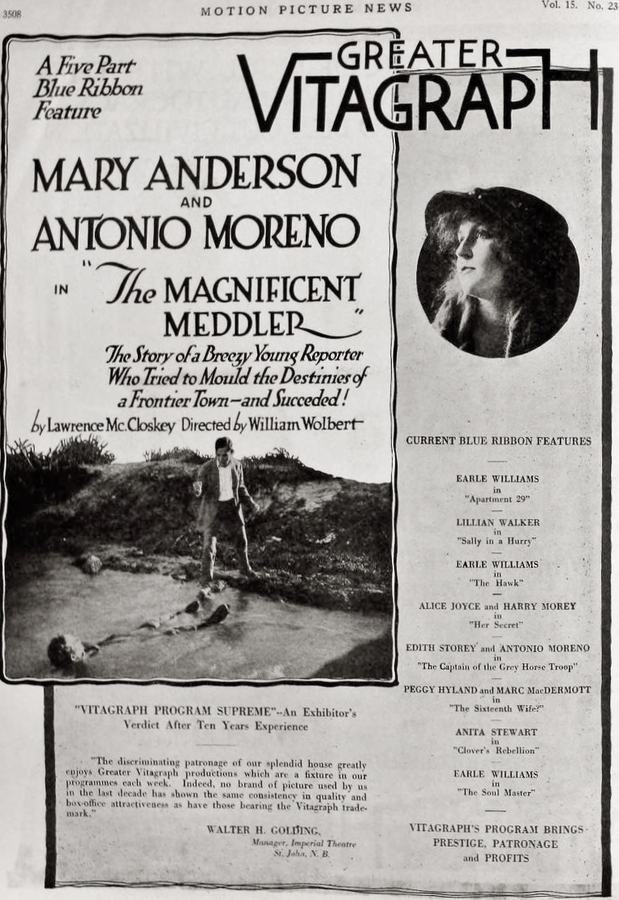
Ah, the silent era! A time when narratives unfolded with a grandeur often lost in the cacophony of modern cinema, relying on the sheer power of visual storytelling, expressive performances, and the evocative pulse of a live orchestra. Among the myriad cinematic gems from this epoch, The Magnificent Meddler (1917) emerges as a fascinating artifact, a vibrant tapestry woven with threads of frontier justice, burgeoning romance, and the transformative power of a determined individual. It’s a film that, even a century later, speaks volumes about the enduring human desire for order amidst chaos, and the often-rocky path toward societal betterment.
At its heart, The Magnificent Meddler introduces us to Montague Emerson, portrayed with a compelling blend of earnestness and conviction by the charismatic Antonio Moreno. Emerson isn't your typical Western hero; he's not a gunslinger, nor a grizzled lawman. Instead, he’s an idealist, propelled by a substantial inheritance and a burning desire to civilize the 'wild and woolly' Western town of Horizon. His weapon of choice? Not a Colt .45, but the printing press. Along with his loyal, somewhat bemused chum, the cartoonist Bob Gill, Emerson acquires The Sentinel, Horizon’s only newspaper. This isn't merely a business venture; it's a declaration of war against the entrenched lawlessness and moral lassitude that define Horizon. It’s a bold move, reminiscent of the journalistic crusades seen in other narratives of the era, where the pen was truly mightier than the sword, or at least a powerful complement to it.
Emerson's initial foray into town reform is both immediate and confrontational. He wastes no time in targeting Ike Cherry, Horizon's resident 'bad man,' branding him an 'undesirable citizen' in the pages of The Sentinel. This act, audacious in its public condemnation, sets the tone for Emerson’s entire tenure. He doesn't shy away from controversy; he actively courts it, believing that only through direct challenge can real change be wrought. This early confrontation establishes Emerson as a force to be reckoned with, a man unafraid to call out corruption and vice, much like the moralizing protagonists found in films like The Disciple, where individual conviction often clashes with societal malaise.
Emerson's ambitions quickly escalate beyond individual rogues. He champions the annexation of Horizon to the more developed town of Lewiston, a move he believes will bring much-needed order and progress. However, this grand vision directly threatens the power base of Roth, Horizon's formidable town boss, masterfully played by Otto Lederer. Roth embodies the old guard, the established order, a man whose authority is built on a network of influence and, implicitly, a certain degree of civic inertia. The conflict between Emerson and Roth thus becomes a microcosm of the larger struggle between progress and tradition, between idealism and pragmatism, a recurrent theme in Westerns where burgeoning civilization grapples with its untamed past. One might draw parallels to the political machinations and community struggles depicted in films such as The Patriot, albeit in a different historical context, where the clash of wills defines the fate of a community.
The narrative gains a captivating personal dimension when Emerson, the very thorn in Roth's side, falls deeply in love with Jess, Roth's daughter, brought to life with grace by Mary Anderson. This romantic entanglement immediately introduces an insurmountable barrier between the lovers, as Roth's disdain for Emerson extends to fervent opposition to any union with his daughter. This classic dramatic trope—the hero falling for the antagonist's daughter—is handled with a certain silent film panache, relying on longing glances, dramatic gestures, and the undeniable chemistry between Moreno and Anderson. It adds a layer of emotional complexity to what could otherwise be a straightforward tale of good versus evil. The personal stakes are raised, making Emerson's crusade not just about civic duty, but about winning the heart of the woman he loves, a familiar yet ever-engaging narrative device.
Just as the tension between Emerson and Roth reaches a fever pitch, a dramatic turn of events reshapes their conflict. In a desperate, vengeful act, Roth and his cronies set fire to The Sentinel offices, aiming to silence Emerson's reforming voice once and for all. This sequence, undoubtedly a highlight of the film, would have been rendered with palpable urgency through the visual medium, emphasizing the fragility of progress in the face of brute force. However, this act of destruction is overshadowed by an even more sinister development: Jess is kidnapped by Pete Marillo, the nefarious owner of Horizon's most disreputable dance hall and saloon. Marillo, a more overtly villainous figure than the politically motivated Roth, represents the pure, unadulterated darkness that Emerson is striving to eradicate. This sudden escalation transforms the narrative from a political struggle into a desperate race against time, a classic Western trope where the hero must prove his worth through decisive action.
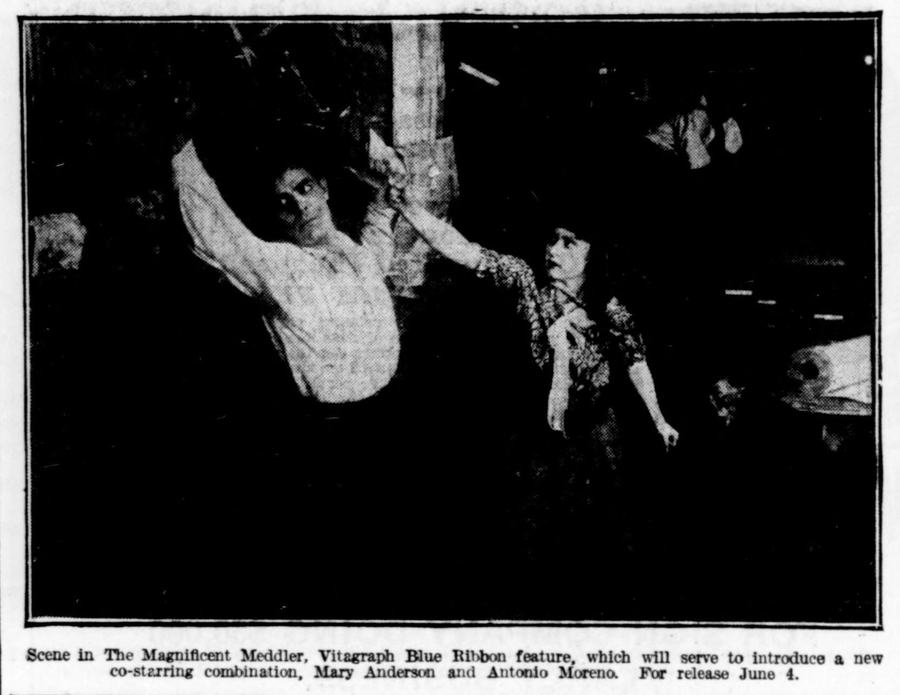
It is in this moment of profound crisis that Montague Emerson truly earns his 'magnificent' moniker. Abandoning his journalistic battle for a more immediate, visceral fight, he embarks on a heroic rescue mission. The visual depiction of this chase and confrontation, a staple of silent Westerns, would have been crafted for maximum suspense, showcasing Moreno’s athleticism and Emerson’s unwavering courage. His successful rescue of Jess is the pivotal moment, not just for the lovers, but for the entire town. It's a powerful demonstration that while words can inspire change, actions often speak louder, especially in a world where physical courage is still highly prized. This act of valor fundamentally alters Roth's perception of Emerson. The town boss, who moments before was attempting to destroy Emerson's livelihood, is now bound by a profound debt of gratitude, his paternal instincts overriding his political animosity. This shift, while somewhat convenient for narrative closure, underscores a common theme in such stories: that shared humanity and crisis can bridge even the deepest divides.
The resolution of The Magnificent Meddler is a testament to the power of love and the unexpected alliances forged in the fires of adversity. Roth, his opposition to Emerson and Jess's union now completely dissolved by gratitude, not only gives his blessing but also pledges to swing the corrupt votes for the consolidation of Horizon and Lewiston. This is a crucial turning point, signifying not just a personal victory for Emerson, but a symbolic triumph for his vision of a more orderly and progressive Horizon. It suggests that even the most entrenched systems of power can be swayed by acts of genuine heroism and sincerity. The ending, therefore, is not merely a romantic resolution but a political one, where the hero achieves both his personal and public goals, a satisfying conclusion characteristic of many films of its era, such as The Heir to the Hoorah, which often concluded with a clear victory for the protagonist's moral stance.
Antonio Moreno, a prominent leading man of the silent screen, delivers a performance that anchors the film. His Montague Emerson is earnest without being naive, determined without being arrogant. He conveys the character's idealism and courage with a nuanced physicality and facial expressions that were the hallmark of great silent acting. Mary Anderson, as Jess, provides a strong female counterpoint, her character's spirited nature shining through despite the narrative's focus on Emerson. Otto Lederer, as Roth, perfectly embodies the gruff, conflicted town boss, his transformation from antagonist to grateful father being particularly compelling. The supporting cast, including Leon De La Mothe and George Kunkel, contribute to the vibrant tapestry of Horizon's inhabitants, each adding a layer of authenticity to the frontier setting.
The directorial hand, guided by Lawrence McCloskey and Garfield Thompson's writing, ensures a brisk pace and clear narrative progression. Silent films, often maligned for perceived slowness by modern audiences, were masters of visual economy. Every gesture, every intertitle, every camera setup was designed to convey maximum information and emotion. While specific details of the film's visual style might be lost to time without widespread access to prints, the plot structure suggests a well-crafted narrative arc, blending action, romance, and social commentary seamlessly. The challenges of creating suspense and character development without spoken dialogue are immense, and the film's enduring appeal lies in its successful navigation of these limitations, much like the intricate visual storytelling of Hoodman Blind or the emotional depth found in The Foundling.
The Magnificent Meddler is more than just a Western adventure; it's a commentary on the forces that shaped the American West. It explores themes of: justice and reform, as Emerson attempts to impose order on a lawless town; the power of the press, highlighting the nascent but potent influence of journalism in shaping public opinion; and the age-old conflict between individual idealism and entrenched corruption. The film also subtly touches upon the evolving role of women in society, with Jess not merely a damsel in distress but a catalyst for change in her father's perspective.
Its portrayal of Horizon, a town caught between its wild past and a yearning for civilization, resonates with the broader American narrative of expansion and settlement. The film captures the essence of a transitional period, where individual enterprise, even if it comes in the form of a 'meddler,' can spur significant societal shifts. While perhaps not as widely known as some of its contemporaries, The Magnificent Meddler offers a valuable window into the popular entertainment and moral sensibilities of the late 1910s. It stands as a testament to the enduring appeal of stories where a determined individual can indeed make a difference, even against seemingly insurmountable odds. Its themes echo across decades, finding new life in countless iterations of the Western genre, where the struggle for order and the pursuit of love remain perennial favorites. It reminds us that even in the silent shadows of history, powerful stories continue to speak volumes, their narratives as resonant today as they were over a century ago. The film, in its quiet determination, holds its own among other Westerns of the period, providing a compelling narrative that blends social commentary with thrilling adventure, much like A Yankee from the West which similarly explored themes of cultural clash and reform in a frontier setting.
In conclusion, The Magnificent Meddler is a captivating journey into the heart of the American West, filtered through the lens of silent cinema. It’s a narrative rich with character, conflict, and a clear moral compass, guided by a protagonist who believes in the power of the press to instigate positive change. Antonio Moreno's performance as Montague Emerson is a standout, embodying the zealous reformer with conviction and charm. The film’s ability to weave together themes of civic duty, personal ambition, and passionate romance into a cohesive and engaging story is commendable. For enthusiasts of silent films, Westerns, or simply well-told tales of redemption and progress, The Magnificent Meddler offers a compelling experience, a reminder of cinema's foundational power to entertain, enlighten, and inspire. It is a film that, despite its age, continues to resonate with its timeless portrayal of the human spirit's capacity for both mischief and magnanimity.
IMDb —
1934
Community
Log in to comment.