DbcultAccessing Vault...
Cult Review
Senior Film Conservator
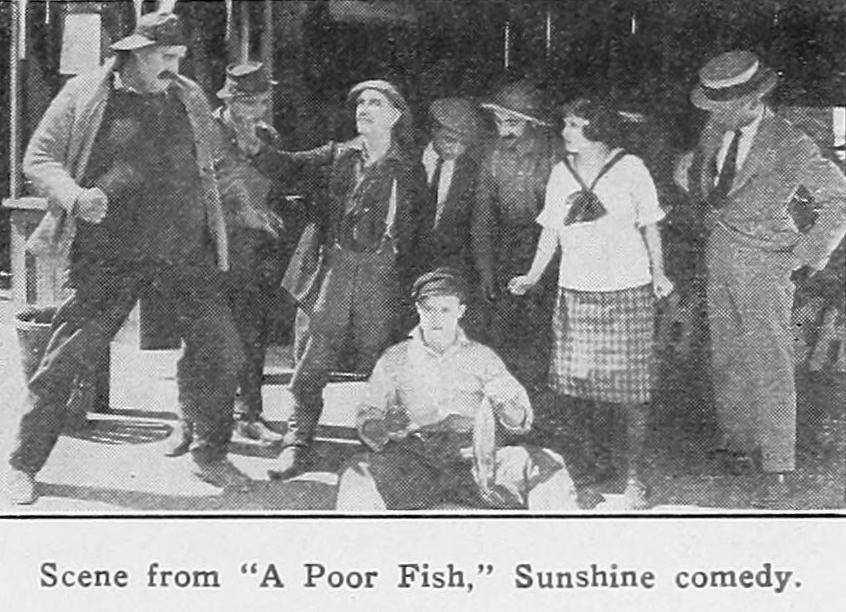
Stepping back into the silent era is often an exercise in historical appreciation, a journey through the nascent stages of cinematic language. Yet, occasionally, a film emerges from the archives, shimmering with a relevance that transcends its temporal origins, demanding not just observation but deep introspection. Erle C. Kenton's 'A Poor Fish' is precisely such a phenomenon. Far from being a mere relic, it presents a compelling narrative, a masterclass in visual storytelling that speaks to the perennial struggles of the human spirit against the relentless tide of societal expectation and personal compromise. It is a work that, while lacking spoken dialogue, articulates volumes through its meticulously crafted imagery and the profoundly nuanced performances of its cast, particularly Kenton himself.
The film plunges us into the bleak, cacophonous world of a fish cannery, a setting rendered with an almost tactile sense of oppressive realism. Here, we encounter Silas, portrayed with a compelling blend of resignation and nascent yearning by Erle C. Kenton. Silas is not merely a cog in the industrial machine; he is the eponymous 'poor fish,' metaphorically tossed back into the churning waters of a life devoid of agency. His existence is defined by the monotonous thrum of machinery, the briny scent of his labor, and the suffocating confines of his tenement. Yet, beneath this veneer of drudgery, a vibrant, artistic soul secretly thrives. His clandestine sketches of the sea, executed with a delicate hand and a keen eye for its boundless majesty, serve as a stark, almost defiant counterpoint to the squalor that envelops him. These drawings are not just hobbies; they are the very breath of his unexpressed self, a testament to an inner world yearning for liberation.
Kenton's portrayal of Silas is nothing short of masterful. Without uttering a single word, he conveys the profound internal conflict of a man caught between the crushing weight of his circumstances and the fragile flicker of his dreams. His eyes, often downcast, speak volumes of weariness, yet occasionally ignite with a spark of artistic passion or a flicker of hope when Elara, the cannery owner's daughter, graces the factory floor with her presence. Elara, a figure of ethereal grace and perceived intellectual curiosity, becomes for Silas not just an object of romantic yearning, but a potent symbol of the refined, cultured world he believes is forever beyond his grasp. Kenton’s subtle shifts in posture, the slight tremor in his hands as he secretly sketches, or the quick, almost imperceptible glance he casts towards Elara, all contribute to a characterization that is both deeply empathetic and profoundly human. This is not the broad, often exaggerated acting sometimes associated with the silent era; it is a performance steeped in a quiet, almost understated realism that draws the viewer into Silas's plight with an undeniable grip.
The narrative’s dramatic tension escalates with the introduction of Mr. Gribble, the conniving foreman whose discovery of Silas's artistic talent sets in motion a chain of events that tests the protagonist’s moral fiber. Gribble, a caricature of corporate avarice and opportunism, sees in Silas's raw skill a means to his own advancement. He coerces Silas into drafting utilitarian, purely functional blueprints for a new, supposedly more efficient cannery design, luring him with promises of recognition and a coveted ascent from his lowly station. This Faustian bargain, driven by Silas’s desperate yearning for a better life and Elara’s fleeting notice, forces him to compromise his artistic soul, trading the sublime beauty of his sea sketches for the cold, hard lines of industrial pragmatism. It is a harrowing depiction of how systemic pressures can corrupt individual integrity, a theme that resonates powerfully even today. The choices Silas makes, while understandable given his dire circumstances, are fraught with the potential for self-destruction, mirroring the struggles seen in films like The Challenge, where characters are often pushed to their limits by societal constraints and the lure of a seemingly better life.
The climax of 'A Poor Fish' is a masterstroke of silent era melodrama, executed with a precision that elevates it beyond mere theatricality. The public unveiling of the new cannery design sees Gribble basking in the spotlight, brazenly claiming sole credit for Silas's labor. Kenton, as Silas, is a figure of profound pathos, relegated to the shadows, a silent observer of his own betrayal. The shot of Elara’s approving gaze falling upon Gribble, oblivious to the true architect of the design, is a knife twist, a visual representation of Silas’s utter devastation. It is in this moment of profound despair, however, that the seeds of his redemption are sown. The realization that he has sacrificed his soul for a false promise, for a recognition that was never truly his, ignites a fierce, long-dormant spark within him. This turning point, a sudden, visceral rejection of deceit and self-abasement, is handled with an emotional intensity that transcends the lack of spoken dialogue, relying instead on Kenton's raw, guttural expressions and the film's evocative cinematography.
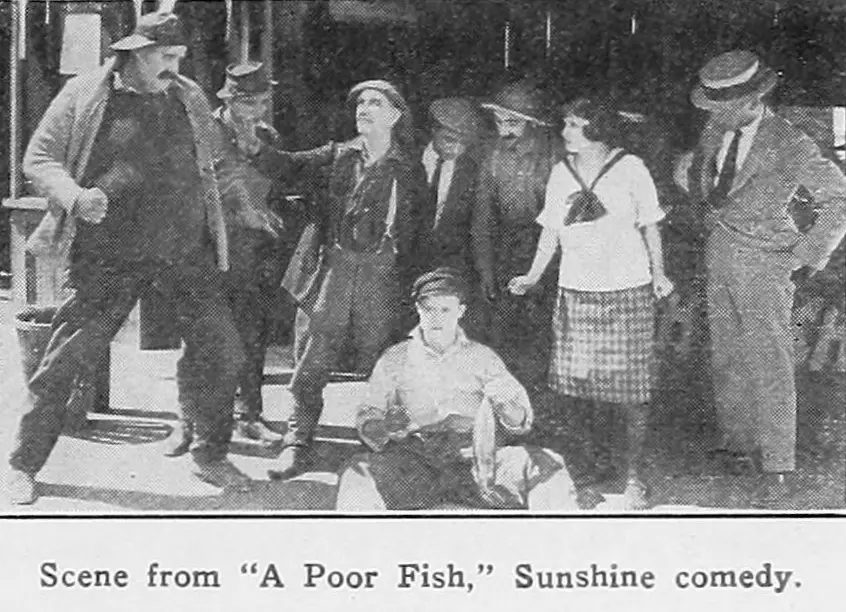
While specific directorial credits for 'A Poor Fish' beyond Erle C. Kenton's involvement as an actor and likely a significant creative force are often obscured by the passage of time, the film exhibits a sophisticated visual language indicative of a keen artistic vision. The use of light and shadow is particularly striking, often employed to underscore Silas's emotional state. The dim, cavernous spaces of the cannery are contrasted with moments of stark illumination when Silas is sketching, or when Elara briefly enters his world. This chiaroscuro effect is not merely aesthetic; it serves as a potent metaphor for the light of his inner world struggling against the darkness of his external reality. The camera work, too, is thoughtfully composed, utilizing close-ups to capture the nuances of Kenton’s expressions and wider shots to emphasize the dehumanizing scale of the industrial environment. This thoughtful visual storytelling places 'A Poor Fish' alongside films like Jubilo, which similarly used its visual grammar to convey complex emotions and societal critique without recourse to spoken words.
The film's pacing, a crucial element in silent cinema, is meticulously controlled. The initial scenes establish the monotonous rhythm of Silas’s life, allowing the viewer to fully immerse themselves in his oppressive routine. As the plot thickens with Gribble’s machinations, the pace quickens, building a palpable sense of unease and anticipation. The climax, with its rapid cuts between Gribble’s self-congratulatory posturing and Silas’s simmering despair, is a triumph of editing, culminating in the cathartic explosion of Silas’s self-expression. This careful calibration of rhythm and visual information ensures that the audience is not just watching a story unfold, but actively experiencing Silas’s emotional journey. Unlike some of the more overtly melodramatic offerings of the era, such as Heart's Haven, 'A Poor Fish' manages to convey its emotional intensity through a more restrained, yet equally powerful, visual lexicon.
'A Poor Fish' delves into a rich tapestry of themes that remain profoundly relevant. At its core, it is a searing critique of social stratification and the dehumanizing effects of industrial labor. Silas’s struggle is emblematic of the countless individuals trapped in cycles of poverty and exploitation, their potential stifled by circumstances beyond their control. The film powerfully illustrates how ambition, when untempered by ethics, can lead to moral compromise and the erosion of one’s true self. Gribble serves as a stark embodiment of this pathology, a character whose pursuit of superficial success blinds him to the inherent value of honesty and genuine talent. This exploration of class struggle and individual agency finds echoes in other silent era films that grappled with similar societal issues, such as Passers By, which often depicted the stark contrasts between the privileged and the downtrodden.
Moreover, the film is a profound meditation on the nature of art and authenticity. Silas’s journey is one of rediscovering the intrinsic value of his creative spirit, not as a tool for personal gain or social climbing, but as an expression of his deepest self. His ultimate act of defiance—tearing up the utilitarian blueprints and presenting his soulful sketches—is a powerful affirmation of artistic integrity over commercial expediency. It argues that true fulfillment lies not in external validation or material wealth, but in living a life aligned with one’s authentic passions. This message, delivered with such clarity and emotional force in a silent medium, is a testament to the film's enduring power. It challenges viewers to consider what truly defines worth, and whether the pursuit of societal approval is worth the sacrifice of one's soul. The film's nuanced exploration of these complex themes elevates it beyond a simple melodrama, positioning it as a significant work of social commentary.
While 'A Poor Fish' may not enjoy the widespread recognition of some of its more celebrated contemporaries, its artistic merit and thematic depth warrant a re-evaluation. Erle C. Kenton, often remembered more for his directorial work in later decades, delivers a performance here that solidifies his place as a compelling actor of the silent screen. His ability to convey such a rich inner life with purely physical and facial expressions is a masterclass in the craft, proving that the silent era was far from a primitive stage in acting evolution. The film's contribution to the broader landscape of silent cinema lies in its nuanced portrayal of the working class, its insightful critique of industrial society, and its powerful affirmation of individual spirit. It stands as a testament to the capacity of early filmmaking to tackle complex social issues with both artistic flair and profound emotional resonance. Its focus on the internal struggle of a common man, rather than grand historical events or far-fetched adventures like those found in A Phantom Husband or In the Clutches of the Paris Apaches, gives it a grounding and relatability that ensures its continued impact.
The ultimate resolution of 'A Poor Fish' is not one of sudden, miraculous wealth, but of a far more profound triumph: the reclamation of self-respect and the promise of a life lived authentically. Elara, witnessing Silas’s raw passion and honesty, finally sees beyond his social standing, recognizing the true value of his character and talent. The cannery owner, impressed by Silas's integrity and unique vision, extends an offer that transcends mere employment – a chance to pursue his art, perhaps even integrating his aesthetic sensibility into the industrial realm, or sponsoring his artistic endeavors outright. This ending, while perhaps idealistic, offers a potent message of hope: that even the 'poor fish' can, through courage and authenticity, carve out a space for themselves in the world, finding riches not in material possessions, but in the invaluable currency of self-worth and genuine expression. It’s a compelling narrative that, much like the enduring appeal of films such as Mother Eternal, speaks to universal human experiences and aspirations, cementing its place as an underrated gem of the silent era that continues to resonate with powerful, timeless themes.
IMDb 4.4
1928
Community
Log in to comment.