DbcultAccessing Vault...
Cult Review
Senior Film Conservator
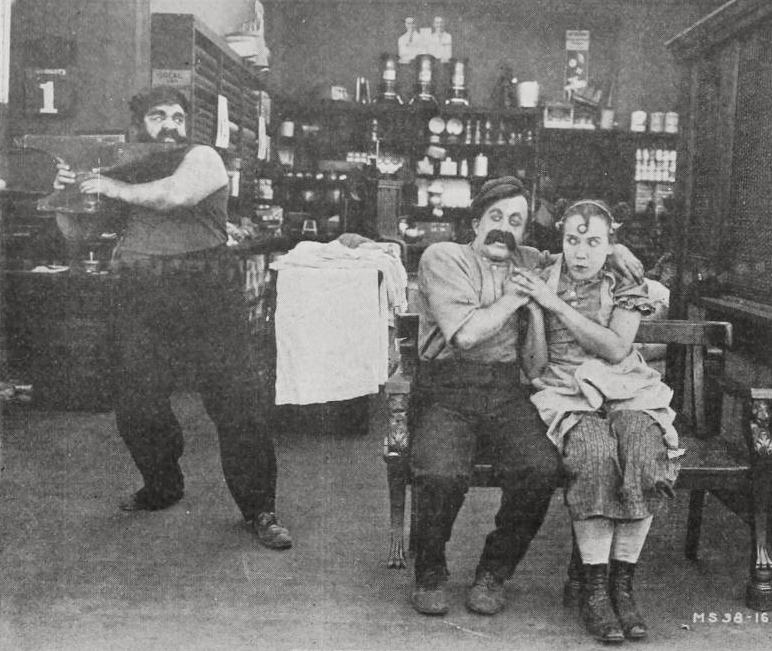
The opening tableau of *The Village Smithy* is a study in visual economy: a soot‑blackened forge, the rhythmic clang of hammer on anvil, and a procession of townsfolk whose faces are etched with both weariness and anticipation. George Jeske, portrayed with a blend of stoic gravitas and sly mischief, commands the screen from the moment his hammer first strikes, establishing the smithy not merely as a workplace but as a narrative fulcrum around which the entire village pivots.
Jeske's relationship with Louise Fazenda is rendered through a series of lingering glances and half‑spoken gestures, a testament to the silent era's reliance on expressive physicality. Fazenda's luminous presence, juxtaposed against the grimy backdrop of the forge, creates a visual metaphor for hope emerging from the furnace of daily toil. Their chemistry is subtle yet palpable, a quiet counterpoint to the broader pandemonium that soon erupts.
Enter Billy Armstrong, the itinerant clown whose arrival is heralded by a cacophony of brass instruments and a troupe of flamboyant performers. Armstrong's slapstick routine—an elaborate sequence of pratfalls involving a runaway horse, a mis‑thrown pie, and an accidental tumble into Jeske's forge—injects a kinetic energy that propels the narrative forward. His character, while ostensibly comic relief, serves a deeper function: he becomes the catalyst that destabilizes the village's status quo, exposing underlying tensions that had long simmered beneath the surface.
Chester Conklin, cast as the village constable, embodies the archetype of the well‑meaning but bumbling authority figure. His attempts to impose order are consistently thwarted by the very chaos he seeks to quell, most memorably when he mistakenly arrests Ben Turpin for “stealing the town’s collective sighs.” Conklin's exaggerated gestures and deadpan expressions provide a satirical commentary on the futility of imposing rigid law upon a community governed by unwritten codes of loyalty and gossip.
The narrative takes a darker turn when Gene Rogers, a stoic farmer, arrives at the smithy with a broken plow and a secret cargo concealed beneath a sack of grain. The revelation of contraband—rumored to be a cache of smuggled whiskey destined for a clandestine speakeasy—introduces a moral dilemma that forces each character to confront their own ethical boundaries. Jeske, torn between his duty to the community and his personal ambition, must decide whether to conceal the illicit goods or expose them, a decision that reverberates throughout the village.
Phyllis Haver, the enigmatic benefactor whose silhouette is glimpsed only in fleeting shadows, adds an additional layer of intrigue. Her whispered rumors—spanning from “the lady who funds the town’s charity” to “the mastermind behind the smuggling ring”—serve as a narrative thread that weaves together the disparate storylines. Haver's presence is felt more than seen, a spectral force that influences decisions and fuels speculation, reminiscent of the unseen puppeteer motif found in The Unpardonable Sin (1919).
The film’s cinematography, while constrained by the technological limitations of its era, exhibits a remarkable command of composition. The use of chiaroscuro lighting within the smithy creates a visual metaphor for the characters' internal conflicts: the stark contrast between the glowing furnace and the surrounding darkness mirrors Jeske's struggle between integrity and temptation. Moreover, the occasional use of a handheld camera during chase sequences—particularly the frantic pursuit of Turpin after he inadvertently sets fire to a haystack—infuses the film with a kinetic urgency that predates modern action cinema.
Thematically, *The Village Smithy* interrogates the interplay between individual agency and communal responsibility. The smithy, as a physical space, evolves from a site of production to a crucible of confession, where secrets are forged, tested, and ultimately either shattered or reforged. This thematic arc aligns closely with the moral reckonings explored in The Mortgaged Wife, yet the film distinguishes itself through its deft blend of comedy, drama, and social critique.
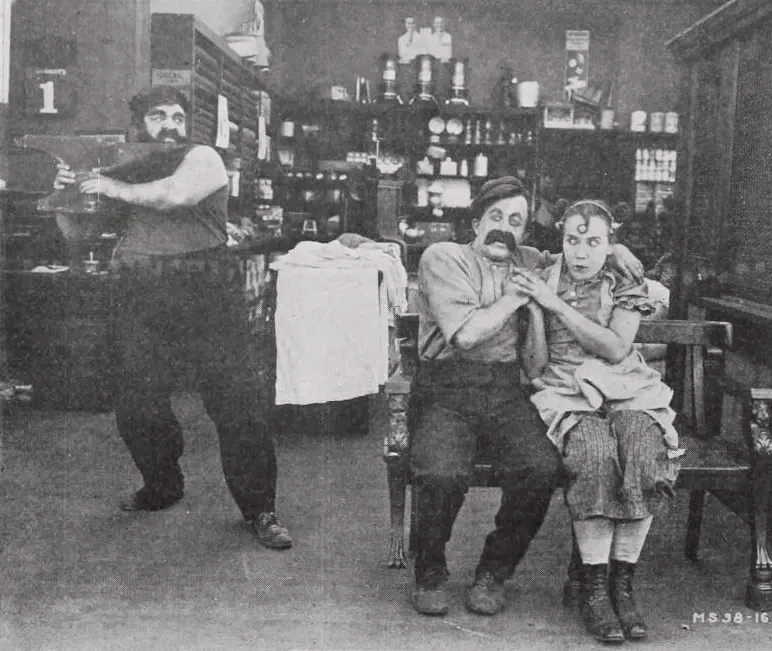
Louise Fazenda’s performance, marked by a delicate balance of vulnerability and resilience, anchors the emotional core of the film. Her moments of quiet introspection—most notably the scene where she watches Jeske labor at the forge from a distance, the amber glow reflecting in her eyes—offer a poignant counterpoint to the surrounding farce. This nuanced portrayal elevates the film beyond mere slapstick, inviting viewers to contemplate the cost of unspoken love in a world governed by silence.
Ben Turpin’s physical comedy, characterized by his signature cross‑eyed stare and exaggerated pratfalls, provides a rhythmic counterbalance to the film’s more somber beats. His accidental destruction of the village’s water pump—an event that triggers a cascade of comedic mishaps—serves as a narrative fulcrum, forcing the townspeople to confront the fragility of their infrastructure and, metaphorically, the fragility of their social bonds.
The climax unfolds in a masterfully choreographed sequence where the smithy’s furnace erupts, sending sparks into the night sky and illuminating the faces of every villager gathered for the annual harvest festival. In this crucible of fire and light, each character is compelled to make a decisive choice: Jeske confesses his involvement with the contraband, Louise chooses to forgive rather than condemn, and the constable, in a rare moment of clarity, relinquishes his badge to stand beside his neighbors as an equal. The resolution, while not entirely tidy, offers a cathartic release that underscores the film’s central thesis—that redemption is forged through collective acknowledgment of fault.
Comparatively, the film’s exploration of communal redemption echoes the narrative beats of Mitternacht and Until They Get Me, yet *The Village Smithy* distinguishes itself through its deft interweaving of humor and pathos. The juxtaposition of Turpin’s slapstick with the gravitas of Jeske’s moral crisis creates a tonal elasticity rarely achieved in silent cinema.
From a production standpoint, the film’s set design merits particular commendation. The smithy itself is constructed with an attention to period detail—iron tools, weathered wooden beams, and a towering furnace—that immerses the viewer in a tactile reality. The surrounding village, rendered in muted earth tones, provides a visual counterpoint that accentuates the forge’s fiery brilliance, reinforcing the motif of illumination emerging from darkness.
The screenplay, though credited anonymously, demonstrates a sophisticated grasp of narrative pacing. The interludes of physical comedy are strategically placed to alleviate tension, while moments of silent contemplation allow the audience to absorb the emotional weight of each character’s journey. This balance is reminiscent of the structural elegance found in Daughter of Destiny and Neal of the Navy, where plot progression is punctuated by reflective pauses.
In terms of legacy, *The Village Smithy* occupies a pivotal niche within the silent era’s oeuvre. Its thematic preoccupations with guilt, redemption, and the transformative power of community anticipate later cinematic movements, such as the Italian neorealism of the 1940s. Moreover, the film’s willingness to blend genre conventions—combining elements of comedy, drama, and social critique—paves the way for future hybrid narratives, a lineage traceable to modern works like Pride and The Opened Shutters.
Ultimately, *The Village Smithy* endures as a testament to the silent era’s capacity for storytelling depth. Its richly textured characters, meticulously crafted visual language, and resonant thematic concerns coalesce into a work that rewards repeated viewings. For scholars and cinephiles alike, the film offers a fertile ground for analysis—whether one is examining its comedic timing, its moral philosophy, or its place within the broader tapestry of early twentieth‑century cinema.
IMDb 5.8
1924
Community
Log in to comment.