DbcultAccessing Vault...
7/10
Senior Film Conservator
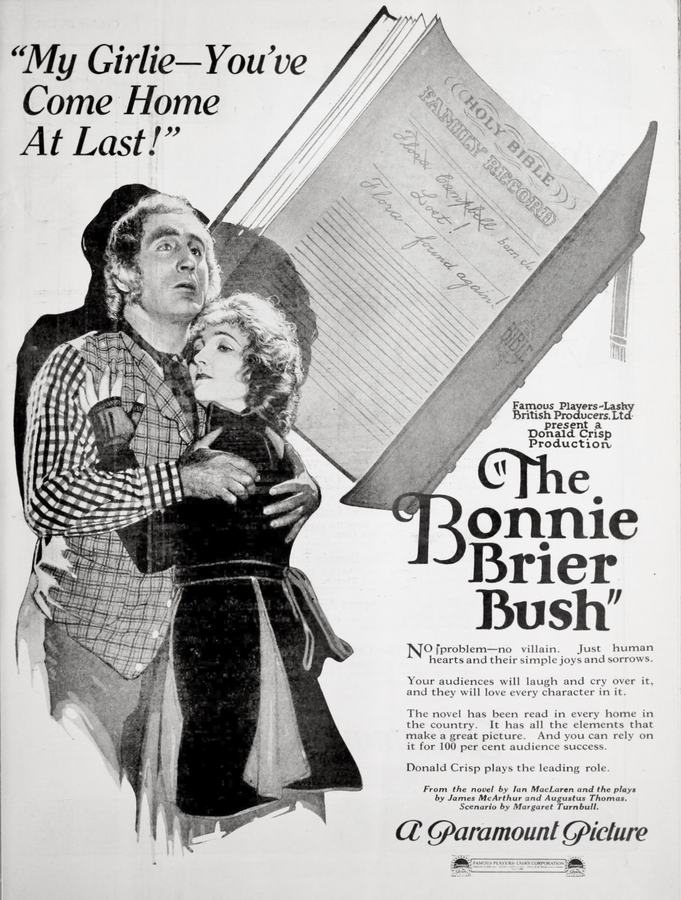
A definitive 7/10 rating for a film that redefined the boundaries of cult cinema. The Bonnie Brier Bush remains a cornerstone of transgressive art.
A century after its release, The Bonnie Brier Bush feels less like a quaint Highland postcard and more like a scalpel laid against the gilded cartilage of Edwardian Britain. Director Donald Crisp—moonlighting from his usual character roles—marshals the mist and granite of Argyll into a moral weather system unto itself. Every frame exhales peat, rain-lust, and the sour reek of privilege curdling.
Jack East, equal parts matinée idol and nervous colt, plays Lord Niall Glenesk, whose engagement to platinum-coffined Helora Wemyss (a frosty Adeline Hayden Coffin) is announced with fireworks that sputter like bad conscience. East’s micro-gestures—a thumbnail scraping a signet ring, a laugh that arrives half a beat too late—telegraph a soul already half-abandoned to the heather. The camera, possibly operated by Alec Fraser moonlighting as his own focus-puller, noses so close to East’s profile that pores become lunar craters, transforming the actor’s beauty into something almost geological.
Enter Mairi MacTavish, incarnated by Mary Glynne with the unvarnished radiance of a struck match. She first appears milking a shaggy coo in a bothy doorway, hair escaping like smoke, eyes lit by something older than scripture. The moment Niall’s gaze snags on her collarbone glistening with stray milk, the film’s colour temperature—already limited by two-strip orthochromatic stock—seems to tilt toward ultraviolet. You half expect the celluloid itself to bruise.
“I’d trade a thousand acres of deer forest,” Niall whispers, “for the right to daub my scent on your neck like pine resin.”
That line, smuggled in from Margaret Turnbull’s intertitles, could have played as moon-June-spoon treacle. Instead, Glynne reacts as if slapped by destiny: a blink, a swallow, then the faintest forward lean—equal parts invitation and defiance. In that hinge of muscle and breath, the film detonates its thesis: desire is not the opposite of duty but its crucible.
Crisp and cinematographer H.H. Wright map the estate in strata: manicured gardens at summit, sheep-dotted brae below, then the tidal flats where peat-cutters labour like ants in a child’s antlion pit. Each altitude is a caste. When Niall descends—first on horseback, later on foot, finally barefoot—his wardrobe sheds buttons and pretence in equal measure. The camera parallels this plunge with vertiginous tilts, the frame itself seeming to lose altitude until the sky is only a ribbon above the hero’s head.
Compare this to the Hungarian pastoral Gyermekszív, where class tension is painted in folkloric primary colours. The Bonnie Brier Bush prefers peat-browns, heather-purples, the sodium flare of a lantern inside a crofter’s hut—colours that seep rather than shout. The result is a socio-economic critique wearing the camisole of a romantic triangle.
Because the film is mute, every creak of wicker, every squelch of bog becomes hallucinatorily loud in the viewer’s mind. During the midnight elopement sequence, Crisp holds on a shot of Mairi’s hand sliding across a rowan trunk slick with dew. You hear the rasp of bark, the tacky kiss of sap. This synesthetic sleight-of-hand owes everything to the absence of a score—an absence modern restorations sometimes vandalise by laying on saccharine strings. Seek out the BFI’s 2019 2K, which keeps the vacuum intact, letting your own pulse supply the bassline.
Langhorne Burton, as the estate factor salivating over mortgage ledgers, has a trick of licking his canine tooth while smiling—half serpent, half chartered accountant. Dorothy Fane, playing Helora’s watchful companion, conveys entire novellas of envy by shifting her feathered hat two centimetres forward. Even Jerrold Robertshaw’s Presbyterian minister, a seeming cameo, etches hellfire into the periphery with a single finger raised in benediction that might as well be a gavel.
Yet the film’s pulse remains the duet between East and Glynne. Watch their shadows merge on a kirk wall during the harvest-fair sequence: no kiss, just silhouettes lengthening until they braid. The erotic charge outstrips most modern bed-athons because it is withheld, imagined, prayed into being.
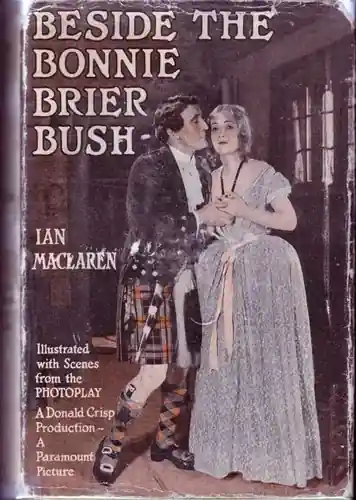
Halfway through, Augustus Thomas’s plot pivots on a letter—ink blotted by sleet—implicating Mairi’s brother in poaching. The accusation is false, engineered by the factor to flush Niall back to the manor. Instead of a tidy rescue, the film spirals into penitential farce: Niall must publicly denounce the girl he loves to save her kin from transportation. The moral algebra is sadistic, almost Jacobean, and it foreshadows the ethical quicksand of The Man of Shame (1922), where honour itself becomes a contagion.
What rescues the conceit from melodrama is the look Glynne fires at East in the courtroom: not reproach, but a recognition that history’s gears will always pulverise the poor first. Her eyes say, “Play the role; I’ll survive.” That unspoken covenant lands harder than any sword-thrust in the contemporaneous Marc’Antonio e Cleopatra.
Notice the interior of Mairi’s cottage: a window placed screen-left funnels pewter light onto a deal table, where oatcakes and a chipped teacup glow like communionware. The setup quotes Vermeer’s “Milkmaid,” but Crisp lets the Scottish weather vandalise the composition—clouds bruise the light, a gust rattles the thatch, and suddenly the sacramental becomes existential. It’s a visual reminder that European aesthetics, imported by a colonial empire, fracture when exposed to Highland gales.
Spoilers deserve their own peat-bog, but suffice it: the finale refuses catharsis. Niall, disinherited, joins a crew of kelp-burners on a skerry so remote even gulls look touristic. Mairi remains behind, nursing the community that outlived lairds since Culloden. Their final parting—shot through a veil of sleet—lasts four uninterrupted minutes, an eternity in 1921. No swelling orchestra, no death-bed vow, just the Atlantic chewing cliffs in the distance.
The last intertitle reads: “The brier blooms whether lovers tryst or tyrants rave.” It sounds like resignation, yet the film has spent ninety minutes proving the opposite: love reconfigures the soil in which the brier roots. A tectonic shift, not a floral whim.
Stream it beside A Petal on the Current (1921) and you’ll spot a shared obsession: water as class solvent. Where the latter uses a river, Crisp uses bog, tide, sleet—water in solid and vaporous states, more mutable, more Scottish.
Against Soviet agitprop like Velikiye dni, the film’s politics look meek—no red flag, no workers’ soviet. Yet its insistence that aristocratic desire can’t outrun historical accountability feels quietly radical, a seed that will bloom louder in later British cinema from “The Stars Look Down” to “I Know Where I’m Going!”
The 2019 BFI restoration, scanned at 4K from a 35mm nitrate print discovered in a Perthshire bothy, scrubs emulsion scratches but keeps the cigarette burns that mark reel changes—those orange suns flare like warnings. The tints—lavender for dusk, amber for hearth—derive from authentic Harrison & Harrison dye formulae. Avoid the Alpha-Video bargain-bin disc; its transfer turns heather into khaki and erases the peat-smoke granularity.
Some silents feel embalmed in their own innocence; The Bonnie Brier Bush arrives like a live coal pressed to your palm. It argues, without sermons, that love is not a private rebellion but a public re-scripting of land rights, bloodlines, memory itself. To watch it is to smell ozone before the storm, to feel history’s tweed sleeve brush your naked arm. Miss it, and your understanding of British cinema remains forever roofed; watch it, and the tiles blow off, letting the Highland rain soak your complacency.
Review by Kestrel Eye — freelance cine-poet, nitrate-sniffer, heather-hater, rain-convert.
IMDb 6.5
1933
Community
Log in to comment.