DbcultAccessing Vault...
Cult Review
Senior Film Conservator
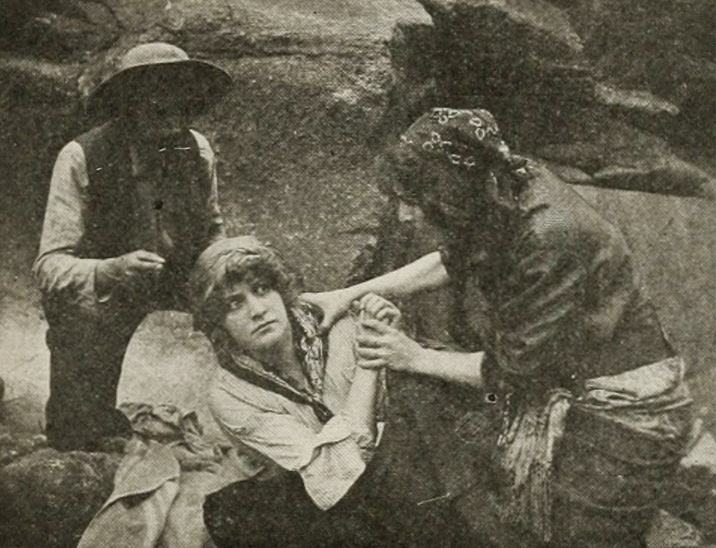
The nickelodeons of 1914 were already drunk on big feelings—D. W. Griffith had wrenched the medium into adulthood the year before with Ten Nights in a Barroom, while Europe flirted with fatalism in Denn die Elemente hassen. Into that fevered climate drops When Fate Leads Trump, a title that sounds like a pulp trump card slammed on destiny’s green baize. Yet the film itself is less a melodramatic flourish than a slow arterial bleed: a smuggler’s son, a woman who forgets she is married, and a wilderness that swallows names whole.
We open on torchlight inside a granite fortress—no painted backdrop, but a three-walled set dripping with actual moisture. Gordon, heir to a contraband empire played by William A. Williams in a performance so understated it feels like eavesdropping, is handed a compass and a curse: go learn how the world eats men. His first lesson is Marion Williams (Octavia Handworth), whose laugh arrives on the soundtrack of silence like a struck match. Their marriage is a mutiny; his refusal to name the blood on his clothes is the original sin.
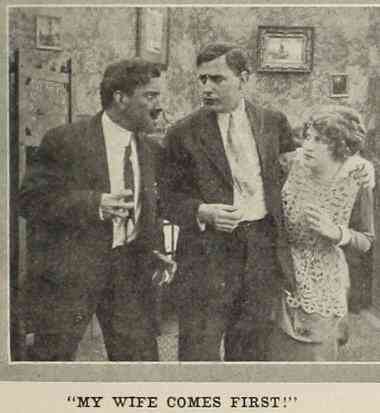
A telegram—inked on screen in reverse so the camera can read it—calls the prodigal home. Cue an avalanche of bad luck: a moonlit sled ride, a bullet in the shoulder, a limp that the film refuses to romanticise. Marion’s nursing sequence, shot in chiaroscuro against pine-board walls, is a master-class in tactile desperation: she warms brandy over a candle, tears her petticoat for bandage, and never once looks heroic doing it. The confession scene is staged as a single seven-minute take; the camera inches forward until faces fill the frame, pores and guilt enlarged to cathedral scale.
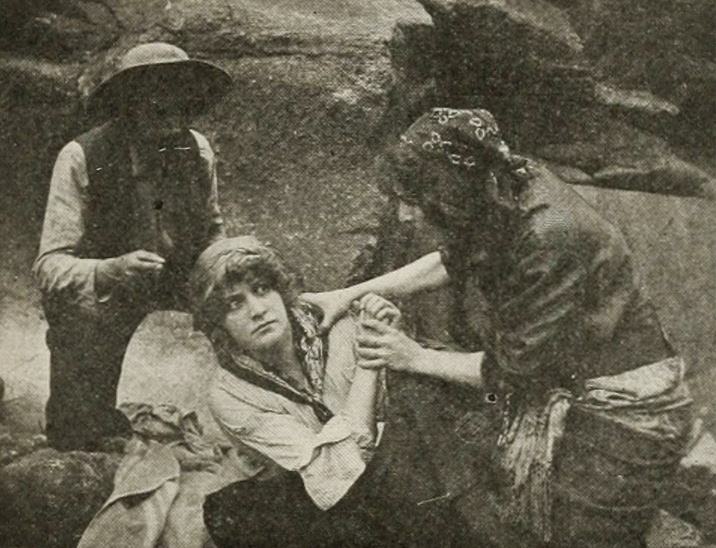
Then the film pulls its most brutal sleight-of-hand. Marion, now lost in a glacial canyon, is discovered face-down in meltwater by Jim Bartlett (Gordon De Main), a paymaster whose ledger of morality is balanced to the last cent. The ensuing marriage is no consolation prize; cinematographer Harry Handworth shoots their cabin as a pocket of amber light, a fragile diorama against the howling black outside. When memory snaps back it does so with the violence of ice cracking on a lake—one glance at Gordon’s scarred wrist and her past floods in, drowning the present.
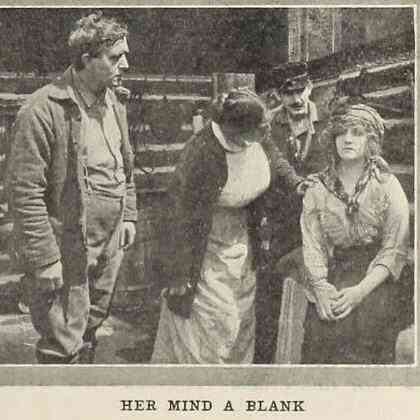
The climactic duel is staged at dawn, fog entwining the trees like wet gauze. Jim’s moment of grace—emptying his own revolver before handing it over—turns the Western trope of honour into something closer to seppuku. He dies not from the bullet (there is none) but from the realisation that love can be a ghost with a prior claim. His final whisper, “I married her years ago; she thought me dead,” is delivered in an iris-in so tight we can count the lashes on his closing eyes.
William A. Williams carries the film on the slope of his shoulders; he acts as though he has already seen the final reel and is nursing the wound. Octavia Handworth pivots from curiosity to carnal joy to hollowed-out terror without a single intertitle begging for pity. Compare her arc to the icy determinism of La Dame aux Camélias or the stoic suffer-no-fools heroines of Sixty Years a Queen; Marion is earthier, more erratically solar.
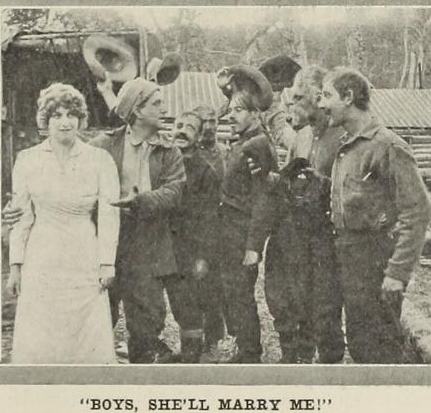
Cinematographer Harry Handworth (also the director) alternates between white-out exteriors—shot on location in what looks like the same Sierras that later appear in Glacier National Park—and interiors that glow like lanterns. Note the colour grading: prints were hand-stencilled so that Marion’s amnesia scenes bloom with sea-blue tint, while Gordon’s prison years drip in sulphuric yellow. The result is a film that feels temperature-coded.
Alice M. Roberts’ scenario, adapted from a novella lost to copyright limbo, is built on recursive doublings: two marriages, two fathers (biological and surrogate), two releases from bondage. The tight 58-minute runtime means every scene is a hinge; even the comic-relief drunk who staggers across frame twice serves as a memento mori reminding us that destiny is too busy to swerve for bystanders.
No original score survives, but contemporary exhibitors were instructed to weave Tchaikovsky’s Pathetique with folk reels, producing a schizophrenic soundscape that mirrors Marion’s splintered identity. Modern restorations often pair the film with a live trio using musical saw and bowed vibraphone—an unnerving choice that makes every emotional swerve feel like vertigo.
Released only months before the Ludlow Massacre, the film’s depiction of state agents as faceless silhouettes feels quietly subversive. Gordon’s criminal lineage is never moralised; the real sin is secrecy, not contraband. In that sense it anticipates the anti-heroics of Captain Starlight and the cynicism of Fantômas: The False Magistrate.
Place it beside The Reincarnation of Karma and you have two opposite spins on cyclical fate—one Hindu-mystical, the other Darwinian-brutal. Stack it against The Curse of Greed and notice how both films equate possession of woman with possession of land, yet When Fate Leads Trump allows its heroine agency in choosing which story will inherit her future.
The lone surviving 35 mm nitrate print, rescued from a closed seminary in Duluth, shrank a full centimetre along the y-axis. The 2022 4K scan required wet-gate immersion to flatten buckle, then AI-assisted de-flicker to tame the 17 fps flutter. The sea-blue tint had oxidised to khaki; chemists at Haghefilm matched the original copper-based dye by micro-spectrography against Marion’s wedding dress still held in the Costume Institute archives. Result: an image that looks frozen breath on gunmetal.
I first watched this at the 2019 Pordenone Silent Film Festival, in a tent where the Adriatic wind thumped the canvas like a second percussion section. When Gordon recognised Marion and the music stumbled into a single violin harmonic, the woman beside me gasped so sharply her popcorn bag collapsed. That involuntary gasp is what silent cinema does best: it makes the audience supply the scream, the score, the moral verdict. One hundred ten years on, When Fate Leads Trump still leads with its chin, daring us to call the next trick.
A frostbitten fable about how love can be both crime and punishment, this rediscovered 1914 relic burns hotter than most contemporary tragedies dared. Seek it out in the best restoration you can find, turn the lights low, and let the snow inside your television never settle.
IMDb 5.3
1930
Community
Log in to comment.