DbcultAccessing Vault...
7.6/10
Senior Film Conservator
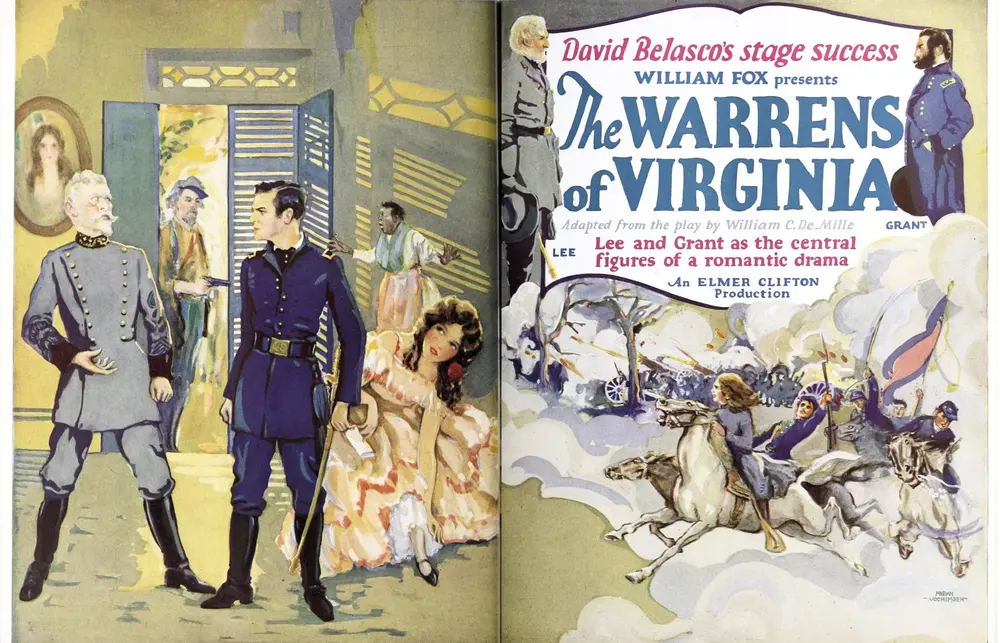
A definitive 7.6/10 rating for a film that redefined the boundaries of cult cinema. The Warrens of Virginia remains a cornerstone of transgressive art.
The flickering shadows of silent cinema often hold within them narratives of profound emotional resonance, tales that, despite their lack of audible dialogue, speak volumes through gesture, expression, and the sheer power of visual storytelling. William C. de Mille's 1924 production, The Warrens of Virginia, is precisely such a film. It plunges us headfirst into the tumultuous currents of the American Civil War, not through grand battlefield panoramas, but through the deeply personal and agonizing choices forced upon individuals caught in its relentless maelstrom. This isn't just a historical drama; it's a poignant exploration of love, loyalty, and the devastating cost of ideological division, rendered with a sensitivity that belies its era. The film asks us to consider what happens when the bonds of affection are stretched to their breaking point by the demands of national allegiance, and whether the human spirit can truly transcend the bitterest of conflicts.
At its core, The Warrens of Virginia unfolds the tragic romance between Ned Burton, portrayed with earnest conviction by Jimmie Ward, and Agatha Warren, brought to life by Martha Mansfield with a delicate yet resolute grace. Their idyllic Southern courtship is abruptly shattered by the outbreak of the Civil War. Ned, driven by principles that align him with the Union cause, makes the agonizing decision to leave his beloved Virginia and Agatha behind, donning the blue uniform. This initial separation isn't merely a plot device; it's the genesis of the film's central conflict, a chasm that grows wider with every passing day of hostilities. Agatha, rooted deeply in her Southern identity and loyalties, finds herself on the opposing side, her heart inextricably tethered to a man now deemed an enemy. This premise immediately establishes a powerful emotional tension, drawing the viewer into their impossible situation. The film masterfully portrays the internal struggle, the silent agony of two souls destined to be together, yet torn apart by forces far greater than themselves. It's a testament to de Mille's direction and the nuanced performances that this emotional weight feels so palpable even a century later.
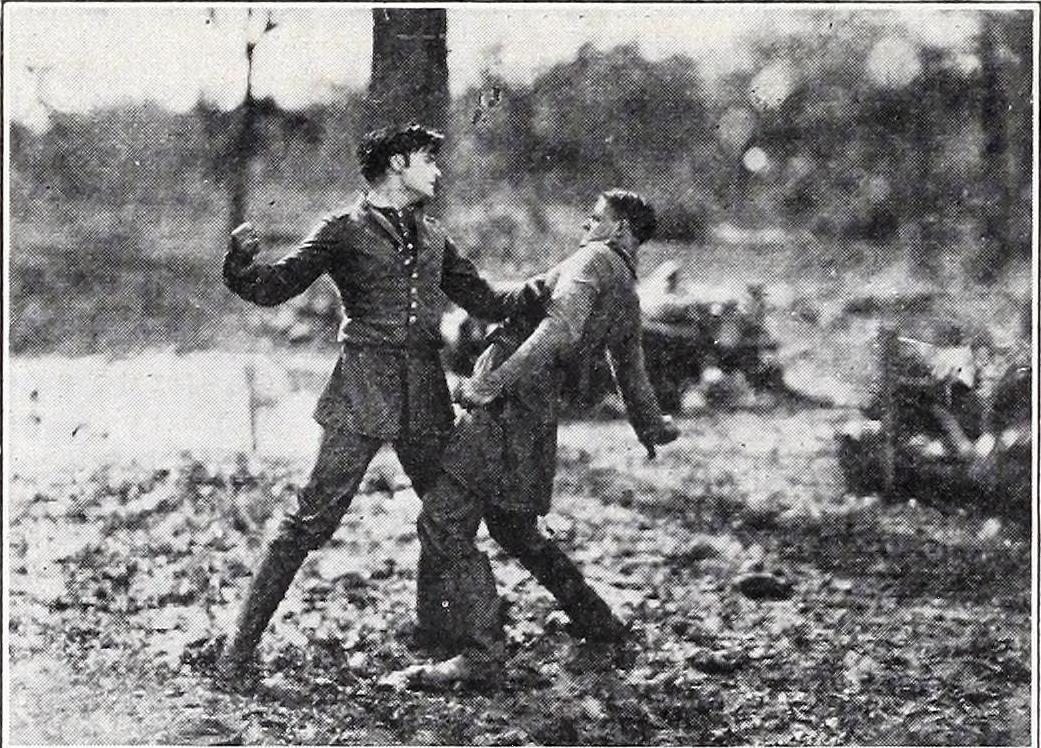
The narrative gains considerable depth when Ned, now a Union soldier operating deep within Confederate territory, finds himself in dire straits. Injured, vulnerable, and facing certain capture or worse, his life hangs by a thread. It is in this critical juncture that Agatha's character truly shines, and the film reaches its emotional zenith. Despite her fervent loyalty to the South, despite the risk to her own safety and reputation, and despite the profound ideological rift that separates them, Agatha cannot abandon the man she loves. Her act of protecting Ned, of shielding him from death, is not merely a romantic gesture; it is a profound moral statement. It speaks to a human compassion that transcends the arbitrary lines drawn by war and politics. This pivotal sequence, undoubtedly the film's most memorable, showcases Martha Mansfield's ability to convey complex emotions – fear, love, defiance, and unwavering resolve – through her expressive performance. The silent screen, in moments like these, becomes a canvas for universal human struggles, making the specific historical context a backdrop for a timeless tale of sacrifice and love. Wilbur J. Fox, as General Warren, Agatha's father, also contributes significantly, embodying the Southern patriarch whose world is crumbling around him, adding another layer of familial and societal pressure to Agatha's predicament.
William C. de Mille, a name often overshadowed by his more famous brother Cecil B. DeMille, was a formidable director in his own right, possessing a keen understanding of dramatic structure and the subtleties of human emotion. In The Warrens of Virginia, his directorial hand is evident in the meticulous staging and the expressive use of cinematography. Without the aid of spoken dialogue, de Mille relies heavily on visual cues – close-ups to capture the anguish or determination on an actor's face, wide shots to establish the desolate beauty of the war-torn landscape, and carefully composed frames that emphasize character relationships and power dynamics. The pacing, while deliberate, never feels sluggish, allowing the emotional beats to land with maximum impact. Intertitles, the textual inserts so crucial to silent films, are used judiciously, providing necessary exposition without interrupting the visual flow or over-explaining the sentiments already conveyed by the actors. This disciplined approach ensures that the audience remains immersed in the characters' internal worlds, piecing together their thoughts and feelings through their actions and reactions.
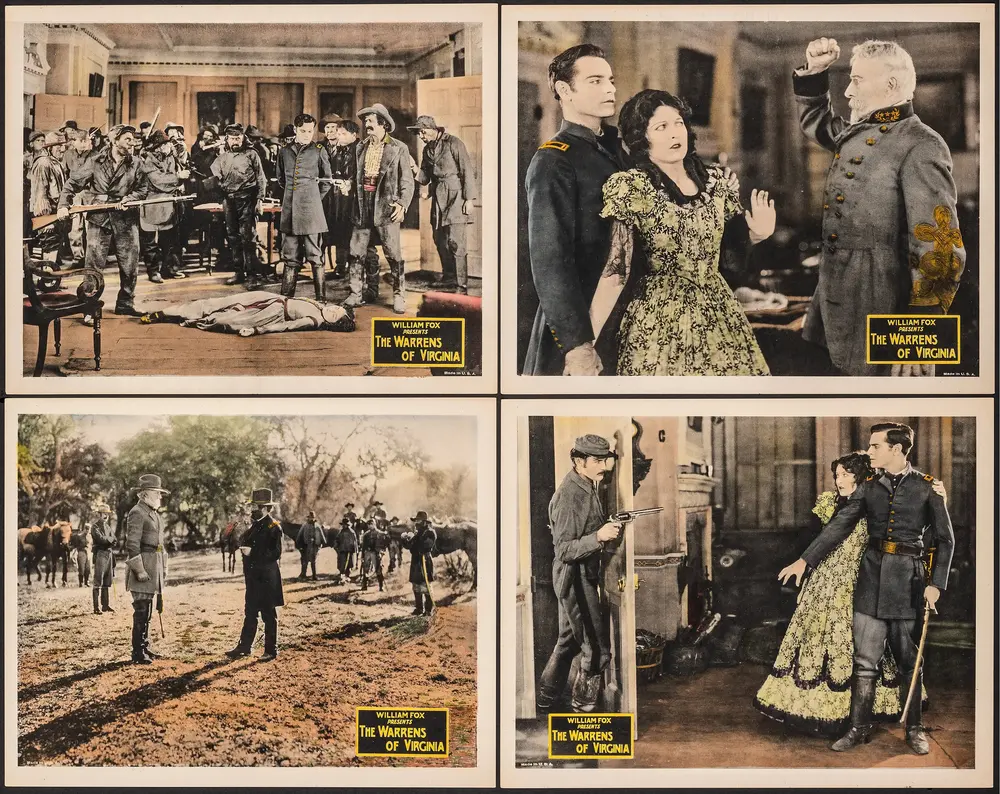
De Mille's ability to extract nuanced performances from his cast is particularly noteworthy. Jimmie Ward, as Ned Burton, projects an earnestness and integrity that makes his difficult choices believable, while Martha Mansfield, in perhaps one of her most memorable roles, delivers a performance brimming with understated power. Her silent screams of anguish and her moments of quiet defiance are etched onto the screen with remarkable clarity. The supporting cast, including Rosemary Hill, Frank Andrews, and Harlan Knight, all contribute to the rich tapestry of the film, creating a believable community caught in the throes of war. The film's aesthetic, with its attention to period detail in costumes and sets, further grounds the narrative in its historical context, making the personal drama feel all the more authentic against the grand backdrop of national upheaval. This careful blend of period authenticity and emotional intensity is a hallmark of de Mille's craft, demonstrating a directorial sophistication that speaks volumes about the artistry of the silent era.
The thematic richness of The Warrens of Virginia extends far beyond a simple wartime romance. It delves into the profound complexities of duty versus personal affection, the destructive nature of sectionalism, and the enduring hope for reconciliation. Agatha's act of saving Ned is a powerful symbol of love's ability to bridge divides, suggesting that even in the darkest hours of conflict, shared humanity can triumph over animosity. This message resonated deeply with audiences in the 1920s, a generation still grappling with the lingering scars of the Civil War and, more recently, the devastation of World War I. The film implicitly argues for empathy and understanding, proposing that beneath the uniforms and flags, individuals still possess the capacity for compassion. It avoids simplistic moralizing, instead presenting characters who are flawed, conflicted, and profoundly human, making their journey all the more compelling.
The portrayal of the Civil War itself is less about glorifying battles and more about illustrating its pervasive impact on domestic life and individual psyches. We see the scarcity, the fear, and the constant threat that looms over Southern households. This focus on the home front provides a stark contrast to more action-oriented war films, emphasizing the quiet suffering and the profound personal sacrifices demanded by the conflict. In this regard, it shares a certain contemplative quality with other silent dramas that explored societal pressures and moral dilemmas, much like the thematic undercurrents one might find in a film such as Her Good Name, where individual reputation and choice stand against broader societal judgment. While the settings differ dramatically, the core exploration of internal conflict against an external, unyielding force remains a compelling parallel. The film avoids overt political commentary, choosing instead to focus on the universal emotional truths that emerge when love and loyalty are pitted against each other.
The ensemble cast, under de Mille's astute direction, delivers performances that elevate the material beyond mere melodrama. Martha Mansfield's portrayal of Agatha is particularly captivating. She embodies the Southern belle archetype, yet imbues it with a strength and moral conviction that transcends convention. Her ability to convey deep emotion through subtle shifts in expression, a lowered gaze, or a trembling hand, is a masterclass in silent film acting. Jimmie Ward, as Ned, complements her perfectly, projecting a quiet determination that makes his character's difficult choices resonate. The supporting players, including Helen Ray Kyle and James Turfler, contribute to the film's authenticity, creating a believable world populated by individuals grappling with extraordinary circumstances. Their collective efforts ensure that the emotional stakes feel consistently high, drawing the audience deeper into the narrative's unfolding drama. The film's reliance on visual storytelling means that every gesture, every facial twitch, and every meticulously crafted scene contributes to the overall emotional impact, a testament to the talent of these early cinematic pioneers.
Comparing The Warrens of Virginia to other films of its era, one can appreciate its distinctive blend of historical drama and intimate romance. While not as overtly adventurous as The Light of Western Stars, which explores frontier justice and rugged individualism, The Warrens of Virginia delves into a different kind of frontier – the emotional landscape of a divided nation. Both films, however, feature strong-willed protagonists navigating challenging circumstances, demonstrating the silent era's fascination with resilience and moral fortitude. The dramatic tension and the focus on personal dilemmas could also draw a faint parallel to the intricate social commentaries found in films like The Divorce Trap, though the contexts are vastly different. Here, the 'trap' is not societal expectation but the inescapable conflict of war. William C. de Mille’s film, in its quiet intensity and profound emotional arc, stands as a significant, if often overlooked, contribution to early American cinema, offering a window into the hearts and minds of those who lived through one of the nation's most trying periods. Its enduring power lies in its universal message: that love, in its purest form, can indeed be a beacon of hope, even when the world around it is consumed by darkness.
Ultimately, The Warrens of Virginia transcends its historical setting to deliver a timeless narrative about human connection, sacrifice, and the moral ambiguities inherent in conflict. It's a film that resonates because it speaks to the enduring power of empathy and the profound choices individuals are forced to make when personal bonds clash with broader loyalties. William C. de Mille, through his masterful direction and the compelling performances of his cast, particularly Martha Mansfield and Jimmie Ward, crafted a silent film that continues to evoke deep emotional responses. It serves as a powerful reminder of the artistry and narrative sophistication that characterized the silent era, proving that a lack of spoken words does not equate to a lack of voice. This cinematic gem, with its rich tapestry of human emotion against the backdrop of a nation at war, deserves to be rediscovered and appreciated for its enduring relevance and its poignant exploration of the human heart under duress. It stands as a testament to the fact that some stories, particularly those woven from the threads of love and sacrifice, need no sound to be heard, echoing across generations with clarity and profound impact.
IMDb —
1920
Community
Log in to comment.