DbcultAccessing Vault...
Cult Review
Senior Film Conservator
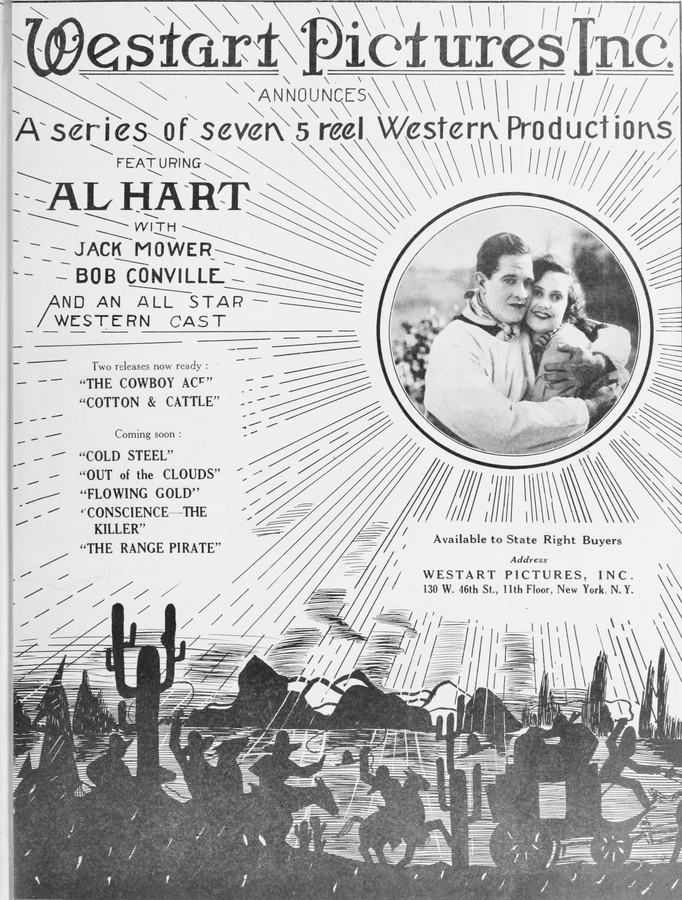
In an era often romanticized for its stark simplicities and clear-cut moralities, 'Rustlers of the Night' emerges from the dusty archives of Western cinema not as a mere relic, but as a surprisingly nuanced and enduring testament to the genre's capacity for complex storytelling. Penned by W.M. Smith, whose narrative voice often imbued his scripts with a raw, unvarnished authenticity, this film transcends the rudimentary 'good versus evil' paradigms, delving instead into the moral ambiguities and existential struggles that truly defined the American frontier. It's a cinematic journey that invites contemplation on the very foundations of justice, ownership, and resilience in a landscape as unforgiving as human nature itself.
The film introduces us to Elias Vance, portrayed with a remarkable stoicism by Al Hart, a performance that quietly anchors the entire production. Vance is not merely a rancher; he is an embodiment of the pioneering spirit, his hands calloused by years of wrestling sustenance from an arid land, his gaze reflecting a deep-seated connection to the earth beneath his feet. His cattle, bearing the distinctive ‘Broken Arrow’ brand, are more than livestock; they are the tangible manifestation of his relentless labor, the very symbol of his identity and legacy. The tranquility of his existence, however, is not destined to endure. The encroaching shadow of modernity, or perhaps more accurately, the timeless avarice of man, manifests in the form of Jedediah Thorne, played with chilling composure by Robert Conville. Conville’s portrayal of Thorne is masterful, eschewing overt villainy for a more insidious, calculated malevolence. He is the respectable façade masking a predatory ambition, a wolf in sheep's clothing whose machinations are far more dangerous than any common banditry. Thorne’s objective is not merely to steal; it is to systematically dismantle Vance’s world, to erode his spirit, and ultimately, to seize the vital water sources that lie within Vance’s territory. This isn't just about cattle; it's about control, about power, about the very essence of survival in a land where resources are life itself.
The initial rustlings are depicted with a haunting efficiency, nocturnal operations that leave minimal trace, suggesting a level of organization and ruthlessness that immediately elevates the threat beyond the ordinary. Vance's initial attempts to combat this unseen enemy are met with frustration, highlighting the impotence of individual resolve against a well-oiled criminal enterprise. It is at this juncture that the film introduces Silas “Silas the Silent” O’Malley, brought to life by Jack Mower. Mower, often lauded for his understated yet impactful performances, delivers a character whose wisdom is etched into his weathered face, whose knowledge of the frontier is encyclopedic. Silas is the antithesis of Thorne’s calculated modernity; he represents the ancient wisdom of the land, a quiet observer whose insights are gleaned from years of patient communion with the wilderness. His partnership with Vance forms the emotional and strategic backbone of the narrative, a union of raw determination and profound experience. Unlike the often boisterous and overtly heroic figures seen in films like His Blooming Bloomers, where comedic timing dictates character, Silas's strength lies in his quiet observational prowess, a stark contrast that enriches 'Rustlers of the Night's' dramatic texture.
Al Hart's Elias Vance is a masterclass in restrained acting. His portrayal avoids the histrionics often associated with heroes facing adversity, opting instead for a quiet, simmering intensity. We feel Vance’s anguish, his growing desperation, not through overt displays of emotion, but through the subtle clench of his jaw, the weary set of his shoulders, the determined glint in his eyes. It’s a performance that speaks volumes through its silences, conveying the immense burden of a man fighting not just for property, but for his very identity in a world that threatens to strip it away. This nuance sets him apart from the more straightforward protagonists found in films like The Plunger, where character arcs often follow more predictable trajectories. Hart’s Vance embodies a more complex psychological landscape.
Robert Conville’s Jedediah Thorne, on the other hand, is a study in controlled menace. He is not a cartoonish villain; rather, he is a chillingly plausible representation of corporate greed and unbridled ambition. Conville imbues Thorne with a veneer of respectability, making his underlying ruthlessness all the more unsettling. His actions are not impulsive acts of malice but calculated maneuvers designed to achieve a specific, self-serving end. This makes Thorne a far more formidable antagonist than the typical outlaw, as his power stems from influence and manipulation rather than brute force alone. This portrayal of a villain who operates within the perceived bounds of society, yet subverts them, offers a stark contrast to the more overt criminality depicted in a film like The Transgressor, broadening the scope of what 'evil' could mean in the cinematic West.
Jack Mower’s Silas O’Malley is the film’s moral compass, a character whose quiet dignity and profound connection to the land provide a counterpoint to the escalating violence and corruption. Mower’s performance is subtle, relying on gestures and expressions rather than extensive dialogue. He is the repository of forgotten knowledge, the living embodiment of a frontier wisdom that is slowly being eclipsed by the machinations of men like Thorne. His presence lends a gravitas to the proceedings, reminding us that even in the face of overwhelming odds, there remains an unwavering sense of justice and an unbreakable bond with the natural world. His understated heroism offers a refreshing alternative to the more boisterous figures of the genre, akin to the quiet resilience found in films like Still Waters, where depth is found in stillness.
The visual language of 'Rustlers of the Night' is arguably one of its most compelling attributes. The cinematography, though perhaps constrained by the technical limitations of its era, demonstrates an astute understanding of how to leverage the vastness of the Western landscape to amplify the narrative's emotional beats. The wide-open vistas, often bathed in the stark, unforgiving light of the high desert sun, serve as a constant reminder of the isolation and vulnerability of the characters. Conversely, the titular 'night' sequences are masterfully shot, utilizing deep shadows and flickering firelight to create an atmosphere of palpable tension and lurking danger. The rustlings themselves are depicted with an almost balletic precision, the silent movement of shadowy figures against the moonlit plains conveying both the efficiency and the chilling anonymity of the perpetrators. This deliberate use of chiaroscuro not only enhances the suspense but also symbolically underscores the moral darkness that threatens to engulf Vance’s world. The visual storytelling here is as crucial as the dialogue, allowing the landscape to become an active character, a silent witness to the human drama unfolding upon it. This visual sophistication, particularly in its use of natural light and shadow, sets it apart from more utilitarian cinematography sometimes found in contemporary productions like The General Store General, where the focus might be more on clear visibility for comedic effect rather than atmospheric depth.
W.M. Smith's screenplay for 'Rustlers of the Night' is a testament to his ability to craft narratives that are both thrilling and intellectually engaging. The plot is not merely a series of events but a carefully constructed exploration of several profound themes. At its heart, the film grapples with the concept of justice in a land where law is still nascent and often bendable by those with power. Vance's struggle is not just against Thorne but against a system that can be corrupted, forcing him to consider extra-legal means to achieve retribution. This moral quandary is handled with admirable subtlety, avoiding easy answers and instead presenting the harsh realities of frontier justice. The film also delves into the changing nature of the West itself. It depicts a transition from a raw, untamed wilderness to a landscape increasingly shaped by economic forces and the consolidation of power. Thorne represents this encroaching 'modernity' – a cynical, exploitative force that threatens to obliterate the independent spirit embodied by Vance and his fellow small ranchers. Smith’s writing also explores the idea of perseverance, the sheer will required to endure against overwhelming odds, a theme deeply ingrained in the Western genre but here rendered with particular poignancy. The screenplay's tight pacing ensures that tension never dissipates, yet it also allows moments of quiet contemplation, particularly in the interactions between Vance and Silas, which provide much-needed emotional ballast. The narrative avoids the simplistic moralizing sometimes present in films like A Message from Mars, which often presents allegories with clear ethical lessons. Instead, 'Rustlers of the Night' invites viewers to wrestle with the complexities alongside its characters.
The film builds inexorably towards its dramatic crescendo, culminating in a sequence that is both exhilarating and deeply satisfying. The discovery of Thorne's hidden canyon, where stolen cattle are re-branded, serves as a powerful visual metaphor for the villain’s duplicity and the systematic nature of his crimes. The subsequent confrontation is not a simple shootout but a meticulously choreographed ballet of strategy and survival. Vance, Silas, and their loyal ranch hands are outgunned but not outsmarted, using their intimate knowledge of the terrain to gain a tactical advantage. The pursuit across treacherous landscapes, with its perilous descents and desperate gallops, is filmed with an urgency that keeps the audience on the edge of their seats. It is here that the film truly earns its stripes as a classic Western, delivering on the promise of high-stakes action while simultaneously reinforcing the thematic underpinnings. The resolution, while providing a sense of catharsis, avoids overly simplistic closure. It acknowledges that victory often comes at a cost and that the struggle for justice is an ongoing one, even in the wake of a decisive triumph. This nuanced ending distinguishes it from narratives that might offer a more absolute and less reflective conclusion, such as the clear-cut resolutions often found in early dramas like A Family Affair.
'Rustlers of the Night' might not always feature in the pantheon of the most frequently cited Westerns, but its quiet power and thematic depth ensure its enduring relevance. It is a film that rewards repeat viewings, revealing new layers of meaning with each engagement. Its exploration of greed, resilience, and the fragile establishment of order in a chaotic world resonates far beyond its specific historical setting. The performances by Hart, Conville, and Mower remain compelling, their characters etched with a realism that transcends the often two-dimensional portrayals found in genre cinema. The film serves as a potent reminder that the Western, at its best, is not merely about cowboys and Indians or gunfights and chases; it is a profound examination of the human condition, a canvas upon which the timeless struggles of morality, survival, and the pursuit of justice are painted in bold, unforgettable strokes. Its influence, while perhaps subtle, can be traced in later, more celebrated works that sought to imbue the Western with psychological complexity and moral ambiguity. It stands as a testament to the fact that compelling storytelling, strong performances, and thoughtful direction can elevate a genre piece into a timeless work of art, a narrative as enduring as the rugged landscapes it so beautifully captures. This film, much like the quiet strength of its protagonist, leaves an indelible mark, proving that true cinematic value lies not in bombast but in authenticity and profound human insight. It offers a counter-narrative to the often-simplified tales of heroism, much like how a film such as Birth of Democracy might offer a complex view of historical events rather than a straightforward chronicle. The film's ability to maintain a tight narrative while exploring significant ethical dilemmas is a hallmark of its quality, distinguishing it from works that might sacrifice depth for spectacle. It holds its own against the tide of time, a true gem in the cinematic landscape, deserving of a renewed appreciation for its masterful blend of action, character study, and thematic richness.
Beyond the immediate thrills of the chase and the tension of the confrontation, 'Rustlers of the Night' excels in its subtle yet effective character development. Vance’s journey is one of gradual transformation, from a man primarily concerned with his land and livelihood to one who understands the broader implications of systemic corruption. His initial reluctance to seek help, born of a fierce independence, slowly gives way to a recognition of the necessity of community and shared purpose. Silas O’Malley, while seemingly static, deepens our understanding of the frontier’s indigenous wisdom, acting as a bridge between the old ways and the encroaching new order. His quiet observations and timely interventions are not just plot devices; they are reflections of a philosophy of life honed by decades of living in harmony with nature. Even Thorne, the antagonist, is not a static figure of evil; his actions, while reprehensible, are rooted in a clear, albeit warped, logic of economic expansion and power consolidation. The interplay between these characters, particularly the unspoken understanding that develops between Vance and Silas, is exquisitely crafted. It’s a relationship built on mutual respect and shared adversity, communicated more through glances and actions than through verbose dialogue. This nuanced approach to character dynamics stands in contrast to films where relationships might be more overtly dramatic or sentimental, like Romeo's Dad. The film's strength lies in portraying how individuals, shaped by their environment and their moral compass, react under extreme duress, revealing the multifaceted nature of human endurance and ethical compromise.
While often overlooked in discussions of older films, the soundscape of 'Rustlers of the Night' plays a crucial role in establishing its immersive atmosphere. The absence of a bombastic orchestral score allows the natural sounds of the frontier—the howling wind, the creak of leather, the distant lowing of cattle, the rhythmic thud of hooves—to take center stage, grounding the narrative in a palpable sense of realism. The quiet moments are punctuated by these environmental sounds, creating an almost meditative quality that enhances the tension when it finally erupts. The pacing, too, is meticulously controlled. The film allows its plot to unfold organically, building suspense through gradual revelation rather than sudden shocks. The initial scenes establish the rhythm of ranch life, making the subsequent disruption by the rustlers all the more impactful. The escalating stakes are mirrored by a subtle acceleration in pacing, leading to a climactic sequence that feels earned and impactful. This deliberate approach to rhythm and sound design elevates 'Rustlers of the Night' beyond a simple genre piece, transforming it into a sensory experience that draws the viewer deeply into its world. The thoughtful use of natural sound, rather than relying heavily on musical cues, creates a more immersive and authentic experience, a distinct choice from the more overtly dramatic scores that might accompany a film like The Leech, where music might be used to heighten psychological tension more directly. The film leverages the inherent drama of its setting and the quiet intensity of its characters to build a compelling narrative, proving that sometimes, less is indeed more when it comes to crafting a truly memorable cinematic experience.
IMDb 6.9
1915
Community
Log in to comment.