DbcultAccessing Vault...
Cult Review
Senior Film Conservator
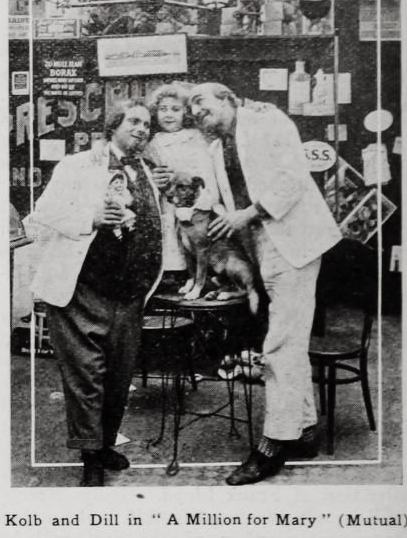
The sidewalk smells of boiled frankfurters and cheap varnish the day Louie’s cart collides with fate. One scrawny pup, a hail of loosened bricks, and suddenly the universe rewrites the social contract for two nobodies who have never before been entrusted with anything alive.
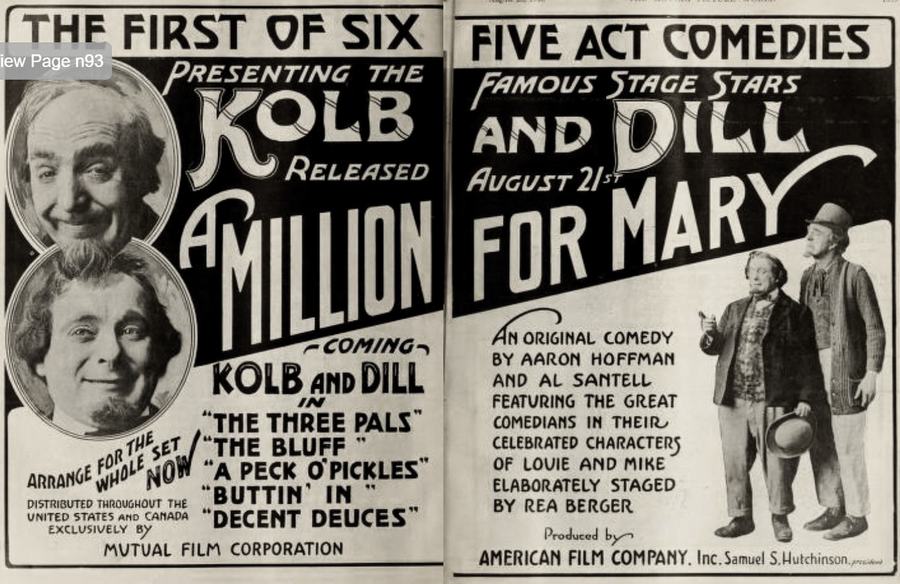
Aaron Hoffman and Alfred Santell’s A Million for Mary—long buried in the amber of 1925—unspools like a fever dream pitched between a Dickensian parable and a boardwalk confidence trick. The film’s very title is a sleight of hand: the million is less a sum than a mirage, a carrot dangled before audiences who themselves hunger for painless absolution. Yet within this slender silent reels a sardonic thesis on American salvation: if faith can be bottled, poverty can be cured by placebo and a jingle.
Watch the way Max Dill’s Louie moves—shoulders perpetually hunched as though bracing for the next gust of capitalism. Compare him to King Clark’s Bob, spine straightened by textbooks, eyes flashing with the hubris of someone who believes chemistry and credulity can share a test tube. Their silhouettes alone chart the film’s moral arc from street-level survival to boardroom metaphysics.
The first reel is pure kinetic chaos: urchins lob debris like pint-sized guerrillas, the dog a trembling emblem of collateral damage. Cinematographer Alfred Gosden’s camera wobbles at ankle height, turning the alley into a trench. Intertitles slam onto the screen with tabloid urgency—“RESCUED—BUT AT WHAT COST?”—as if the film itself were a newsboy shrieking extras.
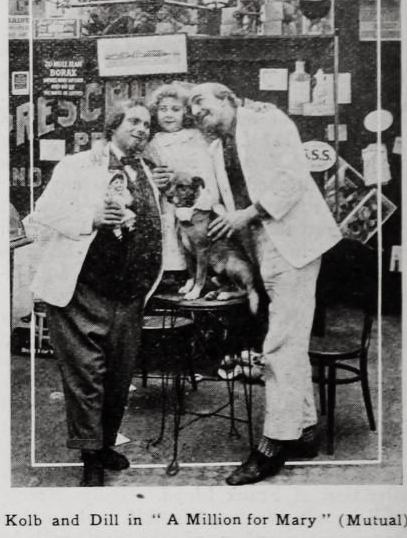
Once the narrative ducks inside the drug store, the tone pivots from urban skirmish to pharmacological noir. The set design drips with irony: show-globes filled with colored water masquerade as cures, dusty ledgers tally imaginary refills, and a neon “PHARMACY” sign flickers like a dying heartbeat. Here the film stages its most audacious coup: swapping narcotics for narrative, addiction for anecdote. The rogue druggist’s exit—coattails fluttering as he vanishes into narrative oblivion—feels less like abandonment than abdication, crowning two street hawkers as unwitting monarchs of a cardboard kingdom.
Eight-year ellipsis, and the store rots into expressionist decrepitude. Paint peels in leprous curls; shelves sag under the weight of dust. May Cloy’s Mary, now grown, navigates this sepulcher in starched white collars that mock the grime. Her transformation from parcel to protagonist is the film’s quiet miracle—achieved not through montage but through the simple accumulation of sacrifice. Every coin Mike and Louie deny themselves is a stitch in the tapestry of her future, and the camera lingers on their cracked fingernails counting pennies as though filming a Stations of the Cross.
Bob’s entrance detonates the status quo. Clarence Kolb plays him with a grin too wide for the frame, a man who has read half a pharmacopeia and swallowed all its hubris. His courtship of Mary unfolds in sideway glances across powder scales and mortar-and-pestle pas de deux. When the elders sneer that courtship costs capital, the film tips its hand: love itself has been metabolized into speculative finance.
Which brings us to the pills—sugar-coated ciphers stamped with the promise of omnipotence. Bob’s brainstorm arrives via newspaper headline on mind-cure evangelism, a nod to the era’s New-Thought hustlers. The montage that follows is a hymn to capitalist synesthesia: billboards bloom on every continent, ocean liners belch banners, radio towers (rendered through animated lightning) pulse the slogan “One pill, one prayer, one penny—perfection!” It’s both hucksterism and holy writ, a convergence that predates modern wellness culture by a century yet feels ripped from today’s targeted-ad feed.
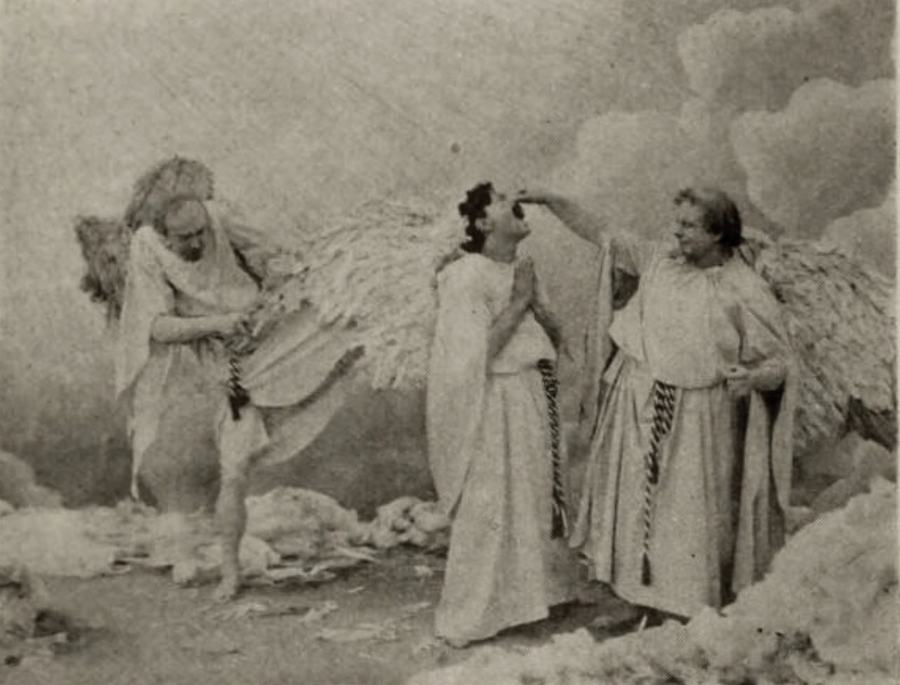
But the film’s true coup de théâtre belongs to Fritz, the long-forgotten terrier. His soap binge and subsequent narcolepsy trigger a suicide pact steeped in medieval guilt. Mike and Louie’s descent into self-slaughter plays out in a celestial courtroom where St. Peter presides like a weary bureaucrat, parchment rolls unfurling into cosmic ledgers. The sequence, tinted in sulphurous yellow, anticipates the afterlife satire of The Last Volunteer yet predates it by decades. When our heroes wake to discover the dog merely stoned, the punchline lands with the force of absolution: fear, not chemistry, had nearly killed them.
Consider the ethical ricochet: a society so starved for miracles it will mortgage its organs for reassurance. Hoffman’s screenplay winks at the audience—yes, these pills are duds, but so are the stockpiled nostrums peddled by today’s algorithmic apothecaries.
Performances oscillate between vaudeville mime and pocket-pathos. Dodo Newton’s Mary ages through posture alone: shoulders back, chin lifted, gaze no longer pleading but appraising. Watch her in the final shot—check in hand, eyes shining with proprietary triumph—she has become the CEO of her own fairy tale. Max Dill and King Clark, meanwhile, deliver a masterclass in silent-era double-act: eyebrows semaphore despair, knees knock in synchronized panic, yet when they stride toward the camera en route to court, their silhouettes swell into gallantry.
The film’s DNA splices DNA from contemporaries yet remains defiantly mutant. Where The Stain moralizes over urban decay and Germinal rages against capital’s crucifixion of labor, A Million for Mary opts for carnival anarchy, gambling that laughter might be the sharpest shiv. Its closest spiritual cousin might be Silks and Satins for its gaudy flirtation with consumer fantasy, yet Mary one-ups that film by weaponizing placebo as plot device.
Technical flourishes deserve excavation. The dissolve that transports us from courtroom dismissal to eight-years-later desolation superimposes a clock face whose hands spin like propeller blades—time as industrial shredder. A POV shot from inside a pill bottle peers up at Bob’s looming grin, literalizing the con. And the orchestral cue (reconstructed by modern scholars) modulates from oom-pah carny to ecclesiastic organ the instant Fritz laps up the tablets, sonically baptizing farce into tragedy.
Yet what lingers is the film’s prescient diagnosis of magical thinking. Replace Mike and Louie’s sugar spheres with any modern app promising mindfulness in a swipe, and the satire feels freshly inked. The picture understands that capitalism’s most potent product is not the commodity but the narrative wrapper—the fable that ownership of X will transmute existential dread into destiny.
Verdict: Essential viewing for anyone convinced that flim-flam is a digital-age invention. A Million for Mary is both time capsule and mirror, sugar pill and scalpel. Swallow with caution—side effects may include uncontrollable laughter, historical vertigo, and a sudden urge to audit your medicine cabinet.
Restoration status: 35 mm elements rediscovered in a Slovenian monastery vault; 4K scan reveals texture of blister paint on the pharmacy counter. Seek the edition scored by experimental trio Plucky Pluto—their toy-piano lullaby for Fritz’s soap coma alone justifies the price of admission.
Final twist: during the closing credits, keep your eyes on the ledger book left center-frame. A shadow briefly forms the shape of a dollar sign, then dissolves—proof that even in paradise, someone keeps the books.
IMDb —
1928
Community
Log in to comment.