DbcultAccessing Vault...
Cult Review
Senior Film Conservator
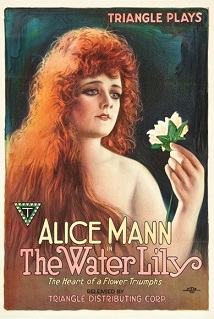
In the annals of early cinema, certain narratives emerge with a resonance that transcends their temporal origins, speaking to universal truths about human nature and societal constructs. The Water Lily, a silent film from 1919, stands as one such enduring artifact, a poignant melodrama that, beneath its seemingly straightforward plot, delves into the intricate complexities of class, virtue, and the tenacious spirit of a young woman striving for dignity. It is a work that, even a century later, invites a discerning eye to appreciate its delicate yet powerful symbolism, its characterizations, and its subtle critique of the social stratifications that defined its era.
At the heart of The Water Lily lies its central, titular metaphor. Genevieve Connors, a girl born into the bleak reality of the slums, is offered a fleeting reprieve – a week-long sojourn at the lavish country estate of Mrs. Vanderbeck. This brief transplantation from urban squalor to bucolic splendor immediately sets the stage for a dramatic clash of worlds. It is here that she encounters Evelyn Carlisle, a character whose privileged upbringing has instilled in her a disdainful arrogance, readily dismissing Genevieve as a mere 'gutter brat.' This epithet, sharp and unsparing, immediately establishes the social chasm that the film seeks to bridge and critique. Yet, it is Evelyn’s cousin, Dick, who perceives beyond the superficial trappings of origin. His pivotal act of rescuing Genevieve from an overturned canoe is not merely an incident of physical salvation, but a symbolic awakening. As he gathers water lilies for her, his observation that their 'fragrance and purity have not been affected by the slime and mud clinging to their roots' becomes the film’s guiding philosophical principle. Genevieve, like the water lily, possesses an intrinsic purity, an unblemished spirit that no amount of societal mud can genuinely tarnish. This elegant metaphor is not just a poetic flourish; it is the very soul of the narrative, asserting the inherent worth of an individual irrespective of their birthright or circumstances.
Dick, captivated by Genevieve’s innate grace and resilience, becomes her steadfast champion. He endeavors to elevate her station, arranging for her to undertake a stenography course and promising her a coveted position with his older brother, Willard. This act of patronage, while well-intentioned, underscores the prevailing social dynamics where advancement often relied on the benevolence of the affluent rather than merit alone. However, the path to social mobility is fraught with the formidable barriers of entrenched prejudice. Mrs. Lawson, Evelyn’s aunt, epitomizes this societal rigidity. Her curt and dismissive rejection of Genevieve, despite Dick’s efforts, serves as a stark reminder of the arbitrary and often cruel nature of class discrimination. It is a moment of profound injustice, highlighting how deeply ingrained social biases can crush the aspirations of the deserving. This particular scene echoes the struggles depicted in other silent era films that grappled with similar themes of social exclusion, perhaps not as explicitly as a film like The Mirror, which might have explored dual identities to escape societal judgment, but certainly in its portrayal of the stark societal barriers. The film effectively portrays the disheartening reality that even with talent and a benefactor, the gatekeepers of society could still slam the door shut based on arbitrary notions of breeding.
Just as hope seems to wane, destiny intervenes once more. Dick, on the precipice of departing for the tumult of war, serendipitously encounters Genevieve again. This reunion is crucial, reaffirming his unwavering belief in her. He not only buys her more water lilies, a tangible symbol of her enduring purity and their shared bond, but also ensures her installation as Willard’s secretary, bypassing Mrs. Lawson’s earlier obstruction. This act of defiance against social snobbery is a quiet triumph, a testament to Dick’s conviction and Genevieve’s inherent worth. It’s a moment that could draw comparisons to the steadfast loyalty seen in a film like In the Lion's Den, where characters often face dire circumstances requiring external intervention or unwavering support to overcome. The narrative then takes a darker turn with the introduction of Mrs. Lawson’s wayward son, Dwight. His dissipation culminates in a gambling raid where he assaults a policeman, believing him dead, and subsequently flees into hiding. This subplot introduces an element of suspense and moral decay, contrasting sharply with Genevieve’s virtuous struggle. The film subtly critiques the hypocrisy of the privileged class, where moral failings are often shielded by wealth and status, a theme that resonates with the darker undercurrents found in films like The Zone of Death, albeit with a less overt thriller approach.
Genevieve’s newfound stability is jeopardized when she receives a clandestine note from Dwight, desperately seeking clothes and money. Mrs. Lawson, fueled by her pre-existing prejudice and suspicion, seizes upon this as an opportunity to discredit Genevieve, pursuing her with accusatory fervor. This moment is a stark portrayal of how easily a vulnerable individual can be ensnared in the machinations of the powerful, especially when latent biases are at play. It’s a classic trope of the innocent being framed, a narrative device explored in many silent dramas where reputation is paramount, perhaps even more acutely than in a film like The Stolen Voice, which might focus on the literal theft of identity or talent. Fortunately, Dick, ever the vigilant protector, follows Mrs. Lawson, arriving just in time to unravel the web of deceit. His timely intervention not only proves Genevieve’s unimpeachable innocence but also exposes the moral failings within the very family that sought to condemn her. This resolution is deeply satisfying, affirming the triumph of truth and virtue over malice and class snobbery. It underscores the film's belief in inherent goodness and the eventual vindication of the pure-hearted, a common yet powerful message in silent-era narratives that often sought to uplift and moralize.
While specific details of directorial flair and acting nuances are often lost to time without modern critical lenses, the narrative structure itself hints at a strong guiding hand. Leatrice Joy, portraying Genevieve, would have been tasked with conveying a vast spectrum of emotions through pantomime and facial expressions – from the quiet dignity of her humble beginnings to the resilience in the face of prejudice, and ultimately, the serene joy of vindication. Her performance, undoubtedly central, would have needed to embody the very essence of the water lily metaphor. Emil De Varney, as Dick, would have projected the heroic, principled figure, his actions driven by a sense of justice and genuine affection rather than societal expectations. The contrast between these two, representing purity and principled action, against the more venal characters like Evelyn Carlisle and Mrs. Lawson, would have been stark and dramatically effective. The supporting cast, including Donald Hall, Eloise Hampton, Charles A. Robins, Francis Mann, Edgar Wedd, and Alice Mann, would have contributed to the rich tapestry of character, each playing their part in the social drama. The effectiveness of silent film often hinged on exaggerated but precise gestures, clear emotional telegraphing, and the power of intertitles to fill in narrative gaps and provide character insights. Lillian Case Russell's writing, therefore, would have been crucial in crafting a story that was both emotionally resonant and visually compelling, allowing the actors to fully inhabit their roles without the aid of spoken dialogue. This required a deep understanding of visual storytelling, where every frame, every gesture, and every intertitle had to contribute meaningfully to the overarching narrative and thematic exposition. The film, in this regard, stands as a testament to the sophisticated storytelling capabilities of early cinema, demonstrating how complex themes could be communicated with elegance and impact.
Beyond its melodramatic trappings, The Water Lily offers valuable insights into the social fabric of its time. It is a commentary on the arbitrary nature of class distinctions and the inherent unfairness of judging individuals based on their origins rather than their character. The film champions the idea that true nobility resides not in inherited wealth or social standing, but in integrity, kindness, and resilience. This moralistic stance was common in many films of the era, which often served as both entertainment and didactic tools. The war-time context, with Dick’s impending departure, adds another layer of gravitas, subtly reminding the audience of larger national struggles and the personal sacrifices involved. This element, though not central, grounds the romance in a broader historical moment, giving it a touch of poignant urgency. While not a direct war film like The Legion of Death or Good-Bye, Bill, the impending conflict acts as a powerful backdrop for personal drama. The film, therefore, is not just a tale of personal triumph; it is a quiet assertion of democratic ideals against aristocratic snobbery, a call for empathy and understanding across social divides. Its enduring appeal lies in this universal message, one that continues to resonate in contemporary discussions about social justice and equality. The deliberate pacing and evocative visuals, typical of the silent era, would have allowed audiences to fully immerse themselves in Genevieve's plight and triumph, fostering a deep emotional connection. The film's strength lies in its ability to transform a simple narrative into a profound statement on human dignity.
The Water Lily, while perhaps not as widely known today as some of its more celebrated contemporaries, offers a compelling glimpse into the popular entertainment and social commentary of its time. It is a testament to the enduring power of storytelling, demonstrating how a simple, elegant metaphor can underpin a narrative rich in emotional depth and social critique. For enthusiasts of silent cinema, it provides an opportunity to appreciate the nuanced performances and the sophisticated visual language that defined the era. The film's message of inner purity triumphing over external prejudice remains timeless, an evergreen reminder that true character is forged not by circumstance, but by an unwavering spirit. It’s a film that, much like the water lily itself, manages to bloom beautifully despite the less-than-ideal conditions from which it sprang, offering a vision of hope and justice. Its importance lies not just in its entertainment value, but in its ability to reflect and subtly influence the societal conversations of its day, particularly concerning class mobility and the inherent dignity of all individuals. Films like Ignorance might have tackled similar issues of social awareness from a different angle, but The Water Lily uses a more direct, character-driven approach to convey its message. In essence, it is a quiet masterpiece that, through its elegant simplicity, delivers a profound and lasting impression, making it a valuable piece in the mosaic of early cinematic history.
The meticulous crafting of the plot, attributed to Lillian Case Russell, is evident in the seamless progression of events and the satisfying resolution. The way the various threads — Genevieve's aspirations, Dick's loyalty, Mrs. Lawson's prejudice, and Dwight's delinquency — intertwine to create a cohesive and impactful narrative speaks volumes about the quality of the screenwriting. It avoids the pitfalls of overly simplistic morality plays by introducing complex characters and situations, such as Dwight's desperate plight, which adds a layer of realism to the otherwise idealistic portrayal of Genevieve. The film manages to balance the personal drama with broader social commentary, making it more than just a romantic tale. It's a reflection on the societal values and anxieties of the early 20th century, a period marked by significant social change and evolving perspectives on class and gender roles. The film's ability to tackle these weighty themes through the personal journey of one resilient young woman is a testament to its narrative strength. It quietly asserts that integrity and kindness are virtues that transcend socio-economic boundaries, offering a hopeful vision of a world where intrinsic worth ultimately prevails over superficial judgment. This makes The Water Lily not just a historical curiosity, but a work with enduring relevance, reminding us that the human spirit, much like the water lily, can blossom beautifully even from the most challenging of circumstances.
IMDb —
1936
Community
Log in to comment.