DbcultAccessing Vault...
Cult Review
Senior Film Conservator
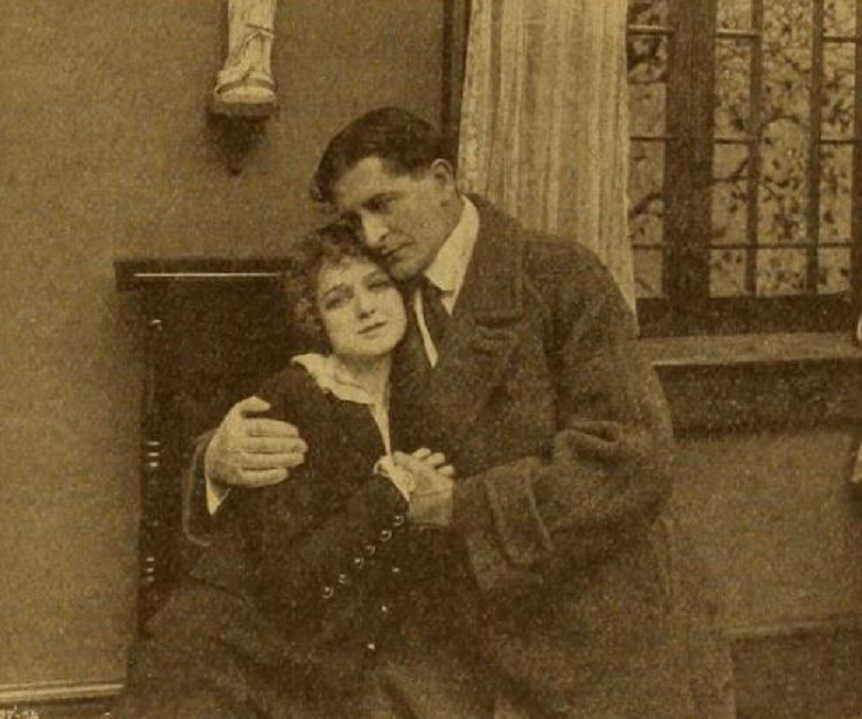
In the annals of silent cinema, certain narratives emerge not merely as entertainment but as poignant societal commentaries, reflecting the rigid moral frameworks and often devastating consequences of misunderstanding prevalent in their era. The Wax Model stands as a compelling testament to this tradition, a melodrama that meticulously dissects themes of reputation, innocence, and the insidious nature of judgment. Directed with a keen eye for emotional nuance, this film, while perhaps not as widely known as some of its contemporaries, offers a rich tapestry of human experience, anchored by a central performance that resonates with palpable vulnerability and burgeoning strength.
At its heart lies Julie Davenant, portrayed with exquisite sensitivity by Helen Jerome Eddy. Eddy, a prolific actress of the silent screen, imbues Julie with a delicate yet resilient spirit, making her journey from neglected child to celebrated model, and subsequently to a woman scorned, utterly believable. Julie’s origins are steeped in tragedy; the daughter of a Parisian dancer, she inherits not only a challenging social standing but also a profound, mother-instilled distrust of men, a precept delivered with her mother’s dying breath. This foundational trauma casts a long shadow over Julie's early life, shaping her interactions and fueling a cautious demeanor that is often misinterpreted.
Her initial foray into the harsh realities of life sees her relegated to the humble position of a nursemaid, a role far beneath her innate grace and beauty. It is here that fate intervenes, or perhaps, rather, the discerning eye of art. Sculptor John Ramsey, played by George Fisher, a character whose artistic appreciation masks a more duplicitous nature, spies Julie’s striking visage. Recognizing her potential as a muse, he offers her a path out of domestic servitude and into the luminous, albeit often objectifying, world of Parisian art. Julie’s ascent is swift and dramatic. She becomes the most sought-after model in the city, her likeness captured and celebrated, transforming her into an icon of beauty. This newfound fame culminates in a significant commission from the esteemed modiste Hermineux, who desires a waxen effigy of Julie to display his exquisite gowns. This wax model, a silent, static representation of Julie, becomes a powerful symbol throughout the narrative – a public facade, easily admired, easily judged, yet utterly devoid of her complex inner life.
Amidst this whirlwind of artistic acclaim and superficial adoration, Julie encounters Melville Ilchester, brought to life by Thomas Holding. Ilchester initially appears to be the antithesis of the men her mother warned her about. He is seemingly earnest, kind, and genuinely captivated by Julie’s spirit, falling deeply in love with her. Their burgeoning romance offers a beacon of hope, a chance for Julie to finally shed the burdens of her past and embrace a love built on trust. However, Ilchester, despite his apparent sensitivity, harbors a rigid moral code and an inherent susceptibility to doubt. He feels compelled to 'test' Julie’s character, to ascertain if she truly is 'different' from the societal norms he perhaps projects onto models. This ill-conceived act of suspicion sets in motion the film’s central tragedy.
In a scene fraught with dramatic irony, Ilchester covertly enters Julie’s flat one night, only to witness her, under the duress of a dare from friends, taking a hesitant sip of wine and lighting a cigarette. In the societal context of the time, particularly for a woman of Julie’s profession, these actions, however innocuous in intent, were sufficient to tarnish a reputation. Ilchester, his preconceived notions affirmed, refuses to entertain any explanation, his judgment swift and unyielding. This moment of profound misunderstanding echoes the tragic miscommunications seen in films like A Tale of Two Cities, where individual perceptions, often flawed, dictate destinies. The emotional devastation of this encounter drives Ilchester to a desperate act: he smashes Julie’s wax model at Hermineux’s shop, a violent, public repudiation that simultaneously destroys her public image and their private bond. This act of iconoclasm is not merely vandalism; it is a symbolic shattering of her perceived innocence, a cruel dismissal of her worth.
The ensuing narrative showcases Julie’s remarkable resilience and intelligence, qualities often overlooked by those who judge her solely on her appearance or profession. She uncovers a nefarious plot involving Ilchester’s sister, Helen (played by Vivian Martin), and the unscrupulous sculptor John Ramsey, who plans to elope with Helen despite being married. Here, Julie, despite her own heartbreak, acts decisively to protect Helen. She sends Ilchester a cryptic note, alerting him to a friend in danger, and simultaneously confronts Helen, revealing Ramsey's marital status. In a masterful stroke of strategic thinking, she hides Helen as Ilchester arrives at Ramsey's studio, orchestrating a confrontation that should, in theory, reveal the truth. However, Ilchester, still blinded by his earlier judgment and convinced of Julie's manipulative nature, dismisses her actions as another elaborate ruse, refusing to allow her to explain. His stubborn disbelief is a heartbreaking illustration of how easily prejudice can override reason, a theme explored in other societal dramas like The Moral Fabric, where rigid social codes often lead to tragic outcomes.
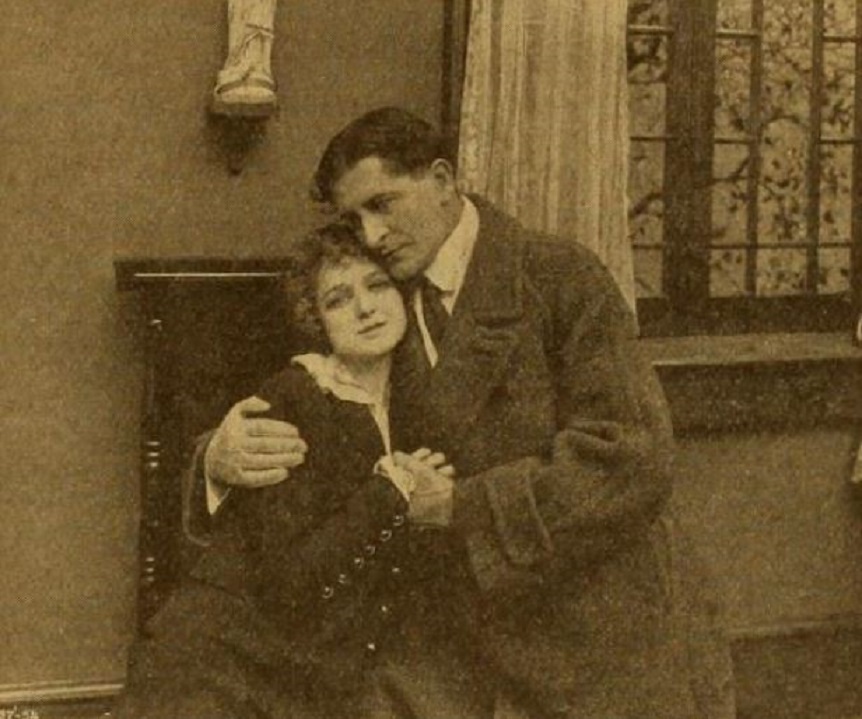
Heartbroken and professionally ruined, Julie abandons her career as a model, a profession that had offered her a semblance of independence but ultimately subjected her to intense scrutiny and vulnerability. She descends into destitution, a grim reality for many women without means in that era, reminiscent of the struggles depicted in films such as Over the Hill or Checkers. In a final, desperate act, she pens a letter of appeal to Ilchester, a last grasp at vindication and reconciliation. This pivotal note, by chance, falls into the hands of Helen, who, having been saved by Julie's intervention and now fully aware of Ramsey's deceit, finally understands the depth of Julie’s character and the injustice she has suffered. Helen’s revelation to her brother serves as the catalyst for Ilchester’s belated enlightenment. The film culminates in a frantic race against time, as Ilchester, riddled with remorse and newfound clarity, hastens to Julie. Explanations are finally exchanged, misunderstandings dissolved, and their happiness, hard-won and deeply earned, is assured.
The casting throughout The Wax Model contributes significantly to its emotional resonance. Beyond Helen Jerome Eddy's compelling lead, Thomas Holding delivers a nuanced performance as Ilchester, skillfully portraying a man torn between rigid principles and genuine affection, ultimately grappling with the consequences of his own hasty judgments. George Fisher as the unscrupulous John Ramsey provides a fitting antagonist, embodying the very deceit Julie's mother warned her against. Supporting roles by Pietro Buzzi, Clarissa Selwynne, Marion Sievers, Vivian Martin, and Katherine Vaughn round out a cast that collectively brings the intricate social dynamics of the period to life.
What distinguishes The Wax Model is its unflinching look at the societal pressures placed upon women, particularly those who dared to step outside conventional roles. Julie's journey from an innocent, albeit emotionally scarred, girl to a celebrated model, then to a victim of slander, and finally to a woman who reclaims her dignity, offers a powerful critique of the double standards prevalent in the early 20th century. Her profession as a model, while offering economic independence, simultaneously exposed her to public scrutiny and assumptions about her morality. This struggle for a woman to maintain her good name in the face of gossip and misinterpretation is a recurring motif in silent era dramas, seen in films like Indiscretion or Gold and the Woman, where female characters often navigate treacherous social landscapes.
The film’s dramatic structure, relying heavily on visual storytelling and intertitles, is characteristic of its era. The use of the wax model itself is a masterstroke of symbolism. It represents the idealized, superficial image that society often projects onto individuals, particularly women, and how easily that image can be shattered by rumor or misjudgment. The destruction of the model by Ilchester is a visceral representation of his own broken perception and Julie’s subsequent public humiliation. It underscores the fragility of reputation and the profound impact of a single, unverified assumption. This tangible representation of an intangible concept elevates the film beyond a simple romance into a more profound commentary on identity and perception.
Furthermore, the narrative skillfully employs dramatic irony, particularly in Julie's selfless efforts to save Helen, which are tragically misinterpreted by Ilchester. This prolonged misunderstanding, while agonizing for the audience, effectively highlights the entrenched nature of Ilchester's prejudice and the difficulty of overcoming deeply held biases. It forces the viewer to empathize with Julie's plight and to question the ease with which society condemns individuals based on circumstantial evidence. The resolution, though perhaps leaning towards the melodramatic conventions of the time, provides a satisfying emotional catharsis, affirming the power of truth and the redemptive nature of forgiveness.
In conclusion, The Wax Model is more than just a period romance; it is a compelling character study wrapped in a gripping melodrama. It offers a fascinating glimpse into the social mores of its time, exploring timeless themes of love, betrayal, and the arduous journey towards understanding. Helen Jerome Eddy’s portrayal of Julie Davenant remains a highlight, a performance that grounds the film’s more dramatic flourishes in genuine human emotion. For enthusiasts of silent cinema and those interested in the evolution of storytelling on screen, this film serves as a valuable example of how early filmmakers tackled complex moral dilemmas and the enduring power of human connection against a backdrop of societal judgment. It reminds us that even in an era without spoken dialogue, the power of expression, narrative ingenuity, and thematic depth could create a cinematic experience that resonates deeply, much like other enduring tales of integrity and perseverance such as True Nobility.
IMDb 5.2
1933
Community
Log in to comment.