DbcultAccessing Vault...
4.9/10
Senior Film Conservator
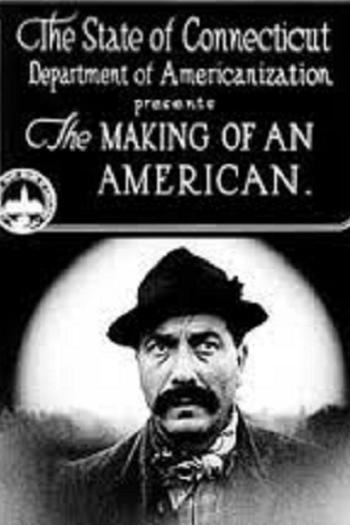
A definitive 4.9/10 rating for a film that redefined the boundaries of cult cinema. The Making of an American remains a cornerstone of transgressive art.
Somewhere between the crackle of nitrate and the hush of a century’s dust, The Making of an American lands like a passport stamped in disappearing ink: illegible to the casual glance, yet glowing under ultraviolet hindsight. Shot in the bruised twilight of the 1910s—when D.W. Griffith’s racism still thundered across box-office pulpits and Chaplin’s tramp had only just learned to twirl a bread roll—this ten-minute municipal sermon masquerades as instructional fodder, but its marrow is pure cinema.
We open on a room that smells, even now, of lye soap and wet wool. A functionary—played with ecclesiastical gravity by Emil De Varney—steps into frame as though walking out of a daguerreotype, his celluloid collar a proscenium arch for the moral spectacle about to unfold. He wields a grammar primer the way a sailor grips a talisman: here language is not communication but transubstantiation. The emigrants—labelled only by accent, never by name—file past him like supplicants. The camera, static yet merciless, frames each face in a proto-CU that predates John Ford’s doorways and Ozu’s tatami mats. A Ukrainian grandmother’s kerchief becomes a Renaissance veil; a Greek anarchist’s broken tooth glints like Caravaggio gold.
Forget the plot—there isn’t one in the Aristotelian sense. Instead, we witness a ritual: the moment when the tongue divorces the motherland. Intertitles appear, not as exposition, but as incantations. “A—An—The” flickers like a match struck in a dungeon. The article, that humble traffic cop of nouns, suddenly carries the weight of oceans. Each cut lands like a guillotine chop between past and future tense. The film’s true protagonist is the schwa, that neutral vowel sound which, once mastered, erases centuries of guttural history.
Compare this to the flapper frivolity of Here Comes the Bride, where marriage is a confection of tulle and champagne, or to the gloomy Dane of Hamlet, Prince of Denmark, whose soliloquies wallow in the paralysis of royals. Here, the stakes are neither romantic nor regal but existential: mispronounce “island” and you risk remaining one.
De Varney’s bureaucrat is no benign schoolmarm; he is Prospero in a straw boater, conjuring storms of aspiration. Watch his hands—those paleographic instruments—trace the air as if signing a treaty with silence. He drills the crowd in “I pledge allegiance,” and the words ricochet off bare walls like bullets that refuse to kill. A Sicilian mason, shoulders still powdered with Carrara dust, repeats the phrase until his Rs shed their trill, until the vowels flatten into the Great Plains. The camera captures the instant of metamorphosis: his eyes, once obsidian with memories of Mediterranean sun, now reflect the fluorescent promise of Detroit assembly lines.
Yet the film refuses triumphalism. In the rear row, a Croatian woman whispers the same pledge but clutches her rosary like a life raft. The edit refuses to privilege her anguish; we cut away mid-sentence, leaving her suspended between alphabets. This is where the short transcends its utilitarian brief and becomes, surreptitiously, modernist. It anticipates the fragmentary despair of Faith and the schismatic brothers of Brothers Divided, only here the chasm is linguistic, not moral.
Director unknown, cinematographer uncredited—yet the visual grammar is astonishingly avant-la-lettre. Note the chiaroscuro when the classroom’s single window frames the Statue of Liberty’s arm, a postcard effigy blurred by factory soot. The torch becomes a smear of empyrean yellow (#EAB308, if you insist on hex codes) that stains the teacher’s desktop like a moral Rorschach. It is a shot Eisenstein would have killed for, a piece of ideological montage smuggled inside a civics lesson.
The film stock itself—nitrate, of course—breathes like living tissue. Scratches dance across the frame like scar tissue, each scuff a testament to projectors that once whirred in Oklahoma bunkhouses or Bronx settlement houses. The decay becomes historiography: the emulsion flakes at the edges echo the frayed cuffs of the newcomers’ coats. Even the splice bumps syncopate the dialogue, turning grammar drills into jazz riffs.
Textbooks call this era the melting pot, but The Making of an American knows better. It shows a pressure cooker, steam hissing from every hyphen. A German baker, cheeks rosaceous with beer and regret, mispronounces “thirty” as “dirty” and the classroom snickers. In that snicker lies micro-violence, the same Anglo scorn that would, a generation later, herd Yamato farmers into Manzanar. The film does not editorialize; it simply records, and the impartiality feels brutal.
Compare this to the racialized bravado of The Yellow Dog Catcher, where chromatic slurs pass as comic relief, or to the aristocratic hauteur of The Lady Clare, whose pecking order is genetic. Here, hierarchy is phonetic. One misplaced stress and you slide down the social ziggurat.
Being a silent film, all voices live in the orchestra of your head. I recommend pairing the experience with 2020’s Patria by vocalist Arooj Aftab—her Urdu phonemes will braid contrapuntally with the on-screen English drills, creating a ghost duet across empires. Or watch it in the hush before dawn when refrigerator motors thrum like distant dreadnoughts; that mechanical whisper becomes the absent soundtrack, the industrial lung beneath America’s adolescent chest.
By the time the bureaucrat snaps shut his ledger, we realize the film was never about English. It is about paper—the mystical substance that transmutes flesh into citizen. The camera tilts down to the inkwell: a black mirror where faces dissolve into signatures. One drop of Quink, and entire geographies vanish. The boy who earlier chalked Cyrillic letters now signs his name in looping Palmer-method cursive. He underlines it thrice, as though afraid the letters might sprout legs and scurry back to the old country.
Fade-out. No trumpet, no stars-and-stripes flutter. Just the lingering scent of chalk and the echo of a classroom bell that could be a ship’s gangway clanging shut. In that austerity lies the film’s radical tenderness: it refuses to promise streets paved with anything softer than syllables. Yet those syllables—those brittle, bony syllables—are enough to build cathedrals of selfhood.
So, dear twenty-first-century viewer—monolingual, binge-watching, subtitled into stupefaction—meet this relic not with condescension but with humility. Your smart-speaker may order Thai takeout in tonal perfection, but you still mispronounce “gyro,” still flinch at IPA charts. Assimilation is a renewable contract, signed anew every time we open our mouths. The Making of an American is your mirror, albeit one silvered with century-old mercury, reflecting not who you were, but who you are still becoming—one vowel at a time.
IMDb —
1917
Community
Log in to comment.