DbcultAccessing Vault...
5.9/10
Senior Film Conservator
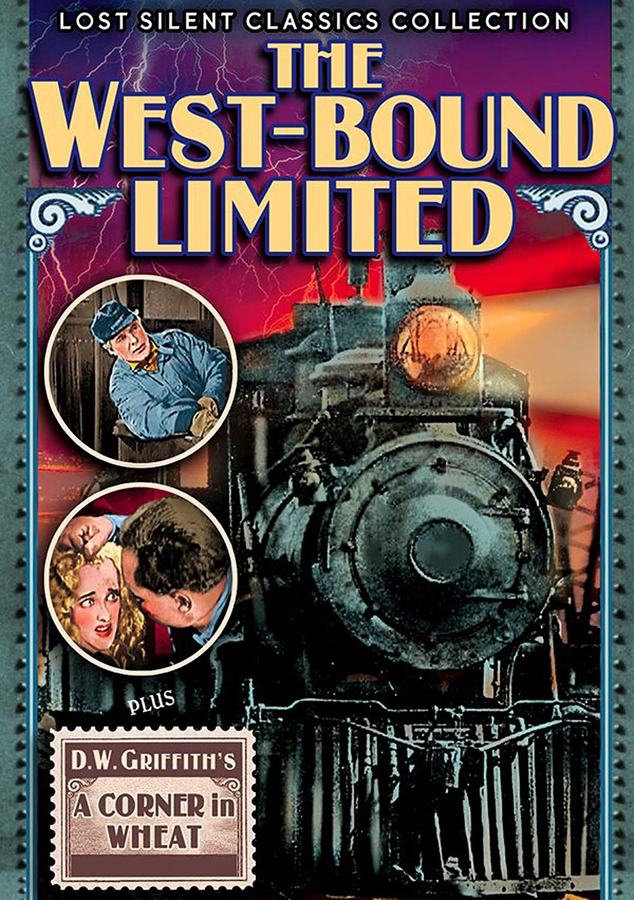
A definitive 5.9/10 rating for a film that redefined the boundaries of cult cinema. The West~Bound Limited remains a cornerstone of transgressive art.
The West~Bound Limited is a film that marries the gritty realism of industrial America with the operatic tragedy of human folly. Its narrative, though rooted in the early 20th century, resonates with a timeless urgency, as if the clatter of its trains echo the heartbeat of modern moral dilemmas.
Set against the backdrop of a sprawling rail network, the film opens with a near-tragedy: Esther Miller, the privileged daughter of the railroad tycoon, stumbles onto the tracks, her life spared by the quick reflexes of Bill Buckley. This act of heroism, however, is swiftly exploited by Raymond McKim, the shadowy secretary whose malevolence is as insidious as it is calculated. McKim’s machinations—a blend of blackmail, social engineering, and psychological warfare—transform Bill from savior to suspect, his marriage to Mrs. Buckley (Ella Hall) reduced to a pawn in a larger game.
What elevates The West~Bound Limited beyond a mere potboiler is its nuanced portrayal of power dynamics. McKim’s villainy is not the cartoonish tyranny of later Hollywood antagonists but a quiet, bureaucratic evil that thrives in the spaces between corporate loyalty and personal ambition. His manipulation of Esther, a character who oscillates between naivety and defiance, is particularly harrowing. The script, penned by Emilie Johnson, avoids the pitfalls of melodrama by grounding the conflict in the tangible: the clench of a train car door, the tremor in a hand gripping a letter of false accusation, the way sunlight filters through soot-stained windows.
Richard Morris’s portrayal of Bill Buckley is a masterclass in understated gravitas. His performance captures the dignity of a man whose life is measured in miles and schedules, blindsided by the chaos of human deceit. The tension between his stoicism and the growing fury at McKim’s schemes is palpable, particularly in scenes where he confronts his wife, her distrust a mirror to his own. Ella Hall, as Mrs. Buckley, brings a weary grace to a role that could have been reduced to a stock wronged wife; her quiet resilience becomes the film’s emotional anchor.
The film’s visual language is equally compelling. Johnson employs the locomotive as both literal and metaphorical device: the West~Bound Limited itself is a character, its arrival heralding both salvation and destruction. In one striking sequence, McKim is shown scheming in a dimly lit office, the glow of a coal lamp casting his face in a sinister orange hue—a visual motif that recurs when he finally meets his downfall, his shadow flickering like a flame extinguished by virtue.
Comparisons to other early 20th-century dramas are inevitable. Like The Deemster (1911), this film explores the collision of honor and corruption, though The West~Bound Limited’s industrial setting lends it a more visceral edge. The Halfbreed (1914), with its focus on racial identity, shares thematic undercurrents of societal judgment, but Johnson’s film is more preoccupied with the machinery of moral compromise. The influence of Fighting Blood (1916) is evident in its familial tensions, yet The West~Bound Limited distinguishes itself through its unflinching portrayal of institutional corruption.
The film’s pacing is deliberate, each scene a cog in the larger mechanism of its plot. The first act establishes the stakes with the precision of a conductor setting a schedule, the second unravels the characters’ moral compasses, and the third delivers a catharsis that feels as inevitable as a train reaching its destination. Johnny Buckley’s role, though initially peripheral, becomes a narrative linchpin; his youthful idealism—a stark contrast to McKim’s cynicism—serves as the film’s moral lodestar.
One cannot discuss The West~Bound Limited without acknowledging its cinematography. The use of smoke, both literal and metaphorical, is particularly effective. Early scenes of the locomotive plowing through fog evoke a sense of isolation, while later shots of the train’s steam mingling with the haze of McKim’s office symbolize the blurring of truth and deception. The final confrontation, staged in the station’s bustling concourse, is a masterstroke of visual storytelling: the chaos of travelers and the order of tracks mirroring the clash between McKim’s disorder and Bill’s rectitude.
The score, though modest by modern standards, enhances the film’s emotional cadence. A recurring motif—a melancholic accordion melody—underscores Bill’s internal struggle, while the staccato percussion during McKim’s schemes mirrors the ticking of a clock counting down to justice. These auditory choices, paired with the stark visual contrasts of light and shadow, create an immersive atmosphere that lingers long after the credits roll.
In its exploration of power and integrity, The West~Bound Limited finds a strange kinship with Medicine Bend (1921), which also grapples with the consequences of societal expectations. However, Johnson’s film is more introspective, its focus on the personal cost of upholding honor in a corrupt system. The resolution—McKim’s downfall and the restoration of the Buckleys and Millers—feels less like a triumph and more like a necessary reckoning, a clearing of the tracks after a derailment.
Criticisms of the film are few but worth noting. The dialogue, while period-accurate, occasionally veers into the stilted, particularly in scenes where characters explain their motivations in monologues. Additionally, Esther’s arc—though compelling—feels underdeveloped compared to Bill’s. A modern viewer might yearn for deeper exploration of her autonomy, yet within the film’s constraints, her transformation from object of manipulation to agent of her own fate is subtly rendered.
Ultimately, The West~Bound Limited endures not as a flawless relic of its time but as a testament to the power of narrative simplicity. It is a film about the tracks we follow and the moments when we must step off them to reclaim our agency. In an age where stories often prioritize spectacle over substance, this 1919 drama reminds us that the most compelling tales are those that, like a well-steam-train, build momentum through the quiet accumulation of detail.
For fans of: The Deemster, The Halfbreed, Fighting Blood.
IMDb —
1927
Community
Log in to comment.