A definitive 5.3/10 rating for a film that redefined the boundaries of cult cinema. Tin Gods remains a cornerstone of transgressive art.
Is 'Tin Gods' worth watching today? Short answer: yes, but with significant caveats. This silent-era drama is a compelling, if occasionally melodramatic, journey into human despair and the elusive nature of redemption, making it a must-see for silent film enthusiasts and those interested in early cinematic portrayals of psychological struggle. However, it's decidedly not for viewers seeking lighthearted entertainment or those who find the conventions of silent cinema too challenging.
For those who appreciate the raw emotional power and expressive artistry unique to the silent era, 'Tin Gods' offers a rich, albeit somber, experience. It’s a film that demands patience but rewards it with a surprisingly complex character study and a narrative that, despite its age, grapples with themes that remain acutely relevant.
This film works because: It delivers a potent, unflinching portrayal of a man's complete psychological breakdown and arduous path to recovery, anchored by deeply expressive silent performances.
This film fails because: Its narrative relies on moments of heightened melodrama and coincidence that can feel heavy-handed and detract from its otherwise grounded emotional core.
You should watch it if: You are a connoisseur of silent cinema, appreciate character-driven dramas with a dark edge, or are fascinated by the social and moral perspectives reflected in early 20th-century filmmaking.
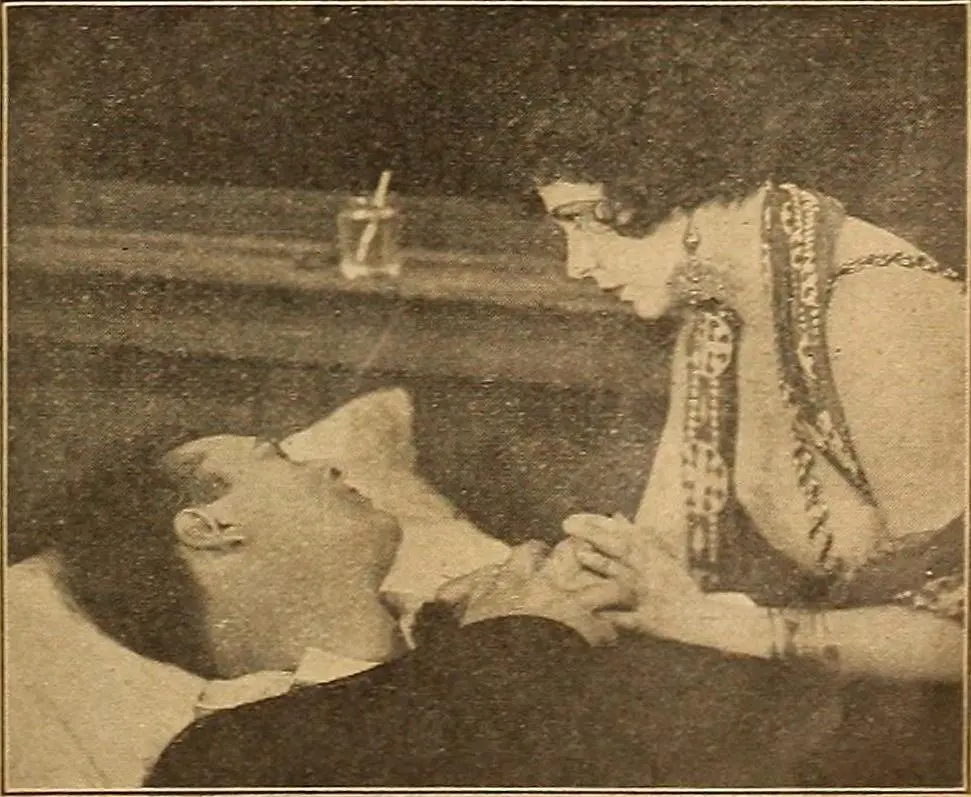
Scene from Tin Gods
Cinematic perspective: Exploring the visual vocabulary of Tin Gods (1926) through its definitive frames.
The Weight of Neglect: A Plot Reinterpretation
'Tin Gods' is not merely a story; it’s a stark dissection of a soul in freefall. Delbert Whitten Jr. portrays the unnamed engineer, a man whose life is initially defined by societal success and professional prowess. The film introduces us to a marriage already strained, not by malice, but by the insidious creep of neglect. His wife, portrayed by Aileen Pringle, is a woman consumed by political ambition, her gaze fixed firmly on the senatorial race, leaving little room for domesticity or maternal affection. This deliberate imbalance of priorities sets the stage for the tragedy that follows, a child's death that isn't an accident in the conventional sense, but a direct consequence of a mother's profound distraction.
The subsequent abandonment of his life in New York isn't an escape but a desperate flight from grief and recrimination. South America, with its promise of grand engineering feats, represents a futile attempt to rebuild himself through sheer physical labor. The bridge, a symbol of connection and strength, ironically becomes a backdrop for his increasing isolation. His descent into alcoholism and joblessness is depicted with a raw honesty that feels ahead of its time, refusing to sugarcoat the realities of addiction and despair.
The introduction of Carita, Renée Adorée’s vibrant cabaret dancer, marks a pivotal shift. She isn't a miraculous cure, but a catalyst for self-healing, a beacon of human warmth in his self-imposed darkness. Their romance blossoms from shared vulnerability, a testament to the power of compassion to resurrect a broken spirit. The final act, with the wife’s return, feels less like a reunion and more like a cruel intrusion, a ghostly echo of a past the engineer has desperately tried to outrun. It’s a narrative steeped in the consequences of choices, both deliberate and unwitting, and the often-unforgiving hand of fate.
Performances: A Study in Silent Expression
The success of 'Tin Gods' hinges almost entirely on its cast’s ability to convey profound emotion without the aid of spoken dialogue. Delbert Whitten Jr. delivers a performance of remarkable depth and subtlety, particularly as his character descends into the depths of despair. His initial portrayal is one of quiet resignation, a man already weary of his life. As the tragedy unfolds, his physical transformation is palpable: the slumped shoulders, the vacant stare, the trembling hands reaching for a glass – these are not overt melodramatic gestures but finely tuned expressions of a soul in torment. In one particularly poignant scene at the South American bar, Whitten's portrayal of drunken indifference, interspersed with flashes of raw pain, is genuinely heartbreaking.
Renée Adorée, as Carita, is the film's undeniable heartbeat. Her performance is a masterclass in silent screen charisma. Where Whitten's character is defined by his internal suffering, Carita radiates external vitality. Her dance sequences are not just entertainment; they are an extension of her generous, life-affirming spirit. Adorée brings a luminous quality to the screen, her expressive eyes conveying warmth, understanding, and ultimately, devastating vulnerability. Her scene where she first genuinely connects with the engineer, offering a simple gesture of kindness, is powerful precisely because of its understated sincerity. This dynamic contrast between Whitten’s stoicism and Adorée’s effervescence creates a compelling on-screen chemistry that drives the film's emotional core.
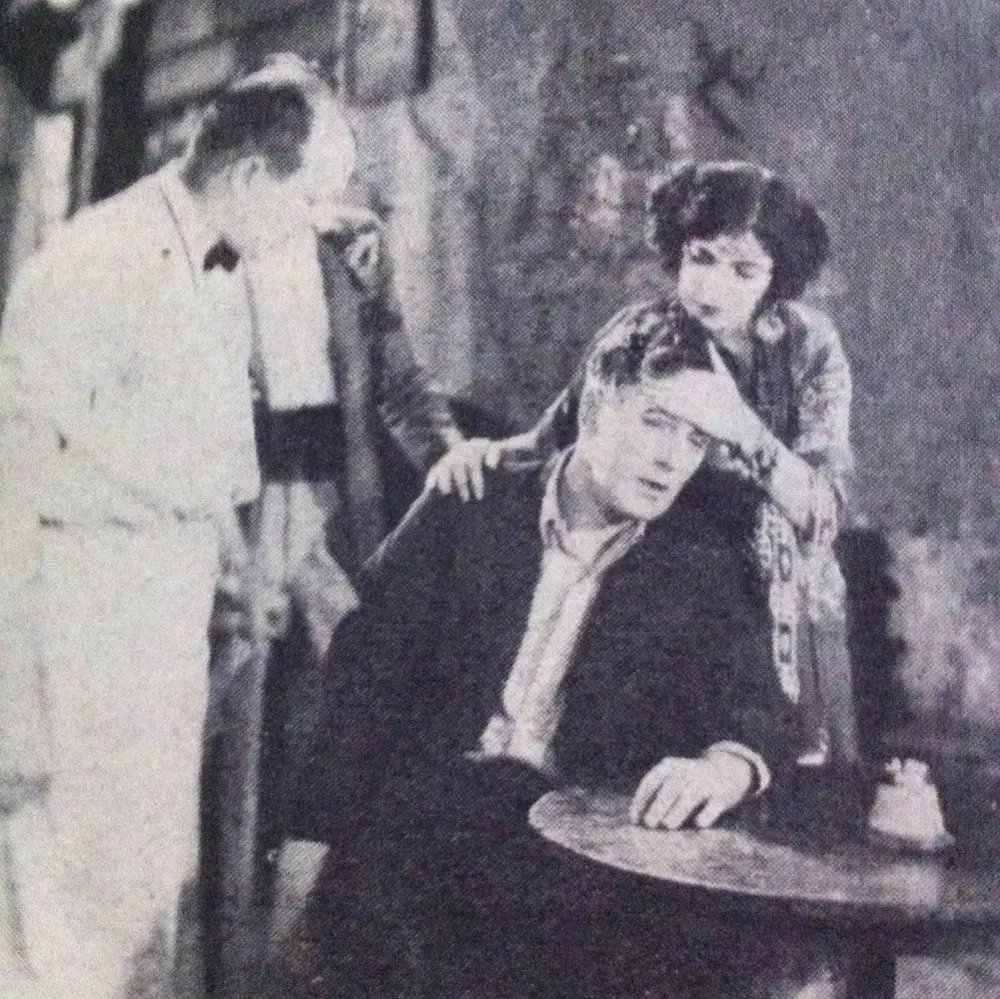
Scene from Tin Gods
Cinematic perspective: Exploring the visual vocabulary of Tin Gods (1926) through its definitive frames.
Aileen Pringle, as the politically ambitious wife, also deserves commendation for crafting a character who, while seemingly villainous, carries her own tragic weight. Her cold ambition is etched onto her face, a mask of determination that rarely falters. It's a portrayal of a woman so focused on external validation that she becomes blind to the destruction she wreaks in her personal life. The supporting cast, including Hale Hamilton and William Powell, provide solid, if less central, contributions, grounding the film's world with believable minor roles. The film The Recoil, another silent drama, similarly showcases how nuanced facial expressions can carry an entire narrative without a single spoken word.
Directorial Choices and Cinematography: Crafting Despair
The filmmakers behind 'Tin Gods' employ a visual language that effectively amplifies the narrative’s emotional beats. The cinematography, while typical of the era, uses light and shadow to great effect. Early scenes in New York, particularly within the engineer’s opulent but emotionally barren home, often feel constrained, with deep shadows hinting at the underlying unhappiness. The stark contrast between the vibrant, almost claustrophobic interior of Carita’s cabaret and the vast, open landscapes of South America where the bridge is being built is a powerful visual metaphor for the protagonist’s internal struggle between confinement and the elusive promise of freedom.
The direction excels at creating a sense of isolation. When the engineer is in South America, particularly during his alcoholic phase, the camera often frames him alone, small against the imposing structures of the bridge or the bustling, indifferent crowds. This visual emphasis on his solitude underscores his emotional detachment. There's a particular sequence where he is shown wandering aimlessly through a bustling market, yet utterly alone in his despair, that resonates deeply. It’s a technique also seen in films like Hintertreppe, where the environment reflects the character's internal state.
The pacing, too, is a deliberate choice. The film takes its time with the engineer's descent, allowing the audience to witness the gradual erosion of his spirit. This slow burn makes his eventual recovery feel earned and more impactful. While some modern viewers might find this pace challenging, it is crucial for building the emotional weight required for the story to land effectively. The use of intertitles is judicious, providing necessary dialogue and exposition without overwhelming the visual storytelling.
Pacing, Tone, and the Unconventional
The rhythm of 'Tin Gods' is measured, a slow, deliberate cadence that mirrors the protagonist's agonizing journey. It’s a film that understands the power of sustained mood over rapid plot progression. The tone, while undeniably melancholic and often melodramatic, possesses an underlying sincerity. This isn't melodrama for its own sake, but a heightened emotional register that was common in silent cinema, designed to bridge the gap left by spoken words. It allows for grand gestures of despair and hope that might feel over-the-top in a sound film but here, resonate with raw power.
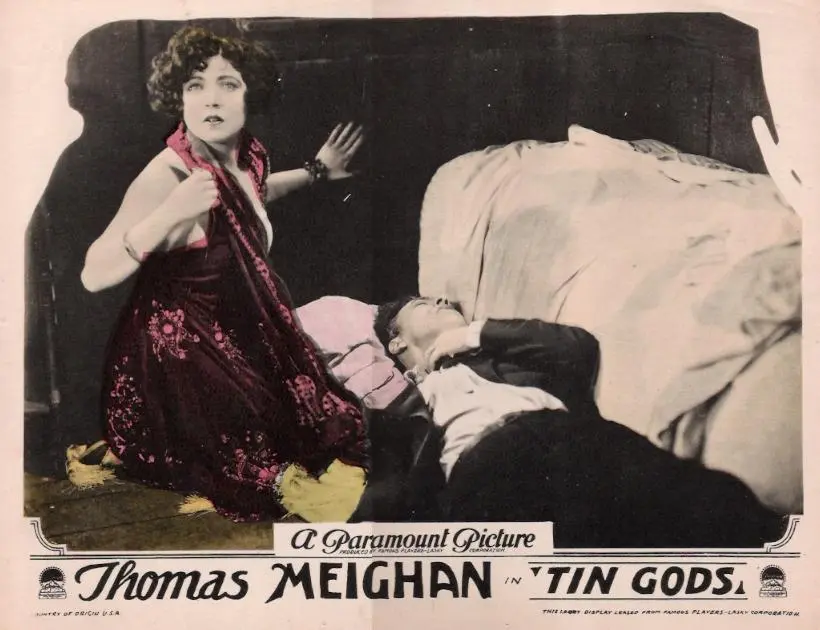
Scene from Tin Gods
Cinematic perspective: Exploring the visual vocabulary of Tin Gods (1926) through its definitive frames.
One of the film's most striking and unconventional observations for its era is its remarkably empathetic portrayal of alcoholism and mental health struggles. The engineer’s breakdown isn't treated as a moral failing to be condemned, but as a genuine psychological consequence of profound trauma. Furthermore, the film’s depiction of Carita, a cabaret dancer, as a figure of pure, unadulterated goodness and a catalyst for redemption, challenges the moralistic conventions of the time. She is not a temptress but a savior, a testament to the idea that compassion can emerge from unexpected places, a theme explored with different nuances in Circus Days.
The film’s greatest strength, arguably, lies in its willingness to lean into its melodrama. While some critics might label this a flaw, I contend that it is precisely this dramatic intensity that allows 'Tin Gods' to transcend its silent limitations and deliver such a potent emotional punch. It works. But it’s flawed. The reliance on the wife’s return as a plot device feels a touch too convenient, a sudden reintroduction of past trauma rather than a more organic progression. This narrative contrivance, however, doesn't entirely derail the film's emotional momentum.
Is 'Tin Gods' Worth Watching Today?
Yes, 'Tin Gods' offers a powerful dramatic experience.
Its themes of loss, ambition, and redemption remain relevant.
Silent film conventions might challenge some viewers.
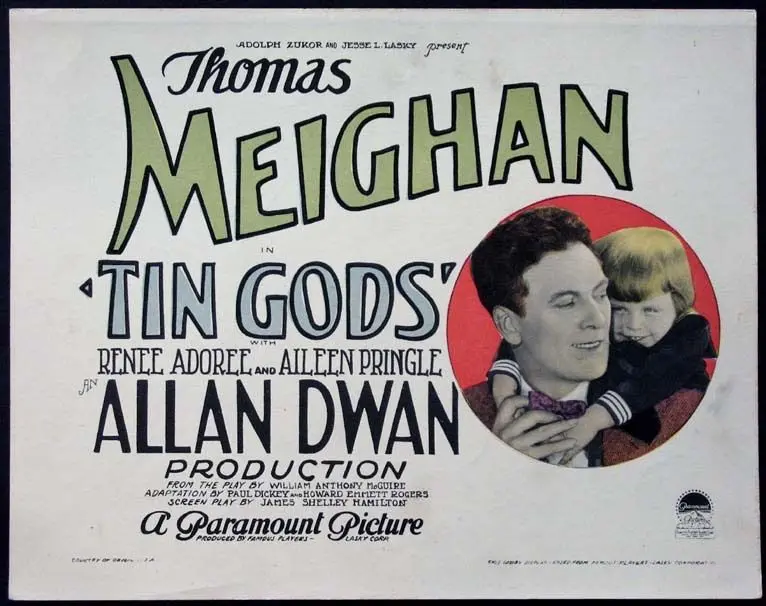
Scene from Tin Gods
Cinematic perspective: Exploring the visual vocabulary of Tin Gods (1926) through its definitive frames.
The melodrama can feel dated at times.
However, the raw performances transcend the era.
It provides valuable insight into early cinematic storytelling.
Ultimately, it’s a moving character study worth rediscovering.
Key Takeaways
Best for: Silent film aficionados, drama lovers, and those interested in psychological character studies and the evolution of cinematic storytelling.
Not for: Viewers seeking fast-paced action, lighthearted entertainment, or those who find the visual and narrative conventions of silent cinema difficult to engage with.
Standout element: Renée Adorée's luminous and compassionate performance as Carita, which injects much-needed warmth and hope into the film's often bleak landscape.
Biggest flaw: The occasional reliance on overly convenient plot devices and heightened melodramatic flourishes, particularly in the film's final act, which can slightly undermine its otherwise grounded emotional core.
Pros and Cons
Pros:
Powerful Central Performances: Delbert Whitten Jr. and Renée Adorée deliver compelling, emotionally resonant portrayals that effectively convey complex internal states without dialogue.
Ambitious Thematic Scope: The film bravely tackles themes of ambition, neglect, grief, addiction, and redemption, offering a surprisingly nuanced look at human suffering for its time.
Effective Visual Storytelling: The cinematography and direction effectively use lighting, framing, and setting to amplify the emotional weight of the narrative and the characters' isolation.
Historical Significance: Provides valuable insight into the social mores and filmmaking techniques of the silent era, making it a compelling watch for film historians and enthusiasts.
Enduring Emotional Arc: The protagonist’s journey from despair to a glimmer of hope remains genuinely moving and relatable, transcending the film's age.
Cons:
Melodramatic Flashes: Certain plot points and character reactions lean heavily into melodrama, which might feel dated or excessive to contemporary audiences.
Reliance on Coincidence: The sudden reappearance of the estranged wife feels somewhat contrived, serving as a dramatic catalyst rather than an organic narrative development.
Pacing Challenges: While deliberate, the film's pace may be slow for viewers accustomed to modern, faster-edited cinema, requiring a degree of patience.
Limited Character Nuance: While impactful, the wife's character could have benefited from more exploration beyond her singular ambition, making her feel less like a plot device.
Silent Film Conventions: For those unfamiliar or uncomfortable with the stylistic elements of silent cinema (e.g., intertitles, exaggerated expressions), the film might present a barrier to full immersion.
Verdict
'Tin Gods' is not a perfect film, but its imperfections are part of its compelling charm. It stands as a powerful testament to the emotional capabilities of silent cinema, delivering a narrative that is both harrowing and ultimately hopeful. The film’s willingness to delve into the darker aspects of the human condition, coupled with its surprisingly progressive portrayal of redemption found outside societal norms, makes it a fascinating artifact of its time and a surprisingly resonant drama for today.
While its melodramatic flourishes might require a degree of stylistic adjustment for modern viewers, the raw power of its performances, particularly from Whitten Jr. and Adorée, ensures its enduring impact. It’s a film that reminds us of the universal nature of suffering and the persistent, if fragile, possibility of recovery. For those willing to engage with its unique language, 'Tin Gods' offers a deeply moving and thought-provoking experience that lingers long after the final frame. It is, without a doubt, a significant piece of silent film history that deserves to be seen and appreciated.