DbcultAccessing Vault...
5.9/10
Senior Film Conservator
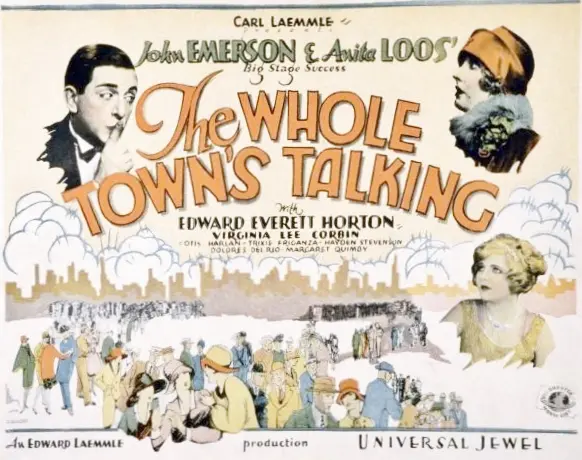
A definitive 5.9/10 rating for a film that redefined the boundaries of cult cinema. The Whole Town's Talking remains a cornerstone of transgressive art.
Is this 1926 silent comedy worth your time in the modern age? Short answer: yes, but only if you appreciate the specific, neurotic alchemy of Edward Everett Horton. This isn't a film for those who demand the grand, sweeping action of Bardelys the Magnificent, nor is it for viewers who need the constant visual invention of a Keaton feature. It is, however, a essential viewing for students of the 'comedy of manners' and anyone who finds humor in the crushing weight of social expectation.
This film works because it weaponizes the natural social anxiety of its lead actor into a sharp critique of post-war hero worship. This film fails because its middle act relies too heavily on the repetitive trope of the 'misunderstood letter,' which feels dated even by 1920s standards. You should watch it if you enjoy the sharp, cynical wit of Anita Loos and want to see a silent film that prioritizes character psychology over physical pratfalls.
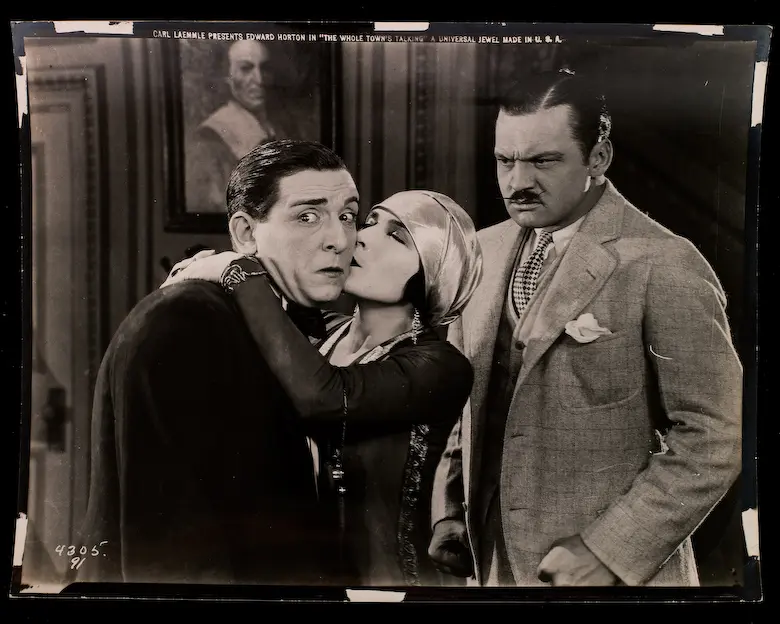
Edward Everett Horton is an acquired taste that becomes an addiction. In The Whole Town's Talking, he plays Chester Binney not as a clown, but as a man constantly on the verge of a nervous breakdown. Coming home from WWI in 1919, Binney is a shell of a man, but the film doesn't treat his trauma with heavy-handed melodrama. Instead, it uses his 'shell-shocked' jumpiness as the engine for a comedy of errors.
There is a specific scene where Binney is forced to recount his 'heroic' deeds to a room full of socialites. Horton’s face is a battlefield. You can see the internal struggle between his desire to tell the truth and his fear of disappointing his host, George Simmons. It’s a performance of micro-expressions. He doesn't need to fall down a flight of stairs to get a laugh; he just needs to blink at the wrong time. It works. But it’s flawed.
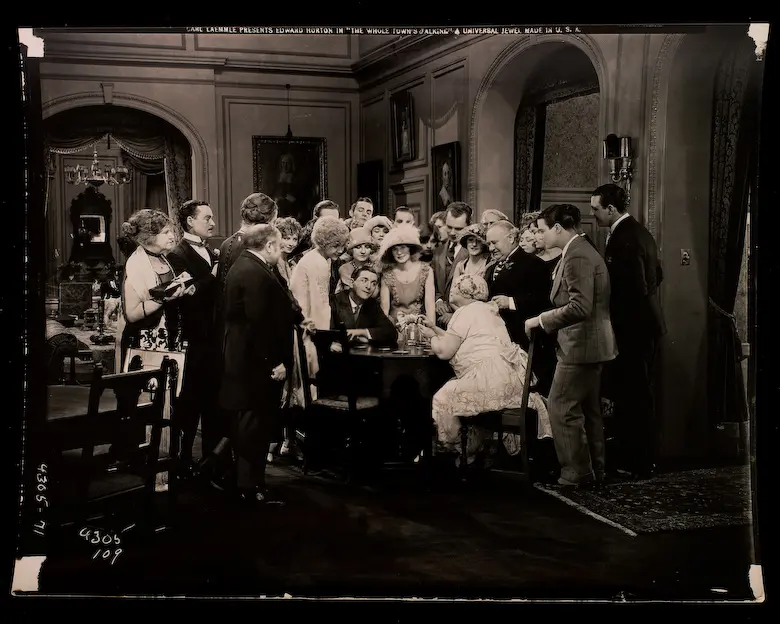
Compared to the more broad performances in Kid Boots, Horton feels modern. He feels like the progenitor of the 'cringe comedy' we see in 21st-century television. He is the man we all fear we are: someone pretending to be more capable than they feel.
The screenplay, co-written by the legendary Anita Loos, is where the film finds its teeth. Loos was never one to suffer fools gladly, and her influence is felt in the way the townspeople are portrayed. They don't care about Binney the man; they care about Binney the symbol. They need a hero to validate their own sense of civic pride, and they are willing to ignore every piece of evidence to the contrary to keep that illusion alive.
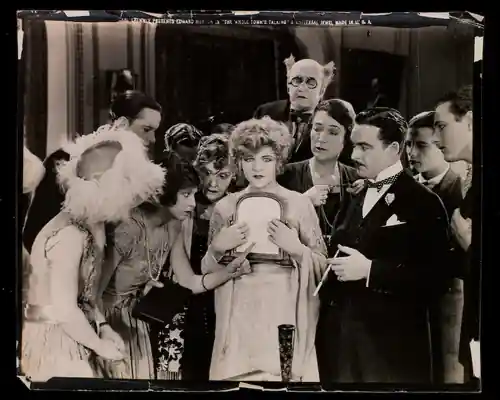
The dialogue—delivered through intertitles—is punchy and often cynical. When George Simmons discusses his daughter Ethel, played with a surprising amount of agency by Dolores Del Río, it isn't about love. It's about branding. This film is a loud movie for a silent one. It screams about the phoniness of the American Dream in the wake of a global catastrophe. It lacks the whimsical charm of Welcome Home, opting instead for a drier, more observational tone.
Director Edward Laemmle handles the pacing with a steady, if uninspired, hand. While the film often feels like the stage play it was adapted from, there are moments of cinematic flair. The framing of the Los Angeles suburbs in 1919 provides a fascinating historical document of a city on the cusp of a boom. The interior sets are cluttered and claustrophobic, perfectly mirroring Binney's internal state.
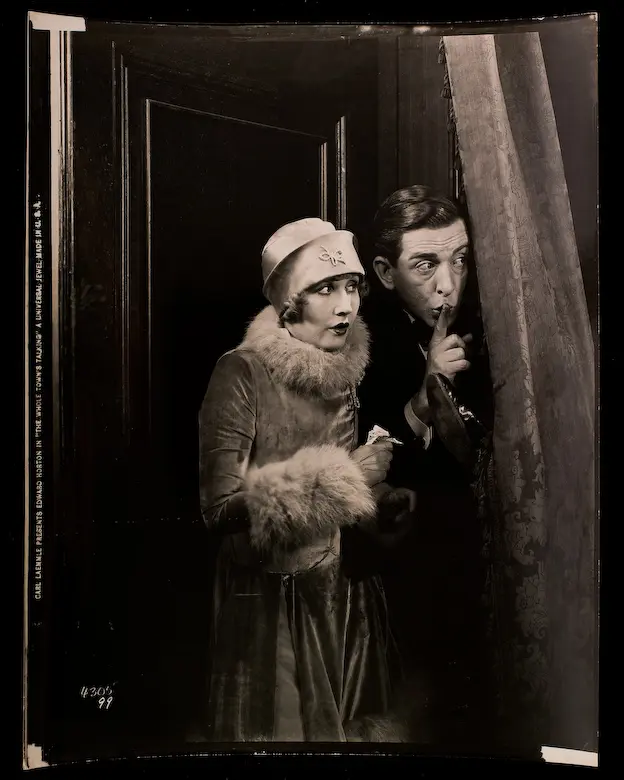
One surprising observation: the film uses light to separate Binney from the 'normal' world. While the rest of the cast is often bathed in a flat, even glow, Binney is frequently caught in shadows or framed against doorways, emphasizing his status as an outsider. It’s a subtle touch that elevates the film above the standard assembly-line comedies of the era like Taxi Please.
Yes, The Whole Town's Talking is worth watching because it offers a rare glimpse into the psychological landscape of the mid-1920s. It captures the tension between the desire for normalcy and the reality of a generation changed by war. It is a film that rewards attention to detail rather than a passive viewing experience.
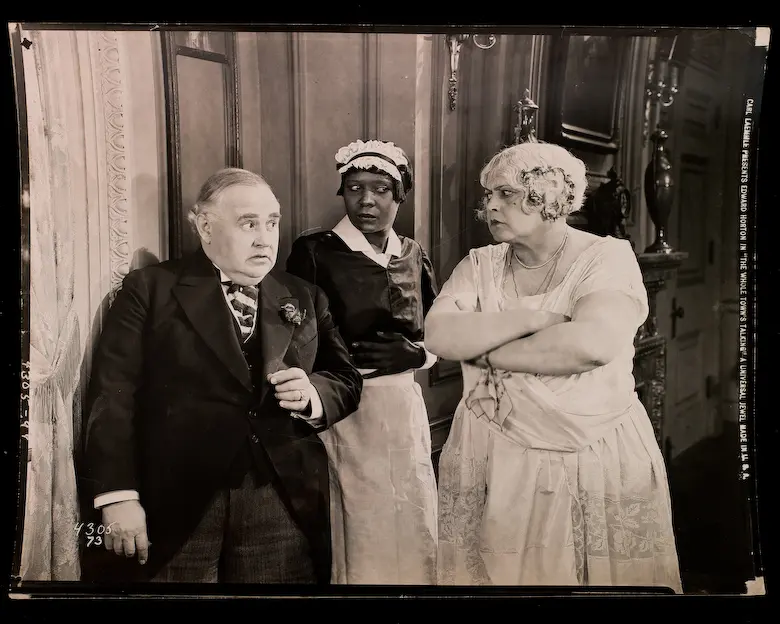
We must talk about Dolores Del Río. While this is early in her career, her screen presence is undeniable. In a film dominated by Horton’s frantic energy, she provides the necessary grounding. She isn't just a trophy for Binney to win; she seems to be the only person in the room who sees through the charade, even if the script doesn't always give her the room to act on it. Her performance is a stark contrast to the more traditional 'ingenue' roles seen in films like Other Men's Daughters.
Pros:
- Sharp, witty intertitles by Anita Loos.
- A unique, non-slapstick approach to silent comedy.
- Fascinating 1919 Los Angeles setting.
- Strong chemistry between the lead cast.
Cons:
- The plot feels slightly stretched to feature length.
- Some supporting characters are one-dimensional caricatures.
- The 'war veteran' theme is occasionally handled with a lightness that might feel jarring today.
When placed alongside other 1926 releases, The Whole Town's Talking feels like an outlier. While The Silver Buddha or The Mysterious Mr. Tiller relied on genre thrills and mystery, this film is content to sit in a room and watch people lie to each other. It has more in common with the cynical social observations of Starting Out in Life than it does with the typical Hollywood romance. It is a film that understands that the most dangerous place in the world isn't a battlefield, but a dinner party where everyone expects you to be a hero.
The Whole Town's Talking is a fascinating, if slightly uneven, piece of silent cinema. It survives today not because of its plot—which is a standard farce—but because of its tone. It is a biting, occasionally mean-spirited look at the way society consumes its heroes. Edward Everett Horton delivers a performance that is both hilarious and deeply uncomfortable, creating a character that feels remarkably human for a 98-year-old film. It isn't a masterpiece, but it is a vital piece of the comedic puzzle of the 1920s. It’s a movie that knows the truth: sometimes, the hardest thing to do is simply talk to your neighbors.
IMDb —
1927
Community
Log in to comment.