DbcultAccessing Vault...
5.4/10
Senior Film Conservator
A definitive 5.4/10 rating for a film that redefined the boundaries of cult cinema. Captain of the Gray Horse Troop remains a cornerstone of transgressive art.
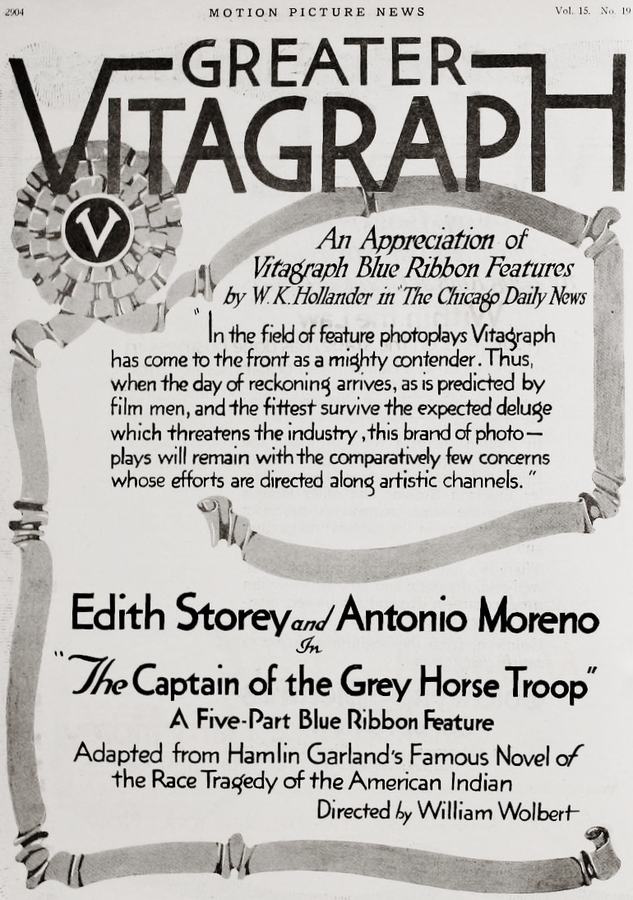
Stepping back into the cinematic landscape of 1917, one encounters a fascinating artifact of early American filmmaking: Captain of the Gray Horse Troop. Far from being a mere historical curiosity, this film, based on the novel by Hamlin Garland, offers a surprisingly nuanced and often prescient examination of themes that remain acutely relevant even today: racial justice, political corruption, and the complexities of intercultural understanding. In an era often characterized by simplistic portrayals, this picture attempts to grapple with the fraught relationship between the U.S. government, white settlers, and Native American tribes, all through the lens of a principled protagonist.
The narrative thrust of Captain of the Gray Horse Troop hinges entirely upon the moral fortitude of Captain George Curtis, portrayed with a stoic yet determined presence by Al J. Jennings. His arrival on a beleaguered Indian reservation is not merely a transfer of duty, but a direct mandate from Washington, D.C., to untangle a Gordian knot of neglect and malfeasance. The conditions he finds are deplorable, a direct consequence of a prejudiced government agent's reign, whose corruption has festered, poisoning the very fabric of the community. Curtis, however, is no ordinary bureaucrat. He embodies a rare blend of military discipline and humanitarian conviction, an idealist in an often cynical world.
His initial act, the swift and decisive ousting of the corrupt agent, is a powerful statement of intent. It’s a move that immediately signals his commitment to justice, not just procedure. This bold stroke earns him something far more valuable than official commendation: the burgeoning allegiance of the reservation’s inhabitants. Their trust, initially tentative and born of generations of broken promises, begins to solidify under Curtis’s transparent and equitable leadership. He doesn't merely govern; he seeks to understand, to bridge the chasm of misunderstanding that has historically separated his world from theirs. This emphasis on building trust through action, rather than just rhetoric, sets the film apart from many of its contemporaries, which often relied on more one-dimensional depictions of indigenous populations.
However, Curtis's success in fostering harmony on the reservation simultaneously ignites a volatile counter-reaction. The neighboring cattlemen, a collective driven by avarice and a deep-seated sense of entitlement, view the improved conditions and the Indians’ newfound stability as an obstacle to their own expansionist ambitions. Their gaze, already fixed on the reservation lands, intensifies, and their methods turn nefarious. They scheme to appropriate the land through political corruption, leveraging their influence and manipulating public sentiment. This dynamic creates a classic Western conflict: the lone, principled individual standing against a powerful, entrenched system of greed and prejudice. It’s a struggle that resonates with the timeless fight for land rights and self-determination, themes that can be seen echoed in the more melodramatic struggles for survival and justice depicted in films like A Man There Was, albeit in a different cultural context.
As if the political and social quagmire weren't enough, Captain Curtis finds his heart ensnared in an equally complex personal dilemma. He falls in love with Elsie, portrayed by Edith Storey, the daughter of ex-Senator Brisbaine. This isn't merely a romantic subplot; it's a profound narrative complication. Senator Brisbaine is not just any political figure; he is explicitly identified as a sworn enemy of the tribe, a symbol of the very forces of opposition Curtis is battling. Elsie, therefore, represents a bridge – or perhaps a chasm – between these warring factions. Her love for George forces her to confront her own inherited prejudices and loyalties, making her character a compelling figure of internal conflict.
The romance between George and Elsie is fraught with the tension of forbidden love, a classic trope that gains particular poignancy here due to the high stakes of their respective worlds. Their relationship symbolizes the potential for reconciliation and understanding across deeply entrenched divides, yet it also highlights the immense personal cost of such an endeavor. It's a love story that must navigate not just personal feelings, but generations of animosity and political intrigue. This emotional core elevates the film beyond a simple action-adventure, imbuing it with a human element that grounds the larger societal conflict. The struggle to reconcile personal desires with societal expectations is a theme explored in various forms across early cinema, from the social pressures faced by characters in Should a Wife Forgive? to the more lighthearted romantic entanglements of Flirting with Fate, but here it takes on a particularly weighty significance due to the life-and-death context.
The fragile peace, so painstakingly constructed by Curtis, is inevitably shattered. The murder of a white rancher by an Indian serves as the tragic catalyst, igniting a powder keg of simmering racial hatred and fear. This incident, regardless of its specific circumstances, is immediately seized upon by the cattlemen and other prejudiced elements as justification for a wholesale attack on the reservation. The demand for collective revenge, a dangerous and unjust impulse, threatens to engulf the entire community in a spiral of violence. This moment is the film's dramatic turning point, where the abstract tensions become brutally manifest.
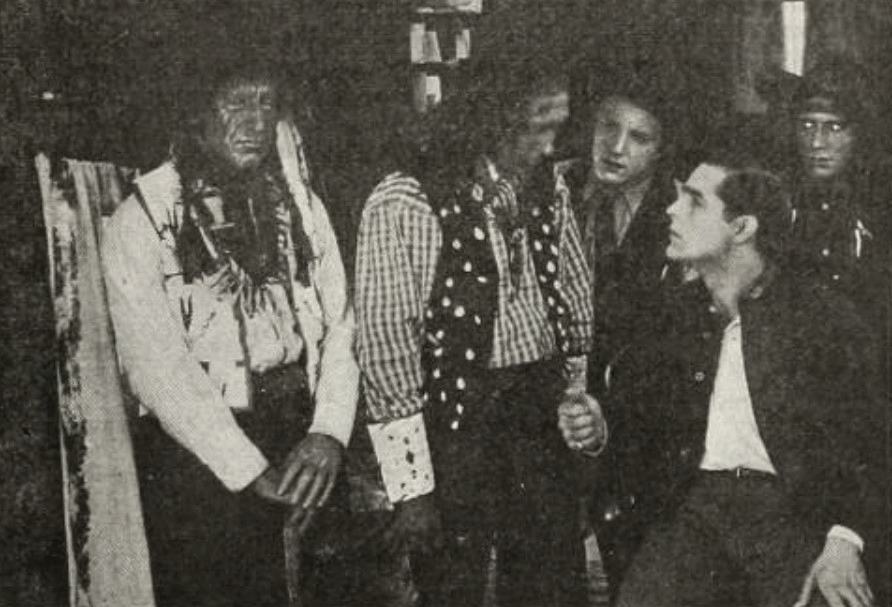
It is in this crucible of crisis that Captain Curtis truly demonstrates his mettle. Without hesitation, he marches his Gray Horse Troops into the agitated town, not to join the mob, but to quell the burgeoning violence. His actions are swift, decisive, and crucially, impartial. He doesn't side with one faction over another but seeks to restore order and ensure due process. This unwavering commitment to justice, even in the face of overwhelming pressure and popular outcry, is what defines his heroism. He understands that true peace cannot be built on vengeance, but on law and fairness.
"In a world quick to condemn an entire people for the actions of one, Captain Curtis stands as a bulwark against the tide of prejudice, a testament to the power of principled leadership."
Curtis’s mission extends beyond simply stopping the immediate violence. He captures the perpetrator, ensuring that justice is served to the individual responsible, rather than allowing the entire tribe to bear the brunt of collective punishment. He then faces the enraged ranchers, assuring them that the incident was isolated, a criminal act by one individual, not an act of war by the entire community. This distinction is crucial, challenging the prevailing narrative that often demonized entire groups. Despite their vociferous demands for revenge on the entire tribe, Curtis maintains the peace, holding firm against the tide of irrational anger. His steadfastness in the face of such pressure is the film's moral core, a powerful statement on the importance of upholding principles even when it is unpopular or dangerous.
While specific directorial credits for A. Van Buren Powell are sparse and detailed reviews of individual silent film performances can be challenging given the passage of time and the limited accessibility of these works, we can infer much from the narrative structure and the impact of the story. Al J. Jennings, as Captain George Curtis, carries the film's moral weight. In silent cinema, much depended on the actor's ability to convey complex emotions and intentions through exaggerated facial expressions, gestures, and body language. Jennings' portrayal likely emphasized Curtis's unwavering resolve and sense of justice, a steady anchor in a tumultuous narrative. Edith Storey, as Elsie, would have needed to convey her internal struggle between familial loyalty and her burgeoning love for Curtis, a conflict expressed through subtle glances and poignant reactions.
The supporting cast, including Otto Lederer as Senator Brisbaine, Edward Cecil, Neola May, Henry A. Barrows, Antonio Moreno, and Bob Burns, would have been instrumental in creating the rich tapestry of characters that populate this Western drama. Lederer, in particular, would have had the task of embodying the entrenched prejudice and political machinations that Curtis fights against. The effectiveness of the film lies in its ability to make these characters feel real and their conflicts tangible, despite the limitations of the silent medium. The visual storytelling, relying on intertitles for dialogue and exposition, would have needed to be clear and compelling, ensuring the audience could follow the intricate plot and emotional arcs. One can imagine the use of dramatic close-ups to emphasize emotional states and wide shots to convey the vast, untamed Western landscape that often serves as a silent, powerful character in such films. The direction would have focused on building tension, especially during the climactic confrontation, using editing and shot composition to convey the urgency and danger of the situation.
The film's use of real locations, if applicable, would have lent an authenticity to the Western setting, a common practice in early cinema that aimed to immerse audiences in the story's environment. The dynamic of the Gray Horse Troops themselves, a visual representation of order and authority, would have been a recurring motif, contrasting with the chaotic energy of the mob. The portrayal of the indigenous community, while undoubtedly a product of its time, likely aimed for a degree of empathy and dignity, especially in contrast to the overtly prejudiced cattlemen. This nuanced approach, however imperfect by modern standards, marked a step towards more thoughtful representations within the Western genre, a genre that often struggled with such portrayals. Consider, for instance, the simplistic narratives of good versus evil in many contemporary films, where Captain of the Gray Horse Troop attempts to explore shades of grey.
Captain of the Gray Horse Troop stands as more than just a historical footnote; it is a testament to the early cinema's capacity for social commentary and its engagement with complex societal issues. Its exploration of racial prejudice, governmental corruption, and the quest for justice within a violent frontier setting speaks volumes about the concerns of its era. While the film's portrayal of indigenous peoples must be viewed through the lens of early 20th-century sensibilities, it is clear that the narrative strives for a message of equity and understanding, particularly through the actions of its protagonist. This film, much like A Daughter of Australia or The Little Gypsy, grapples with societal norms and the individual's place within them, often challenging the status quo.
The enduring power of Captain of the Gray Horse Troop lies in its timeless themes. The struggle for land rights, the dangers of mob mentality, the importance of impartial justice, and the transformative power of love across divides are all elements that continue to resonate. It reminds us that even in the nascent years of filmmaking, artists were grappling with the profound questions of human nature and societal organization. It offers a valuable glimpse into how these issues were perceived and discussed in the public consciousness over a century ago, and how some battles for justice, sadly, remain ongoing.
In conclusion, Captain of the Gray Horse Troop is a compelling and thought-provoking early Western. It transcends the genre's typical heroics to deliver a story rich in moral complexity and social relevance. Through the steadfast courage of Captain George Curtis, the film champions justice, empathy, and the pursuit of peace, even in the most challenging of circumstances. It's a cinematic journey worth taking, offering both historical insight and a powerful, enduring message.
IMDb —
1915
Community
Log in to comment.