DbcultAccessing Vault...
7.3/10
Senior Film Conservator
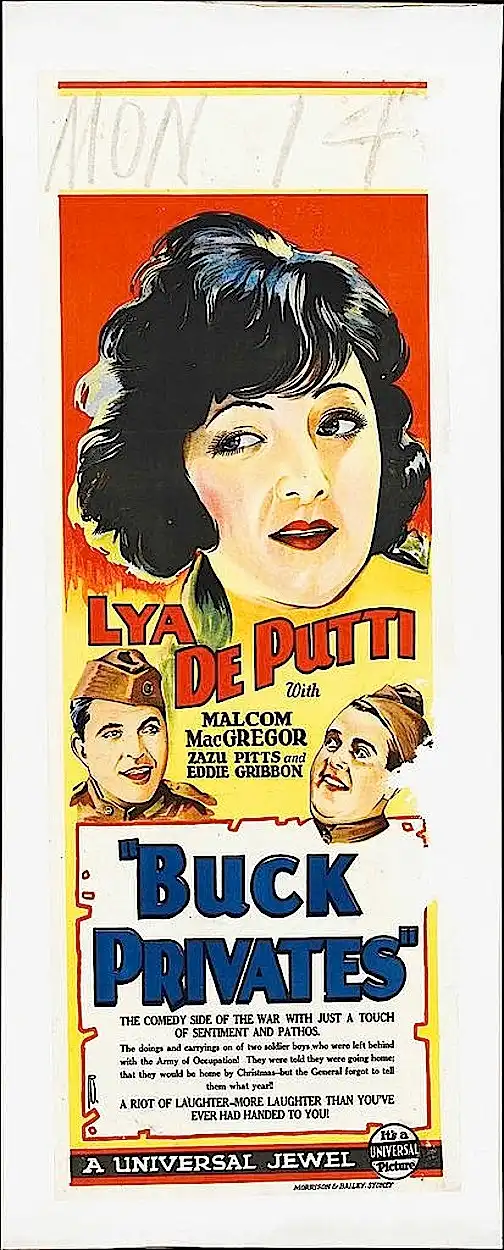
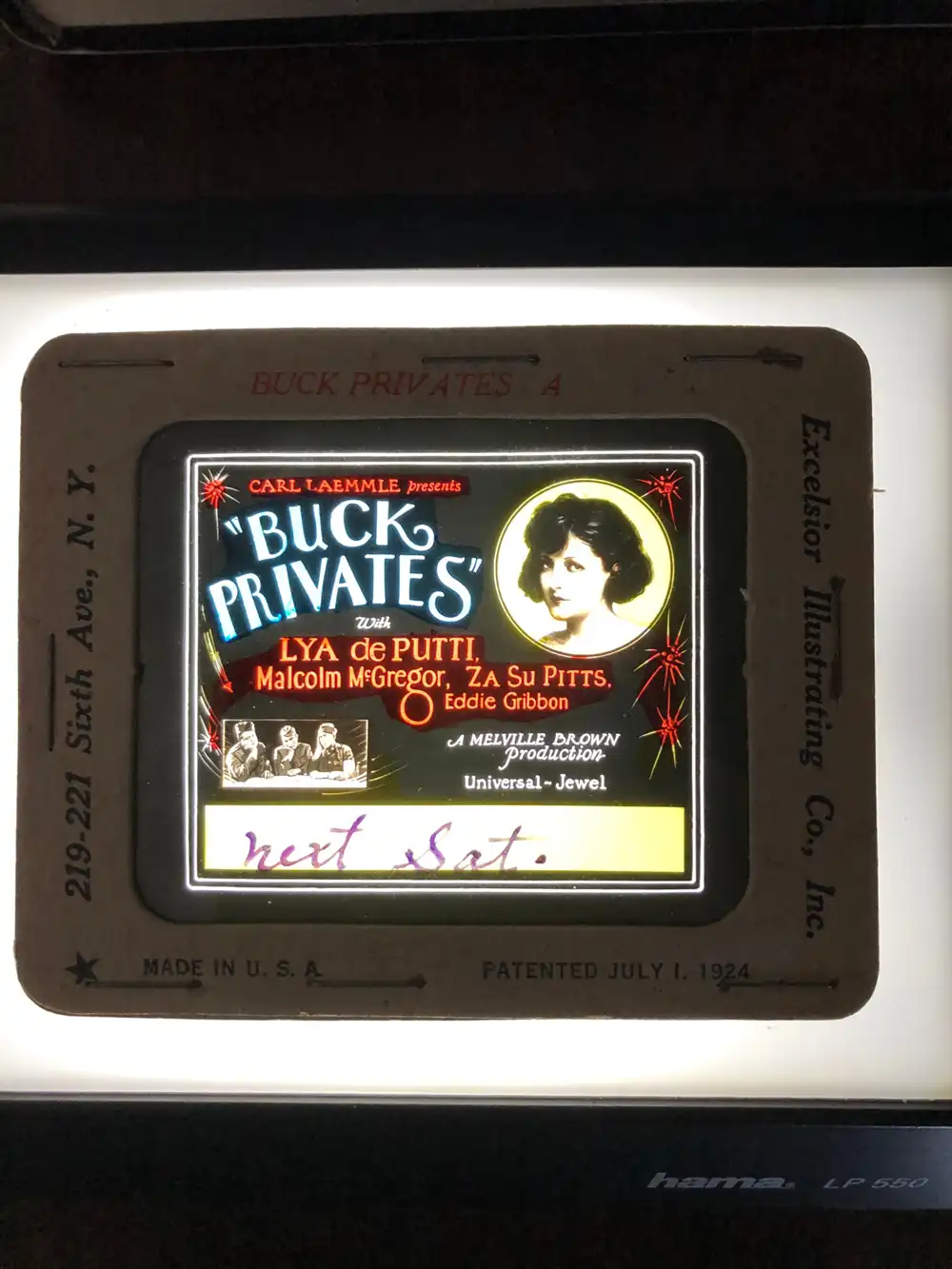
A definitive 7.3/10 rating for a film that redefined the boundaries of cult cinema. Buck Privates remains a cornerstone of transgressive art.
First things first: if you’re looking for the Abbott and Costello movie, you’re about thirteen years too early. This 1928 version of Buck Privates is a silent production that’s much more interested in a weirdly sanitized version of the post-WWI occupation of Germany than in slapstick routines about 'Who’s on First.' It’s a film for people who enjoy the specific, slightly haunting magnetism of Lya De Putti or anyone who has a soft spot for the 'tough sergeant vs. lucky private' trope that felt old even back then.
If you aren't a silent film completionist, this might feel like a bit of a slog. It’s not a masterpiece, and it doesn't try to be. But there is something about the way it handles its setting that kept me watching, even when the plot started to circle the drain in the second act.
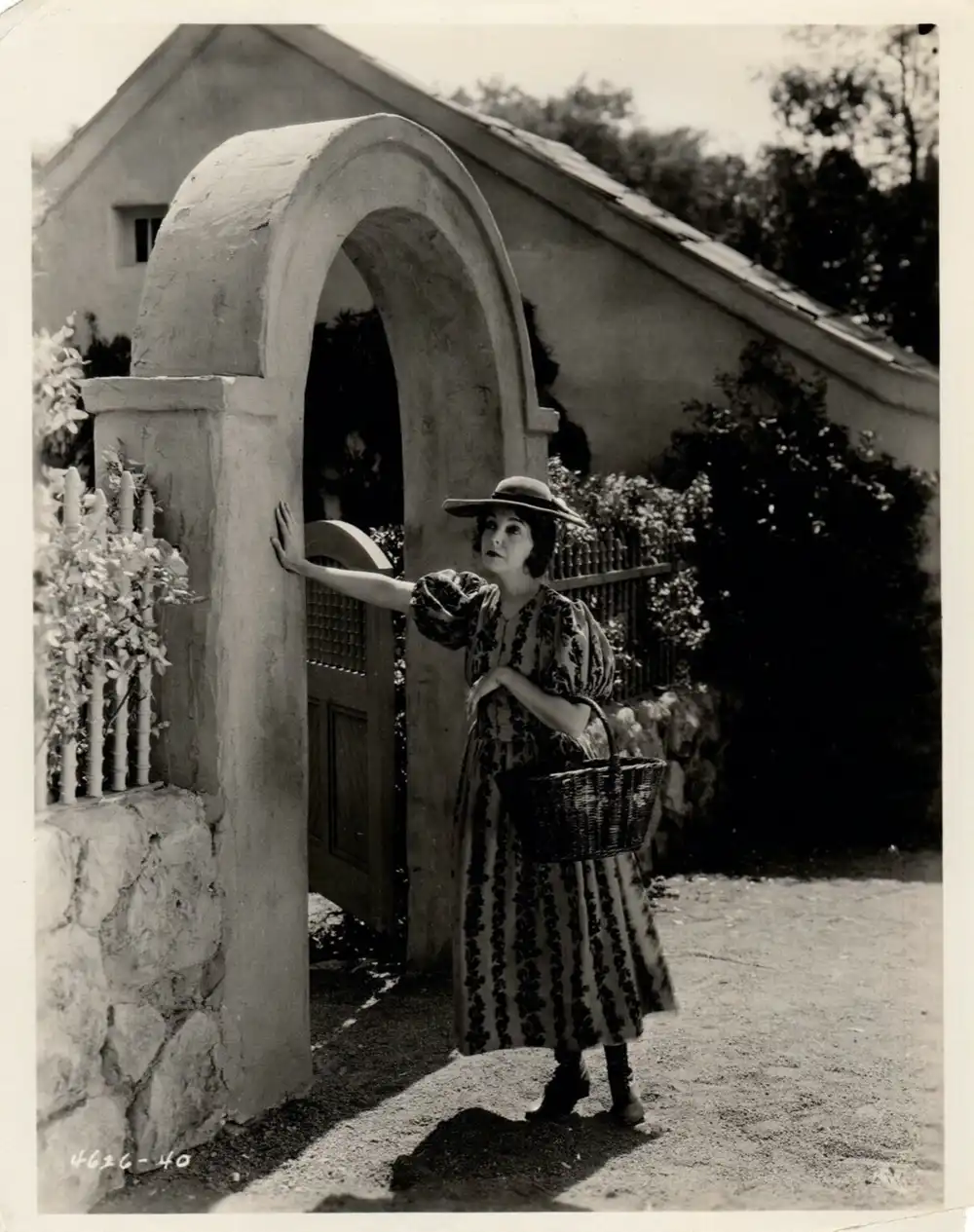
Malcolm McGregor plays Pvt. Smith, and he’s... fine. He has that very specific 1920s leading man face—clean-cut, a bit stiff, and looks like he’s constantly trying to remember if he left the stove on. He’s stationed in a German town, and the movie makes the occupation look remarkably pleasant. Everyone is well-fed, the streets are clean, and the local 'leading citizen' has a daughter named Annie (Lya De Putti) who apparently has nothing better to do than fall for an American soldier.
The real energy comes from Lya De Putti. She was a massive star in Germany before coming to Hollywood, and you can see why. She has this way of looking at the camera that feels heavy—not in a sad way, but like she’s actually present in the room while everyone else is just hitting their marks. There’s a scene where she’s sitting at a table with Smith, and the way she adjusts her collar feels like a real human gesture, not a 'movie' gesture. It’s a shame the script doesn't give her much more to do than be the prize in a tug-of-war between two guys who aren't nearly as interesting as she is.
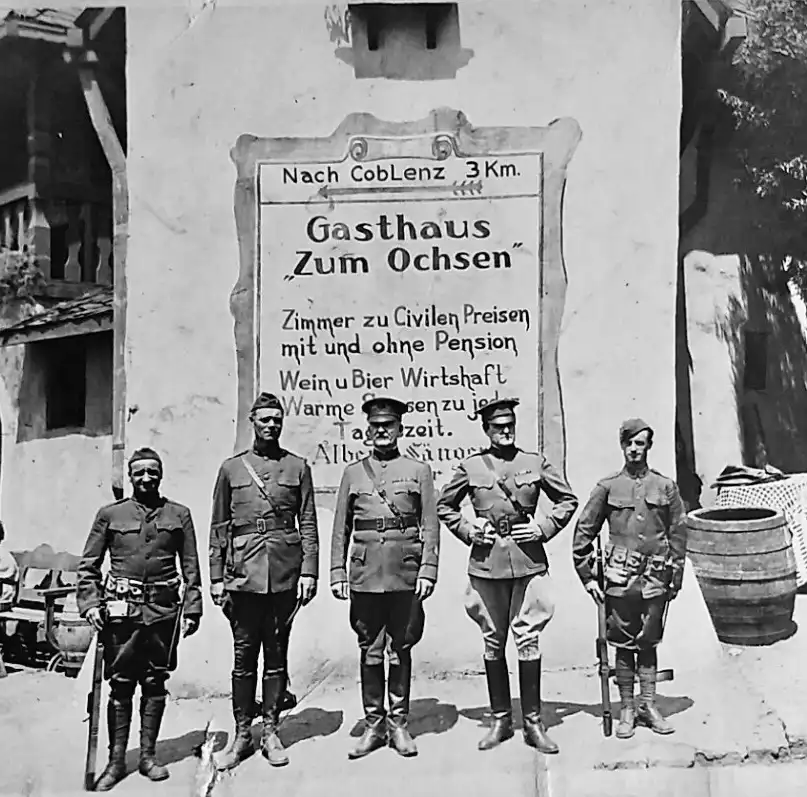
Then there’s Sgt. Butts, played by Eddie Gribbon. He has a face like a crushed tin can. He’s the antagonist, but in that broad, silent-film way where you know he’s the bad guy because he sneers every time he’s on screen. His plan to get rid of Smith is convoluted and involves some military maneuvering that doesn't quite make sense if you think about it for more than three seconds, but logic isn't really the point here.
The pacing is where things get a little hairy. There’s a sequence involving a military drill that goes on for what feels like an eternity. I get it—they’re soldiers—but we don't need to see every single pivot. It’s one of those moments where you can tell the director, Melville W. Brown, was trying to fill time or perhaps just liked the visual of the uniforms in the sun. It kills the momentum of the romance entirely.
I found myself distracted by the background extras in the town scenes. Some of them look genuinely confused, like they were locals hired for the day who weren't told where the camera was. In one shot, there’s an old man in the far left of the frame who just stops walking and stares directly at the lens for a good four seconds before remembering he’s supposed to be an 'occupied citizen.' It’s a tiny thing, but it’s more interesting than the dialogue intertitles, which are pretty standard fare.
Speaking of the cast, Zasu Pitts makes an appearance. If you’ve seen her in The Little Church Around the Corner, you know her vibe. She has those fluttery hands and that worried expression that makes her look like she’s perpetually about to lose her purse. She’s great, as always, but she feels like she’s in a different movie than the rest of the cast. She’s playing for comedy while McGregor is playing for romance and Gribbon is playing for a cartoon. It’s a strange tonal mix.
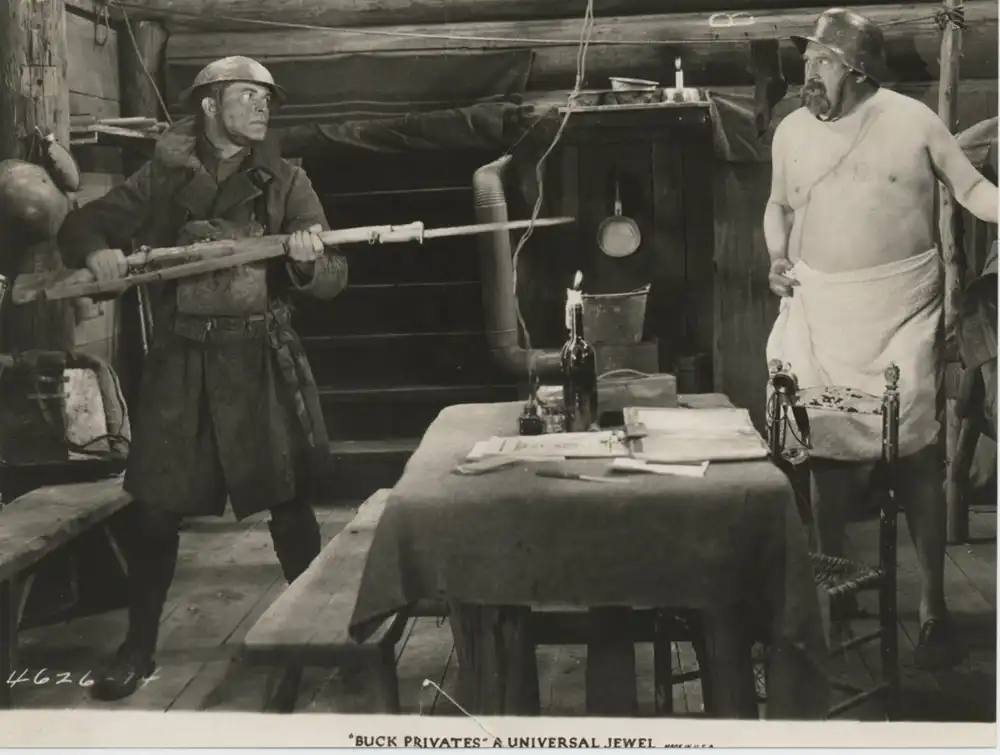
The sets are surprisingly decent, though they have that 'Universal backlot' feel where the cobblestones look a little too perfect. There’s a specific shot of the town square at night that actually works quite well—the shadows are long, and it captures a bit of that European moodiness that De Putti probably brought with her from the UFA studios. But then the movie snaps back into a bright, flatly lit scene of soldiers bickering, and the mood evaporates.
The rivalry between Smith and Butts eventually comes to a head, and the resolution is exactly what you’d expect. It’s a bit of a letdown because the movie sets up the tension of the occupation—the idea of being a soldier in a 'defeated' land—and then does absolutely nothing with it. It’s just a backdrop for a standard jealousy plot. Even What Happened to Father had a bit more bite in its domestic observations than this does with its international ones.

Is it a bad movie? No. It’s a functional piece of late-silent era entertainment. But it feels like a missed opportunity. If you watch it, watch it for De Putti. Watch it for the weirdly aggressive way Eddie Gribbon wears his hat. Don't watch it if you’re expecting a deep dive into the psyche of a post-war soldier. It’s mostly just a guy trying to get a date while his boss yells at him.
One last thing: the ending feels incredibly rushed. It’s like they realized they were running out of film and just decided to wrap everything up in two minutes. The 'big' realization for the sergeant happens so fast you might blink and miss it. It’s not satisfying, but by that point, you’re probably ready for the credits to roll anyway.
IMDb —
1919
Community
Log in to comment.