DbcultAccessing Vault...
Cult Review
Senior Film Conservator
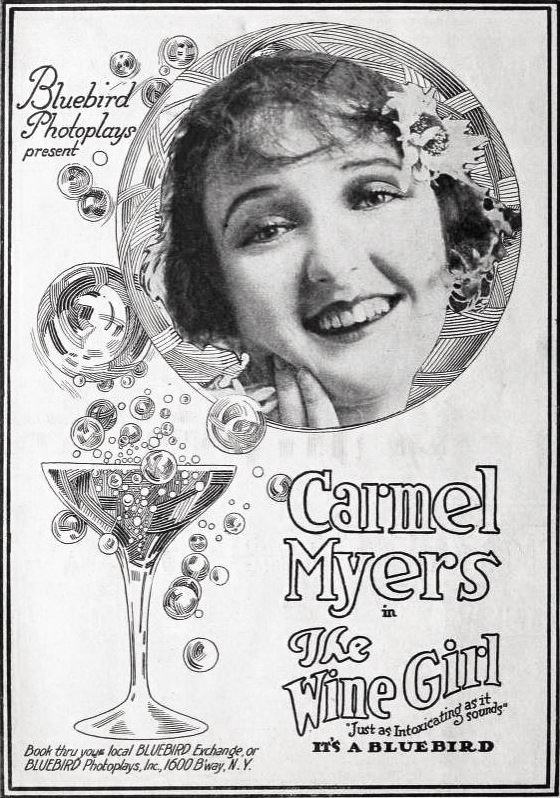
The Wine Girl, a 1930s American melodrama cloaked in the lush, sun-drenched backdrops of California vineyards, is a film that thrives on its taut emotional stakes and moral complexity. Directed with a deft hand by Harvey Gates—whose credits often flirt with the edges of social realism and romantic fatalism—the film navigates the precarious terrain between rural idyll and urban corruption. At its core, it is a story of familial duty, the seductive pull of greed, and the quiet fortitude of women navigating patriarchal and criminal machinations. The vineyard, a symbol both of abundance and vulnerability, becomes the stage where these tensions play out with unflinching intensity.
Andrea Minghetti (E. Alyn Warren) is a man of quiet authority, his presence as commanding as the rows of grapevines under his care. Yet his world is irrevocably upended by the arrival of Chico Piave (Rex De Rosselli), a worker whose affiliations with a shadowy criminal syndicate taint the vineyard’s otherwise pastoral serenity. Chico’s predatory advances toward Bona (Carmel Myers), Andrea’s niece and the film’s moral compass, set in motion a chain of events that exposes the fragility of trust. Bona, a woman of understated strength, embodies the archetype of the nurturing yet resourceful woman—a trope that Gates subverts with unexpected depth. Her cooking, a recurring motif, serves as both a literal and metaphorical sustenance, grounding the narrative in moments of warmth amid encroaching darkness.
Frank Harris (Kenneth Harlan) enters the fray as an outsider, his decision to accept a position at the vineyard on a dare marking the start of a fateful entanglement. His growing admiration for Bona is portrayed with a mix of sincerity and naivety, a dynamic that contrasts sharply with Chico’s overt menace. Mrs. Harris (Katherine Kirkwood), Frank’s mother, is a figure of calculated cruelty, her treatment of Bona a stark reminder of the classist and gendered hierarchies that permeate the narrative. Her sudden shift from hostility to condescension following Bona’s inheritance—a windfall engineered by Andrea’s disappearance—adds a layer of irony to the story’s exploration of greed and social mobility.
The film’s pacing is deliberate, allowing the audience to absorb the simmering tensions before the plot erupts into chaos. Gates’ direction leans into the visual language of classical Hollywood, with wide shots of the vineyard emphasizing both its beauty and isolation. The use of shadows and light is particularly effective in scenes involving Chico, whose criminal dealings are often framed in dimly lit settings, reinforcing his role as a disruptive force. Meanwhile, Bona is frequently bathed in natural light, a visual cue underscoring her moral integrity.
What elevates The Wine Girl beyond its genre conventions is its nuanced treatment of power dynamics. Andrea’s decision to disappear rather than confront Chico directly is a quiet act of resistance, a refusal to be complicit in a system that exploits the vulnerable. His return, coupled with Frank’s impassioned declaration of love for Bona, marks a resolution that is as much about reconciliation as it is about justice. Yet, the film avoids simplistic moralizing; the resolution feels earned but not entirely satisfying, a reflection of the ambiguities inherent in human behavior.
Comparisons can be drawn to The Devil’s Daughter, another melodrama that explores the intersection of personal virtue and societal corruption. However, The Wine Girl distinguishes itself through its focus on rural settings and the everyday heroism of its female lead. Unlike the more overtly gothic elements of The American Beauty, this film grounds its drama in the tangible world of agriculture and labor, giving it a sense of authenticity that resonates even today.
The cast delivers performances that are both restrained and powerful. Myers, in particular, imbues Bona with a quiet strength that belies the turmoil she faces. Her interactions with Chico are charged with unspoken tension, and her eventual confrontation with Mrs. Harris is a masterclass in understated defiance. De Rosselli, as the antagonist, walks a fine line between menace and vulnerability, a testament to the script’s refusal to reduce characters to mere archetypes. Harlan’s Frank is less compelling, his romantic arc feeling slightly perfunctory, but he provides a necessary counterbalance to the darker elements of the story.
Technically, the film is a product of its era, with sets and costumes that evoke the early 20th century’s aesthetic sensibilities. The score, though minimal, enhances the mood without overpowering the dialogue-driven scenes. The editing is efficient, with transitions that maintain narrative momentum without sacrificing the film’s introspective tone. One might argue that the plot’s reliance on contrivance—Andrea’s abrupt disappearance, for instance—undermines the credibility of the climax. Yet, these very elements contribute to the film’s old-school charm, a reminder of Hollywood’s pre-code era when narratives often prioritized emotional truth over realism.
Thematically, The Wine Girl is a meditation on the costs of integrity in a world rife with exploitation. The vineyard, a symbol of both productivity and fragility, mirrors Bona’s journey—rooted in tradition yet susceptible to external forces. The film’s critique of capitalism and organized crime, though subtle, resonates through its portrayal of Chico’s syndicate as a parasitic entity preying on the honest labor of Andrea’s workers. This social commentary is delivered without didacticism, allowing the audience to draw their own conclusions about the moral implications of the characters’ actions.
In the pantheon of pre-Code cinema, The Wine Girl occupies a unique space. It is neither a campy relic nor a forgotten masterpiece, but a film that rewards attentive viewing with its layered characterization and atmospheric storytelling. For modern audiences, it offers a window into the anxieties of the 1930s—a decade marked by economic hardship and shifting social norms—while its exploration of personal ethics remains strikingly relevant. The film’s enduring appeal lies in its ability to balance melodramatic flourishes with a genuine commitment to its characters’ emotional journeys.
While it may not reach the heights of The Guardian or The White Terror in terms of narrative ambition, The Wine Girl is a testament to the quiet resilience of its protagonists—and its creators. It is a film that understands the power of restraint, letting its themes emerge through subtle gestures and unspoken tensions. In an age where cinematic storytelling often leans toward spectacle, this modest yet compelling drama serves as a reminder of the enduring power of human stories told with sincerity and artistry.
IMDb 1.5
1927
Community
Log in to comment.